Is therapy really that essential though?

Hear me out.

I’m not saying therapy isn’t beneficial, but every time I have a conversation with someone about the topic they act as if it is going to fix all of your problems. I feel like if you need therapy and you personally without any outside forces feel like it’ll benefit you then okay that is justifiable. I think my stance on the subject is the way it is because I’ve never personally met anyone who willingly goes to therapy on their own. I also believe that therapy will only benefit you if you yourself are open to the idea of it.

I also just feel like some people are able to work things out on their own without needing an outside perspective as hard as it is for some to accept the fact. Me being one of those people I think I was programmed to just fix all my problems on my own and some people think that I need therapy because of that. This is the most frustrating part to me because just because I’m able to work things out and talk through things to myself I need therapy? I don’t know I just feel like not everyone needs to talk to someone. I also would like to add that yes I have been to therapy before and I’m speaking from experience of what it’s like to be in that kind of environment. Ultimately it did not end up working for me which is why I kind of turned myself into my own therapist and it’s worked a lot better that way. Therapy felt like I was relying on someone else for my emotional stability which was a feeling that I didn’t enjoy. It had nothing to do with my therapist herself she was amazing I just didn’t like the idea of therapy for me. I believe that it’s important to give yourself a chance to be there for yourself.

What are your thoughts? I’m curious.  
The Inevitability of Death

This week, I had the luck of seeing roadkill, not once, not twice, but three times. I’m not a stranger to looking at dead things, but the fact that it happened three times so far to three different animals is kind of sobering. Not that I was driving under the influence, but it got me thinking about my own mortality. These animals were once living breathing beings. Now they are carcasses on the road side, if lucky. If I die, will I be like that, ultimately reduced to a obituary in a newspaper? And it got me thinking about my own mother.

She is suffering from cancer, and due to my own cowardice of not being able to confront it, I don’t know what type. We thought her cancer was cured, but it came back, and I worry every day that she will drop dead. And I don’t know what I will be do with myself and my family if she does. She’s the family’s backbone, and if she dies, we all break. Can you imagine that, all of your efforts, all of your actions that take, ceasing to mean anything once you die? I can understand dying surrounded by loved ones, and knowing that you live a life well-lived. That’s the ideal death to have. But I keep thinking that one of us will die unceremoniously, so suddenly that we as a family can never recover. And I keep being afraid. I don’t know what to do. Sometimes I curse the luck of others for having a blessed life. But I always tell myself that I don’t know what they’ve been through. But some days, I sometimes wish I didn’t care.

Social Media and Mental Health Stigma

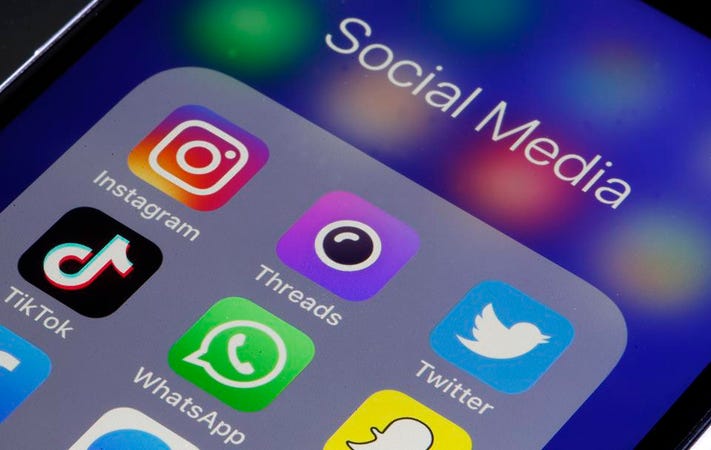
            I love Tiktok. I spend entirely too much time on the app. However, a lot of the videos that pop up on my “for you page” function in an attempt to make mental illness/neurodivergence “trendy.” These videos are typical of people who have diagnosed themselves with serious mental illnesses based on a watered-down, or inaccurate list of symptoms. I have seen BPD, bipolar disorder, DID and Tourette’s included in these self-diagnoses. Increasing exposure to mental health has not decreased the stigma. Rather it has led to people pathologizing regular human emotions. Part of being human is to experience a range of emotions. It is normal to be anxious when there are stressors present in your life; normal to be sad as a reaction to circumstance; normal to have good days and bad days. However, by associating any and every emotion deviating from contentment with a mood disorder, it makes things worse for those with mental illnesses.

            People preach about prioritizing and caring for mental health but only when it looks a specific way. For a specific example, it was a trend for people to post videos of them dying their hair and cleaning their room late at night and refer to it as mania. Although illness does exist on a spectrum everyone’s experience will vary in severity, reducing mania to box dye and a productive late night is incredibly problematic. It increases stigma for those who experience the more severe symptoms, ironically a lot of which are actually required for diagnosis. The DSM-5 characterizes mania for Bipolar I disorder as commonly being associated with hospitalization, psychotic symptoms, and an observable consequence regarding occupation and interpersonal relationships. Yet the same people diagnosing themselves with Bipolar disorder for their DIY hair project, judge those who experience this actual diagnostic criterion. On Twitter I see the same people posting positively about taking mental health days, tweet negative comments about someone’s depression room. As someone who struggles with mental illness, it sucks to listen to so many people around me diagnose themselves with and romanticize an illness that has caused serious detriment in my life.

            I think a lot of people feel as though they need a label to validate their own feelings. Pain, sadness, and stress can be valid, acknowledged, and empathized with even without a disorder. They can be real on their own. I am not saying the topic of mental health should be exclusive to those with illnesses either. It is important for everyone to listen to their minds to treat themselves with kindness and care, to take breaks when needed, and to recognize mental limits, similar to how you need to care for your physical body.  But a boundary needs to exist and wearing someone’s illness as a costume is insensitive.

I can’t be an activist (yet)

 I consider myself a pretty quiet person. You probably haven’t heard me speak up much in class. I’m not sure if it’s because of fear of judgement, or just the fact that people will be looking at me, but I try to keep to myself. In many ways, this has helped me blend into a crowd, and it fuels my need to avoid confrontation, but when it comes to important subjects and conversations, there unfortunately is no difference in my action (or inaction). 

Continue reading

My self love journey

I’ve always felt self conscious about how I look. 

It started from a young age, around when I was in elementary school, when I began to feel the people around judging me for my appearance. I was only 9 or 10 when classmates would tell me I needed to shave my moustache, or I was teased for having hairy arms. When I went to middle school, it was even worse. I had a unibrow so of course I was an easy target for bullies. There were so many times where my classmates would deliberately point out my unibrow in front of everyone. It used to upset me so much. I would go home and beg my mother to get rid of it. At such a young age, I was already so insecure about myself and I cared so much about what other people thought of me. I let western ideas of beauty define myself and my worth. It makes me so sad to think about how much I cared about my appearance at such a young age. I genuinely thought that I was ugly. I remember I used to look in the mirror and cover up my upper lip and unibrow to imagine what I looked like without them. 

I eventually got my upper lip waxed, I got my eyebrows threaded, and I shaved my arms. But none of that really helped me get over my insecurities, I still didn’t feel “pretty.” My self esteem was already ruined. 

Once I was in high school I thought it would get better, but then I started to gain weight and I would get really bad acne breakouts. It wasn’t until my senior year of high school that I finally started to fall in love with myself. I began to feel more confident in my own skin despite what I assumed others thought of me. It’s a journey I’m still working on.

Some days I look in the mirror and I still feel awful about my appearance. Other days I look in the mirror and I feel beautiful. But I can feel myself finally getting to a point where I am confident and happy with myself. 

I added a self portrait by Frida Kahlo because 1. she is infamous for her unibrow, and 2. a lot of her artwork is centered around how she perceives herself as being “ugly.” I resonate with her artwork because despite being very beautiful, sometimes the only way she could see herself was in a negative way. When I was younger I thought she was so beautiful despite her criticisms of herself. 

Just because others can’t see it, doesn’t mean it isn’t there

Each day we walk through life and see all these different people. I love to people watch. I find it enjoyable to sit and walk people interact and wonder what’s going on in their heads as they go about their every day life. Sometimes you see people do funny things and you have no explanation as to why they may be doing it. Sometimes they may be build a little different in the mind than you are and you might not be able to see it at first, doesn’t mean it isn’t there.

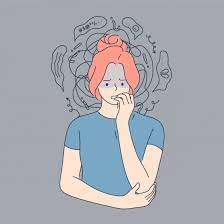
I struggle with anxiety everyday but if I’m being honest you would probably never notice. If someone was watching me go through my every day life, they would probably see someone who looks confident about everything they do, but in reality, it is quite the opposite. I wake up every morning with my heart rate elevated and the feeling that something just isn’t quite right. As I go on with my day I question everything I do, wondering if its right or wrong. I am horrified to get called on class, be the first one to present or even speak when it comes to a subject I don’t know too much about. Even when I’m in my element at soccer practice, my heart rate is through the roof when it comes to being the next person up in line or having to respond to a question my coach asks. When all these moments in my life happen, I get through them, but not without internal struggle. Before each moment happens and it’s my turn to go, my heart starts to race and my mind starts to wonder. What if I mess up? What if I say the wrong thing? Should I do this instead? These are just a few of the worries that shoot through my mind. Constantly wondering if I’m going to make it through the duration of the day.

This is something that so many people deal with, but so few people would know. We only see what is on the outside, and naturally as humans when someone looks fine on the outside, we presume they are just fine on the inside as well. You might be reading this thinking you are experiencing the same thing, and I just want you to know that you are seen are you are heard. Every one experiences this life differently, and that is perfectly okay.

Weight Loss Reality TV Shows

TW: talk about ED, weight, and obesity.

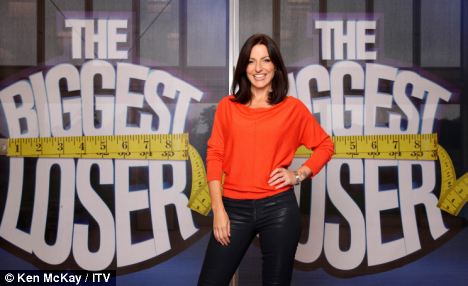
I know most of us have probably tuned in to watch shows like “The Biggest Loser”, “My Big Fat Fabulous Life”, or “Revenge Body by Khloe Kardashian.” Trust me, reality TV shows are my guilty pleasure so I have definitely watched some episodes from all of these shows. But why? From a more negative standpoint, do we find pleasure in knowing that the people on those shows are less fit that us to make ourselves feel better about our lifestyles? Or from a more positive standpoint, do we enjoy seeing the end result of weight loss and feel secure in knowing that if you put in the time and effort, you could lose stubborn fat if you wanted to just like the people on the show?

I think that the focus on weight and how to morph your body to fit society’s standards has been an issue for hundreds of years, but the media we experience today amplifies this issue. There are pros and cons to these types of shows and I can see how they can be beneficial for extreme cases. Obesity has been a significant problem in the United States and a healthier lifestyle can cause many health benefits. But are these shows really the answer? Probably not. One reason being the potential creation or relapse of eating disorders that can be encountered from either the contestants or the viewers watching the show. I also would like to know the percentage of contestants that can maintain their new lifestyle and not fall back into old habits.

The moral of the story is that the producers of these shows are not focused on the health of the contestant, they are focused on the number of views they are going to receive. For that reason, I do not think these shows should gain popularity anymore. If someone wants to make their lifestyle healthier, I think it is their own journey and not one for the entire world to see. It is your body, and you can choose what you want to do with it, but it should not come to the expense of your, or anybody else’s mental health.

Invisible Disabilities: They are Real.

Early Signs of Multiple Sclerosis

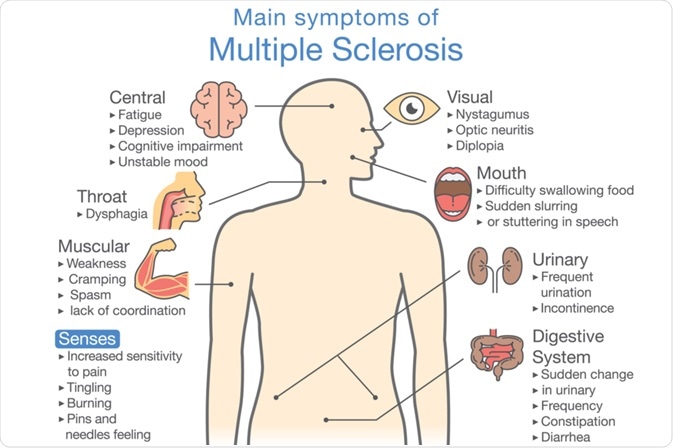
Invisible disabilities are something that, if you don’t first hand witness how hard they are, it can be very easy to look right by them. When I was 7 years old my mom was diagnosed with Multiple Sclerosis. At the time it didn’t seem something that was very serious. She would get injections monthly and take her medicine and she would live normally. As time progressed she began to struggle with every day life activities and need to rest a lot in order to take care of herself.

Multiple Sclerosis (MS) is something that essentially, in the worst scenario, could be fatal. It is very exhausting on the body and I wish I better understood that. When I was in middle school I vividly remember asking my mom if she could take my friends and I shopping for the day. My mom LOVES to shop. So when she said no because she was having a flare up I thought that was just an excuse. I then remember comments I made such as “just take some medicine” “sleep when we get back” and realized how ignorant I was. I had no idea the severity of the pain she had because looking at her, she looked just fine. My younger siblings would do the same thing. I remember times they would make comments about how mommy was so lazy and never did anything. Looking back now it is heartbreaking because my mom would do anything for anyone in the whole world and it would kill her when my siblings and I wouldn’t get upset with her for something she couldn’t control.

Paralysis is a possible outcome of Multiple Sclerosis. As a family, to better understand what our mom goes through, we decided to do an annual MS walk in Pittsburgh, PA. Through this we were able to meet other families that struggled with what our family went through. It allowed my siblings and I to realize what our mom goes through is real and that a lot of other people struggle as well.

The point here is that invisible disabilities are real and it becomes more of a sensitive when it involves your own family.