Faking Disabilities

I was reading the news the other day and came across an article that got me so angry. A man had been using the medical condition of epilepsy to get out of paying for his expensive meals. Luckily he got caught but his punishment is a very small punishment; a slap on the hand if you will.

The reason why this story got me so riled was because of the fact that my mother has been living with epilepsy for 26 years.She has to deal with the repercussions of her disability daily. For someone to mock and mimic an invisible disability is a despicable act. She has had to recently stop driving because her seizures have gotten so bad. Her seizures have taken a toll on her memory slightly so the small task of reminiscing becomes a difficult task of the realization that her disability is becoming more and more relevant each time we talk.

The man who decided it is acceptable to skip out on paying for a meal by faking a seizure makes me sick. It is disgusting and I wish he could understand epilepsy more in depth; this disability is no joking matter. Since he used the disability to his benefit, it makes me worried for my mother. If she has a seizure in the grocery store, restaurant, and any other public place, will people be less likely to help her if they think she is faking. I hope that if people see someone having a seizure they can recognize it and stay by that persons side until they come out of it. I hope that this mans acts did not make people want to turn a cold shoulder to a person actually having a seizure.

“Table for one, please” “Waiting for someone?” “No”

Why is it so wrong for a body to be alone during a meal time? Why does a body have to be around other people during meals? It might seem strange but I have always enjoyed the occasional “out to eat with myself” for breakfast lunch or dinner.

One time I went to Waffle House for breakfast, since my boyfriend isn’t a morning person I decided to go alone. When I got there the perky little seventeen something hostess asked how many. I said one. Her demeanor changed from chipper to confused, to sympathetic as she led me to my corner table. As I was ordering she asked if anyone else will be eating breakfast with me for the second time I said no, just me. She asked me why go out when you are not meeting anyone. I replied “I enjoy eating by myself from time to time. Then I don’t have to worry about meaningless small talk or comfortable silences. It is some time for myself” after my  little chat with her she left me to get my pancakes I pulled out a book and started to do homework. I got my food, she refilled me coffee more times that I needed, I left her a nice tip and I left.

I don’t understand why a person needs to eat around other people all the time. It may be a pack mentality, where we need to strive for a sense of belonging as we down greasy burgers and french fries.  I have no idea why eating solo was a big deal for my waitress that day but it just got me thinking why we view someone as lonely, sad, standoffish, bitchy,or depressed when they choose to have some time for themselves.

Whew, well that felt good to vent.

Retarded.

My sister is mentally retarded. I’m not sure what the ‘politically correct’ term would be for this these days. I’m pretty sure it’s “mentally handicap”. Retard literally means to slow down. At the end of the day that’s a pretty accurate description of my sister. She is 24 years old and has the mentality of a twelve year old. She isn’t stupid by any means. She just got slowed down. My 6-year-old son and she are such good friends. I fear the day he intellectually passes her.

petergriffiin

Let me explain a little more about her condition.

Continue reading

Leaving The Labyrinth of Self Loathing

I was recently perusing the world wide webs when I came across an article entitled “7 Things To Look At When You Feel Bad About Your Body“. I encourage everyone to go read it now. Right this minute and then come back here…Go ahead…I’ll wait… (Warning: Contains bodies, in various forms and fashions)

Continue reading

Bald Barbies

Disclaimer: While I have never experienced baldness personally, drawing from the literature on disability and class discussions I felt an affinity with the topic. If I indirectly offend anyone I offer an apology in advance.Image
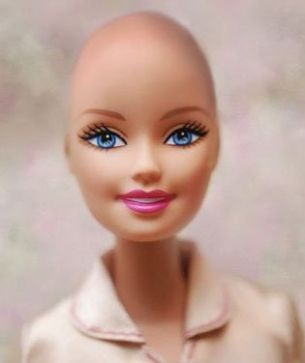
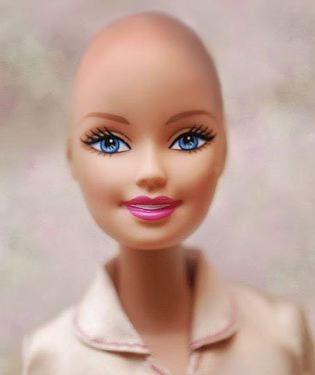
Recently I’ve noticed a lot of rabble on facebook about a topic I never thought would pop up in my newsfeed: Bald Barbie.

There’s a facebook group dedicated to pressuring Mattel to create the Bald Barbie for children who suffer from hair loss due to cancer as well as Alopecia, and Trichotillomania. Mattel has finally released a statement saying they will create Bald Barbie but it, “will be a friend of Barbie, which will include wigs, hats, scarves and other fashion accessories to provide girls with a traditional fashion play experience.”

Hm. So, the new doll cannot be labeled a “Barbie” and she still has to have fashion accessories which, in my interpretation, (and perhaps this is my raging feminist coming out) means people who have hair loss still have to cover up their scalp since baldness cannot be accepted as normal.

Not only will Mattel’s new doll not be a “Barbie”, she will also only be distributed to children’s hospital for reasons of “directly reaching girls who are most affected by hair loss”. But what about the children who are not in hospitals who have experienced hair loss? And how does a hospital reinforcing to the children that they’re still beautiful actually combat the main message that Mattel sends out to the general public on a day-to-day basis, i.e. beauty has a certain standard, and if you don’t have the hair and body for it, you will never be beautiful.

Could placing the doll on the shelves of a toy store create too much of a sense of normalcy towards hair loss?

From the past course discussions on disability, and the invisibility and inaccessibility that many disabled people have expressed they have experienced; I don’t think that Bald Barbie does much to enhance the lives of children who have experienced baldness.

By only distributing these dolls to hospitals Mattel is stating that baldness is still a disability and is associated only with illness. Mattel could release Bald Barbie in mainstream stores and allow Bald Barbie to be viewed right next to a Barbie with hair but then what message would Mattel be sending to the children that experience baldness? Beauty standards can actually deviate from what Mattel portrays them to be?

If Bald Barbie were to be considered equal and sold in the mainstream market right next to a Barbie with hair I think children who experience hair loss could actually feel acceptance and beauty towards their baldness, especially when Barbie is such an icon for female children for femininity and glamour.

I think Mattel’s creation and distribution of Bald Barbie is just another way to emphasize disability rather than accept it.

Face Transplants

I saw this article relating to a face transplant that occurred in Maryland within the last week or so.  This article is extremely relevant to the book we just discussed (Autobiography of a Face).  The man who received the transplant needed one due to a gunshot wound and damage from about 15 years ago.  The article can be found here:

36-hour face transplant ‘most extensive’ ever

The story is an amazing one.  The medical technology and techniques that we now know are phenomenal.  I wish I could interview this guy and ask him how he feels about having a new face after hiding behind a mask for so long and having to use a breathing tube to breathe.  The transplanted face came from a donor whose other organs were also donated to save 5 lives.  The article states that the recipient’s new face is a combination of his own face and the donor’s face and a little bit of customization.  I wonder how this man feels about having another person’s face fused into his.  I also wonder how that impacts his identity.  How would you feel?  Would you be relieved to have the new face so you can appear what is “normal” to society?  Or would you have some reservations and other ideals about how this re-creates your identity?