FAT people deserve LOVE

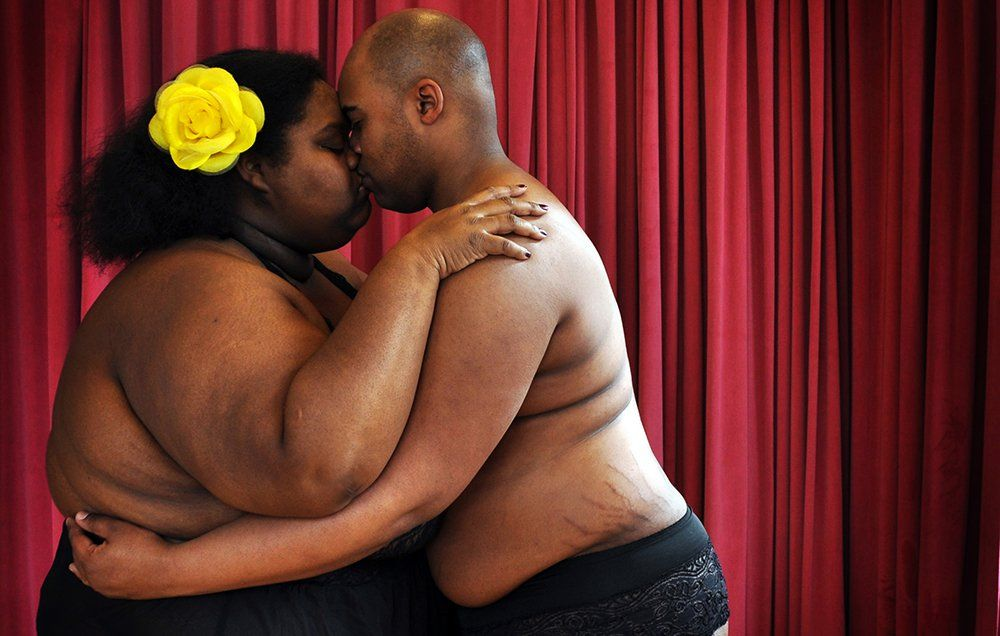
Fat people deserve love to… Why does it feel as though people hate fat people? Why is it so wrong to be fat, or overweight, or just NOT skinny. The beauty standard does not reflect fat people. I get that but now the beauty standards have altered a bit. In which women specifically can be more curvy especially in the ass or bust. However, even now that the beauty standard or should I say, beauty trends have shifted from Victoria’s Secret model to fashion nova model, it seems that the hate of fat people is worse. As a fat black woman myself I see this a lot in which you fit in neither category of the beauty standards set in America. You’re not skinny enough, yet you’re not busty enough or you don’t have an ass or curves. As if curves are needed… to be considered attractive if YOU do happen to be fat. This then leads into if you are not the beauty standard….. Can you still be attractive? Do you still deserve love? Yes you do of course,  but then why do I feel like I have to cower when an attractive man comes towards me or why I feel as though what I look like now is not enough. I mean I believe I deserve love but feel as though I can not attain it while I am fat.. If I just lost some weight … maybe just maybe.

I’m gonna stop there because I just went on a tangent but I also wanted to tie this back to class which is why I wanted to mention how I watched a few of the maintenance phase podcasts. First, I love this podcast! Now one of my favorites. I was listening to one which is called fat camps. Imagine your parents hate the fact that you are fat or you hate that you are fat sooo much you enter a fat camp. I was blown away at first because whattttt like you pay thousands of dollars to undergo strenuous activities and a calorie deficit to MAYBE come out weighing less. I find this intertwines with my earlier point in which people will literally starve or cause their body repeated physical stress in order to inhabit a body comparable to the beauty standards. The world is such a sad one in which fat people can not just be people and live their lives in peace without the constant reminder that they’re not skinny enough. This is apparent through pop culture, social media, classroom seats, airplane aisles, roller coaster rides and more that I care not to mention. I believe we all deserve to be comfortable in our skin and we deserve for others to see us that way. We deserve love too.

Hunger

You awaken eyes bloodshot teeth aching and a pit in your stomach you look up and he stands there pleased with himself and it comes into focus what has happened why you were on the cold pavement your back wet from the puddle you seem to be sitting in the anger wells up as liquid flows down your face you try to stand but stumble back into that puddle he places a hand out and waits a moment before reaching out and grabbing the front of your shirt yanking you up “what? can’t stand?” your feet dangling above the pavement just barely “wh..why do this to me” you manage to choke out as he lowers you to the ground “I don’t know truthfully irritation maybe I was reading minds looking for my next meal when all I could hear was you. I have never heard someone actually recite calorie conversions” you shift in place entirely uncomfortable with someone reading your thoughts then you feel it this intense pain that shoots through you like a dagger in the gut. You’ve ignored hunger before but this this was a different beast it was angry it was demanding it was not something you were gonna be able to ignore ” there it is” he chuckles ” Well you have fun with that” he begins walking away “I’m sure you and that new apatite of yours are gonna have quite the time together try not to kill to many people and most of all have fun” he vanishes into the shadow leaving you alone cold and hungry.

Emotional Labor on Campus

              I work on campus for a part of DoIT and this causes me to interact with other students and with professors. On campus the power dynamic is generally that professors are in a higher position and are to be respected always. When I am on the clock and assisting a user with an issue, I am providing a service to a user and about half of the time it is for a professor. So, when I go out to help with their ticket it can go one of two ways. They either see me as a student who is there to “help” and behave very rudely as if I do not know what my own job entails, with them trying to tell me how to perform a certain task for my job when it is the primary thing we do. Or they respect that I am a working member of DoIT as I am providing a service to them, and they trust that I will resolve the issue.

Continue reading

The Sacrifice Play

I HATEEEEE to admit this but the day we talked about how much time goes into labor and preparing for labor, I just about cried in class. My eyes welled up with fat tears hearing the hours and hours and hours and HOURS of my life that were being wasted on school and work and preparing for school and work. 

And it felt stupid that I was crying about it. I had been working since high school so it’s not like I hadn’t ever known or internalized this information. But, seeing all the hours calculated on the board intensified the feeling I always keep tucked away in my chest: I’m running out of time. My life is being spent in school and at work, instead of doing things that I actually enjoy. Instead of drawing and spending time with my loved ones, I’m putting my mind and body through hell for things that don’t even bring me joy or even satisfaction. 

And we’re EXPECTED to do this. Expected to sacrifice our personal lives, our precious time with ourselves and our loved ones, for work and school. Because if we really cared about becoming successful in life, we would choose to make that sacrifice. I remember receiving a text in the group chat of colleagues I was added to when I started my new job. The text talked about how it was our responsibility as new employees to sacrifice our holidays and free time to work so that the senior coworkers could finally enjoy the holidays they had missed out on during all these years and years of service. 

And for a lot of us, we HAVE to make that sacrifice play, whether it’s to make rent or to have enough to eat. Our bodies aren’t anything but tools for our employers to use until they’re unusable and unprofitable. And we HAVE to live this way if we want to survive and thrive in the current world we live in. 

All of that really hit me all at once during that class discussion, all of these thoughts collected in the tears that were ridiculously close to spilling. 

I think this is one of the reasons why it’s important to appreciate the time we spend with loved ones, ourselves included. Because those moments become a rarity as you grow up and have your time eaten by capitalism. Because those moments are what remind you that you are a PERSON, not just a tool.

Fat or Skinny, WE ARE ALL EQUAL

How many of us feel anxious when discussing our weight and attempt to change the topic it as soon as possible?

What percentage of us think that, in the end, what matters most is a person’s capacity to feel at ease within their own body and refrain from using that confidence as a means of gaining an advantage over others in the society we have today?

Photo by Andres Ayrton on Pexels.com

An major determinant of a female’s partner’s worth is their body weight. Although it may appear unpleasant, the idea behind it is one that was developed through the ages.  Physique size and shape substantially influence what is considered beautiful. Everywhere in the globe, that is the situation. I believe that as we become older, we more aware of our bodies. As our consciousness grows, we begin to notice things that other people deem to be flawed and begin to worry about our bodies. Weight is an example of these imperfections that humans battle.

A person’s body weight increase or significant loss is frequently directly attributed to changing their eating or activity routine. One can get upset with your body and start working out harder if one suspect you’ve put on a couple pounds. In contrast, you would applaud yourself for improving your diet if the scale indicates that you are lighter than typical. Although many individuals wouldn’t even consider it, bigger weight shifts are sometimes triggered by hormonal changes or imbalances. Researchers have shown that hormonal fluctuations can affect your eating, affecting the amount of food you consume and what kinds of cravings you have. 

Compared to males, women seem to be more inclined to indulge in emotional eating. They might grab ice cream far quicker than a male might when they are anxious, unhappy, or overcome with emotion. Women are more likely to use aggressive dietary techniques to get in shape, including missing meals or doing juice fasts. 

My Toxic Relationship with Shapewear

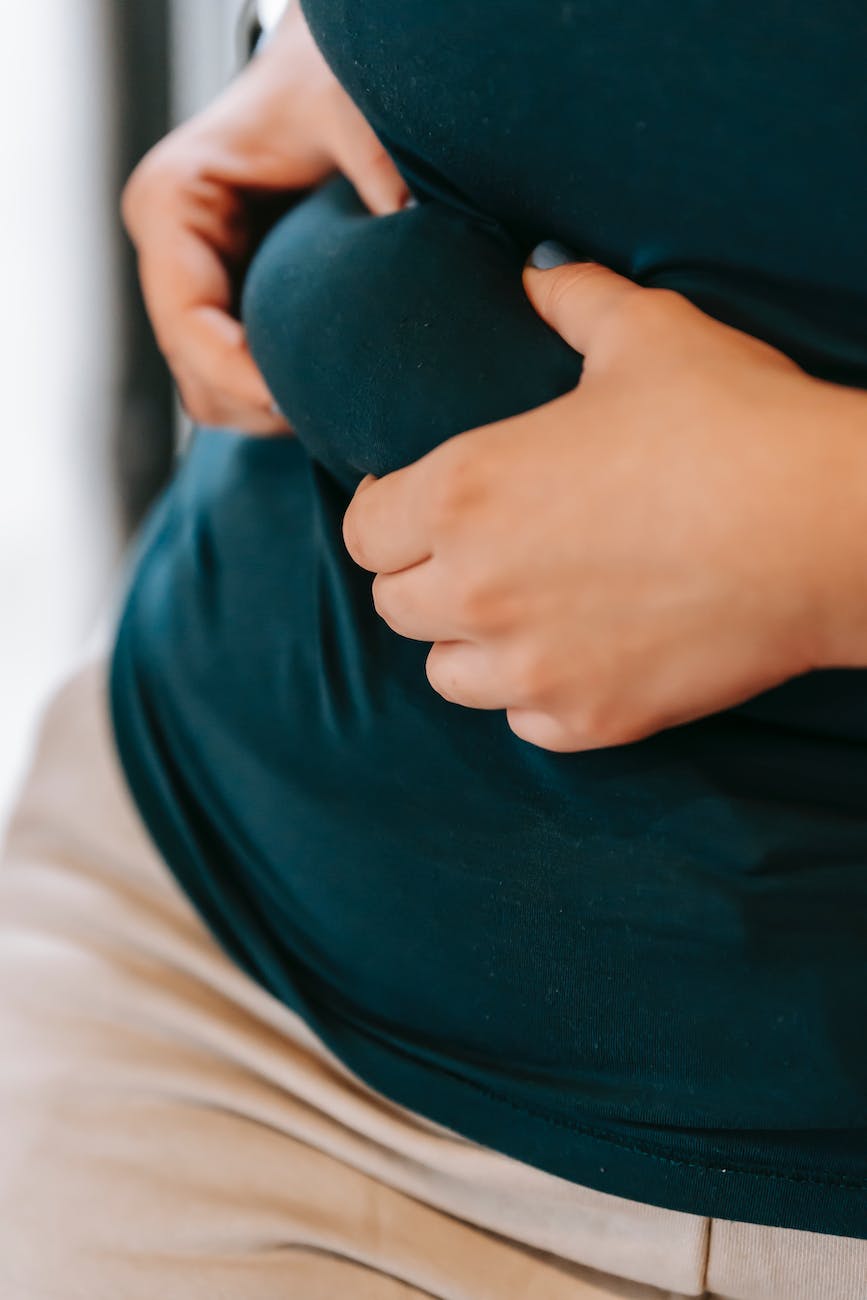
Person grabbing the fat on their stomach. (By Andres Ayrton on Pexels.com)

As a fat person, everyday I constantly battle with myself. Do I want to look flat when I go out, or show my fat? Do I want to seem slimmer, or let everything exist how it’s supposed to? Would I rather be comfortable or uncomfortable? This constant battle with myself resulted in my toxic relationship with shapewear.

Shapewear, shapers, waist trainers, and girdles: all names for a garment that comes in different sizes and shapes. This garment has multiple functions, but its most common use is to slim the body and make it look thinner, and less curvy. They can be short or long, they can come with mesh bottoms (which form the shapewear into shorts), they can have hooks or straps or zippers to close them, and they can come in different colors. 

I own five of them.

Continue reading

Fake Smile

In class, we learned about different types of labor and how shapes are body and emotions to helps us navigate the world. Karl Marx makes a good a point about how we are so alienated to in doing labor without realizing we maybe suppressing our emotions just for working and making money. Emotional labor defined by Arlie Hochschild is the management of feelings and expressions to fulfill job requirements of a job. People find a job and work to support themselves financially, even if it means expressing their true emotions. Typically jobs where you interacted with a lot people to fulfill their needs like health care jobs and customer service. Occupations like nursing or caregiving need you to take care of numerous people and cope with sickness or death on a regular basis while maintaining your calm. These jobs also require you to be sensitive and pleasant to many clients throughout a day even when you are not treated nicely. It might be more difficult to control your own emotions when you are simultaneously struggling with other mental health problems. My current job is considered healthcare and I will say my experience with job has caused me to hide more true emotions quite a lot. I have been working at a Senior Living Home as a Dining Server for about over year now. The challenge of my job is that most residents there have onset dementia like Alzheimer’s Disease. Because of this, those residents can have a hard time remembering things, thinking, and making decisions that can interfere with everyday and can cause them to get easily frustrated or irritated. I have dealt with quite of few residents who get frustrated with me and have food thrown at me because them getting irritated about something. Of course, I have to stay composed because of the sake for the residents comfort and the reputation of the business I work because if I were to lash out I feel like it would show a lack empathy or feelings towards the residents needs. On top of this, residents have other issues like hearing and eye sight problems and have physical limitations. We have to always work around and cater to these things and requires a lot of patience to deal with the residents.

one side knowledge

Before coming to UMBC, I thought that “disabled people” needed special treatment or extra help. but this changed when I came to umbc. During my first semester here, I met a paralyzed guy on one side of his body. To be exact, he has hemiplegia, a symptom involving one-sided paralysis. one day, he asked me to go on a walk, and I was very hesitant but said yes at the end. I tried to go on the most accessible walk possible, which was difficult because UMBC is very hilly and has many stairs. As we were walking, I tried to redirect the hike multiple times to make it easier for my friend. Suddenly my friend asked to go up the stairs to see the skyline of Baltimore city. At the moment, I was not sure what to say. I accidentally said are you sure you want to go. He was kind and said yeah, I like the exercise. As we slowly walked up the stairs, I noticed my friend getting out of breath. We kept going to the top, where the performing arts building was. At that moment, I realized that even though he struggled to walk, he never gave up and asked for help. I realized that “disabled people” are self-efficient and will ask for help when needed; people should not look at them any less differently because they can do everything everyone else can.


On the other hand, I was getting late at night a few weeks ago, and someone in front of me was trying to get a drink cup, and she was struggling and had dropped a few paper cup lids over to the floor. She asked me to help her grab a cup and a straw within a few seconds. I was glad to help her and help her pick up the things that fell. My idea of “disabled people” has changed over the years from wow I should be helping them all the time to wow they can do everything by themself and I should help but when they needed it. My asking can make them feel ashamed of being the way they are, but they did n

A world built for us

What would the world be like if it was built for us? The world as it is now is so unaccommodating to anyone who isn’t cis, straight, white, male, and able bodied. Whether it’s lack of gender neutral bathrooms or failure to provide disability access in stores and restaurants, the world we live in now is not built for people who don’t meet the western societal standards of what a perfect body should look and function like. That being said, why isn’t the world more accessible? Aren’t we the ones who decide how the world should work? So why is it that we continue to make these things so inaccessible when it is an easy fix? It’s so engrained in our society that this is just the way things are and that we should just accept it. It’s like the saying “if it’s not broken, don’t fix it” except it is broken and we refuse to acknowledge it. There are so many ways in which the world could be more accessible that just aren’t implemented tin the way they should be. Like why do we not have wheelchair ramps and elevators at every establishment? We could make all restrooms gender neutral as well. Small things such as this would make the world a much more accessible place for everyone to live and be happy. I guess I just don’t understand why we would go out of our way to make things inaccessible for those who need these things. Not to mention it would help everybody, not just those who you would think need it. An example would be parents withs strollers, a ramp would be helpful to them too so they don’t have to carry the stroller up a flight of stairs. Moral of the story, the world could be so much more accessible if we just decided that it should be.

“F*ck your disorder”

Photo by Darya Sannikova on Pexels.com

A few weeks ago I had a difficult bipolar/autistic meltdown that spiraled me into a dissociative state. I say bipolar slash autistic because the criteria and symptoms for both disorders overlap so much that it is nearly impossible to tell them apart within my own body at this point.  I wasn’t able to attend some of my classes for two weeks because my mental state was feeling immensely guilty about using my accommodations. Every time I typed up another email to a professor, saying that I once again had to rely on my disability accommodations, I felt my chest tighten with anxiety and guilt, as if I was doing something wrong by needing my accommodations. I didn’t want my professors to think that I was lying to get out of class to go out with my friends. To be fair I did hang out with my friends and try and do stuff during the time I had class, but everything we did was an attempt to pull me out of the dissociative state I was in. As someone who has heard numerous times that they don’t look “autistic” or “disabled”, I am aware that this is a judgment that many pass on me, and I was aware that my professors may think that as well. Perhaps out of guilt, I sent an email to my professors, explaining that I had bipolar disorder and was struggling to pull myself out of a rough episode that left me unable to even read and comprehend the readings for any of my classes. Most of my professors answered with supportive statements, validating my disability and granting me as many extensions as I needed. One professor emailed me back, ignoring the fact that I had just opened up to him about my identity, and demanded I turn in my work within 48 hours, because the accommodation guidelines offered a 48 hour extension as an example guideline. Evidently, I was not able to get my work in, because I am not able to pull myself out of a dissociative episode on command; to make it worse, when I finally returned to class the following week he spoke negatively about bipolar disorder in class, leaving me stunned and panicked. I made the rather obvious assumption that I wasn’t his favorite student. Rather than fighting with him every step of the way, I decided to withdraw from the class, postponing my graduation from this December to May. I was devastated telling my parents that I would not be graduating as soon as they thought, and I was even embarrassed, knowing that if I pushed myself I could have made it through the class. But just because you can do something as a disabled person, doesn’t mean it is worth it. I was reminded in a somewhat blunt manner that not everyone will accommodate your disability, and sometimes it’s better to give up, then to fight for your right to take a class. 

The emotional labour it would have taken for me to fight with this professor every step of the way, just to most likely pass with a C in his class was not worth it for me. Personally, I am proud of myself for knowing my boundaries and how far I can push myself. He made me feel weak and made me hyperaware of how people view me as someone who is bipolar and on the sepctrum. 

Subtle ableism is so present in today’s world that it goes unnoticed by most, unless we are directly affected by it. For me, this was an example of direct ableism, someone who would do the bare minimum to accommodate my needs, and refused to do anything more. It was dehumanizing, but it also reminded me how lucky I am to not be faced with people like him, and ableist challenges on a daily basis. Our world was not made for disabled bodies, whether it’s expectations at work, to campuses being not accessible, to the general population applying certain stigmas to disabled people as a whole. As a physically abled person who is usually able to mask their disability in public, I don’t have to constantly worry how I will make it to class on time, or if the elevator will work today, or if I will be able to make it up the hill to my building for class, and that gives me a certain privilege. The dialectic of both being disabled and abled is an interesting limbo to live in. I can’t imagine how it would be if I had to worry about physical disability on top of my ever present mental disability, still, I can’t help but wonder if I would have been treated better by that professor if my disability had been more visible.