
When I was a kid, sometimes I use to just sit there and feel myself. Not physically put my hands on myself but I would sit and think, “I am a person who is alive right now in this present moment. This is not a dream or some sort of video game but I am sitting here as a physical being. Breathing, thinking, sitting down etc.” I am glad that I finally have been introduced to a proper name for that stream of consciousness I acquainted myself with. I felt okay with being just me. I realized that I stopped this practice because I started to feel less like me and got consumed with the different roles I fit into and play in different circles of society. In some I am a child, some I’m an adult, some I’m a student, some I’m gay. Some I am a villain, some I’m a hero, some I’m gay, some I’m a black woman. As I got older I felt like there were so many labels that were plastered on me that I did not feel like a person rather a characteristic. I miss when I could just exist in my own bubble as my own entity without feeling a part of someone else’s.
Month: September 2023
Conforming


I wrote this poem when i was 17 years old. I was fed up with the judgement I received from my parents and my local Christian community that I have grown up with. I was starting to really branch out and not want to conform to the kind of culture I had been raised in. Modesty is a concept i grew up viewing as enforceable instead of insubstantial or a true virtue. Writing was something that helped me build on past conceptions.
Cover Judger
When I wear skirts that wrap tight around my waist
Or bold makeup from the top to bottom of my face
Or my Full breasts that just happen to bounce up and down while I’m on my way
Doesn’t mean you get to say whatever you wanna say
Doesn’t mean you have a right to prey
My body isn’t a show for you to watch and praise
Eyes roaming from city streets to grocery stores
Even when I show “less skin” men seem to think less is more
Every part of my body is a threat
Do you know what it’s like to not feel good in your skin and only feel regret?
Regretting the outfit you wore because you feel a man’s eyes on you wanting more, more, more
Why are cat calls normal ?
Like women don’t get raped every day and these rapists walk around these streets thinking they’re immortal
Because young men are patted on the back for the deeds of the immoral
It’s like if you sleep with a thousand women you’re a man
“Man up” they say because if you don’t show a woman who’s in control you’re less then
Boys will be boys, they respond with a smile
Because apparently the male species shouldn’t be expected to control themselves WE have to go the extra mile
Adam said “You are bone of my bone and flesh of my flesh.”
That doesn’t mean every women’s skin was made for man’s caress
Slut. Hoe. Thot.
Apparently you can tell if a woman fit those categories just by looking at her
If she’s showing too much skin, she can never be ladylike and prim
If she’s covered up from head to toe, she’s worthless, no one wants a closed show
Double standards are the essence of sexism
Instead of focusing on my clothes, what about my mind
Try noticing a human being, before thinking “this girl is mine”
A flash of skin never means permission
A touch between touch is a mutual decision
You know when your mom used to say look but don’t touch ? Now, I say don’t even look.
Woman-less Womanhood: An Experience
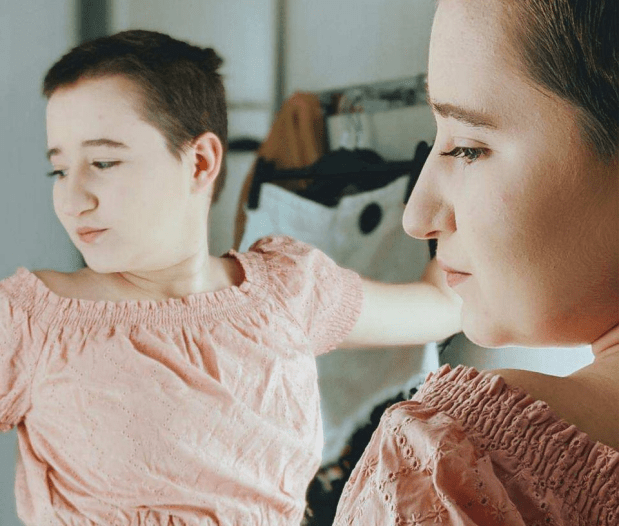
After spending a large majority of my life as a girl before not identifying as one, my relationship with my femininity is… difficult, to say the least. I was always told to “close my legs”, that I needed to shave my legs if I wanted to wear shorts outdoors. I was always expected to wear a dress for formal events, to have a quieter laugh that was more “ladylike”. I never understood why I had to do these things; what was so bad about my laugh? What was wrong about the hair on my legs? Maybe as a way to avoid these expectations that I didn’t understand, I ended up not being interested in the usual “feminine” things. I never wore makeup, never gained an interest in fashion, never got into those cheesy chick flicks that my mom liked watching. I didn’t really care about my physical appearance, and my interests were more on the nerdy side of video games or books that weren’t easily gendered hobbies.
Now, ever since I’ve come out to myself and others as nonbinary, my connection to “womanhood” doesn’t feel so alienating. I no longer feel discomfort for dressing more feminine or liking girly things. Pink is still my favorite color, just with the added pastel blue. I still like cute things like cats and plushies. My interests still fall on the nerdy side of course, but I feel more free to express who I am, despite my rough relationship with femininity. I can take up space differently without the “shackles” of womanhood, nor do I feel like I am reduced to being simply a “girl”. Of course, being a woman isn’t bad in any way; however, for me, my gender identity is a way for me to be myself, wholly and unconditionally. It’s a way for me to display my femininity on my own terms, rather than what society has told me it should be.
Rediscovering Authenticity
Upon reading Iris Marion Young’s essay, I couldn’t help but scrutinize my own life experiences through a phenomenological lens. It became evident that societal expectations had subtly shaped the way I conducted myself physically, and I began to notice instances where my actions were influenced by gendered stereotypes.
One striking realization was how I had always been somewhat hesitant to engage in certain physical activities considered traditionally masculine. For instance, I never felt entirely comfortable with sports like basketball or baseball, activities I perceived as requiring more “aggressive” or “forceful” movements. I wondered whether this hesitation was rooted in ingrained societal ideas about femininity and masculinity.
Additionally, I reflected on how, at times, I had consciously modified my body language to appear more feminine, whether in the way I walked or sat. This wasn’t necessarily a conscious choice; rather, it seemed almost instinctual, a reflex born from years of exposure to societal norms and gendered expectations. Reading Young’s essay was a catalyst for me to question these behaviors and their underlying causes.
As I continued to contemplate the impact of gendered expectations on my bodily comportment, I realized that this was not just about my physical actions but extended to my overall sense of self. I had unconsciously internalized certain stereotypes about what it meant to be a woman, and these stereotypes had, to some extent, influenced how I expressed myself in various aspects of life.
However, what struck me most was the idea of authenticity. Young’s essay illuminated the importance of being true to oneself and not conforming to societal expectations that stifled one’s genuine experiences. I began to see that embracing my authentic self, both in terms of physicality and identity, was a crucial step towards personal growth and fulfillment.
“My Personal Reflections” were not limited to introspection alone; they also prompted a call to action. I realized that understanding the subtle ways in which gendered expectations influence our lives is just the first step. The next step is to actively challenge these norms, both personally and as part of a broader societal effort.
I decided to explore activities and sports that I had previously shied away from, not because they were inherently masculine or feminine but because they interested me. I also engaged in discussions about gender and identity with friends and family, aiming to raise awareness and foster more open conversations on these topics.
Through self-reflection and a commitment to authenticity, I found the courage to challenge these ingrained stereotypes. The journey toward authenticity is ongoing, but I am now more conscious of the choices I make and the influence of societal norms on my experiences. It’s a journey of self-discovery and empowerment, one that phenomenology continues to inspire in individuals willing to question, explore, and live authentically.
The Menstrual Cycle in a Patriarchal Society
One quote that I really resonated with was in “Throwing like a Girl,” by Iris Marion Young. It says, “The female person who enacts the existence of women in patriarchal society must therefore live a contradiction: as human she is a free subject who participates in transcendence, but her situation as a woman denies her that subjectivity and transcendence.” When I first read that part, I immediately thought of the menstrual cycle and how living against it impacts us mentally, physically, and spiritually. When we bleed, we are forced to slow down, to rest, to feel, to isolate, and to reflect.
For me, I also feel more connected to nature, my intuition, and psychic abilities. So, when I get my period, I usually look forward to it because I love taking that time to care for myself. I always take lots of baths, eat good food, and sleep a LOT. In this time is where I have had most of my revelations and gotten to the truth of what I was feeling. When I bleed, I also feel what I had been suppressing all month long. In addition to this, I am extremely sensitive, and not just emotionally. I personally have sensory issues in general, so when I’m bleeding my tolerance becomes very low. Unless there is a way for me to regulate myself, I will likely get angry, and this is the case for a lot (if not most) of us.
When we do not have the means to rest and take care of ourselves, whether that be money, time, or resources, we are denied our subjectivity and transcendence. The enormous growth and wisdom we gain is often stunted because we are not in an environment that is gentle and gives us the time to rest and reflect. The biological cycle of someone with a uterus is roughly 28 days; however, we are still expected to feel and perform the same every day. Over this cycle, we actually go through four phases, and I like to think of them as the seasons: winter (menstruation), spring (follicular phase), summer (ovulation), and fall (luteal phase).
Thinking about my cycle this way helped me conceptualize my nature more. I got this idea from a book I read that changed everything for me, it’s called “Red Moon” by Miranda Gray, and it talks about the mental, physical, spiritual, creative, and sexual aspects of the menstrual cycle. After reading this book, I feel so much more in touch with my body, my womb, nature, and other people with this cycle. Now when I can, I am able to slightly adjust my schedule, so I work with my nature. And although this is great, I am ultimately restricted to patriarchal society.
Trans-cendence: a perpetual journey
I’m a trans man. I’m pretty open about this, largely because I’ve found interacting with anyone who thinks less of me for being transgender a waste of time anyways. And yet in any social scenario where I am misgendered- or even feel that I may be- I find myself obsessing over whether I “pass” for a cisgender guy, analyzing everything from my sitting position, to how I walk, to my vocal characteristics. Am I absentmindedly crossing my legs? Am I swaying my hips or portraying timid, feminine-coded movements? Is my voice going up too high in excitement?- These questions become semi-constant intrusions made all the more irritating by the fact that I genuinely don’t care. Or at least, I wouldn’t in an ideal world. For myself and several of my other transgender friends, the social aspect of dysphoria can particularly be difficult to manage. Even if you are feeling comfortable in your own skin, any stranger or acquaintance misgendering you can take away any confidence in an instant, with seemingly no set criteria for their gendered perceptions. Working in retail can especially give this effect- I’ve had experiences where one customer would call me “babygirl” while the next in line would address me as “sir”.
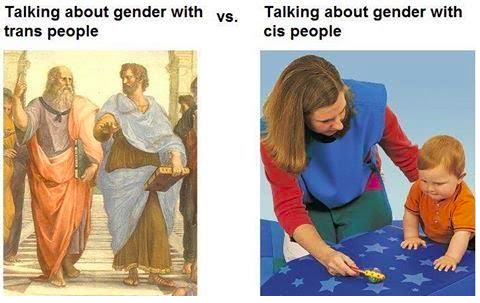
For people that don’t entirely fit in a clear gender-conforming box, we often have to over-rely on performances that feel stereotypically masculine. I’ve made a habit of manspreading when physically possible and not obstructing other’s seating. I often focus on having a confident, wide stride, especially since I’m not as tall as most cis men. In many ways, I’ve tried to unlearn gender norms that were thrust on me because I grew up as a girl. And yet, I resent having to do so- by reversing the stereotypes I adhere to, I’m just placing myself in a different state of immanence and enforcing traditional gender norms. While being seen as masculine is euphoric, performing stereotypical heterosexual masculinity can be exhausting. Sometimes, you simply want to exist. And because I am lucky enough to have mainly transgender and queer friends, I am able to have a space for existing without the burden of outside judgement. But being able to transcend beyond the roles placed early on in life and the roles you are forced to conform to is a continual process, and one that may take a lifetime. Even so, I find it a journey worth taking, especially if my experiences allow me to help others around me. The more of us are able to think critically about gendered behaviors, the more these expectations can be challenged and dismantled.
On Seeing But Not Seen
Eyes are weird. Most of us are (usually) born with two; nestled gently on either side of our noses, shaped in all kinds of ways, colors, etc. Millions of little cells working in tandem to handle the brightness, making sense of the the light waves, determining sharpness. The very complexness of it demands an entire section of our brain to develop over time! But we see things, eventually. Some of us more than others.
I wanted, at first, to write about hands, and how they guide us through space, making sense of the world in a odd way. We learn lessons (physically) about the world through touch, translating little neurons across complex wiring into feelings about something that has happened to us. Or about smelling, where the small cilia of the nose work, along those same complex wirings to give us information about the pleasant unpleasantries that come with life. But the eyes have come to be more special in my mind. They see what is meant to be experienced and relay it back two ways: the mind to be processed and the body to be judged.
I think before this class, I could not understand what Phenomenology meant. In my mind then, thoughts came first to determine the self; the body a separate process after thoughts have developed. Its then that we find consciousness! An old me might have said. Even as I sit to write this blog now, I still find myself not fully sure. But of all the many neurons working (mostly) the same across many different people, what determines the ultimate difference in experiences? Some might suggest another sophisticated science; to which I may not fully disagree. I’m saying here, that now I understand that there is much more that we learn from our bodied experiences than we give them credit for.
This course of thought, of realizing, of seeing the unseen, is a process I have been experiencing for many years now. Of becoming aware of things, of myself, of the ways my race and privileges that have mapped my path forward into a kaleidoscope of experiences. I am grateful for it, and I hope, as you age you will become grateful for this process too. This, of course, depends on how you see it.
On Conformity and Self-Policing

I am constantly policing my body. It’s as if I’m being watched at all times. I’ve been taught to hate my body, even in private. I’ve spent my whole life retransforming my face and my hair and my personality to fit some ideal. When I was younger and getting into hardcore and metal, I began changing my appearance, as one does. I wore intense winged eyeliner every day and never left the house without a band shirt on. Heavy music scenes are dominated by white men and the only other representation I saw was from cis white women. Being brown and queer in that space, I felt uninvited. The way I inserted myself was by constantly presenting myself as belonging. I felt like I had something to prove. Without my gear, I was invisible and my passion for music was unconvincing. I was dressing the way I thought I was supposed to in order to seek that validation. My self-esteem was so reliant on the way I presented myself because I attached so much meaning to my appearance.
It was even more confusing to feel so unaccepted and alienated from my own community for being a “black sheep.” I was being ridiculed by my family and judged by strangers who didn’t think I belonged in the scene. How many times can a teenager be forced to “name 3 songs” by creepy middle aged men? The insecurity and trauma of being a queer POC in the heavy music scene made it necessary for me to police my clothes and my appearance every single day to ensure that I was conforming enough.
Slowly that started getting exhausting to keep up with. For most people who dress alternatively, it feels liberating. For me, it often felt forced. It felt like a loss of self when I slowly transitioned away from that constant performance. It was hard and weird to detach from that. I had aligned my worth to my appearance after fighting so long to prove to myself that I belonged. I had to relearn my passion for music while discovering what it meant to just exist in my body. I still enjoy dressing the part and I will never stop flaunting my collection of band tees, but I no longer feel such pressure to attach my identity and interests to my appearance.
And even as I am just existing, my identities still cause me to police my body. A while ago I was perusing some street shops when I decided it would be funny to walk into a store I had previously had a weird experience in. The first time I went there the owner followed me and my friend around and surveilled us to the point where we felt too uncomfortable to stay. So this time I wanted to see if it was the same. There was an old white guy in there whose eyes would not stop tracing me. My brain was racing trying to figure out why he was staring in disgust. Is he being creepy? Is it because I’m a brown feminine presenting person in a Bad Brains shirt? My intersecting identities made it impossible for me to decipher why this man was making me feel so uncomfortable. My prior experiences with these types of stares instantly brought me fear and confusion and anxiety.
For people like me, it’s hard to navigate self-discovery in a space that doesn’t always accept you. It’s even harder when you do find yourself and still have to reckon with the fear of safety because of it. Finding good representation of queer folk and POC making waves in hardcore was a game changer for me. Seeing myself in them affirmed my new embodiment. All I know is that I have nothing to prove and my body is not an exhibit to be scrutinized.
Fear Of Failure
As a child I always had a fear of failure. Coming from a family that didn’t have much early on, I was conditioned to work hard towards my goals because of the expectations set above me. My parents have always been hard working thus the same teachings and conditions were set on me. I like to think of it as a hustler’s mentality. People of color in this country are often more challenged by society as a whole, thus my parents were very much strict and disciplined early on like some if not most foreign households. Their experiences as people of color molded them to be of hard-working class that caused them to pass down those same ethics and beliefs of struggle and success down to me because of societal pressures, borderline phenomenology.
They held me to high standards that made me feel like failure wasn’t an option. Back then I couldn’t afford bad grades or get in trouble because there would be some clear consequences which at that time made me feel confined in a box because I couldn’t just slack off and what not like other people who were more privileged could, especially with the pressures and constant distractions of society back then. That alongside with personal issues I had going for me at the time, led to a lot of pent-up frustration causing me to look a different way, act a different way (Nonchalant etc.) and think the world was against me because I had too many factors going against my favor (intentionality). Wouldn’t say my story is just like everyone else’s but it is relatable. Furthermore, I was always taught to go hard or go home, so that’s what I did with everything, fights, arguments, school, relationships, jobs etc. In the end as an individual, my experiences (Phenomenology) led by this social structure molded me to have thick skin to the point where nothing really affects me anymore, which is relatable to a lot of men and how they are programmed to physically and mentally endure certain trials and tribulations.
For me it all reverts back to my fear of failure, weather it’s not getting the right grades, having test anxiety, not be an outstanding individual, not being the best that I could be, being ignorant towards a lot of things and other stuff that this society brings and faults that other men might not want to be able to express, which now leads me to strive to be the best that I can be. For me a lot of things have changed during my years, I’m more of an open-minded person now than I was before, less ignorant & more conscious; just better overall as I continue to grow. I sympathize with people going through things now a days to the point where so far, I’ve had like seven people (male & female) tell me personally that I should be a therapist. It puts a smile on my face every time I hear that because who would of thought that someone like me could feel for and be integral in someone else’s struggles. I’ve always been aware of people while having good senses to read people and help guide them through situations as I get satisfaction from motivating and uplifting people.
Finding Your Voice as an Introvert
Do I really have the loudest mind?
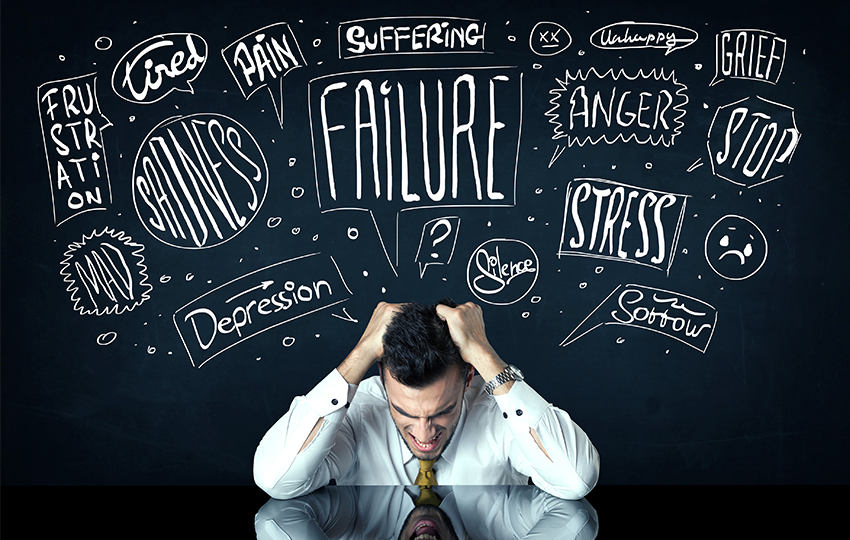
As an introvert, navigating conflicts and hurt emotions can be tough. For the longest time, I handled such situations in a very different way, withdrawing and cutting off communication with the person who had hurt me. I often blamed myself for the situation, making it even harder for me to confront the person who had hurt me. However, I soon realized that this way of handling hurtful situations was not healthy or sustainable. If I didn’t express how I felt, and instead held onto those feelings, it could lead to anxiety, depression, and stress. It was crucial for me to give myself permission to feel and process my emotions in a healthy way.
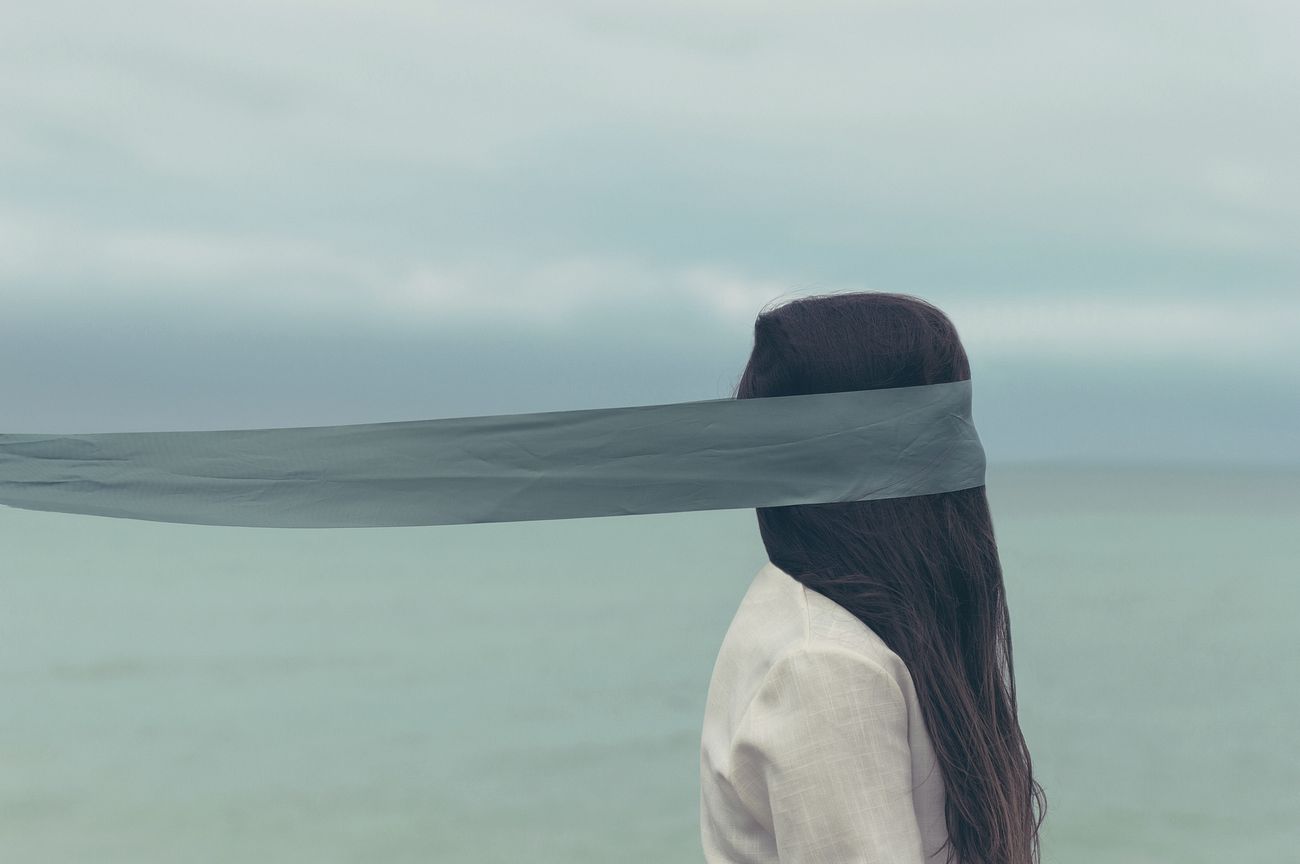
Discovering my voice as I journey ahead ………!
While it was uncomfortable, I began to approach situations with clarity, trying to be clear and direct about how I felt and why. It can be challenging to confront someone who has hurt you, but it’s important to remind yourself that in doing so, it can be a healthy and constructive way to resolve conflicts. I learned to stay calm and focused during difficult conversations, so that I could maintain a respectful and constructive dialogue.
By being open to feedback and listening to the other person’s perspective, I found it helpful in promoting understanding, which indeed led to positive resolutions. Sometimes, however, the person’s behavior continued to be hurtful or harmful, and I found it important to set boundaries or distance myself from the relationship to take care of my mental health. It took time, but I learned to prioritize my well-being and communicate my needs effectively.
I finally found that it was okay to make mistakes, approach situations with patience and forgiveness, and navigate my relationships and emotions as an introvert. Ultimately, expressing my emotions and talking to the person who had hurt me, while difficult, led to positive outcomes and improved my relationships.
As an introvert, it’s normal to have difficulty navigating conflicts and hurtful emotions. But with practice, expressing emotions and processing feelings in a healthy way can bring great positive effects to our lives. By giving ourselves permission to feel, reaching out for support, and approaching difficult conversations with clarity and focus, we can improve our relationships and promote our mental health and well-being.

