
Job Prospects & Embodiment

I grew up with a very laid back mom.

Read more: Job Prospects & Embodiment

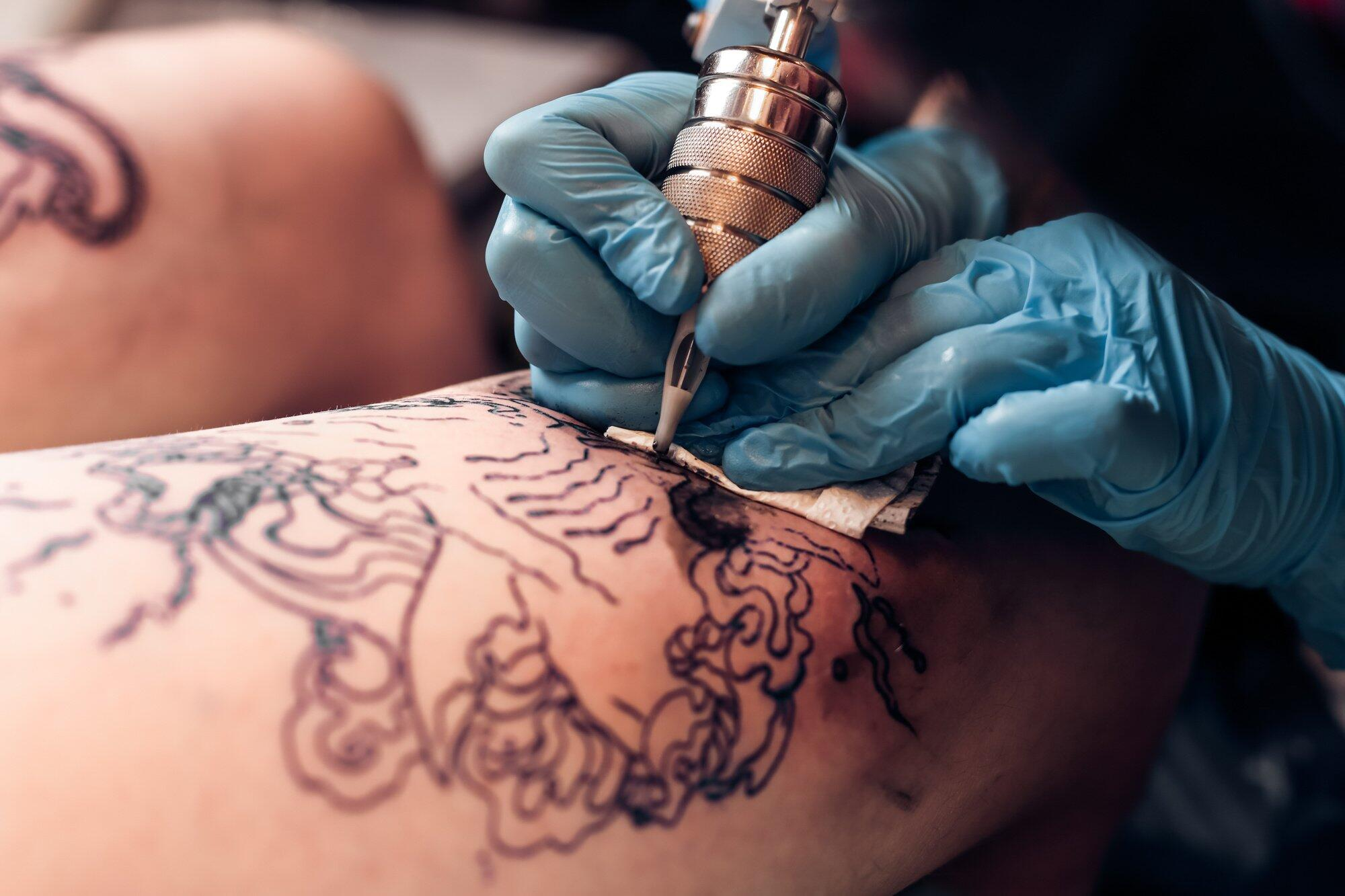
She allowed me to gauge my ears in middle school, and I got my first tattoo, a large forearm piece, in high school (which I do sometimes regret). To this day, I still seek out that thrill of body modifications. It was yesterday that I stretched my ears to the next size up, 9/16″, just a few away from my goal of 3/4″. I have a helix and some facial piercings, and I only plan on getting more. The same can be said for tattoos. I have a list of ones I want, and my following list on Instagram is filled with artists who I want flash pieces from.

Some people ask about things like professionalism and job prospects with my visible tattoos and stretched ears, but at the end of the day, it’s all me. I don’t want to let some corporate entity control how I feel most at home with myself. I’m realizing more and more as I grow into myself that there are so many things that are inherent to me as a person, and tattoos and piercings are some of those things. They’re a part of my identity at this point. They’re how I embody myself.

All of that is to say, I think there is an art of making yourself your own. Creating your body and molding it how you please is a part of the human experience. It isn’t just our limbs that are extensions of ourselves – hair, mobility aids, tattoos, piercings, surgical scars – they’re all extensions of who we are. Piercings and tattoos are how I express myself, and my gender as a trans person. I am reclaiming a body that, as an AFAB individual, has been claimed by society.

There are a lot of ways people make their bodies their own. I think it’s very human, and very beautiful (regardless of job prospects).
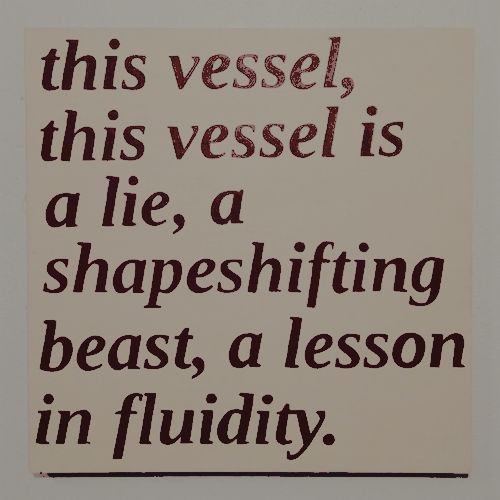
Piercings

When I was eight, the first piercing into my body was for a ritual, a gentle whisper of tradition inscribed on the skin. Or maybe these were the things little girls did, bearing a tiny badge of belonging. I didn’t question it, didn’t need to. It fell into the soft quilt of childhood.

At twenty, a sharper needle danced across my skin: a second lobe, a nose ring, a tragus. These weren’t whispered rites; they were restless proclamations. Boredom had seeped into my bones, and the sting of metal felt like a remedy, a spark against the dull ache of routine.

But the tragus rebelled, itching, and inflamed, and was eventually lost, snagged in the tangle of intimacy during a hug. A small casualty, nonetheless one that left its mark within memory memory of touch and unintentional loss.

Now, they hang silent companions. Some days, they feel like artifacts of whimsy I can’t quite justify. On other days, they’re ornaments of a self I’ve grown to understand. Mistakes? Maybe. Or maybe they are just chapters, stitched in by silver and steel, each adding texture to the story I wear.

The Alchemist’s Anger

The Alchemist’s Anger

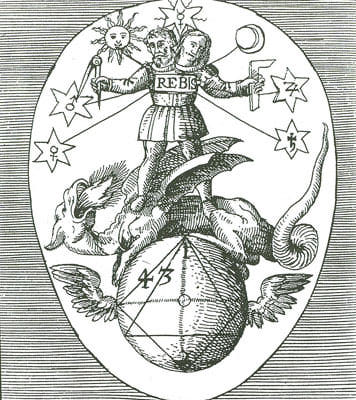
The current image has no alternative text. The file name is: rebis_theoria_philosophiae_hermeticae_1617.jpg

The Rebis

Alchemical perfection — An Alchemist’s Magnum Opus

After one has gone through the stages of putrefaction and purification, separating opposing qualities, those qualities are united once more in what is sometimes described as the divine hermaphrodite, a reconciliation of spirit and matter, a being of both male and female qualities as indicated by the male and female head within a single body. The sun and moon correspond to the male and female halves, just as the Red King and White Queen are similarly associated.

Upon reading Susan Stryker’s “My Words to Victor Frankenstein” I reached enlightenment. She blessed me with an epiphany that had evaded the capability of language.

She starts by breaking down the monstrosity of the transsexual in extremely profound ways. “The transsexual body is an unnatural body,” she says, “…It is flesh torn apart and sewn together again in a shape other than which it was born.” I have been hyper-fixated on this concept since discovering my own transsexuality and I could not agree more. But much like transgender is to transsexual, why not push the boundary further? Why be unnatural when you can be supernatural? Preternatural? Extraordinary? To augment oneself to perfection. To reach a level of divinity only capable through self-made creation. This is where my love for the alchemist began. 

As transsexuals do we not toe the line between scientists and sorcerers, ever in pursuit of physical perfection? To transform one substance into another? Matter cannot be created nor destroyed but it can be transmuted. We become monsters, or in Stryker’s explanation, heralds of our own extraordinary creation.

While carving, sewing, and transforming your body is perhaps the closest to divinity I can imagine, there is always the scrutinizing eye of the world upon you. In embodying what lies beyond the realm of normalcy comes the onlookers probing for answers. To be transsexual is to be spectacle – for better or for worse. You walk through the world always on display, always looked at but never seen; this is visibility versus legibility. In the space between the two, I find my transgender rage. Always listened to, but never heard. Always known, but never understood. In this violence, I find my transsexual body an abject one constrained by the world’s subjectivity and “…limited by its signification.”

I could spend forever talking about what enrages me about my own transsexual embodiment, but I’d like to end on a positive note. I am a monster in all aspects and retellings of the word. But I am a monster of my own creation. In some strange way, I am both Frankenstein and his monster. Creator and created. Alchemist and Rebis. And I will continue to create. 

The Privatization of Dance: Examining the Dallas Cowboys Cheerleaders

As we discussed sporting bodies, there is an overarching understanding of how factors like race and gender prescribe certain bodies to sports, in which industries and society deem who can and can’t participate. With this, something that continued to infiltrate my mind was the occurrence of the privatization of sports. This can be attributed to the dance industry, which determines who can and can’t participate through various factors such as race, class, sexuality, and gender. A noteworthy example of this could be considered within the Netflix docuseries, “America’s Sweethearts,” about the Dallas Cowboys cheerleaders, which displays how dance is privatized and systemically pushes certain people out while keeping others in. 

In my experience as a competitive dancer, the aspect of having money is one of the largest barriers to becoming a successful dancer. You have to be able to afford the costumes, the shoes, the uniforms, the makeup, and the classes. And if you want to get ahead, you have to be able to afford the private classes and the fees that come along with being on the competitive dance team. Consequently, the dance world is not the most diverse, and there is still a severe lack of effort in considering dancers who don’t fit the mold of able-bodied, white, thin, and wealthy. 

You even see it in “traditional” dance attire. You know those pink tights and pointe shoes that everyone correlates with ballet, even sometimes referencing the color as “ballet pink?” That color is intended to match a dancer’s skin tone, to make their legs appear longer on stage. The problem with this, however, is that not everyone has a pale skin tone. This alone is enough to understand why dance is so privatized—to keep certain people in and certain people out. 

Throughout the Netflix show, the viewers see how these women are expected to be classically trained to a high standard, have the most expensive costumes, have all the necessary equipment to upkeep their hair and makeup, and maintain particularly expensive diets, all for the sake of the chance of auditioning to make the team. Here, it becomes clear that there is an obvious class barrier to getting on the Dallas Cowboys cheerleaders, as all the mentioned aspects cost extensive amounts of money. Of course, this is only further complicated when we think about who is barred from gaining access to wealth. Additionally, the Dallas Cowboys Cheerleaders, in adhering to Eurocentric beauty standards, tend to prioritize thin-white women to upkeep their identity as “America’s Sweethearts.”

Thus, I find that the Netflix series about the Dallas Cowboys Cheerleaders provides a prime example of how dance is privatized. While you might not see it from outside of the dance world, the show gives some insight into how the dance industry has become dominated by wealthy white people. Ultimately, as made clear by this series and the industry as a whole, dance is privatized to avoid being accessible; only certain types of bodies are welcome, and only certain bodies can be seen as “professional” dancers.

an open letter to my reflection

To my reflection,

Our relationship has been rocky for the past 22 years, to say the least. Some days, I see you and I smile. I stop and admire the little things about you. Sometimes that admiration stays, feeling like how a breeze feels on a warm summer day. Sometimes is not all the time. Most days, I see you and I want to cry. The little things I once admired have since disappeared, and the comforting breeze on that warm sunny day has turned into the searing gusts that cut my skin and leave me raw. These days are much more frequent. More often than not, when I pass you as I leave for the day, making eye contact with you is impossible. I avert my eyes to avoid the death by a thousand cuts that I know will ensue if I stay with you for too long.

I don’t know what its like to be comfortable with you. To be happy with you. To be secure with you. You have caused me endless tears, endless confusion, endless dread. What is it like to look in the mirror and feel completely and fully affirmed by you? Has anyone ever felt that? Or am I chasing a mirage, a confidence that will never truly be achieved by someone with a human brain and human body?

I hope that one day you and I will make amends. Maybe one day the gusts will turn into breezes, and my cuts will heal.

Until then,

S.

Understanding Privilege

As a cisgender woman, I’ve grown up aware that my body fits the societal norms laid out for me. From an early age, I was taught that my body should look and act a certain way, especially in sports. While I’ve had access to opportunities and acceptance in athletic spaces, I’ve come to understand that this isn’t the reality for everyone. Transgender athletes—especially transgender women—face barriers that often seem impossible to overcome.

Read more: Understanding Privilege

In the article, “Beyond Physiology: Embodied Experience, Embodied Advantage,” Torres et al. delve into the challenges transgender athletes face. They show how discussions about their participation in sports are often reduced to debates about physiology, particularly for transgender women. These athletes are often subjected to scrutiny about their bodies, which overshadows their identities. The article highlights not only the social and political hurdles they encounter but also the privilege cisgender athletes like myself often take for granted.

Reflecting on my own experience as a cisgender woman in athletics, I realize how much privilege I carry. My body is rarely questioned or scrutinized in sports; it is accepted without hesitation. I’ve been able to compete without worrying about being excluded or misgendered. In contrast, transgender women often have to fight for the right to compete—against opponents and, more often, against institutions that marginalize them.

This constant fight can take a toll, and creates mental and emotional barriers. It’s not a question of whether they can succeed in sports but whether they’ll even be allowed to try. Recognizing my privilege as someone whose body aligns with societal expectations reminds me of the need to advocate for more inclusive spaces in sports, where everyone has a chance to thrive without fear or discrimination.

Bulls***

Growing up in a conservative religious private school meant living in a world defined by strict rules, firm expectations, and little room for personal expression. Dress codes dictated what you wore and skirt lengths, hairstyles were scrutinized, no colored hair was allowed, and nothing outside of the “norm”. Don’t draw attention to yourself, don’t be flashy. Uniforms were standard, carefully regulated, and even the smallest deviation, like an untucked shirt or non black/white shoes, led to disciplinary action. For me, this pressure to conform wasn’t just about what I wore but how I was supposed to think and behave. It was about control. For others, these cookie cutter rules shaped a happily structured and obedient lifestyle. Just fall in line and do not ask questions.  Questioning authority was frowned upon and individuality was seen as “rebelling”or “ungodly”. Creativity wasn’t necessarily celebrated unless it fit the standards deemed acceptable by the school. 

Piercings became my way of saying no to rigid expectations and finally saying yes to my individuality. My first piercing wasn’t just about aesthetics but making a statement. As I continued to push the limits, getting more earrings/piercings, gauging my ears, and coloring my hair the more disapproval I was met with. But for every reprimand, uniform violation, lunch detention, and the more I was told no, the more I wanted to push the limits! Soon it was not just the school who had a problem but my family as well. I didn’t care, nobody, not even my family or god, was going to tell me who I can or can’t be. I am my own person.

At first glance, a piercing might seem like a small thing but all 20 of my piercings carry an emotional meaning. They’re milestones and reminders to continue to be myself and to never hold myself back; they’re a part of me. I still remember very vividly when I got my septum pierced and my dad texted me a picture of a bull. It was meant to insult me but I took it as a compliment. What’s wrong with being a bull? They’re strong, tough, resilient and often symbolize the ability to stand tall in the face of adversity. Remember, the only person who can grab life by the horns, is You.

Becoming Whole In a World of Fragments

Reading Sandy Stone’s “The Empire Strikes Back: A posttransexual manifesto” felt like stumbling upon a secret I didn’t know I needed. One quote stood out to me, almost as if it were waiting for me to see it:   “This paper…is about morality tales and origin myths, about telling the ‘truth’ of gender.”  Stone is talking about the stories society tells us,stories that claim to be the “truth” about who we are, even when those truths don’t fit us. For trans people, these stories are often used to deny their identities or paint them as something artificial. But the idea of being trapped in a story that isn’t your own? That resonated deeply with me.  I’ve lived my whole life caught in a story that I didn’t write. It’s the one that tells me I’m not enough. Not pretty enough, not confident enough, not “worthy” enough. I don’t even know when it started. Maybe it was growing up surrounded by images of perfection I could never reach, or hearing the subtle ways people praise others for what I always felt I lacked. Over time, I internalized it. It became my “truth.” Stone’s words reminded me that these stories aren’t real, they’re constructs, born from societal expectations, comparison, and insecurity. They’re myths, handed down to us as if they’re fact. And just like Stone argues for trans people to reclaim their narratives, I feel like I need to do the same for myself.   But that’s easier said than done. When I look at others, I see their beauty, their confidence, their ease. I convince myself they’re everything I’m not. I’ll scroll through social media, comparing myself to images of people who seem flawless, wondering why I can’t see myself that way. I’ve spent years trying to measure up to a standard I never set and every time I fall short, it reinforces the idea that I’m not enough.   What Stone helped me realize is that the only person who can rewrite my story is me. I don’t have to accept the idea that my worth depends on how closely I resemble someone else. My value doesn’t come from meeting some impossible standard, it comes from being me.  That’s not to say it’s easy. Some days, I catch a glimpse of my own reflection and think, “Maybe I’m not so bad after all.”  But other days, the old voices creep back in, whispering that I’ll never measure up. It’s a slow process, unlearning the lies I’ve believed for so long.   But Stone gives me hope. If it’s possible to challenge something as deeply rooted as society’s myths about gender, then it must also be possible to challenge the myths I’ve told myself about who I am. It’s not about becoming someone else, it’s about learning to see myself clearly, without the noise of comparison and doubt.  I’m not there yet, but I’m starting to believe I can get there. Little by little, I’m learning to let go of the story that says I’m not enough. And in its place, I’m beginning to write a new one: one where I see myself as whole, just as I am.  


Empowerment, Inspirering

2024, the Ying Yang year ☯️

2024 will go down as one of the worst years of my life.  This year consisted of some serious low, lows and high, highs. My biggest battle this year was the battle I had within myself. This past school year was rough. But, this specific semester was the hardest semester I have ever had. Juggling three jobs, six classes, grieving the loss of family members, learning how to learn about my adult body, and everything else in between has seriously been so hard. I’ve explained in previous posts that your twenties are the hardest and I will forever stand on that. I’ve never experienced so much sadness and trauma ever in my life until I entered into my twenties. Grieving the loss of a parent who is still alive is also another pain I never thought I’d endeavor. Everything has happened too fast and I’ve only been in my twenties for four years. When I was a kid I would fantasize how perfect my life would be when I reached the ages 20-25 and so far those have been nothing short of challenging. It’s hard for me to talk about my life without being so dark but I don’t need to sugar coat the things I’ve gone through nor want to ignore those points in my life because I know that those hard times were only part of the process of preparing me to be a better and stronger human. 

Though this year was the hardest, this year has taught me so many things that have helped shape me into a better person. I have grown so much in many different aspects, that almost the things that happened this year were meant to happen. During this year I’ve had the opportunity to learn how to prioritize my health and wellness, by noticing the changes within my body. I’ve learned how to prioritize my mental health. I’ve learned how to create boundaries with people even if that meant bonds would be broken. I’ve learned how to stand up for myself and to not feel guilty for standing my ground. I’ve learned how to properly love someone and to be loved. I’ve learned that having empathy is a strength rather than a weakness. I’ve learned that achieving big goals means that achieving small goals comes first. I’ve learned that everyone has different perspectives on things, and that’s okay. I’ve learned that people are not always going to agree with what you agree with, and that’s okay. I’ve learned that the things I love about myself are not going to be loved by someone else, and that is okay. I’ve learned that what I love about myself and my body only matters to me and to not give a damn what someone else thinks about me. And most importantly I’ve learned that the hardships I’ve encountered have only shaped me to learn more about myself, and to love myself wholeheartedly.

Truly and fully accepting the good in the bad, and the bad in the good in my 2024 yin yang year.