A Modicum of Power, Respect, and Autonomy

Within the strictly imposed, purposeful, and artificially manufactured hierarchy of our society, the term ‘power’ consists of numerous meanings. The first definition that most think of is how, in many settings, power is about dominance, control, authority, and oppression. It is a matter of commanding people how to act, what to look like, and where to place one’s body. This is presumably the type of power that most incites the oppressor or the privileged to fear any semblance of gain from oppressed groups, as one’s acquisition of power is identified as something that only happens at the detriment of another’s. It is as though some are terrified that they will be unable to impart shame, terror, disdain, or indifference if those they subject to such tools of oppression and control have enough power to refute their efforts. When someone places themselves wherever they choose, exists in a body that defies social norms, or performs actions that are implicitly or explicitly forbidden without politely carrying the emotional or cognitive burdens for others’ comfort, the power dynamic experiences a significant shift.

Perhaps this view of power, as if it is a finite resource, is why our society so carefully enforces arbitrary rules and prioritizes those who can embody them. One can see this when Roxanne Gay is shouted at by a stranger who feels entitled to comment on her body, when civil rights protesters are subjected to horrific violence for challenging atrocious laws and attitudes, when the demands of disabled protestors to attend the activities of everyday life are ignored, and when incarcerated people are forced into appalling conditions. The same message applies: if we cannot control every aspect of your physical being, we will at least attempt to control our view or knowledge of your presence. 

In parallel, power can be regained by the supposedly powerless in many ways, such as when one reclaims one’s autonomy and refuses to accept, either internally or externally, the disrespect one has been bestowed. What is power, if not the presence of respect? What is power, if not autonomy over oneself, and even over others? Power is in the ability to go on with one’s day without being harassed and criticized; it is in the circumstances that allow one to move about the world freely, without social or physical barriers; and it is wholly anchored in the presumedly simple concept of peacefully living one’s life however one chooses. Why should one not have the opportunity and ability to determine one’s own life as much as possible in one’s circumstances, with as few barriers as possible? One should further ask oneself, why is seeking oppressive power over others normative and incentivized, yet the simple request of wanting to be seen and treated as human is consistently dismissed as grossly idealistic?

Disability and UMBC

When talking about disability justice, we must reflect on the systems in our everyday lives. UMBC is a good place to start.

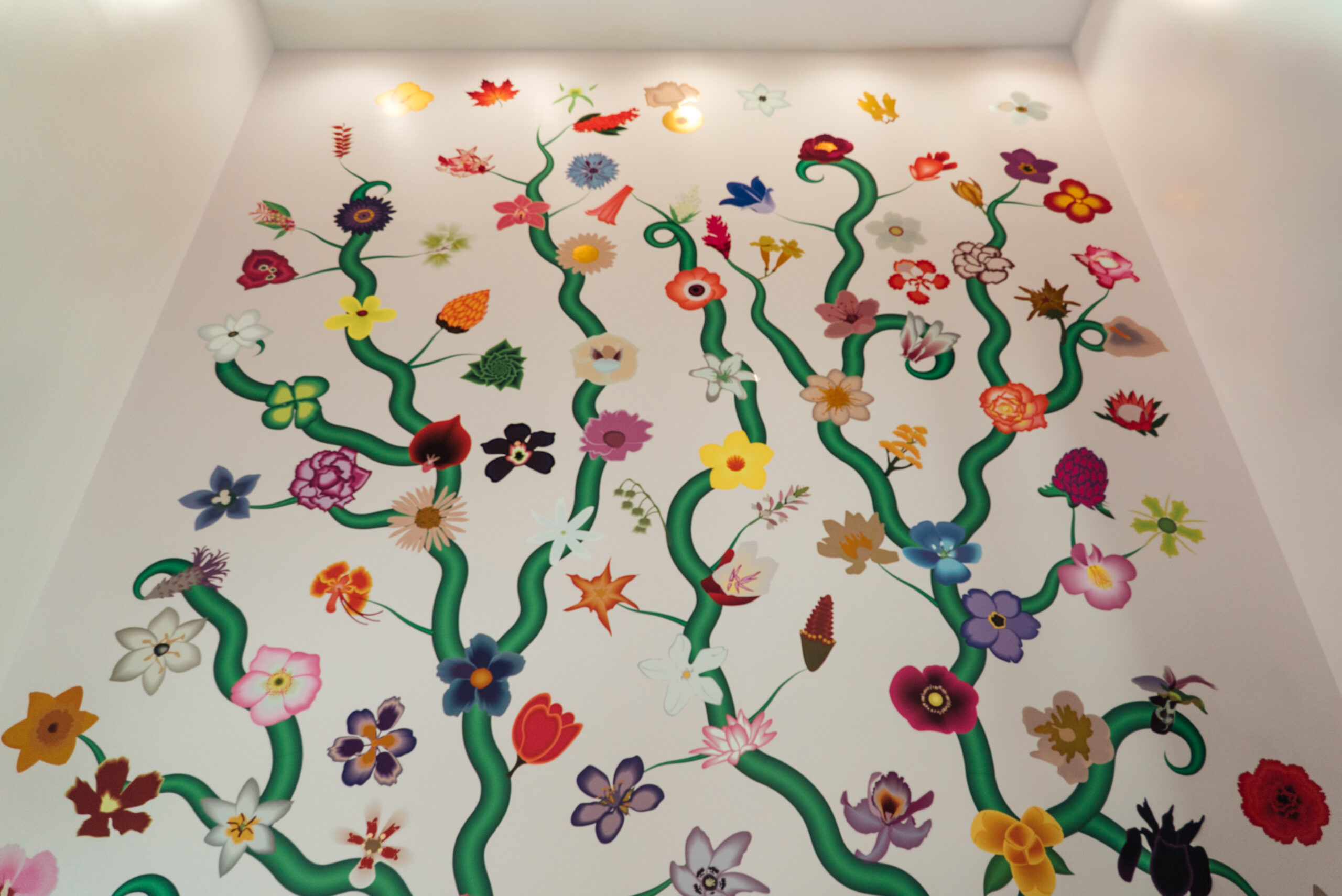
This is the “Inclusive Excellence” art from one of the entrances of the UMBC Commons

UMBC is a very diverse campus. A large portion of the student body is international students, and statistically speaking, a significant number of students at UMBC are disabled. When UMBC brags about its campus inclusivity, it makes me pause. UMBC misses the mark consistently when it comes to accessibility and inclusion of disabled people.

The accessible routes are long, often involve hills, and are mercy to whether or not a door opener has been fixed in time. There isn’t live captioning included in events, even though it would be an easy way to include Deaf and HoH people, people with auditory processing disorder, brain fog, sensory sensitivity, and those who English isn’t their first language. The campus activities include a consistent rotation of bingo and karaoke. Bingo would be very accessible for anyone to participate in if the event organizers clearly displayed the letter and numbers called on screen, but I have never seen any of the campus event organizers do so (correct me if you have). Karaoke at least has lyrics on screen most of the time, which fulfills a small portion of the live captioning need.

When it comes to simple, obvious things like these, I can’t help but feel angry. In most cases, I’ve found that what’s even more uncomfortable to nondisabled people than a disability advocate is an angry disabled advocate, so the anger doesn’t help. When I’m not angry, I’m tired, and either way, I am the one experiencing mental and emotional strain while the people in charge of whether or not all students should have access to events still do not care. It is 2025, do not bullshit me, you know you should have captions on screen. And it pisses me off to no end when an organizer says that the disabled person has to email the organizer in advance if they wanted that. Every student should have the opportunity to look on myUMBC and decide in the moment whether or not they want to spontaneously go to an event. No student should have to warn the event organizer that they’re coming just to participate. Disabled or not, UMBC takes the tuition payments all the same.

Special shoutout to the sunflower training program. It’s not that I think the training shouldn’t be there. It should, and I’m glad it is. But there are things that should obviously be made more accessible on campus that the office has not fixed, and getting accommodations from this office can be such a dehumanizing process. One of the people from this office proceeded to be ableist and all around awful while having this sticker in their email ending.

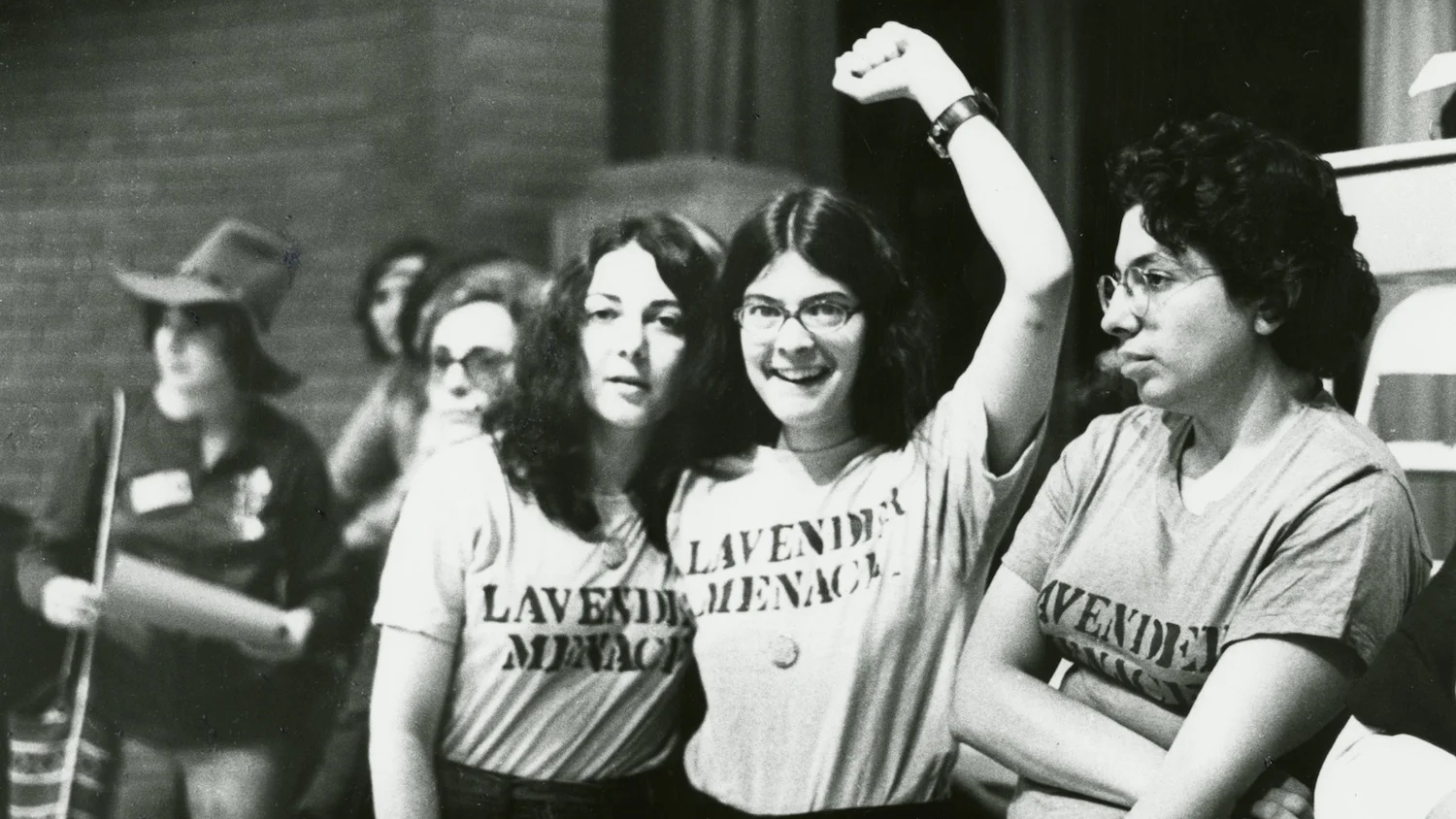
Lavender Menace

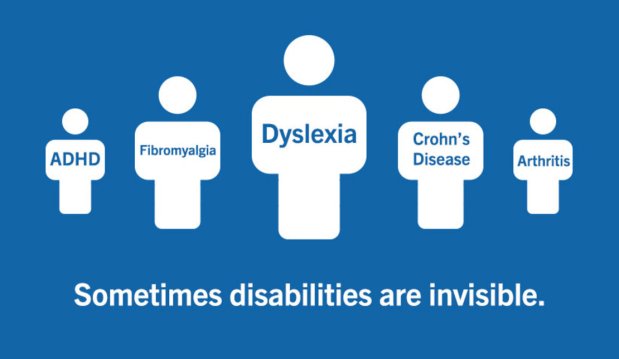
Invisible Disabilities

Invisible Disabilities

ng disabled in any contact in a non disability friendly society is hard. I would be classified as having a disability that is not visual.  I have learning issues and was born with medical issues to the point of needing a liver transplant at the age of 2 and needing my spleen removed in 11th grade in 2013. This is not visible but due to these health issues I have always been behind my grade level. As for many if not all people who have any type of disability, people tend to give you “pity” or praise for doing the simplistic things.  Although most times it is people trying to be nice it is dehumanizing and hurts/irritates me and many others. The documentary we watched is nice being able to have somewhere to go where you can be yourself since when you are disabled you are often not allowed to have the same things or experiences the same thing as a “normal” person. As for myself not having a visible disability I was not shield from these opportunities but at same time this is complicated because it was not as noticeable I was not offered the help I needed when I was young would never really get much help until I was in my late 20s when I had advocated for myself it even still I feel I am not completely diagnosed therefore do not get all the help I need but i have unfortunately accepted I will never be able to truly know what it like not to struggle so much intellectually, mentally or physically. 

Even with my accepts of my situation I think it is important to unite together to change things for the better for the next generation, like how they did in the video the civil right activist and black panthers helped those in the disability rights movement because they both had a goal in common of wanting to be treated equal and treated like human bringing and not monsters who are less then.

Body Comfort

I can’t remember the last time I truly felt comfortable in my body. I’ve always had a lot of issues with how I looked and how my body was. I was very skinny in my early years in elementary school where I did Tae Kwon do which had a lot of conditioning and exercise that kept me “in shape”. After that, middle school and quarantine were spent sitting in a chair for what felt like days on end just eating and eating. I never even realized it until someone mentioned it offhandedly and I looked down and didn’t like what I saw. One of the quotes that really stood out to me from Roxane Gay’s “My Body is A Cage of my Own Making” is when they say “Feeling comfortable in my body isn’t entirely about beauty standards. It’s about how I feel in my skin and bones”. After gaining a lot of weight into high school, my body ached. Everything was slower, I felt like my feet were so heavy and every step I took hit the floor harder than I wanted it to. With activities, I started to feel better about myself and my body, losing the weight that I had put on before but injuries riddled my life until I was practically forced to quit. See, I’m hyper flexible but what they don’t tell you about hyper flexibility is that it just means you can be comfortable in a position that puts your body at risk of injuring itself. At every moment, I was either not happy with how my skin folded over itself and how I looked in the mirror or not happy that I couldn’t do any more because of my injuries. At one of the meets, I was slammed so hard on the ground that my lower back muscles spasmed and I was couch ridden for two days. It was getting harder and harder to become comfortable in my own skin. I never even realized that at the end of the day, as hard as I worked and worked and overworked my body into the ground, I was never going to be happy.

I trapped myself in this cycle of hating my body so I try and work until I’m finally happy until my body gave up on me and then I hated it again. I like to think that I’ve finally learned how to accept and love my body but to be honest, It’s still a process for me. I still wake up and look in the mirror to see my progress and I still always skip breakfast, even if it’s bad for me. Until I finally free myself and love my body the way that it is, I will always look in that mirror hoping for this perfect body that I don’t even know if I can attain. Day by day, I will work towards loving myself and my body but until then, breakfast is overrated and it being the most important meal of the day is a lie.

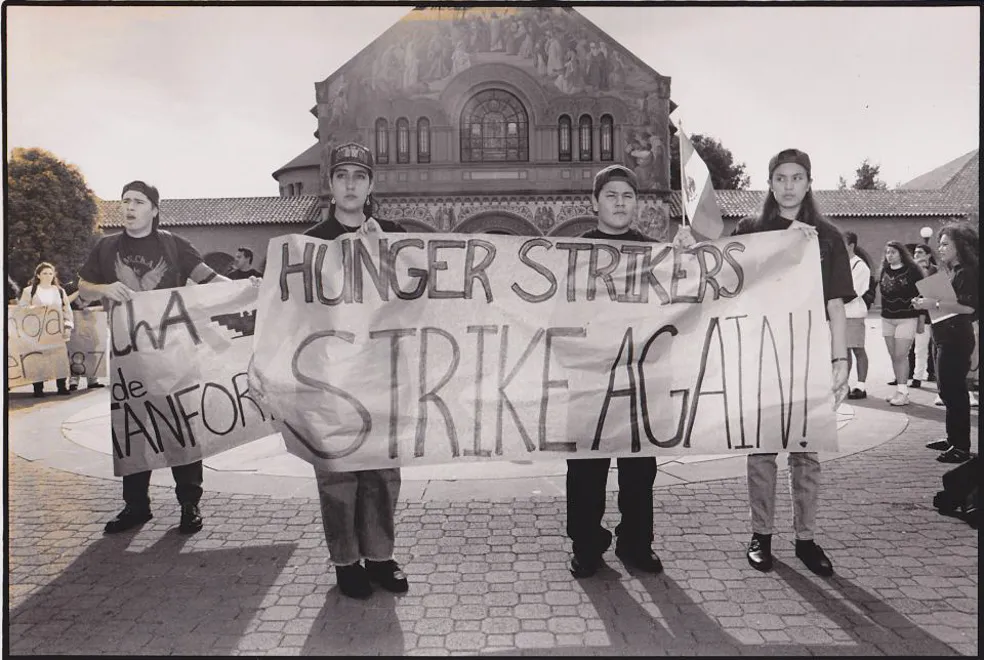
Hunger strike for the evening

A hunger strike — what is it exactly? According to Google, it is “a prolonged refusal to eat, carried out as a protest by a prisoner.” I find the whole concept of a hunger strike very interesting. Why would we, as humans, intentionally refuse to eat as a form of persuasion or protest? At first, it seems strange, but maybe it’s not as unusual as we think.

Think back to when we were kids. Have you ever had a moment when your parents said, “You can’t leave the table until you finish your food”? That used to happen to me all the time, and I can confidently say that I would stand my ground. I’d sit at the table for as long as it took, not taking a single bite until my parents agreed to let me eat something I made for myself.

Now, let’s go back to the definition. The first part mentions a “prolonged” period of time — would an evening be considered prolonged? Probably not. And the second part mentions a “prisoner.” Would I be considered one? In a way, maybe. I wasn’t locked in a cell, but being unable to leave the dinner table could feel like a small form of imprisonment, especially since I didn’t want to face the consequences of disobeying my parents.

So, considering these two factors, I wouldn’t call an evening of childhood stubbornness a hunger strike. However, this small example might help us understand something deeper about human nature. Even as children, we use our bodies — in this case, refusing to eat — as a way to express resistance and assert control when we feel powerless. On a larger scale, hunger strikes work the same way: they become a form of protest when words or actions no longer seem enough to make change.

Taking What’s Mine

Under the First Amendment, we have the right to protest, so why is it that when we do, it’s just seen as an annoyance? Why do they believe that some bodies don’t have the right to form one big body of people? The truth of the matter is that they feel we don’t belong. The biggest protests known to America have been over civil rights, the rights to just be seen as human and nothing less. people felt as if those bodies didn’t belong on their streets and sidewalks. How dare our bodies occupy space reserved for theirs?   People will scare you from your position, run you out with fear and violence. You must remember that the reason you are there is for bodies like yours no longer have to run in fear, but stand in comfort. They feel as if their space is being taken away when, in reality, they must realize that it is meant to be shared. The earth belongs to no one and everyone. It is our right to take up that space and even hold more than what is needed for our bodies to allow more to stand with us. Every time we subject ourselves to the world of protests, the better the chances for the children of tomorrow to not have to. We all once had that fire in us when we were children ourselves. The fight we gave to our parents when we refused to eat dinner,  and the rage-filled letters we slipped under doors, all show the fight inside. When we relearn how to unlock it, we regain our wonder and imagination, the imagination of what this world could be if we all stood together in unity. In everything you do, remember you are deserving of the space you use. Do not shrink yourself, do not move over, own it. This can be exercised in your daily life by the way you walk and talk, be bold and brave. You have the right to exist, don’t let anyone tell you otherwise.

A Society Built on an Unattainable Standard

I’d like to know the who, what, when, where, and why behind the time in human history where it became a concept to have an ‘ideal’ type of person within society. Who’s judgement of another person decided that having a thinner body type is ‘normal,’ while having a bigger one is not. Or, are these judgements just an innate human nature, that was always bound to be unavoidable? I truthfully wonder why people’s judgements and opinions towards certain types of bodies became so prominent/trendy. These bounds within society seem nearly unbreakable, as in, can we ever really alter these narratives? This goes hand in hand with the question of: who decided what a ‘normal, nondisabled body’ looks like within society? Why was it never initially concluded that there can be multiple versions of ‘normal,’ and why isn’t being simply human, normal enough? Insecurities are oh so prominent amongst humans, particularly due to the crafted narrative that’s come to be, surrounding what the ‘preferred body’ is within society. It’s all too common for people in today’s age to feel the need to ‘fix’ something about themselves. Whether it be thinking that you’re too big, you’re too small, your nose is too big, your lips are too small, etc., it seems that hardly anyone is ever fully satisfied with how they look, and I believe that this didn’t always have to be the case. Obviously, society has always been excluding and hateful towards differing groups of people, so the current global dynamic full of insecurities and judgement is anything but surprising. The film Crimp Camp strongly supports these concerns as a sense of normalcy was experienced by the campers when they existed together in nature, away from society’s restricting expectations. The film emphasizes that ‘normalcy’ is not a simple definition, but a spectrum of human experience.

Black Disability (A Short Poem)

My Black disability ain’t about ability 

My Black disability is about your perception

You see my blackness first then get to offending me

You feel my disability and use it like a weapon

The diss ability I carry ‘round like a gun

Shaming myself for slowness of thought

If I could transmit my body to another one

I’d do it but still I’d feel lost

My Black disability ain’t about ability 

But you sure make it seem like it is

Crip Camp Reaction

A image of the Crip camp, a disability revolution Netflix documentary there is an African-American man holding a guitar while holding onto a wheelchair with a white boy in it. They are standing on what looks to be a dirt road with buildings behind him and trees. They both look really happy. They are smiling.

Watching Crip Camp honestly had me sitting there like… wow. I had no idea any of this even happened. I didn’t know a place like Crip Camp existed, and I definitely didn’t know how much the disability community had to fight just to have basic rights. The camp itself was actually beautiful to me having kids and adults come from all over, with different disabilities finally getting to to be able to just live life. No overprotective parents hovering, no being treated like they were made of glass, no feeling like they were “different” in a bad way. They finally got to have what everyone else calls a “normal” experience, which is crazy because it shouldn’t have taken a whole camp for that to happen.

And honestly, it kind of bothers me that I had never heard about this before. In school we always learned about the civil rights movement, the women’s movement, all these big historical moments happening around the same time but the disability movement is it really talked about.  It’s like because so many other movements were happening, theirs just got pushed to the back sort of being pushed as not important as the other movements. Fact that it’s not true they were fighting for their rights, equality, and accessibility just like everyone else. And that just leads me to the question of why they don’t talk about this movement.

What hit me the hardest is how far they had to go. Some of them were starving themselves, camping out in a government building for weeks even though some of them needed home aides or medical help. But you know what the government still ignored them. All they wanted were things like being able to enter a building or ride public transportation things that can be simply resolved yet they didn’t want to spend extra money to have all these changes made. It just goes to really show how  trashy our government is how are you supposed to be for the people when you’re not really for the people.

The wildest part is these are recent changes that took longer to happen in the women’s movement and the civil rights movement the ADA was passed not to long ago it makes me mad to think a powerful movement like this is being ignored and it just reminds me of the quote that I wrote down which is” You can pass a law but until you change society’s attitudes that law won’t mean anything” and I really like this quote because I feel like it it sort of means what is still happening today yeah they have these laws but society’s attitude hasn’t changed. I feel like since these laws have happened it still feels as though they try to shut people with disabilities out.

But this documentary opened my eyes. I feel like more people need to see it this should be shown in high school, in history classes. Because this isn’t some small side story it’s real history that deserves attention. I really enjoyed the documentary, and it made me think a lot about how we still don’t talk about it enough. It really made me feel like why did they have to fight this hard for rights they should’ve had from the beginning? And why did I have to wait until now to learn about it?