A Minority within a Minority

“Why I don’t relate to my skin colour” by the Kidology YouTube channel

“Why I don’t relate to my skin colour” is a video, created by the creator of the Kidology YouTube channel (I’m going to be calling them Zee, as it’s one of the answers she gave when asked about her name, and the one I see others most often use), and it’s one that I have found myself repeatedly returning to. Zee’s relationship to race and society are polar opposite to mine, and hearing her experiences has pushed me to rethink the way I think of my own race.

Content Warning: The video being referenced, and to a lesser extent this blog post, focuses on racial relations in an institutionally segregated South Africa, and talks about it from the perspective of someone raised within that system.

Continue reading

Bodies In Different Places

I don’t know if the title should really be called this or not but I wanted to talk about how bodies are portrayed in different settings like I find it weird when I think of my body socially and then from a medical standpoint. When I look at my body compared to society’s standards… I am disgusted. I wish it wasn’t the case but I don’t like how I look. I could do a deep dive into whose fault it was to give me such an outlandish idea of what bodies should look like. Especially since every body type is different and made beautifully. However, that’s a lot to unpack so instead I will just say it is my own weaknesses and justified insecurities that make me this way. Welp.. that was dark…anyway… I wanted to talk about how when we think socially about our bodies certain thoughts come to my mind such as what style is in, or what body proportions are popular. Like all I see on social media is BBL’s or small waist coke body types and that’s what’s popular and that’s what everyone wants to look like. However, when I go to the hospital I don’t see that doctors explain the body in totally different terms. But what’s crazy is they are referring to the same thing. They are referring to the body. However, when they explain it to me it’s deeper than just body proportions or what clothes would look the best and fit the best or how tiny your hips are. In my opinion it’s more intimate when health professionals discuss your body. I start thinking about every cell and every vein \and how they all team up to help you breathe. I just think its wild how a body is just a body until a different context is applied.

Racism and Sports

Racism is a social construct that has been used to oppress people of color for centuries, and this has had a lasting impact on American society.  As a result, racism has prevented people of color from having equal access to opportunities and resources. Discrimination against black athletes has been a persistent problem throughout history. This systematic racism has led to discrimination against black athletes, who are often not given the same opportunities as their white counterparts.

 One way that racism manifests itself is through the use of stereotypes. When it comes to black athletes, there are several stereotypes that are commonly used. These stereotypes often portray black athletes as being inferior to their white counterparts. Also, these stereotypes are often perpetuated by the media, and they can have a significant impact on the way that black athletes are perceived by the public. As a result of these stereotypes, black athletes often face discrimination in various areas of their lives. This discrimination can take the form of negative comments that are made about them when they are on television, in the media, or when they are working. This discrimination has a negative impact on their careers, and it can make it difficult for them to achieve their goals. 

Additionally, black athletes are often targets of violence, and this violence can have a significant impact on their lives. This is especially true for black athletes who are trying to make a name for themselves in a predominantly white sports environment. For example, black athletes who are successful in their chosen sport often face a lot of criticism from the media and the public. These stereotypes are not only inaccurate, but it also results in black athletes feeling like they have to work twice as hard to prove themselves. One example of this is Tiger Woods, who is one of the most successful black athletes in history. Tiger Woods faced a lot of racism when he first started playing golf, and this racism had a negative impact on his career. It was not until he became one of the best golfers in the world that people started to accept him. 

Honey-coated Flytrap

Honey-coated Flytrap

It’s fortunately very easy to tie our class discussions into real life/other classes I’m taking, has anyone else felt that way? One thing that struck gold with me in relation to our topic of bodies is the fact that women’s bodies within society throughout generations within a religious light have always been thought of as something that is a sin/sinful and that utilizing that body will result in horrible events for mankind. 

Read more: Honey-coated Flytrap

We’re taught through the Greeks that Pandora opened a box after the wise Zeus, her creator, tells her not to, unleashing the “bad” into the world. But the thing we later realize is that Pandora was never given a physical box you and I think of – no, this box (or pithos) was what most cisgender women have: a uterus. She opened her uterus (had sex), and brought forth the worst imaginable things onto mankind. Does that sound familiar? Like in a specific garden, I don’t know, in Eden?

The thing is, women are always taught to “keep their legs closed”, to “take up less space” – things that make them smaller, make their bodies smaller, until they’re practically nonexistent. And for what? So that men can pass down a story through generations about a sexually active woman who “ruined it” for the rest of humanity? If a woman is going to be known as a horrid being, shameful and sinful, should she not be at least allowed to have a little fun and take up as much space as she desires? As if, for example, women have desires outside of doing whatever men tell them to do? Are women allowed to have desires, to be tempted by fruit, or are their bodies too small to house such things that they must turn to other things to fulfill those desires, and then be banned from society? 

It’s a slippery slope from being a sinner or a saint – in Christianity, Mary is given sainthood by the miraculous conception of Jesus, but why is she exempt? Does a woman have to give birth to a miracle to be considered holy? Are their bodies not enough without holding the body of the next god? Who deems the gods from the men? If men decide, why are they demonizing themselves?

Are their bodies not enough for you, while simultaneously being too much that you need to restrict them from all their desires? Being a woman and being a man is similar to being a fly in a Venus flytrap – everything seems sweet until the jaws close down and your temptation is the death of you. You’re then just food for the plant.  

Phenomenology and Gender

From the time children are born, they start experiencing things that will shape them into the person they will become. One way to look at how different phenomena can have meaning in our experience is through gender. Boys grow up being told that they have to be strong or be a leader, while girls are told that they should be nice and helpful. Boys are praised for being loud and sharing their ideas, while girls are bossy or seen as annoying if they are too loud. Boys have to be tough and not show emotion, while girls are emotional and cry a lot. Through these experiences and interactions centered around gender, children get the idea that either if they are a boy, they should be a protector or have control and if they are a girl, they should be quiet and be people pleasers. It is through daily experiences that these ideas are introduced and maintained.

Continue reading

Phenomenology of a Muslim’s perspective

I can speak from experience as an American-born Muslim who was raised in the US when I say that Muslims will always be socially stigmatized. The worst thing I could do was sit in my social studies lessons, praying that September 11th wouldn’t be right around the corner. I would always try staying home that day. When the subject was discussed on the day of the lesson, everyone would turn their heads, and the classmates would smirk cruelly as I sat there with nothing to say and nothing I could do because that’s how the people around us saw us Muslims. It’s the worst feeling a Muslim could experience. Islamophobia was initially defined as an unjustified hatred of Islam and hate against all or many Muslims. Middle Eastern communities, especially Muslims and Sikhs, were stereotyped as “terrorists.”

Due to the prevalence of Muslim representations belonging to non-White populations, racialization and religion are typically intertwined. Islamophobia has an impact on the lives of Americans with Muslim-like aspects. It goes beyond race and includes things like attire. External qualities that make one more susceptible to Islamophobia include having a particular skin complexion, donning a headscarf or turban, and conversing to a particular accent; nevertheless, non-Muslims like Christians can also possess similar traits.

Photo by mentatdgt on Pexels.com

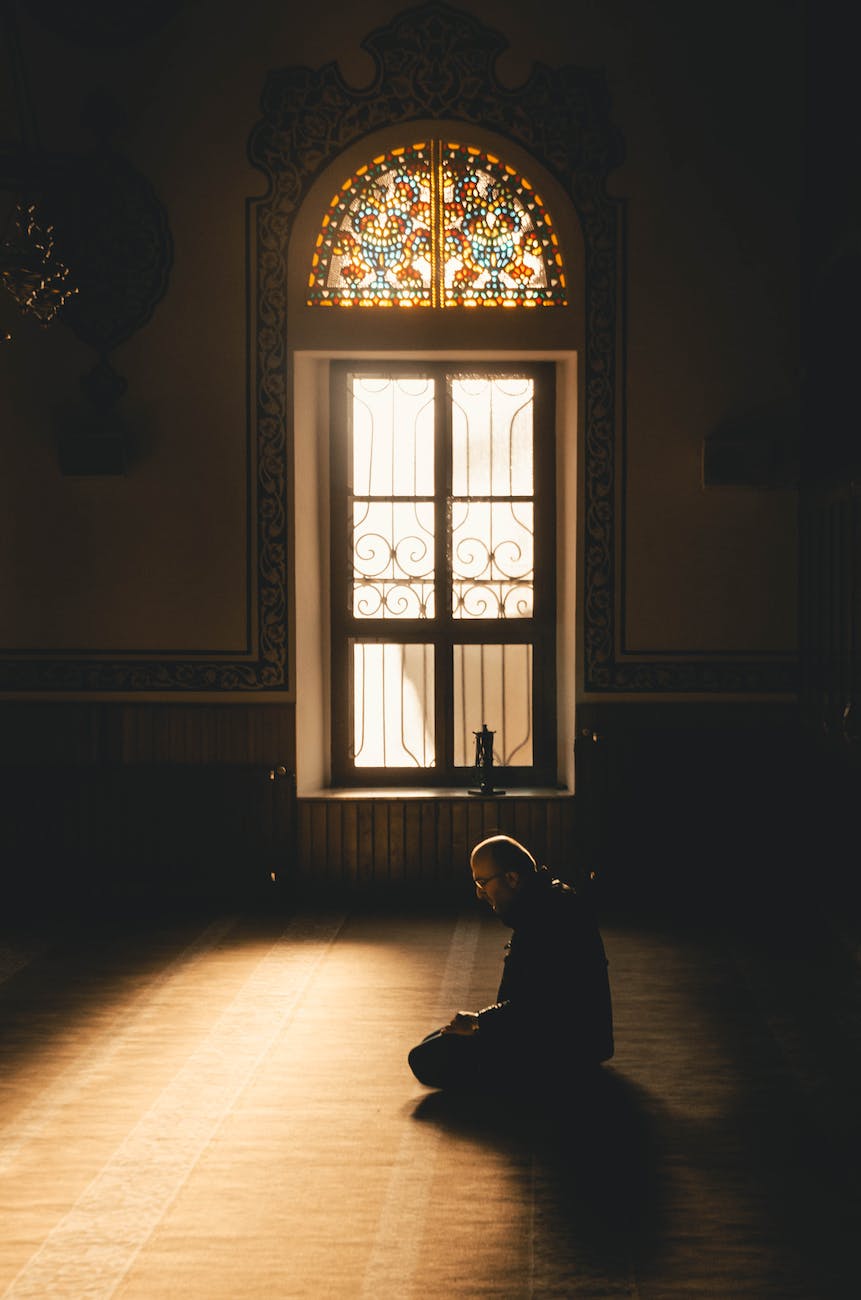
Numerous faiths have adopted racism from a phenomenological perspective, but Islam is a religion that it has significantly impacted. Its fundamental objective is to demonstrate that prejudice as a form of poor socialization is not a temporary deficit that automatically vanishes in completely functional societies. Islamic racism has an authoritarian impact that affects the lives of its own followers, altering their routines and, ultimately, religious representations. I’m among them. Phenomenology is sometimes referred to as the study of phenomena as they appear in human perception, as well as the awareness, cognition, and meaning that they have for us. Phenomenology, to put it another way, is the study of how people actually perceive their surroundings.

Photo by Ali Arapou011flu on Pexels.com

Is it pajamas or is it a costume?

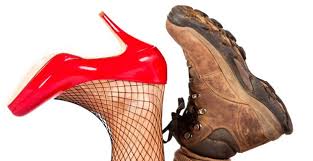
I hate wearing jeans. At least 95% of the jeans at the store. They never seem to fit right, the waist is too big, the hips are too small. High-rise never hits at the right spot, and I swear you need special underwear (and a special kind of confidence) to wear low-rise jeans. When I think about the clothing I wear most of the time it’s based on feel. How it feels physically on my body. I hate too tight jeans, too tight turtlenecks, and too tight shirts. I hate when the neckline hits in the wrong spot, when I can feel the button of my pants when I sit down, and when my skirt is too flowy. There’s something called too much of a breeze you know? And not to forget the feeling of peeling your thighs apart after sitting down for too long. But most of the time the feeling of uncomfortable clothing cannot be put in words. Some times the clothes I like one day feel completely different on another day. I feel like I either end up in something resembling pajamas, or dressing up so much it feels like a costume.

Continue reading

Learning to Take Up Space

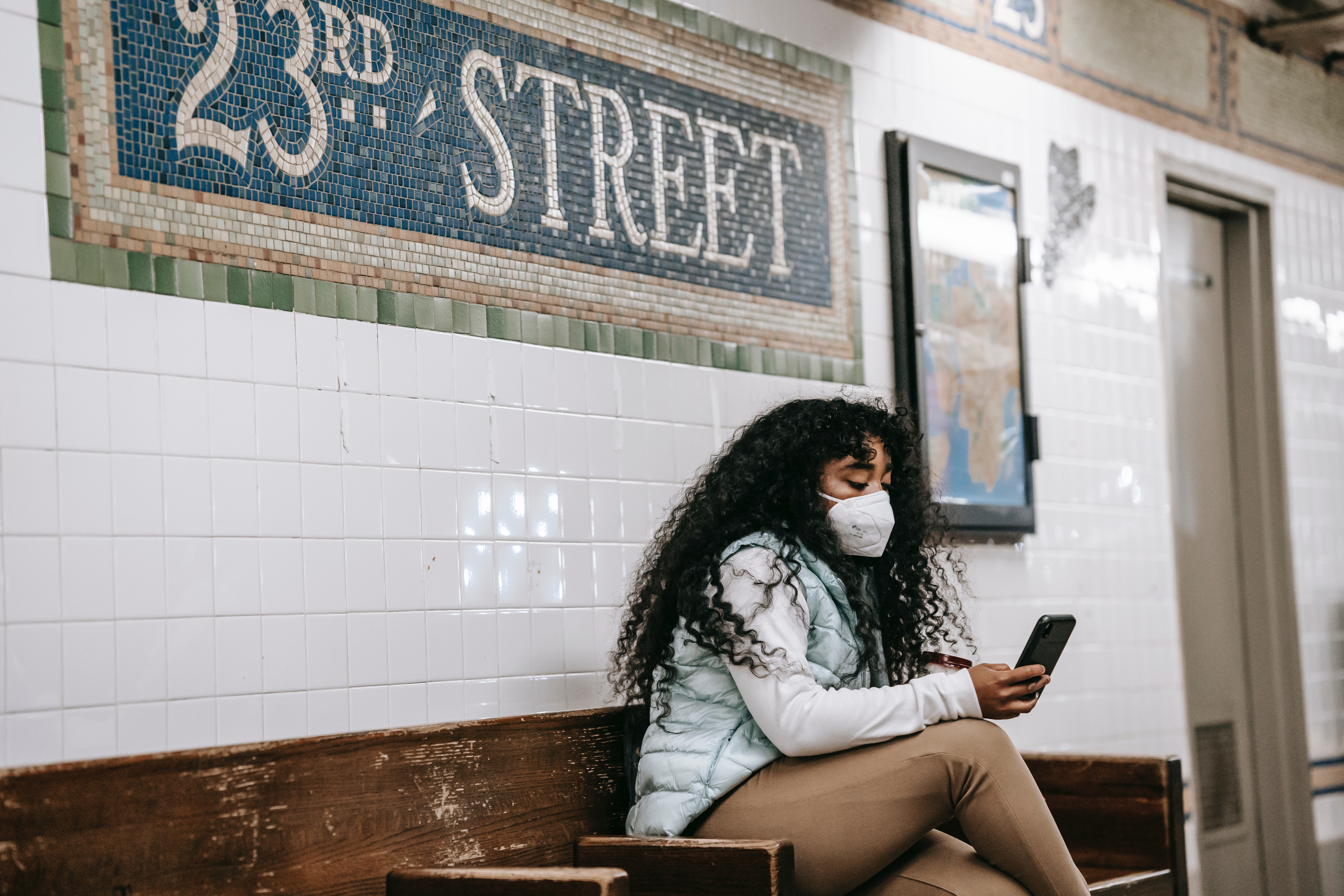
Bodies are beautiful, complex vessels of our minds and souls and hearts. Bodies deserve to take up as much space as they need, regardless of race or gender expression.

Unfortunately, that’s not how society is socialized. We’re taught both implicitly and explicitly that cisgender white men can take up as much space as they want, and if you don’t fall into any of those categories then you’re simply out of luck. Minimize yourself as much as you can, though, because God forbid you get in their way and take up their space– don’t you want to get married to one of them one day?

Photo by Uriel Mont: https://www.pexels.com/photo/concentrated-black-woman-in-respirator-using-smartphone-on-metro-platform-6280658/
Continue reading

Finding my Rhythm Joking About Arrhythmia

A "galaxy brain" meme with tree tiers. Tiny brain tier: "my chronic illness is somehow my fault." Active brain tier: "chronic illness can happen to anyone because the human body is a fucked up mess." Enlightened brain tier: "god had to nerf me because i was too powerful."

Content warning for brief reference to suicide.

Being chronically ill has to be the funniest thing in my life. When I started a job last year, I was given a magnetic nametag to fasten to my shirt. I did it without noticing the warning on the back not to put it near pacemakers—a warning I assume the higher-ups had never considered either, because what kind of able-bodied young person has a pacemaker? An hour or so into the presentation, a muffled beeping fills the room. No one recognizes it, so we move on. And a few minutes later, beeping again. It’s coming from near me. Is it in my jacket? No, it’s literally in my body, because I put a very strong magnet right on top of my implanted defibrillator.

Continue reading

The intersectionality between wealth and race

When I spent my first two years at University of Maryland, eastern shore, that was the first time where I saw black people of a different socioeconomic status to myself. I was born poor, from a dysfunctional family and somehow I am surrounded by people who had it better than me. It is an interesting take because we often talk about black people as a monolith, but that is further than the case. Blacks can be as racist as non blacks, and whites can be as poor as non whites. The discussion that we had in class considering this interested me because I am still trying to find myself. I am doing great things, I am even the first in my family to have a job with a major corporation in my 20s, but I see these people who are the same color as me, achieving even more. Then I realize that they could be wealthier than my family and or their family is functional. I end this with saying that wealth has no race however there are strong correlations with being a certain race and your wealth.