Body dysmorphia as a female athlete

From the day you are born society is always going to be telling you what you should look like and how you should act. But in reality, it is really up to you how you want to want to look. Growing up as an athlete I had always noticed I had thighs that were a little bigger than all the other girls, and shoulders that were a little broader. When I was high school I never thought anything of it because I still looked like everyone else. With social media giving me all the information on how my body should look and I was still fitting into that category. Sure my body was a little more filled out but I still looked like most of the girls on the internet. Before I knew it, I was committed to play my sport at a division one level which had always been my goal as an athlete. Something you tend to forget when your a freshman in college is that you could be competing against girls who are now 4-5 years older than you, and have been working out that much more than you.

When I first came into college, I weighed roughly 135 pounds. I liked the way I looked. Slim in all the right places from what social media had me to believe. But I didn’t come to college to just look how I thought people wanted me to, I came to get an education and succeed as an athlete. Before I knew it, I was in the weight room 3 times a week lifting weights I didn’t know I could lift. By the end of my freshman year, I had gained so much muscle in every aspect of my body, I weighed 147 pounds.

All the sudden I don’t look like every model being posted on instagram. My thighs, arms, shoulders, everything on my body was different from everything social media was depicting us to be. You start to lose your mind a little bit when you look one way and begin to believe that society would no longer deem you as “attractive” or “normal”. With this leads to so many unhealthy aspects of life. When it would come to refueling my body, I would say “I’m not hungry” or lie about already eating just to save myself a few pounds that. I felt like I didn’t need. It becomes a constant battle with your mind everyday you step on the scale and feel like you weigh to much when in reality your body needs that to protect itself. As an athlete, your body needs hat extra bit of protein at a meal, and it needs that extra muscle on your bones to prevent injury in any way it can. It wasn’t until this year that it fully clicked in my mind how much my body needs this extra muscle to protect itself. Trying to put yourself into a mindset that is okay to not be as social media may tell you to and let your body be what is best for you. My body is at the strongest point it has ever been at because I allowed myself to just let go and do what is best for me. So many not only female athletes but all athletes struggle with this concept and I feel like it is not nearly talked about enough.
Use of Photoshop on Social Media

It is rare to see a picture on social media that is free of photoshop or Face Tune editing. Many people edit their face or body to fit within society’s beauty standards. I’m sure many of the people you follow on social media have at least one picture on their page that is Face Tuned or photoshopped. Today, the beauty standard is to have a small waist, yet be curvy everywhere else. This preferred body type, in my opinion, became popular due to celebrities and other figures in the media posting images that are unattainable.

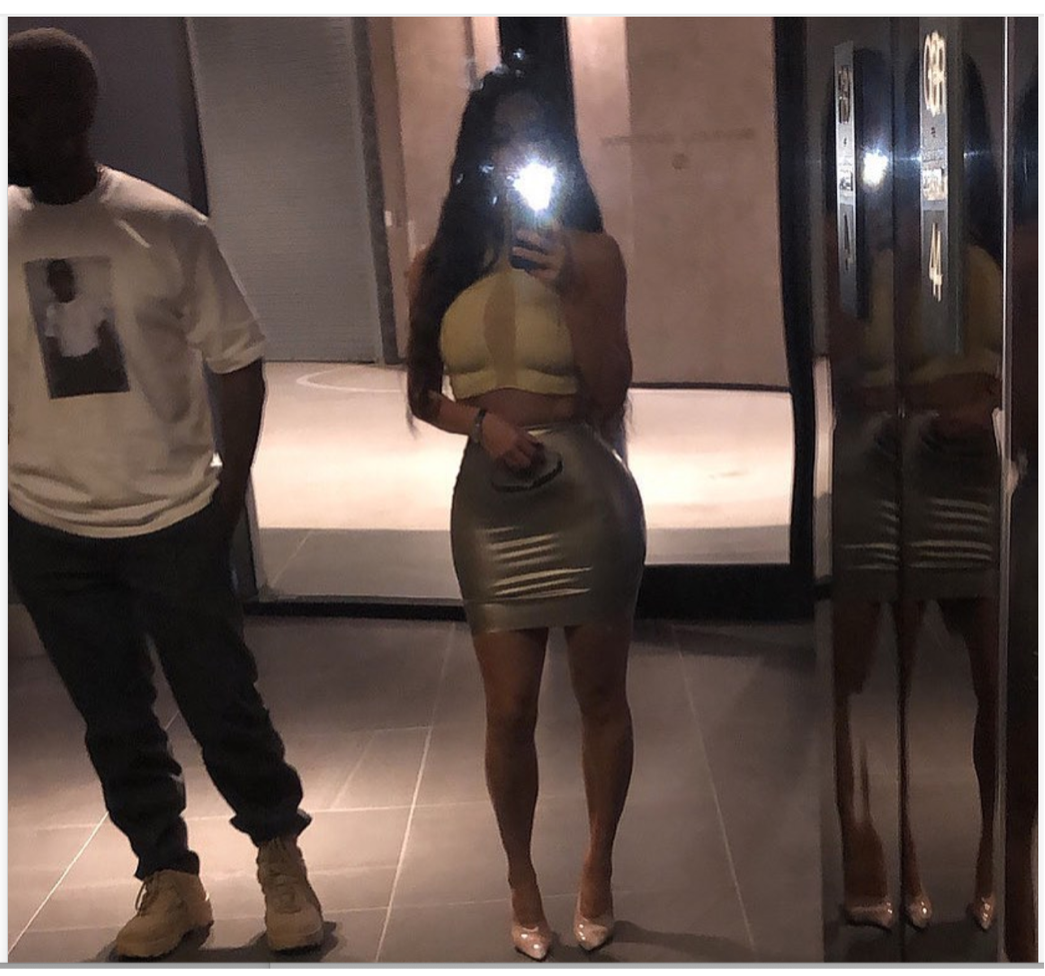
I think the most notable examples of photoshop can be found in the Kardashian family. On more than one occasion, the public has noticed photoshop fails seen within the Kardashian’s social media or ad campaigns. Here is just one example of Kim Kardashian failing to notice poor editing in a picture. You can see that the doorframe in Kim’s Instagram photo is clearly distorted, probably with the hope of making her figure appear curvier.

Kim Kardashian Instagram Post. Seventeen Magazine. https://www.seventeen.com/celebrity/a23458173/photoshop-fail-keeping-up-with-the-kardashians/.

I think that celebrities using photoshop to edit their bodies has a huge effect on body image in young adults. We as the public look up to these people because they are trendsetters. This is problematic because younger audiences believe these images are real and will likely feel a sense of dissatisfaction with their own bodies. Since so much time is spent on social media, many people are looking at images of unattainable bodies and wondering why they can’t look like these “perfect” celebrities. This leads to a variety of mental health struggles and an increase in body dysmorphia. It is extremely sad to see this, because all bodies are beautiful in their own unique way. To decrease the amount of body dysmorphia seen in young men and women, celebrities need to admit to photoshopping their photos, and/or post pictures of themselves with no editing to show the public what they really look like.

On the other hand, it can be argued that small edits to make an individual feel more confident online is not a horrible thing because nearly everybody does it. Celebrities are people too, all having insecurities like the rest of us. They should not be scrutinized by the public for everything they do, especially online. However, it is a problem when celebrities don’t admit to photoshop because this creates a negative online space, and it effects the body images of so many people.

Mutual Aid as a Practice in Love

Mutual Aid as a Practice in Love

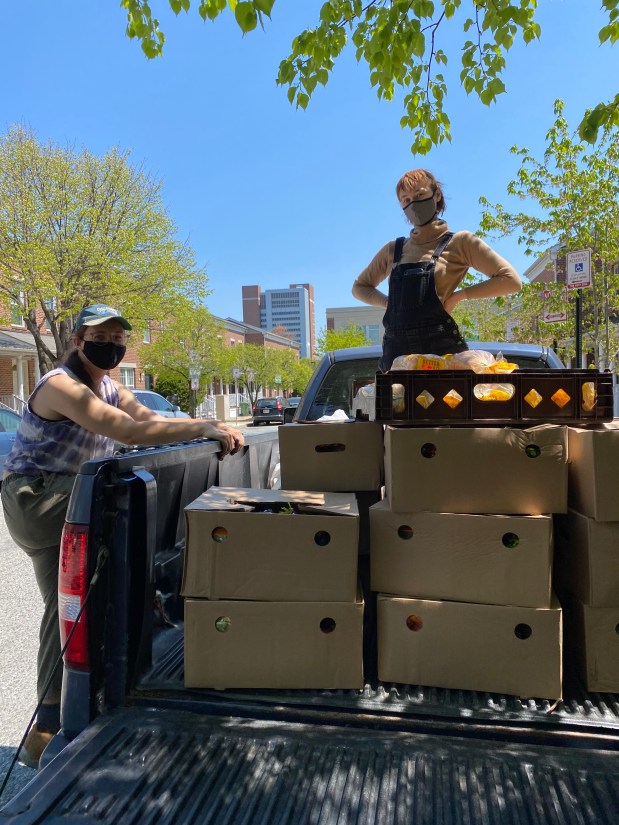
I was recently asked why I got involved in mutual aid. My answers were the same as they have always been, it’s the end of the world and we need to take care of each other, it is a part of my politics, and a natural (human) response to crises. All of these things are very much true, and they all center me and my orientation in this moment of time. However, there is a piece of mutual aid that I’ve failed to name, but one that I feel deeply through the most sacred parts of my body.

Continue reading

Flunking Bio(logical sex)

The concept of “biological sex” is bullshit. When talking about trans people and the sex they were assigned at birth, the terms “biologically female” and “biologically male” are often thrown around without any critical interrogation into their meaning. They’re a fallback for a lot of people who are aware that saying “born female/male” is reductionist, but who haven’t yet done the work to find more accurate terminology. (The terminology I use and recommend is “assigned male/female at birth”). For a variety of reasons, “biological sex” is a faulty concept, rife with scientific inaccuracies, that subtly undermines and invalidates trans identity. Like a pointillist painting, the closer you examine the concept, the more you realize it’s just a cluster of meaningless points of observation, designed to trick you into seeing a complete picture that was never really there in the first place.

Continue reading

What’s in a Name?

Image description: A white sheet of paper with the words "Sign here" followed by a dotted line. A tip of a pen hovers over the line.

Names, everyone has one (or several), and a name is used in everyday occurrences. You see your friend walking down the hall, you excitedly yell their name and embarrass or startle them, you see your pet eating something they shouldn’t, you shout their name and chase after them, you get the idea. A lot of people never really think much about their name, it’s their name, their parents gave it to them, case closed, but the issue of names comes up when one’s gender identity is brought to the forefront of their thoughts. As I try to untangle my own understanding of my gender identity, my name becomes an issue.

Continue reading

Becoming “That Girl”

There is no doubt that many of us have changed after quarantine and as a result of this pandemic. Many of us are overwhelmed, anxious, but some of us might have used the time in quarantine to better themselves. I was not one of those people. If you scrolled on TikTok during the height of the pandemic back in March/April of 2020 you would see glamorized morning routines, cloud coffee videos, exercise routines, etc. But, there are hidden layers to what you might see through your screen.

Continue reading