“Othering”

In one of my classes last semester, I learned about “othering” in the context of racism, and something that stood out to me was the detrimental effects it has, especially on individuals who are labeled as the “other.” By labeling someone as an “other,” it inherently assumes that there is a default or normative standard that these individuals fail to meet. This concept connects deeply to issues surrounding disability and body size, as society often marginalizes people with disabilities and diverse body types by positioning them as deviations from a perceived norm.  It creates a harmful narrative that devalues and dehumanizes individuals who do not fit within societal norms. This narrative reinforces the idea that there is a “right” or “ideal” way to exist, marginalizing those who differ and often placing blame on them for their perceived shortcomings. This harmful narrative of “othering” has profound real-world impacts that go far beyond social perception; it affects how people are treated in various aspects of daily life. For example, people with disabilities, like those with autism, are often treated as if they’re incapable or stuck at a child-like level, no matter how old they are or what their abilities are. This kind of infantilization can strip away their independence and agency, making it harder for them to have control over their own lives. It reinforces the idea that they aren’t fully capable adults.

I’ve Changed

Why do strangers think it’s okay to comment on someone’s body, especially when they have no idea what someone is going through? Lately I have been experiencing more judgment than I ever have because I work at a public restaurant, where I see regular customers quite often. I’ve been at this job for almost a decade and I started here as a teenager, so obviously my body has changed over the years. But, what annoys me the most about working in the public eye is that people are just genuinely rude and judgemental. I’ve been asked multiple times by my regular customers if I’m pregnant, or if I’ve “let myself go.” I’ve also had two separate people, who I don’t even know, ask me if I agree/ also think that I’ve gained weight. People have asked me if “covid’s got the best of me” or just tell me that I “look bigger and my face has more weight to it.” What I think is the craziest part of all of this is that I think I’m pretty skinny. Am I the 100lb girl I was when I was 15? No, and am I only 130lbs? Yes. But, it has been proven to me that people only categorize girls to be skinny based off of what they have seen on social media. 

To make this story even worse, the only people who have ever commented on my weight or acknowledge the change in my body have only come from the mouth of WOMEN. I feel like it is really hard for me to  wrap my head around the idea of women supporting women because I constantly deal with people like this. It frustrates me because the pressure from social media has caused more division in women, rather than solidarity. Which is upsetting because in today’s society we are in desperate need for true women’s support. 

I brought this up though because I want to tie it back to our class when we talked about how we think work can shape our bodies, in week 6. 

My body is the way it is because I am a growing and developing young female, where I automatically am going through biological changes. Plus the damage of 60 hour work weeks, and the overstimulation from mentally drainage from being a full time college student, and all the environmental changes have taken a toll on my body. No one tells you that your twenties are the hardest years of your life. Personally, people have glamorized what my twenties were going to be. My parents and grandparents would explain that your twenties are the best times of your life and to enjoy every moment because you’ll be in your prime. I’m in my twenties, half way through and I am still waiting for when the best times will start. It blows my mind that no one talks about how your twenties are the HARDEST times of your life. Your body changes dramatically in your twenties, and you have no choice but to just adapt to the changes and continue on with life. These changes could be environmental, biological, physical, or mental changes. Your twenties is the time where you are simply just figuring things out, and that’s not the easiest. I actually find it to be the messiest. 

Anyways, all of these factors have an effect on the physical appearance of my body. The body that represents me and the body I have to show to the world. I know it’s okay to go through these changes and I don’t really let the thoughts of other people bring me down or hurt my self-esteem. But, what’s sad to say is that I didn’t think like this until recently. My job has shaped me into this tougher person because working with the public is hard and can affect people if they let them. I used to let others’ opinions crush me, but now I truly don’t care what people think. People are entitled to their own opinions and I respect that, the only thing I don’t respect and will not tolerate is the pure rudeness from strangers. And I thank my labored body for allowing me to become like this.

The Potential of Body Neutrality

This reminded me of what we have discussed in class regarding how society prioritizes weight and what bodies look like. In our everyday lives, there is constant expectation of what our bodies are “supposed to be,” what type of body is deemed “healthy” or not, and what bodies are “moral” or “immoral.” Especially with social media, people’s bodies are only placed on a pedestal where hundreds and thousands of people look, judge, and comment. Over time, it becomes distressing because it can be extremely dehumanizing to constantly be aware of others’ entitlement to comment on your body and interpret it, whether those remarks are positive or negative. In this sense, as society focuses on weight and the body, you are left to feel as though you are no longer human with a personality, character, or morals, but rather just a body defined by weight.

With this, I can’t help but wonder: How can we change these expectations and concepts that invade how we view and think about weight and bodies?

I think of the body-neutrality movement that we touched upon in class discussions. Body neutrality embraces the practice of simply accepting your body for what it is rather than constantly trying to have a positive or loving mindset. There is no positivity or negativity tied to bodies, but rather just an acknowledgement of their existence as they are. I find that this has the potential to make a change in how the world views and thinks about bodies and weight, as recognizing and accepting bodies as they are disadvantages ideas of “good” and “bad.” While this cannot be done overnight, there needs to be a change in how we think about weight. Ultimately, there could be a great benefit in embracing movement such as body neutrality and understanding and accepting weight and bodies as they are, rather than attatching them to notions of positivity or negativity. 

Social Darwinism, Work, Education, Poverty, and death.

One of the things that I never understood about the way that our life in this country is structured is how miserable your supposed to be while engaging with it. There is so much misery involved in the everyday lives of human beings, especially those that live in poverty. this excess stress from always being in a state of precarity and being underpaid to take care of basic necessities. For impoverished college students, the cost of schooling and the menial work of trying to ensure that your institution grants you the correct amount of money to be able to cover tuition cost (and potentially room and board). For impoverished workers, there is always a threat to your employment that more likely than not doesn’t pay enough to survive. In an economy, where degrees are paradoxically more necessary than ever and historically undervalued, rent prices are going up exponentially, and school is more unnattainable for the working class since the 60s, we are expected to do school and work, and self management of the body all at full time. In these state of affairs, I wouldn’t be surprised if the ruling class is simply trying to get the poor citizens of america to just what they’ve wanted them to do forever: to die. The system that we are working within today is one that drives a working laboring body so far to the point of desiring death, and then punishing the unwilling participants for saying the desire outloud. their desires for the working body not to die does not come from care for the working body, but from the need to utilize the working body. the wealthy have already revealed to us years ago that they actually do not care about the well being of the poor. From the various austerity pollitics coming out of the Reagan era that created a profit incentive from credit and debt to as far back as victorian attitudes surrounding social welfare, the ruling classes have always made it clear that they do not believe that the poor actually deserve to live. Social Darwinism has been a long lingering school of thought among the wealthy, the idea that the economically strongest individuals should survive and those who fall short should die off. This is not only limited to financial success, but also ability, temperment, and perceived morality that many on the right is genetically inherited (essentially economic eugenics). However, If all of the working and lower class individuals just died, they wouldn’t be as economically “fit” as they are, as their wealth depends on the labor provided by the working class. If the stress and anxiety gets to a working class person to the point of them wanting to take their own life, the various institutions (educations, work, and family) will work to try and convince them to not take their own life, which may involve serious caring conversation or serious medicalization. I find it very funny that as much as the wealthy seems to not want the poor to be able to survive, they depend on their lives continuing in order for them to stay as comfortable as they are (sorry about this being a lot, i’m going through some stuff at the moment. I’m Okay, this post is just something i’ve been thinking about for a long time).

Autistic Masking & Trans Passing — The Venn Diagram is a Circle

Autistic people are a lot more likely than the neurotypical population to identify as transgender — something I personally chalk up to us having a keener eye for social norms that make no sense (the gender binary being no exception). As an autistic trans person who has to deal with the social repercussions of both these parts of myself, I have noticed how society is built not only to prioritize cisgender neurotypical people, but to actively shun those who don’t fit in either category in very similar ways.

Continue reading

N.A.D – No Apparent Distress

TW: Abortion, Pregnancy Loss, Ectopic Pregnancy

June 2022 – After being on the birth control implant, Nexplanon, for 7 years I decided to have the implant removed. I wanted to give my body a break and be able to regulate my hormones and cycles naturally. I could not take the constant anxiety attacks and overall poor mental health caused by the high dose of continuous hormones being released into my body. Once removed, I never felt so clear headed or so relaxed. It felt as if a storm of clouds around my head just dissipated and my cycle returned to normal. I felt as though I had a new outlook on my body and the way it is supposed to be. 

July 2022 – It is mid July and I am driving down 95 heading to Baltimore. I feel a strange tingling and pulling sensation in my lower abdomen. I have never felt this before, it was such an unusual feeling that I made sure to take a mental note. Subconsciously, I already knew. A week passes, my cycle never comes. One evening, enjoying time with my partner at the kitchen counter; I casually slip into the conversation, “I think I’m pregnant.” He looks at me, totally unfazed, “I think you are too.” he says. The next morning, the test is positive. Neither of us are at a stage of life to raise a child. Only two other people are made aware of the situation, his sister and my best friend. The abortion is scheduled for mid August.

August 2022 – It is the evening before the procedure. I am terrified but I have planned to stay at my partner’s house where he and his sister can help me recover in secret. We order food and enjoy the evening as usual, there is nothing out of the ordinary. Throughout the day I had some light brownish spotting, not uncommon for a pregnancy. Right before bed I decided to pee one last time. This time there was one small drop of bright red blood in the brown. This does get my attention but I shrug it off. 

I jolt awake at almost 2:00 am on the dot in unbelievable pain. I stumble to the bathroom in the darkness and I flip the light on. I am hemorrhaging blood and the pain is indescribable. Instinctively I know something is very wrong. At this point the pain is so bad I crawl back to the bedroom to wake my partner.  He stirs, I say, “Something is really wrong, wake your sister. We have to go to the ER.” He goes to get his sister, a veteran shock trauma nurse and chief of hospital operations. I am barely conscious on the floor, bleeding, sweating, and in extreme pain. She says, “I think you may be having a miscarriage.”. I respond, “What if it is ectopic?”. I have never been pregnant before but I knew this was something much more dire. 

After struggling to even be able to stand, my partner and I finally arrive at the ER at 3:00 am. He is basically carrying me through the door, hospital security quickly gets me a wheelchair and I begin to violently vomit at the check in desk. I explain to them I am pregnant and something is seriously wrong. I am taken to a treatment room for IV fluids, my veins were so shallow the nurses could not hit a vein. I begin drifting in and out of consciousness as the nurses are stabbing me over and over and shouting at me to stay awake. Once the IV is placed I am left alone in a chair off to the side. I begged for somewhere to just lie down, even the floor, as sitting straight up was extremely painful. Denied. The IV bag is empty, back to the wheelchair in the hallway. 

8 hours of what felt like being stabbed over and over by a dull serrated knife pass. The minutes felt like years. Pain meds, denied. At 11:00 am, I am given a room with a bed, it would be another hour before pain meds. Finally, relief. An internal ultrasound is performed, the results inconclusive. The doctor comes in to discuss the results, the results are inconclusive and discusses the possibility of an ectopic or a miscarriage with a fallopian cyst. There is too much “sludge” in my uterus to be sure. She pushes to send me home with mifepristone and misoprostol. I refuse, I am not leaving this hospital without surgical intervention. A second ultrasound is performed with a specialist. Results, inconclusive and exploratory surgery is recommended; the surgery is scheduled for 5:00 pm. 

14 hours since check in and I am on my way up to the OR. I am terrified and crying. Everything goes black. I wake up and I am told the surgery was successful. However, I am told that my tube was extremely close to rupturing and had it been any longer it could have been fatal. Discharge: 7:00 pm, 16 hours since check in. My partner drives us home, he never left. The beginning of recovery starts. 

March 2023 – I log into MyChart, the hospital database which includes medical records. Just out of curiosity I decide to read the medical documentation from my ER visit and surgery. There, on my intake notes under patient condition, reads in all caps “N.A.D”, no apparent distress. I am horrified. 

Women in medical settings already have their symptoms dismissed or minimized, pregnant women especially. Our symptoms are written off as “just being a woman” or pregnant women being labeled as “dramatic” or “overreacting”. What could have happened if N.A.D had not been placed on my chart? Could I have gotten the help I needed sooner? Would I have had to suffer for as long as I did with a critical condition? To this day, I still have not mentally recovered from this experience. For pregnant women in the ER, vomiting, loss of consciousness, hemorrhaging, loss of full mobility, and extreme lethargy are considered N.A.D. This is the sad reality for many women who seek medical care. Even when you are on the verge of dying you are considered to be in no apparent distress.

Okay to Drive

Being the youngest person in the company AND being specifically requested by the CEO to attend a conference on the other side of the country sounds impressive. It sounds like a dream. You get to experience the freedom of traveling and staying in a hotel alone. You get to meet dozens of scientists and researchers who are all amazed that someone so young could be trusted as one of only two people to help run a corporate workshop. On top of all of this, you get to carpool with a coworker who has really interesting insights into your field of study. Everything is perfect. Until the group dinner.

Ah, group dinners. They say they’re optional but you know the truth. If you don’t go and interact with the rest of the people from the conference, you look bad. And being the youngest person, there’s no blending into the group. You would stick out like a sore thumb if you didn’t go. So you do it anyway, even though your social battery is way below zero from an almost 12 hour work day. Good for you!

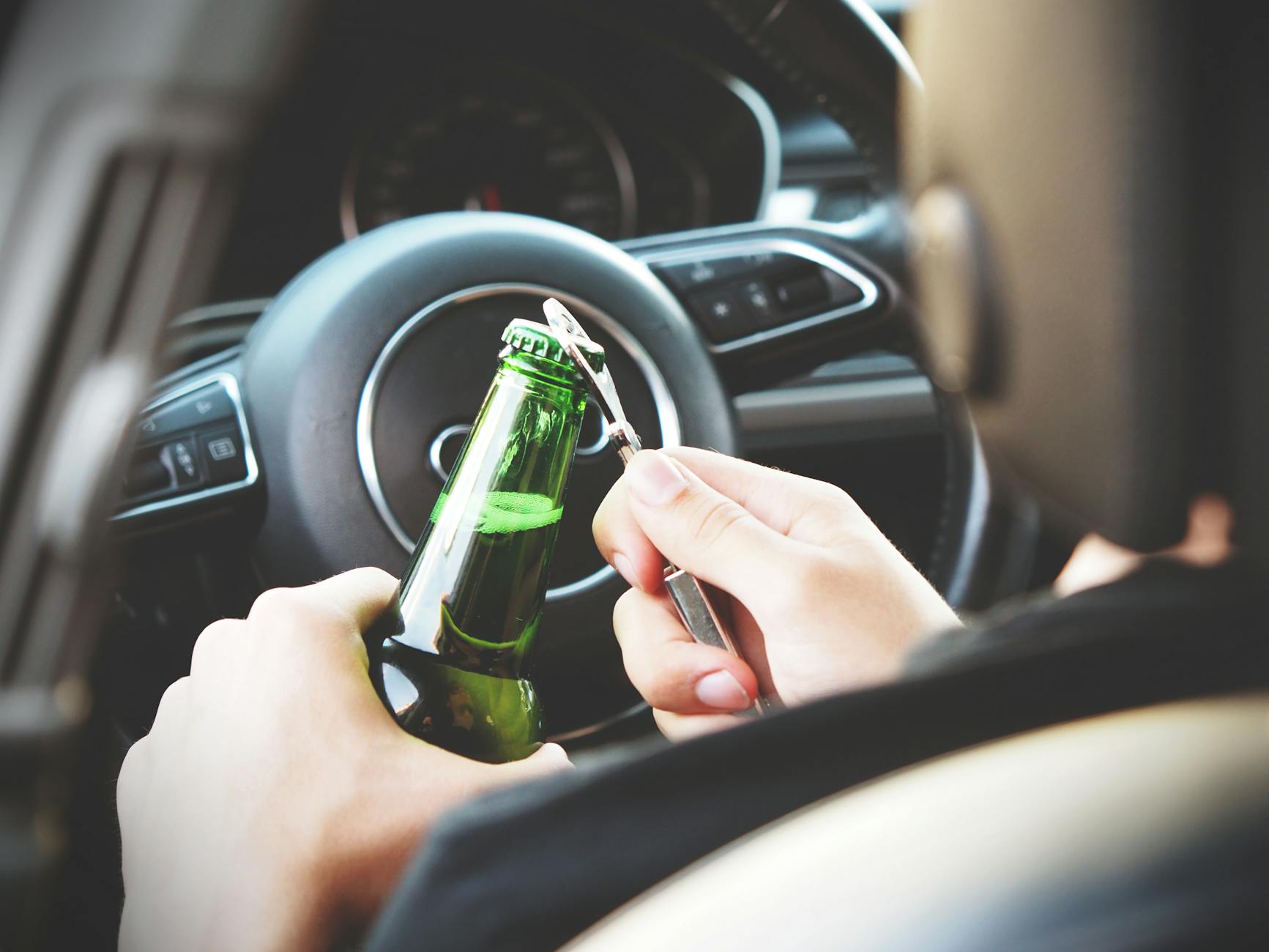
All is going well until you start to notice that the coworker who you were carpooling with is drinking a lot. No one is stopping him. Hell, they’re drinking too. As the night progresses, he gets drunker and drunker. But he’s probably fine, right? He couldn’t be that drunk, right? He wouldn’t do that knowing full well he is responsible for driving you back to the hotel, right? RIGHT? You try to dismiss your worries, so you don’t notice how bad it is. At the end of the dinner, another one of your coworkers asks to ride with you and the man who had been drinking. She had had a couple drinks too. Plus, she probably noticed he wasn’t 100% and didn’t want to leave you alone with him. You get to the car and realize how bad it is. He’s yelling and stumbling around. “Should we Uber?” you whisper to your female coworker. “Maybe,” she replies. But it’s too late. You three are already getting in the car. “Are you sure you’re okay to drive?” the less drunk coworker says. “Yeah yeah yeah I’m fine,” the drunker one responds. And off you go for the longest drive of your life. What should have been a 10 minute drive was 30 minutes because he kept making wrong turns. He was turning around to talk to your coworker in the backseat half the time, not even thinking to look at the road. The car was swerving between lanes as he yelled at her that he didn’t need directions. All the while you are sitting silently in the front seat, holding back the tears welling up in your eyes, trying to put on a smile so no one knows how terrified you are so be the most sober one in a car of the coworkers who were supposed to keep you safe across the country from anyone you knew or could call.

Why didn’t you say anything? Why didn’t you take an Uber? Why didn’t you say you were uncomfortable? Why didn’t you show them that you were upset and that it wasn’t okay? Why did you feel like you were obligated to ride with him in the first place? 

Maybe because you were afraid of how they would view you for going against them. You were afraid of embarrassing them for letting this happen. You didn’t want them to feel guilty. You didn’t want to seem like a burden for having standards that are too high. You didn’t want to be known as the kid who dealt with the drunk coworkers. You didn’t want to have to face them the next day with them thinking you were judging them. All these reasons and more are why you got in that car and risked your life. This is the kind of emotional labor that you take on being a young intern. Constantly second guessing yourself and kicking yourself for messing up social interactions. Trying to manage everyone’s emotions and their perception of you. All of that bracing and anticipation and anxiety waiting for those imagined criticisms (Beck 4). Your coworkers probably would have understood if you had decided to take an Uber. But on the off chance that they didn’t, you decided to put your life in danger. When will you unlearn this, and will it be too late?

Beck, Julie. “The Concept Creep of ‘Emotional Labor.’” The Atlantic, 26 Nov. 2018, ht://www.thcatlantic.com/family/acchive/2018/11/arlie-hochschild-bousework-isat-ensotional-Labor/5766371.

Over it

“The duties that are expected of you, but go unnoticed” is a quote that has been replaying in my head constantly these past few weeks. It hits home because of the reality of my mental bandwidth being a form of  labor. Emotional labor went unnoticed by myself and those around me needing this labor from me. Julie Beck’s concept of emotional labor in her article, Concept Creep, has made me reflect on the countless times I have unknowingly experienced this form of labor, causing me to question how I add onto the load of others emotional labor ? or do I appreciate more visible types of work and labor ?  

Emotional labor encompasses the unseen and often unacknowledged efforts that individuals often ignore. In my own experiences working in retail and hospitality, I have been responsible for such labor regularly, even though it might not have been in the job description.For instance, as a sales associate in retail, I would greet customers with a smile and ask, “Did you find everything okay?” that would have me engaging in small talk through the transaction or getting talked over and the customer just asking me how much? Though this may seem like a simple interaction, it involved managing my emotions to appear friendly and approachable, regardless of how I was feeling internally. There were also times when I found myself laughing at a customer’s unfunny joke while working at a sports bar, simply to maintain a positive atmosphere. These interactions, though small, added up to a significant emotional toll over my 8 hour shift 

On top of this, emotional labor often blends into physical tasks that fall through the cracks. An example that comes to mind is when I was living with roommates here at college. If someone removed the trash bag but didn’t replace it, I would end up doing it. Even though I wasn’t assigned this specific duty, I knew if I didn’t replace it, no one else would.Or I notice that the house has changed in appearance when I get home from a three-month trip to college. In my absence, my brother has been left to handle all home responsibilities, and he has done his best. However, the distinction is obvious. It serves as yet another illustration of how invisible work can accumulate when there aren’t enough hands to divide the workload. I can see how the tasks fall unevenly without me present, and the mental and physical labor I usually provide is not accounted for until I return.These duties may not seem like much individually, but together they reflect the often invisible labor that many workers perform daily. Emotional labor may not be part of a job description, but it remains an essential component of many jobs, ensuring that workplaces function smoothly, customers are satisfied, and tasks are completed even when no one is watching.

Honestly I’m just over it.

Reproductive + Emotional Labor = Wishing I was a Boy

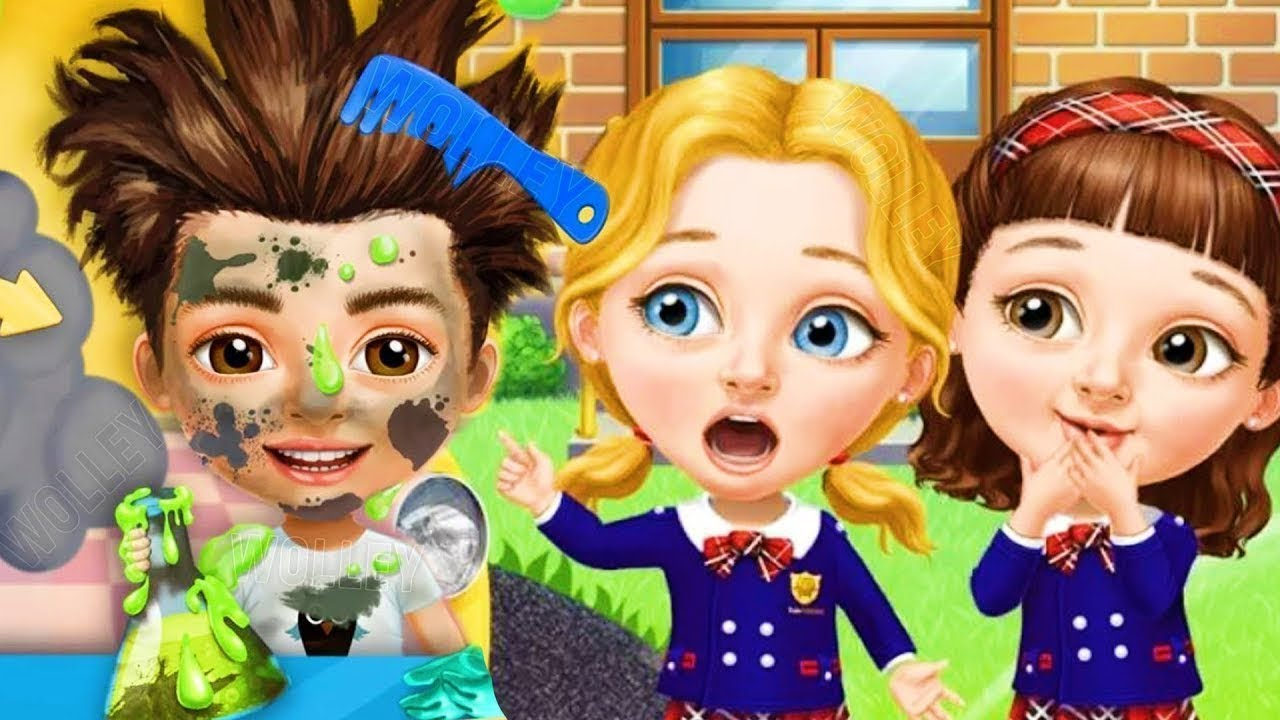
(Image of a boy who looks dirty while doing science while two girls who look clean are surprised and giggle) – Crazy picture by the way

I grew up as a big sister. This role consisted of my unpaid labor, such as housework and childcare. In my house lived my single mom who worked 12+ hours a day and my little sister that is 5 years younger than me. Growing up, my friends never wanted to come over because my mom would ask us to clean the house and I was never in a position to say no. At other friends’ houses, it was always to clean up after ourselves which I especially didn’t mind doing. But one day, I realized that boys my age were rarely given this responsibility.

It feels so dumb to think that I was so upset about cleaning, but the extent of unequal treatment I felt still persists today. I saw my male classmates running around outside while the girls stayed behind and pushed in our chairs, put our stuff away, and followed directions. I saw my friends’ brothers run to play video games right after a meal while my friends and I would scrape our plates and at least put them in the sink. I saw my male cousins never once offer to do dishes, and my aunt always accepted that she would after spending hours cooking a dinner that she didn’t even eat. 

On top of that, my parents have always expected me, as the big sister, to understand why they hate each other. My divorced parents put me in the middle of their ‘friendly communication’ for 15 years. I’ve heard whining from both sides about how awful and unreasonable the other is being, and I am supposed to give advice and agree. When I ignore it, they feel bad but continue a few hours later. It’s a loop I’ve been stuck in that gets better until it doesn’t (and trust me, I’ve tried EVERYTHING).

All the emotional and reproductive labor I have done in my life makes me wish I was born a boy (I’m delighted to think that all of the mental anguish I’ve been through could be resolved if so). Although it’s an unrealistic thought, it lets me imagine what could’ve been, without my life’s pervasive reproductive and emotional labor. I wish I was a boy without a care in the world, who could eat mud pies and play with worms. Instead, I had to be clean and calm which has defined my past.