I Quit.

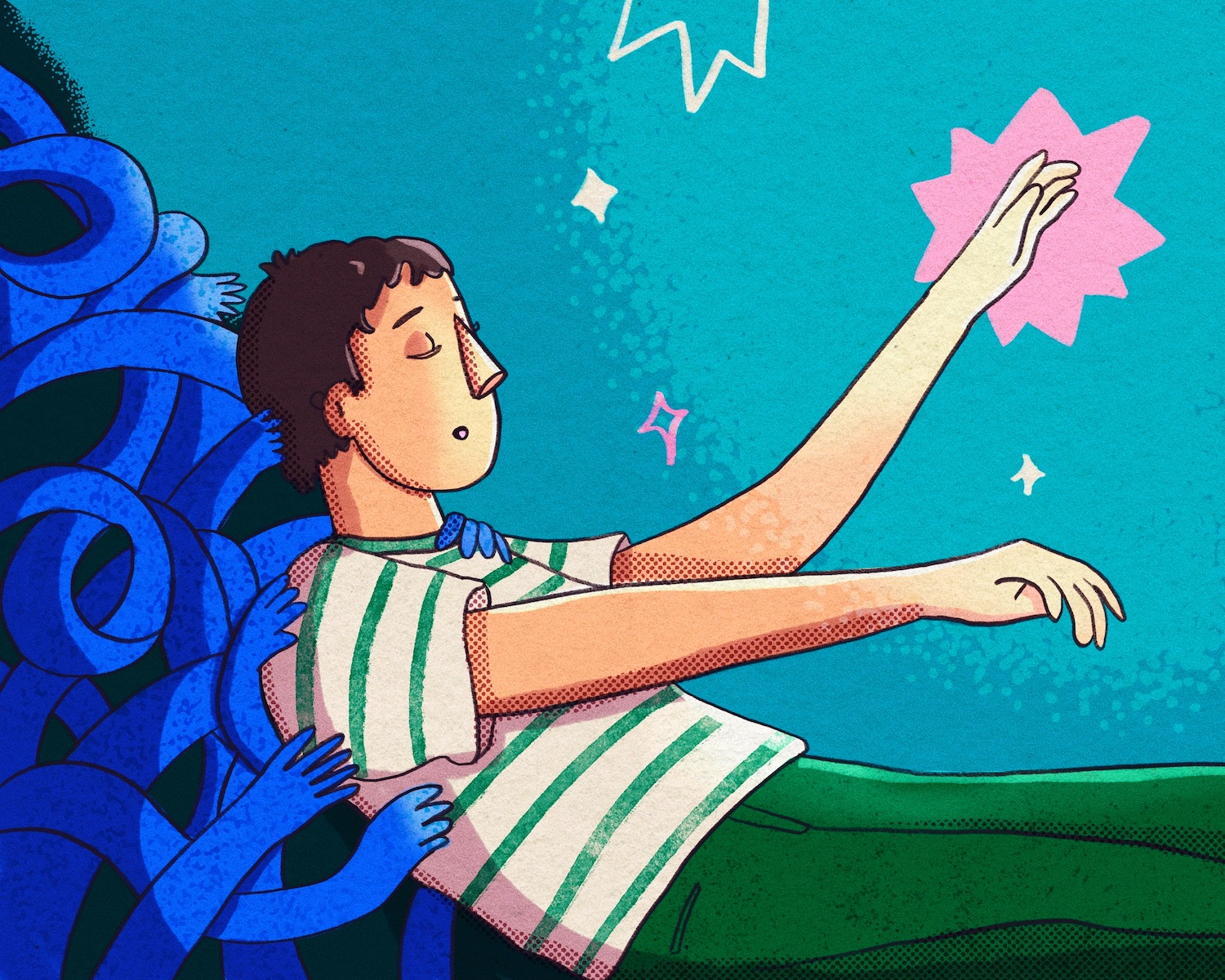
Why do we work ourselves the way that we do? Do I actually want to do my job or am I there due simply to societal expectation? How many jobs do I need to juggle to make a decent wage? Why am I told to work myself to death in order to “succeed”? 

Last week I quit a job for the first time ever. Sure, I’ve held many different jobs in the past, but I’ve always simply “moved on”, outgrown it, graduated; I’ve never just quit so suddenly. However, my work environment had become so toxic and taxing on my mental health, I had to leave. This was a really empowering experience if I’m being honest, but it has left me anxiously wondering and stressing. I haven’t been properly unemployed since I was about fourteen. Even though I’m a full time student now and my mental health has been suffering, I still am finding myself anxious about not having any income for an indefinite period. Though I know logically that I need the break and I will be okay if I take some time off, I feel anxious and somehow as though I am failing. 

This has led me to do a lot of reflecting. I feel such frustration at this system and society we have created for ourselves. Living as a full time student balancing classes, extracurriculars, and a social life is enough of a full time job by itself. Yet we live in a world where not having a consistent income is both damning and regarded as a disappointment. Why do we push ourselves to the breaking point every day, expecting the utmost effort and engagement no matter what? I can only dream of how much more productive and healthy we would all be if we simply prioritized our mental health and undertook a balanced, reasonable schedule. How long until I run out of gas money? When do I have time for job applications? Am I failing because I’m not employed while my friends are? What if we stepped back? What if we broke the cycle? What if we chose to prioritize ourselves instead of this toxic loop of waking, working, spending, sleeping, and repeating? Not to mention that emotional labor is interwoven between physical demands, in our jobs and lives. It is always simply expected. Don’t break down, don’t show weakness or frustration or exhaustion or anger. Be pleasant, be professional

What if we had universal healthcare? What if bills weren’t such a stressor? What if the cost of living didn’t grow exponentially faster than the average salary? 

How long until I’m too exhausted to function in this world anymore, until I have to quit? 

Physical labor, Emotional Labor

When I was around four or five years old, I was obsessed with ballet. Angelina Ballerina was my all time favorite show/book series, most nights I would end up dancing around my mom in the kitchen while she was preparing dinner, and I would religiously practice positions one through five on the weekends when I had nothing better to do. It eventually got to the point where my mom had enough and signed me up for beginner’s ballet lessons. 

I didn’t stick with ballet for various reasons, but to this day I’ve noticed a few things about my body that most definitely are a result from my ballet obsession. I’ve noticed that I’m more flexible than my peers, I have a better sense of balance than my friends, I keep a fairly good posture when I’m not thinking about it, and – most noticeably – I stand at a relaxed position two when speaking to people – my legs out wide with my feet pointed outward, instead of (what I’ve been told is) standing normally with of my legs parallel to my shoulders, and my feet pointing forwards. In fact my standing position is apparently so noticeable to the point where I’ve been called out about it, and my friends have made lighthearted jokes about how I stand. 

There are a lot more effects that ballet can have on the physical body. All things considered I seem to have gotten out lucky, but that fact that an extracurricular I decided to take on when I was five has noticeable physical effects on my body almost two decades on since I “professionally” danced, is at the very least notable in what it says about the body and how it is used. 

A young ballerina, dancing on a stage

More recently in my life: I became elected, performed the duties of, and subsequently passed on the torch of the presidency of the A Capella group I’ve been a part of while I’ve been studying at UMBC. That entire year was extremely stressful, in no small part thanks to working on my capstone project during the second semester. As an anthropology major, it was my job to perform an ethnographic research study on a group I found interesting. After getting unanimous support from both my professor and the group itself, I was able to study my A Capella group. While I was originally unsure of what to focus my study on, I soon started noticing the emotional and unpaid labor that everyone – not just the group leaders – performed in order to keep the group functional and thriving.

 While I am no longer the president of the A Capella group, echoes of my presidency still linger on, despite my want to “retire” and enjoy the group as if I were a normal member, emotionally I’m still in “president mode”. People still come up to me asking for advice regarding the group, and I have a hard time not interjecting with my opinion when the leaders of the group are having trouble. In a way it reminds me of how ballet affects the way I stand, and I wonder if I’ll ever be able to break out of “president mode” when interacting with the group in the future.

(in)visible labor

Okay, so, no judging, but my suite hasn’t been properly cleaned in weeks. My roommates and I have a schedule that we usually stick to, but this semester has been rough (and that’s an understatement), so things just haven’t been cleaned up as well as they could be.

To give you one idea: our trashcan has been full for a good while. To give you more ideas in way more detail than you’re probably okay with: the couch cover is all scrunched up, stray hair everywhere, there’s leaves and mud that have been tracked in from the outside on our floor, our poor little coffee table has crumbs and juice and tea stains on it- please don’t even get me started on our fridge. Half the time we even forget to turn off the living room lamp at night because we’re so tired… hey! I said no judging.

Today, I got up at 12:30pm and had a good, hard look at our suite and couldn’t stand it anymore. So for two hours I wiped down all the surfaces, took out the trash, cleaned our bathroom, cleaned the microwave, cleaned the sink, vacuumed, watered my roommates’ plants, and all in all just made our living space look more neat. So. Freaking. Tiring. By the end I was ready for a nap, but I knew I couldn’t because I had assignments due at midnight. I kept thinking, no wonder we share the chores; one person doing this all is too much, especially on top of all the homework and projects and midterms we all need to study for.

It reminded me of my mom. My mother juggles so many things at home: doing the laundry, wondering what to cook for breakfast, for lunch, for dinner, sweeping the floor, cleaning three bathrooms, the list goes on and on- all while also having a full-time job at work and a full-time job as a mother. So in the end, she has three full-time jobs, one being invisible or reproductive labor around the household. Invisible labor is I think the worst labor someone could be tasked with, because usually we aren’t even tasked with it directly; it’s simply expected of us. And because of that, no one really talks about how taxing this is on our bodies, or how we should be able to take breaks because of this work.

It’s sad and frustrating. I would argue that yes, knowing how to do basic tasks like washing the dishes and doing your laundry is necessary to living, but its such a different story when you’re doing it for more people than yourself. You take on the labor of other people, and it absolutely sucks when those people don’t even acknowledge it. My father is one of them. He expects my mother and I to do things for him, because that’s our “job” in the family hierarchy- and therefore never says please or thank you. I feel like whenever I do the dishes for him, or fold his laundry, he just sees right through me. Pretty annoying, if you ask me.

I’m lucky to live with people who are appreciative of each other’s contributions to our little makeshift household for the year. My roommates thanked me profusely and it felt good to be validated in that sense. I’m also lucky to be able to have a mother so great as my mom, who does so many things all at once. I express my gratitude via words, gifts, and physical affection, and when I’m home (which is rare nowadays, unfortunately), I do my best to help her in whatever way possible to alleviate her stress. Most importantly, I let her know that her labor is visible to me. Visibility is all some people are asking for, after all.

Nothing is wrong with you


Nothing is wrong with you is a term i’ve heard all my life,when experiencing feelings of sadness,anxiety worriedness and overall disappointment in my life.It was only at times when my parents saw behaviors and situations that they did not agree with is where I got the advice to drink more water start working out, eat less etc  My parents often repeated this phrase some much that when I hear it now I just roll my eyes and continue on with my day,But I never realized how much the phares “nothing is wrong with you” has effect me.Nothing is wrong with you  is such a simple expression that has affected my embodiment  both with my mental and physical health and it is something that I have never considered or realized till this semester.

From my point of view, when my parents used this term, it was often their way of moving past situations that required emotional effort to navigate. I understand why they were both juggling a lot. My mom worked a full-time job while pursuing her master’s degree, my dad put in over 40 hours a week, all while raising two kids under the age of 10. It was a lot for them to manage, and in their eyes,Taking me and my sister to activities  providing a roof over my head and food on the table were the essentials,and the things I needed most.Now i’m not saying that they didn’t care about my emotional needs, but I think their own exhaustion and focus on providing for us made it hard for them to fully engage with the deeper feelings I experienced during my childhood and own personal discovery at times.

As both my mom and I grow older, we’ve developed a stronger emotional connection. Recently, I opened up to her about something I’ve struggled to admit to anyone. I rarely get my period. As a biological female there’s a lot tied to the fact that your period often serves as an indicator of your overall health and what your body will and will not be able to do, in some ways, simple terms of one’s fertility. For a long time, I felt embarrassed to talk about it because it seemed to say some much about myself without saying a lot and most of it were things about my body that I wasn’t ready to face. What really held me back from making appointments and not self diagnosing myself was a part of myself repeating the phrase “nothing is really wrong with you” because I always found a way to justify how my body was moving through time.

Nothing is really wrong with you quickly became a way for my mind to override any negative emotions and what my body’s needs in my life.Which is why I feel like this assignment took so long for me to complete because I could grasp how scholars could contextualize both there unruly bodies fit into society and it not that they just so happend to be borning this way but society was constructed this way.

To end off on a more positive note, I’ve  gotten a diagnosis of my medical condition.This realization, combined with finally receiving a diagnosis for my medical condition, has helped me come to terms with the fact that something is wrong with me, and that’s okay. It’s comforting to believe that our bodies aren’t defined by moments of sadness, emotional struggles, or physical issues like irregular periods or hirsutism, but truly embracing that idea of having a body is  challenging.

Thinking about Transmasculine Feminism

Last semester in my Theories of Feminism class I read “The Transfeminist Manifesto” by Emi Koyama. This text spoke out to me as a trans person, and it introduced me to Koyama’s additional work on disability, sex work and intersex advocacy that has greatly increased my knowledge of other parts of the field. However, one thing I noticed throughout the text was the focus specifically on trans women and minimal reference to the experiences of trans men, apart from a couple of paragraphs in the gender-based violence section along the lines of “trans men also have something like this problem, we should also advocate for them.” Koyama herself at the end of the paper points out that while she did have the intention of transfeminine focus due to a higher visibility of injustice within transfeminine experiences, there is more information she could have covered on trans men’s experiences, and invites the reader to think more on the topics she did not discuss (e.g. intersectional analysis, trans men).

I did some Google scholar and library archival research after reading this paper and found out there is indeed not very much overlapping scholarship on feminism and transmasculinity, specifically discussing how feminism applies to – and can be done by – transmasculine folk across the gender and sex spectrums. In response to this deficit I thought, “they should make a transmasculine feminism,” and then remembered that I am in fact someone who has a say in that!

What comes to mind (at least from my perspective) as an avenue to explore transmasculine feminism is the idea of recontextualizing our lived experiences from embodied “feminine,” non-hegemonic-male experiences that feminism applies to. Examples I’ve thought of include socialization growing up, the treatment of our sexed bodies in the medical sphere (spaces commonly designated as “women’s” care), and ongoing experiences with how we are treated based on the gender others perceive us as.

I admit that while some may be comfortable discussing the controversial point of socialization, not all transgender folk may be as willing to critically discuss their socialized experiences in their assigned gender growing up, which could be due to dysphoria that could come from this recollection. While there are perfectly valid reasons for avoiding exploring this vulnerable topic in depth, I would argue that in the process of developing my transmasculine feminist thought thinking about my own girlhood, my medical encounters with my own biology, and how I have been gendered based on appearance, I have become more in tune with how I live gender than I ever have before. This might just be me growing up, but I think embracing the gendered aspects of earlier parts of my life is genuinely so constructive to thinking on how I wish to improve as a person, and more relevantly, as a feminist and activist.

So, from thinking about Koyama’s call to action to include more transmasculine thought on feminism, my personal goal in my GWST academics is to formulate something along the lines of a “Transmasculine Feminist Manifesto.” It feels like a very big task to come up with a personal Big Word for an Academic Thing and then justify to Big Academia why you think that should be a Thing, so I am quite daunted by that, especially considering I’ve been experiencing some intense burnout and for whatever reason have been having more and more of a difficult time putting words to my thoughts. But in the case of arguing for this from an embodied, phenomenological perspective, I suddenly have a lot more faith in my words than I have before, and I am very excited to get into putting research together and synthesizing that with my own life as a transmasculine person.

Sweet Treat

As a feminine presenting person, I’ve often felt the weight of societal expectations placed on my body, and it’s a pressure that seems to evolve over time but never truly disappears. From a young age, I became aware that my body was not just my own, but something to be scrutinized, judged, and valued by others. There’s a constant narrative surrounding what a “perfect” body should look like; slim but curvy, toned but feminine, attractive but not overly sexualized. Around 8 years old, my father took this to heart. I was put on a diet and had regular weigh-ins to make sure I was not “getting fat”. At birthday parties and holidays I was denied cake and desserts, forced to watch all the other kids enjoy their sweets. This mental strain was and still is exhausting. Present day, I dare say this “trauma” has taken its toll on my body image. Even when I was at my most toned and fit it was still not enough. No matter how long I looked in the mirror, all I could see was someone too fat and not good enough. For years I struggled, and still do, with accepting myself and my body and not fearing the occasional sweet treat. The journey to reclaim my body as my own has been gradual and ongoing. I’m learning to love it for what it is; its strength, its ability to heal, and the ways it supports me. I try to remember that my body is my identity.

We’re all Sado-masochists: An Exploration of The Gendered Implications Behind BDSM

We’re all Sado-masochists: An Exploration of The Gendered Implications Behind BDSM

Continue reading

Foucault and Environmental Justice

This semester, I’m taking the course Environmental Justice. Although I wasn’t quite prepared for the amount of reading I’d be doing this fall, I was pleasantly surprised at what we read for Week 4 – Nadia Kim’s Fighting for Breath in the Other LA, an introduction to the book Refusing Death. Kim’s work analyzes the intersectionality of environmental injustices through a framework explicitly including gender. Something that stood out to me, however, was her discussion of Foucault.

Read more: Foucault and Environmental Justice

In Week 2 of Unruly Bodies, we discussed Foucault’s idea of biopower; the power of life and how it is controlled. Kim is critical of this concept, however. She argues that Foucault focused too heavily on biopower’s dimension of making life, and not enough on the ability to “let die”. She states, “[Foucault] does not tell us about a state that circulates deadly air.” (p27). Here, she proposes the term bioneglect, not to replace biopower, but to instead add to it. Essentially, the term bioneglect stands to emphasize the “…process of ‘letting die’ waged by neoliberal racial capitalism and the racial state.” (p27). What this means is, where biopower represents the power of life, bioneglect represents the power of discriminating against and neglecting life. Kim discusses how communities made up of low income individuals and people of color are targeted by bioneglect, leading to problems such as health disparities caused by higher rates of pollution, among other issues. This is perpetuated by the (in)actions of the government as well as large corporations.

I think Kim’s addendum to Foucault’s concept of biopower is important when discussing environmental injustices such as these in particular. The struggles faced through environmental injustices are inherently tied to our bodies and how we experience them, as the forces that control our bodies – whether they be large corporations and governments or on smaller community scales – also have the power to control the environment around us; they control everything from the policies we keep to the norms we follow, for better or for worse. The work we are expected and forced to do under capitalism is also directly intertwined with environmental injustices, as it is inherently unsustainable, though not through our own fault. All in all, I believe Kim’s concept of bioneglect is a useful addition to the conversation of biopower proposed by Foucault, one that is necessary to consider when trying to understand the full scope of the effect of larger powers on life.

Image source: https://www.sustainableprinceton.org/explainer-series-2-environmental-justice/

A Puppet: Follow the rules I make about YOUR body! (TW: eating disorder, body image, parental issues)

It’s such an odd concept, isn’t it?? My mother started controlling my body image when I was in elementary school. 6 years old and already practically dieting. She would give me specific low-calorie, thin ass bread for my sandwiches with a single slice of cheese as my lunch for the day. 10 years old and already posting long workouts that I did on social media so my mother would be proud of me that I was making an effort to make my body more acceptable for her. I developed an eating disorder in elementary school. I was always so scared of my mother seeing me eat that I became so secretive. Binge eating disorder isn’t taken seriously, she knew I had it, admitting she knew, but I guess it was another way of controlling me for her to not help me. I remember hiding snacks under my bed that I was given at school so I could have them without her seeing and judging me. Halloween as a kid was pointless, she always gave my candy away to people at her work because I “didn’t need it”. I was a kid. My mother snapping at me to pull my shirt out, “suggesting” (the things she told me were never a suggestion: you don’t go against what Vicki says, your body is her puppet) that I take my selfies at a higher angle to hide my double chin, telling me to wear shapewear so my clothes would “flatter”… the best they could that is as she looked my body up and down in disgust. I was a child.

I have always been her puppet. Wear this, don’t wear that you can see how fat you are, god don’t sit like that you can see your fat rolls, when does it stop?? The answer? Never.

Continue reading

Shy Girl Workout

Photo by Ivan Samkov on Pexels.com

Imagine you walk into a gym, a not-quite 20-year-old feminine presenting person. After months of working out in the peace of your own home and improving your self esteem, you finally build up the courage and confidence to work out in public for the first time. You sign in and find the weight room. You look up and…wow that’s a lot of men. You struggle to even find one girl. Just a bunch of grunting gym bros with all their buddies lifting weights that are probably too heavy for them to safely lift. Not to worry though! You’ve been training for this moment. All the (Instagram) research you’ve done has led up to this moment. You take a deep breath, grab your 2 dumbbells and find a corner to begin your Shy Girl Workout

Your Shy Girl Workout allows you to stay in one place with one set of weights the whole time, taking up minimal space so as not to draw any attention to yourself. To be virtually imperceptible. Invisible.

Continue reading