If Life is a marathon, Not a sprint, How come then, Everyone is going, So, so fast But I, I’m already behind, And while everyone else, Is having a great day, I toil away
My legs, Slabs beneath me, Holding me up, But barely, My lungs, Burning with every inhale, About to burst, But I cannot stop, I have to keep going, To get to the top, I can’t ever, Ever stop, I want to pause Catch my breath, But that’s not possible, Because the world won’t stop, And the non-existing finish line… Uncrossable
I see them, In the distance, So far, Way ahead of me, Doing better, Crushing this war, Me, however, A nonstarter, I struggle to keep up, Everyone is running, Sprinting, Me, however, A slow trot, Kinda like, A tortoise a lot, In a world full of hares, Speeding by, We both mosey about
I turn my head, I see the hares by me, Wait! I’m not so far behind? I’m actually, Doing kinda fine? My eyes, My mind, They… They deceive me? Why?! How can they not show me reality, When it’s right in front of me
I turn, Timidly, I ask, The hare next to me, How its going, To try and uncover, The secret of her, Great stride, And to my surprise, “I’M SO FAR BEHIND,” She bursts, Impossible. My mind told me I’M the worst! Turns out, I’m not alone, In my pain, and, This hare, Is not a hare, Just a person, And I, I’m not a tortoise
So, I uncover, Life isn’t a sprint, Or a marathon, I figure, It’s a heckin’ triathlon, Ongoing and never-ending And I, I’m not the only one, Who struggles, Because the hares aren’t hares, And my eyes, My eyes lie: I’m doing just fine, Jogging, In my own time
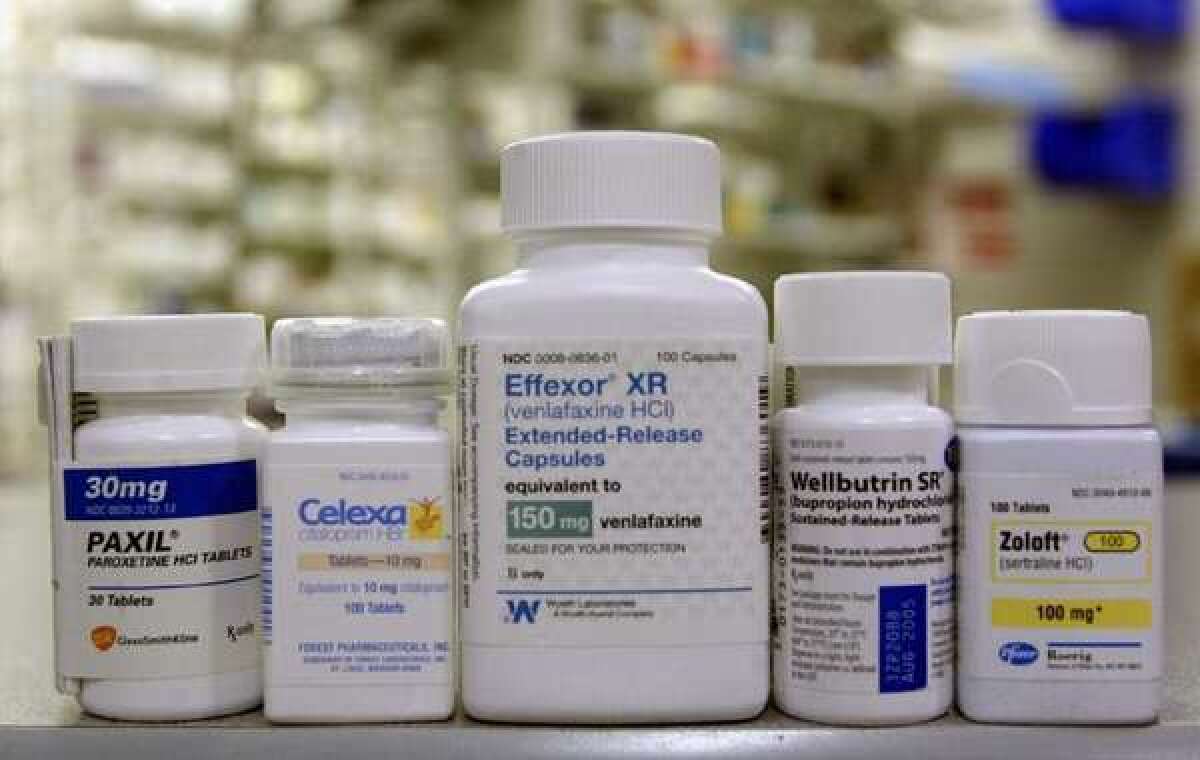
My entire life I have been hearing a narrative that antidepressants, (a category of drug that includes things like SSRIs, SNRIs, TCAs and MAOIs,) are intrinsically bad or indicate some kind of personal failure. People have used different arguments, saying that antidepressants never work or that they work too well and cause people to become emotionless robots. I’ve heard people imply that it’s insulting to even suggest medication as a treatment for mental health issues. Personally I disagree with these assertions and I would argue that the bad rap mental health medications get is born out of bad personal experiences, ableism and misunderstandings of how psychiatric medications are prescribed. (I am going to mostly talk about antidepressants here because that’s what I have the most experience with and knowledge of, but similar principles apply to other categories of medication as well)
I started taking antidepressants over a decade ago, as a treatment for a laundry list of mental illnesses and neurodivergences that started presenting from the time I could speak. I would have severe panic attacks and meltdowns on a daily basis, each lasting for hours at a time, complete with kicking, screaming, and endless sobbing. Eventually after several failed attempts at holistic treatments I was prescribed Citaloptam, an SSRI (a type of antidepressant), to help me manage my emotions and prevent panic attacks, as well as benzodiazepines to take as needed when my panic attacks became out of control. Prescription medication was not the first choice treatment from my doctors or parents, no one wanted to have to give a 9 year old benzos, but it was necessary in order to keep me safe, stable, and calm when I would otherwise be a non-functional mess. I would go on to try a dozen different meds before the age of 15 before settling on the cocktail of drugs that I’ve been taking for the last 5 years or so, which is a combination of an SSRI, an NDRI, and a medication classified as an antipsychotic that is also used to treat anxiety and depression.
Of course, meds alone don’t cure mental illness, that’s not how that works. Therapy, in the forms of group therapies, DBT, CBT, and individual talk therapy have all been parts of my treatment regimen over the years, and they have helped me immensely. Gaining accommodations, correct diagnoses, and removal from environments that exacerbated my mental health issues were also important steps in my journey. But the antidepressants and other meds I took were instrumental because they lowered my baseline level of distress and made me capable of participating in my treatments and helped me be able to access the resources at my disposal. I cannot stress enough how much antidepressants have improved my quality of life.
But that’s just my story, and my experiences are not universal. Not everyone needs meds, and meds don’t work for everyone, especially on the first try. If your mental health issues are mild, not severely impacting your day to day functionality, and not causing you significant distress, psychiatric medication may not be right for you. In that case maybe talk or behavioral therapies would be better suited for you. Even if medication is right for you, it’s quite possible or even likely that the first one or two or three that you try won’t be effective. (Often psychiatrists will cycle patients through several different SSRIs, despite the fact that they don’t work for everyone, before trying other forms of psychiatric medication. This is because SSRIs have been found to be the safest and least addictive type, as well as having the least significant side effects compared to the other types of antidepressants. The fact SSRIs have the fewest adverse effects make it an appealing first choice for doctors, but I digress.) Psychiatric medications are unfortunately not an exact science with a one size fits all solution.
But that doesn’t mean that antidepressants don’t work for anyone, in fact, for some people like me they are as necessary as any medication for any other kind of chronic condition. When people imply that the suggestion of antidepressants is bad, or that antidepressants never work and aren’t worth trying, it reinforces the stigma around them and mental illness in general. I fear that this narrative could prevent people from seeking professional mental health treatment, or cause people who are already on medication to feel bad about it, to hide that fact or stop taking their meds altogether. Taking psychiatric medications is not ‘taking the easy way out’ or a sign that someone hasn’t tried hard enough to treat their issues on their own, it’s a morally neutral act. Thank you for coming to my TED talk.

Oddly enough, I remember my first orgasm. And that’s simply because it wasn’t too long ago, about over a year to be exact. It’s aggravating how the shame I felt towards my body kept me from exploring it. The repressed Christian girl is no foreign stereotype to us, but we never seem to focus enough on the shame hoisted upon young girls that makes them conceal any and every part of their sexual nature. Why was “acting your own age” or “not looking too grown” a priority for my middle school self when I had just barely started to develop tweenage crushes on my classmates? The only people who were in touch with these notions I had no idea existed were the adults around me. My body as a child shouldn’t have been a battleground where I had to prioritize mannerisms over my black girl joy.
Looking back now, coming into my body has been a long and tiring journey. My family’s obsession with purity stems from the dominating Christian culture we came from. The ideals instilled into me as a young girl weren’t just the opinions of my aunt who raised me, but that of her mother and her mother’s mother. For generations, no, eras, we were told to protect young girls through forcing them to adhere to paltry rules about how we use the space we take up. But who am I to break the sanctity of these rules? They seemed to do enough for my female ancestors who succeeded in having families of their own.
Don’t think for a second, I didn’t rebel. I wore what I wanted, listened to punk rock music, and tried my best to escape my family’s expectations. I even came out as pansexual in middle school, which my family brushed off as a phase but was still mildly appalled by it, to say the least. Back then, I thought knowing my sexuality meant being comfortable within it. I was pretty far off.
The sin of masturbation was never discussed by my family, but the weight of it was still there. In my late teenage years I explored my body in the few hours I had the house to myself. All I remember was the constant rush of shame every time I attempted to get myself off. I could only ever think of the judging stare of God from above or that my ancestors or guardian angels were disgusted with me. Despite this shame, I never even reached a climax. Maybe it was what I deserved.
Eventually, I entered my first relationship and there went my virginity. Many people were actually surprised I stayed a virgin for so long as I always tried to make myself come off as the raunchy, sex-positive funny girl. Despite wanting to be known as a “sexpert” in my youth, I never took my chances to engage in any sexual acts until I was a legal adult. I convinced myself this was the safest option to avoid being grounded into oblivion. It wasn’t until I bought my first sex toy that I actually learned the extent of my own pleasure. Like a great number of people with vulvas, clitoral stimulation led to my first success.
It was a moment of cathartic relief like no other. Any feeling of my body being broken immediately left me. Is this what my shame kept me from my whole life? Feelings of purity and shame no longer mattered, because I had finally come into my individual pleasure. Shame only held me back, which is why I refuse to give into it any longer. Those moments of fear now correspond to a time long ago where I was afraid of my body.
“When I met you (thanks Tinder), I had no idea you would become so important to me. You have taught me so many things, and helped me grow immensely in the short amount of time I have known you. And I foresee much more growth to come. Not just with myself, but with us.
I am so excited and fortunate to have you in my life, and to have the opportunity to get to know all of you. It’s easy to see your wit, and kind heart. Do I even have to mention how physically attractive you are? Ugh, and you have the sweetest and most pure soul. You have shocked my unfamiliar system with your support and care, and especially with your patience. All of those amazing things, and yet there is still more to discover. More characteristics and quirks; little details that make you uniquely who you are. I am so lucky.
You have made me feel more loved in six months than I have felt in years. I am so grateful for you, and everything that you are and do. I can only hope that I make you feel as amazing as you are.”
This note was written over a year ago. My partner and I are about to celebrate our two year anniversary in a few months. I thought posting this note and commentary was fitting for my last blog, as I would not be where I am without all of the love and support he has given me. I have suffered with my mental health severely, especially since starting school this fall. He has continuously lifted me out of the darkness and cheered me on in my times of need (which has been often). I never knew something so pure and extraordinary would come out of a dating app like Tinder.
Emotional labor is the act of “regulating or managing emotional expressions with others as part of one’s professional work role”. For the context of this blog post, I will also be referencing emotional work as well, which is the role people use in any social context. RANT: Every post, YouTube video, and link that I looked at typically focused on the emphasis of how women have been the brute focus of emotional work and often, labor. WHAT ABOUT THE MEN?! BLOG: Ideally, men have been the focus, but in our current generation, I am starting to wonder if men are becoming the scapegoat for blame. There are good and bad things to this, but I can only share my experiences. From growing up in a household as an adopted child to working in hospitality at some of the best hotels in the Houston area, to coming home and being expected to “clean up everyone else’s shit” (one of my ex’s fathers literally told me this and suggested I work for some type of plumbing company) to experiencing my own version of emotional labor is…exhausting. As a recommendation, if you’re dealing with being the emotional laborer of your family or workplace, I suggest counseling, good friends, hobbies, and money. Now that I have your attention, the emphasis on emotional labor during this period of the class was for women. Honestly, I love that. Often, the strongest women in my life have carried the emotional labor of EVERYONE in the family. My Grandmother (capital G, because she truly is a G), and my Aunt (who raised me, God bless her soul) have not only raised multiple members of the family but have guided others and influenced people for generations to come. I can endlessly explain what they have done for everyone, including my impaired brother (this falls into the disability category of the past few weeks, but I decided to not go in-depth with these issues and instead focus on emotional labor…anyway) My Grandmother has done amazing things as a widowed woman, and when my grandfather was alive, what I recall of him, he was a remarkable man, veteran, and overall generally good person. In order for him to be that he needed to have an even stronger woman there to not only support him, but to motivate and guide him. We so often focus on a certain gender, but I think its vital to focus and include everyone because we cannot physically do it all on our own – even if social media suggests that we do. When it comes to emotional labor for myself, as an older male, I grew up with the family vibe of “you want it? Do it yourself” This mindset has its own version of toxic masculinity and it worked for a time, but as I have grown older and started practicing gratitude, meditation, and fitness, I have learned that kindness is the key to growing. However, that is also the curse of being easily manipulated and being the scapegoat out of a lack of emotion – if you allow yourself to be. When working as a hotel supervisor, I found myself taking on the emotional verbal abuse of people that travelled so far and attempted to check in, but one minor inconvenience (Well…one time there was a major inconvenience, we sold out and by the time they got there…the people didn’t have a room… and they were diamond members which is equivalent to being a traveling version of Karen) set them over the top, and I had to apologize profusely, make up for their issues by giving them a free nights stay at another hotel, etc… all while keeping a smile on my face. So dumb, but it was vital in learning how to maneuver around people when they are angry and teaching myself how to stay calm in the face of disappointment. That’s an invaluable trait and lessons/memories that I am grateful for. I don’t know, I am a believer in the idea that everything happens for a reason. Maybe I should allow myself to be the gatekeeper of my own “shit”, to be more selfish and selfless at the same time, and to lack the attempt to understand everything and everyone around me but I cant do that shrug. In essence, I think all of us must have some type of role in emotional labor, but please, don’t forget to take care of your mental, physical, and financial well-being. Your family, friends, and pets will thank you for it. (I will always choose to be kind and thank you to all of the people in my life, wouldn’t be me without YOU).
I have many impairments. I need glasses. I need tasks repeated, written down in planners, reminded of multiple times throughout the day, written in front of me, with a harsh deadline in order to get done. I even had braces, and should be using my long-lost retainer inside a hot-pink case to keep that “aesthetic impairment” in check (sorry to my future dentist). But I don’t think I would have ever considered myself disabled until now that I’m facing mobility issues.
To be frank: I still don’t consider myself disabled. I just think the possibility is higher now. I’m older (not too old), and have had incredible stressors placed on my body (an example being COVID in May, as well as the mental stressor of work and a deteriorating friendship) – it’s natural for things to start “falling apart” or “not working as well as they used to”.
But buddy, if you have these impairments – surely you’ve been disabled this entire time! Like, sure, I guess. Except for the fact that my visual and cognitive impairments are the “more manageable” impairments that I face. I have glasses, although I need to go in to update my prescription every few years. I have ADHD, although I need to constantly ensure I can get access to adderall without jumping through ten thousand hoops – not to mention admitting my amphetamine results on drug tests are because of medication, something I am always embarrassed of (another conversation for another day). Mobility impairments aren’t in the same ballpark solely because the “solutions” are less accessible.
In order to check that my ankles are chronically messed up, I have to have routine conversations with my doctor. This means testing out theories of new/different shoes, stretches, exercise plans, and pain medications. Some of which could help, but only for a few periods of time. Others can have no impact whatsoever, or even make my pain worse. Once these are all ruled out, then comes the tests. X-rays. Blood tests. Gait checks. Then the waiting. Then the results. Then the realization, whether good or bad – that I need help. Then the vulnerable accommodations. Begging to be taken seriously, if I was even given the advantage of being taken seriously from the get-go, which not everyone is privileged to. I’m fortunate enough to be working somewhere where the walk from my car and the building isn’t too harsh, but from Parking Lot 29/Walker Apartments (wherever there’s a free commuter spot) to Engineering is absolutely unbearable. So the disability pass – if I even qualify for one – would only be for school, which already feels like a debate that’s waiting to happen: are you really disabled?
That’s when I circle the drain. Is it easier to just accept yourself as impaired, but not disabled? But then, how do you gain accomodations for such impairments? Do you just stick it out, saying it’s not worth it and continue suffering in silence?
Why has society ruined the idea of being disabled?
There’s a problem with anti-trans activists trying to deny gender-affirming care to someone diagnosed as autistic. While it isn’t impossible to receive gender-affirming healthcare with an autism diagnosis, some people have reported issues with being denied on the idea that autistic people do not know their own mind or bodies.
This is becoming a concerning issue when you have to either choose to be autistic or choose to be transgender. I do not mean that you have to choose which one to identify with, as I consider myself to be both, I mean in accessing healthcare. There’s been a trend between transgender people having to choose between gender-affirming care or mental healthcare. James Pisani has noticed an issue where trans people sign up for insurance with good transition care, but terrible healthcare. While it wasn’t discussed in the article I read, when it comes to making a choice, you face mental health issues either way. If you choose good transition care, you get more gender euphoria, you face less personal and public issues regarding how you present yourself, even if it’s at the cost of mental health care and autism support. Say you aren’t the majority of people who made the previous choice, and you instead sacrifice gender-affirming care for mental healthcare. Even if you have the best mental healthcare possible, you will still face the dysphoria or other issues that come from being trans. Being transgender is already a toll on mental health (for most people, I think).
A slider image, with one side showing someone in therapy or similar location with another person holding a clipboard (This is meant to represent choosing healthcare). The other image is someone sitting on top of a car, wrapped inside a rainbow flag (meant to represent choosing transgender care).
Moving on, there’s already been a consistent problem in trying to deny trans identity for a long time. Especially when it become regarded as a “trend”, instead of wider visibility that made people consider their own idea. This exact thing occurs with autism, where some people see the rise in autism diagnoses and consider it to be a trend, rather than the fact they were always autistic and just never had the knowledge or resources to know beforehand.
Correlation between being gender-diverse and being autistic is still under-research. Some researchers, and myself, think that when someone identifies as genderqueer or autistic/ND in some way, that they are less concerned with fitting into society, and are more willing to consider their identity.
I want to wrap this up by the idea that although there’s an overlap in being genderqueer and autistic, that doesn’t mean either should be taken less seriously. I think there needs to be a pushback against the idea that autistic people are incapable of understanding themselves. Thank you for your time 🙂
trigger warnings: body dysmorphia, suicide, mentions of disordered eating, illness
If you remember what your body looks like, I think you’re one of the lucky ones. If you don’t, then I’m not so glad this is what we have in common. Coming from an older West Indian family, my body was always a discussion. No matter how many soccer practices I showed up to, salads I ate, nor how well I did in P.E. class, whenever an aunt approached me it was always “You’ve gotten bigger!” Even throughout my adulthood my body has gotten bigger. I know I’m big, but I wish they knew that I didn’t need to be reminded every second of my life.
I think it’s important to note that I wasn’t always fat, but I still struggled with food and dieting at a young age. Having to deal with cholesterol issues during elementary school was the start of my long, relentless relationship with food. I remember sitting in the doctor’s office with my uncle, his eyes glazed over, listening to every word my pediatrician said. My relationship with food not only originates in this moment, but also with my family’s history of heart disease, diabetes, and many other debilitating diseases. By the time I reached high school, my uncle had a coronary angioplasty, stent insertion, triple bypass heart surgery, and several other surgeries for various kinds of cancer. He never wanted me to suffer like he did.
For as long as I can remember, my uncle micro-managed everything that graced my plate. There were even times we fought at the dinner table so he could see whatever takeout I’d brought home. The stress of bringing home any form of food that he would scrutinize started to transfer into other aspects of my life. In middle school I discovered how uncomfortable it made me feel to eat in public spaces. In high school I even went as far as to become the library aide so I could escape the daunting task of consuming food in the adolescent-filled cafeteria and tried my best to retreat back to the library every lunch break. The library was my safe haven, a place of structure for the moments where I felt the most vulnerable. This is still a habit I have today, I always look for security.
It wasn’t until my senior year of high school that I started my first romantic relationship. He was beautiful, smart, and even had a piercing on one ear that was the jackpot of my teenage girl fantasies. Being with him was the first time someone told me I was pretty. For someone that had only dreamed of having a boyfriend, that meant the world to me. I naively thought that feeling would last forever. As the pandemic raged on, and quarantine forced us into our isolated nests, there became an evident strain on our relationship. Still, we continued to stay with each other. I never noticed when his demeanor changed or that I couldn’t fit into half of my jeans anymore, or even that I was getting bigger than him. I made a huge mistake. You know that horrible mistake people make when they get lost in a relationship because they already have constant bodily validation? Yeah, that one. I gained the “happy weight”, I let myself go. People hate happy weight because being fat makes you feel empty and alone after a relationship. Nobody thinks that you’re attractive anymore and it feels like now there’s this huge responsibility that you have to get back to when you were skinnier. I fucked up.
Coming out of that relationship I became extremely depressed. I moved back in with my family, back to a space I never felt secure in. Endless nights spent scrolling through Tinder, a space where your body is always being perceived, felt completely invalidating. I was a completely different person. And I didn’t feel that way because I had loved and learned valuable lessons about navigating relationships, but it was because I was fat. Everytime I looked into the mirror, a devil appeared on my shoulder pointing out every flaw on my now monstrous body. It’s like my ego had turned against me.
I didn’t want to live in my body anymore. I thought I was nothing without the comfort of another person telling me I was good enough. I can’t say that I never feel that way today, but I’ve worked on it. I’m not about to go on a spiel about how much it matters to love yourself, nor about how self-love is a journey and not a destination… but would love really be worth it if it meant that I had to be skinny, athletic, or fit any of the aesthetic qualities guys on dating apps wanted? Probably not. But I want to be better, because I know that the moments in between these feelings of doubt and despair are much more important than these superficial views of my body. Though, how I never saw myself changing is still a phenomena to me.
In the end, I’m still trying to upward spiral out of this feeling called body dysmorphia.
If someone complimented me, they obviously didn’t mean it. It was a social experiment, a tease, some witty inside joke I wasn’t a part of. Especially if it was a male, they wanted to express their male dominance because they’re insecure about their masculinity. I’m a ‘mere object’. They wanted something from me. They have an ulterior motive, with a million strings attached. These are some of the subconscious thoughts that run through my head when I am complimented for something. The sheer audacity of feeling good from someone’s compliment felt narcissistic. I’d honestly rather be criticized. I had to humble myself.
In Citizen by Claudia Ranken, she writes about how “the physical carriage hauls more than its weight”, in other words how our bodies hold more weight than what is shown on the scale. The weight means trauma and experiences we gained through being a conscious, breathing being. Growing up, I was always taught that if anyone had done a nice favor for me or complimented me, they wanted something. I kept this ideology in the back of my head, like a sticky note I would reference each time I interacted with someone. Over time, I amassed a couple hundred of these notes which eventually turned into a know-it-all heavy weight I lugged around when navigating the real world. “Cute outfit!” a stranger said. “Nice try.” I would think to myself. “You’re not getting into my head that easily.” “You’re so pretty!” Another would exclaim. “Lies.” I thought again. I knew how pathetic I was. I wasn’t conventionally attractive. The phenomenon of having this toxic belief ingrained in my brain destroyed every ounce of self-confidence and feelings of worthiness I had throughout my childhood. It was hard for me to sustain relationships with my friends without these thoughts creeping into my mind because why would they want to waste their time with someone like me? Did they want something? Are they playing the long game?
Eighteen years later, I still have an internal debate whenever I receive a compliment or even a simple praise. The guidebook is etched deep within my brain, so it’ll take quite some time to reverse its effects, but I’ve learned to accept these thoughts and let them free. My friends are friends with me because they value who I am and appreciate my presence, not because they have a secret agenda (unless they do…just kidding). People give and receive compliments because they genuinely had a reason to. So, when someone compliments you on your drip, take it with pride! Make an effort to throw one back. Spread the love!
Regina: You’re really pretty Kat: Thank You Regina: So you agree? You think you’re really pretty?