Dispair / *Despair

I have many impairments. I need glasses. I need tasks repeated, written down in planners, reminded of multiple times throughout the day, written in front of me, with a harsh deadline in order to get done. I even had braces, and should be using my long-lost retainer inside a hot-pink case to keep that “aesthetic impairment” in check (sorry to my future dentist). But I don’t think I would have ever considered myself disabled until now that I’m facing mobility issues.

Read more: Dispair / *Despair

To be frank: I still don’t consider myself disabled. I just think the possibility is higher now. I’m older (not too old), and have had incredible stressors placed on my body (an example being COVID in May, as well as the mental stressor of work and a deteriorating friendship) – it’s natural for things to start “falling apart” or “not working as well as they used to”. 

But buddy, if you have these impairments – surely you’ve been disabled this entire time! Like, sure, I guess. Except for the fact that my visual and cognitive impairments are the “more manageable” impairments that I face. I have glasses, although I need to go in to update my prescription every few years. I have ADHD, although I need to constantly ensure I can get access to adderall without jumping through ten thousand hoops – not to mention admitting my amphetamine results on drug tests are because of medication, something I am always embarrassed of (another conversation for another day). Mobility impairments aren’t in the same ballpark solely because the “solutions” are less accessible. 

In order to check that my ankles are chronically messed up, I have to have routine conversations with my doctor. This means testing out theories of new/different shoes, stretches, exercise plans, and pain medications. Some of which could help, but only for a few periods of time. Others can have no impact whatsoever, or even make my pain worse. Once these are all ruled out, then comes the tests. X-rays. Blood tests. Gait checks. Then the waiting. Then the results. Then the realization, whether good or bad – that I need help. Then the vulnerable accommodations. Begging to be taken seriously, if I was even given the advantage of being taken seriously from the get-go, which not everyone is privileged to. I’m fortunate enough to be working somewhere where the walk from my car and the building isn’t too harsh, but from Parking Lot 29/Walker Apartments (wherever there’s a free commuter spot) to Engineering is absolutely unbearable. So the disability pass – if I even qualify for one – would only be for school, which already feels like a debate that’s waiting to happen: are you really disabled? 

That’s when I circle the drain. Is it easier to just accept yourself as impaired, but not disabled? But then, how do you gain accomodations for such impairments? Do you just stick it out, saying it’s not worth it and continue suffering in silence?

Why has society ruined the idea of being disabled?
Autism and the Prevention of being Trans

Autism and the Prevention of being Trans

There’s a problem with anti-trans activists trying to deny gender-affirming care to someone diagnosed as autistic. While it isn’t impossible to receive gender-affirming healthcare with an autism diagnosis, some people have reported issues with being denied on the idea that autistic people do not know their own mind or bodies.

This is becoming a concerning issue when you have to either choose to be autistic or choose to be transgender. I do not mean that you have to choose which one to identify with, as I consider myself to be both, I mean in accessing healthcare. There’s been a trend between transgender people having to choose between gender-affirming care or mental healthcare. James Pisani has noticed an issue where trans people sign up for insurance with good transition care, but terrible healthcare. While it wasn’t discussed in the article I read, when it comes to making a choice, you face mental health issues either way. If you choose good transition care, you get more gender euphoria, you face less personal and public issues regarding how you present yourself, even if it’s at the cost of mental health care and autism support. Say you aren’t the majority of people who made the previous choice, and you instead sacrifice gender-affirming care for mental healthcare. Even if you have the best mental healthcare possible, you will still face the dysphoria or other issues that come from being trans. Being transgender is already a toll on mental health (for most people, I think).

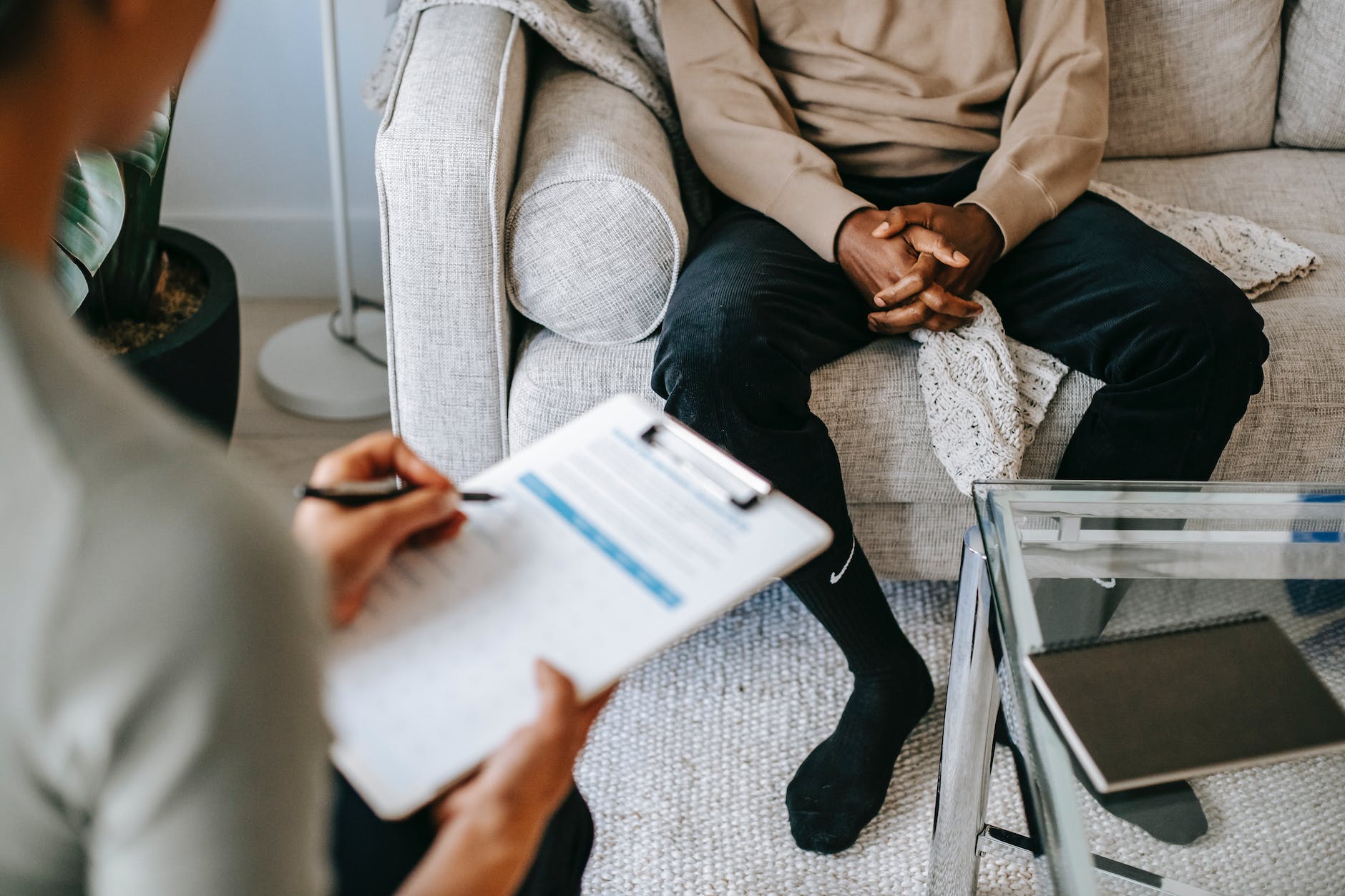
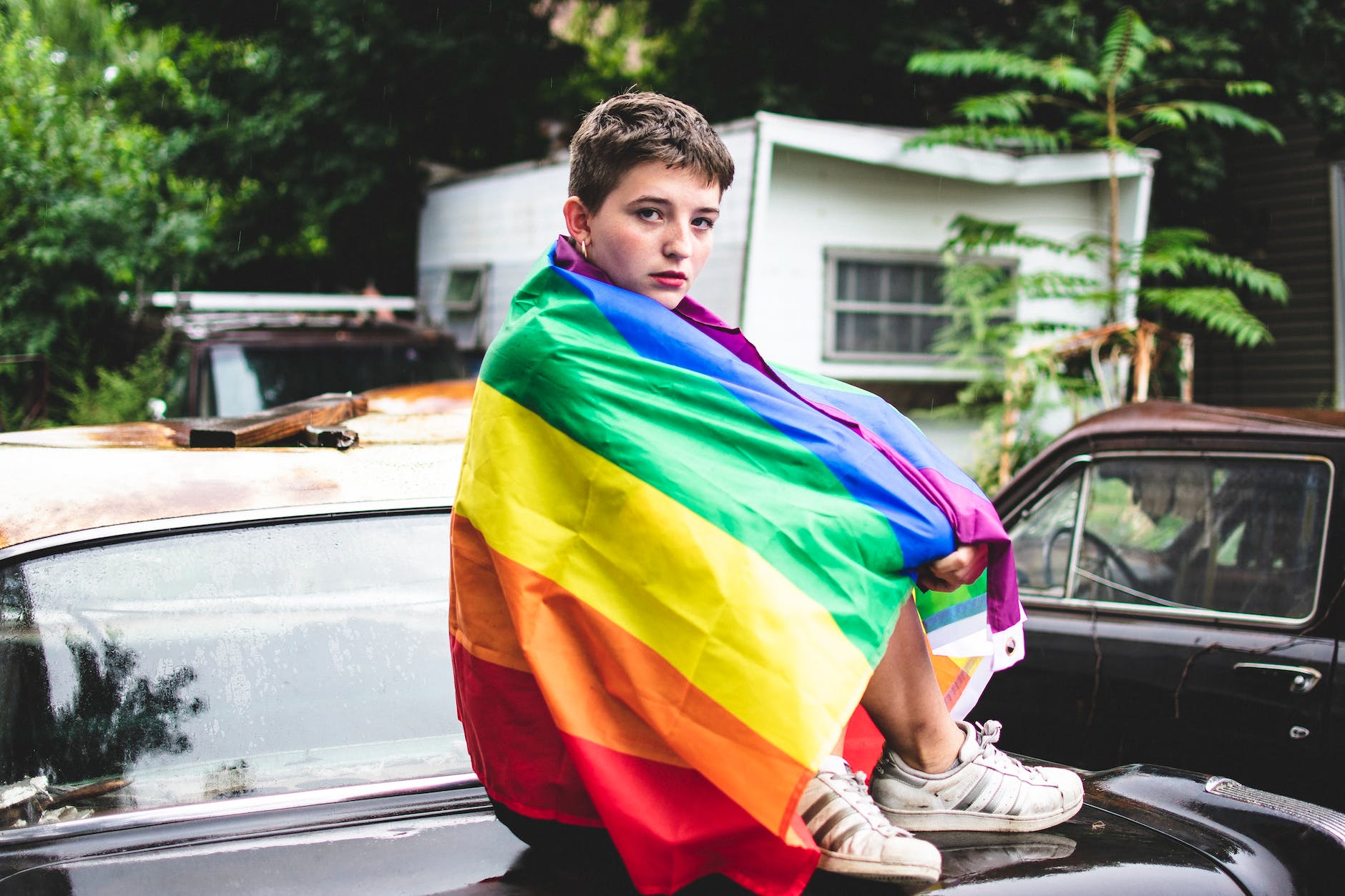
A slider image, with one side showing someone in therapy or similar location with another person holding a clipboard (This is meant to represent choosing healthcare). The other image is someone sitting on top of a car, wrapped inside a rainbow flag (meant to represent choosing transgender care).

Moving on, there’s already been a consistent problem in trying to deny trans identity for a long time. Especially when it become regarded as a “trend”, instead of wider visibility that made people consider their own idea. This exact thing occurs with autism, where some people see the rise in autism diagnoses and consider it to be a trend, rather than the fact they were always autistic and just never had the knowledge or resources to know beforehand.

Correlation between being gender-diverse and being autistic is still under-research. Some researchers, and myself, think that when someone identifies as genderqueer or autistic/ND in some way, that they are less concerned with fitting into society, and are more willing to consider their identity.

I want to wrap this up by the idea that although there’s an overlap in being genderqueer and autistic, that doesn’t mean either should be taken less seriously. I think there needs to be a pushback against the idea that autistic people are incapable of understanding themselves. Thank you for your time 🙂

Sources:

Upward Spiraling Out of My Body Dysmorphia

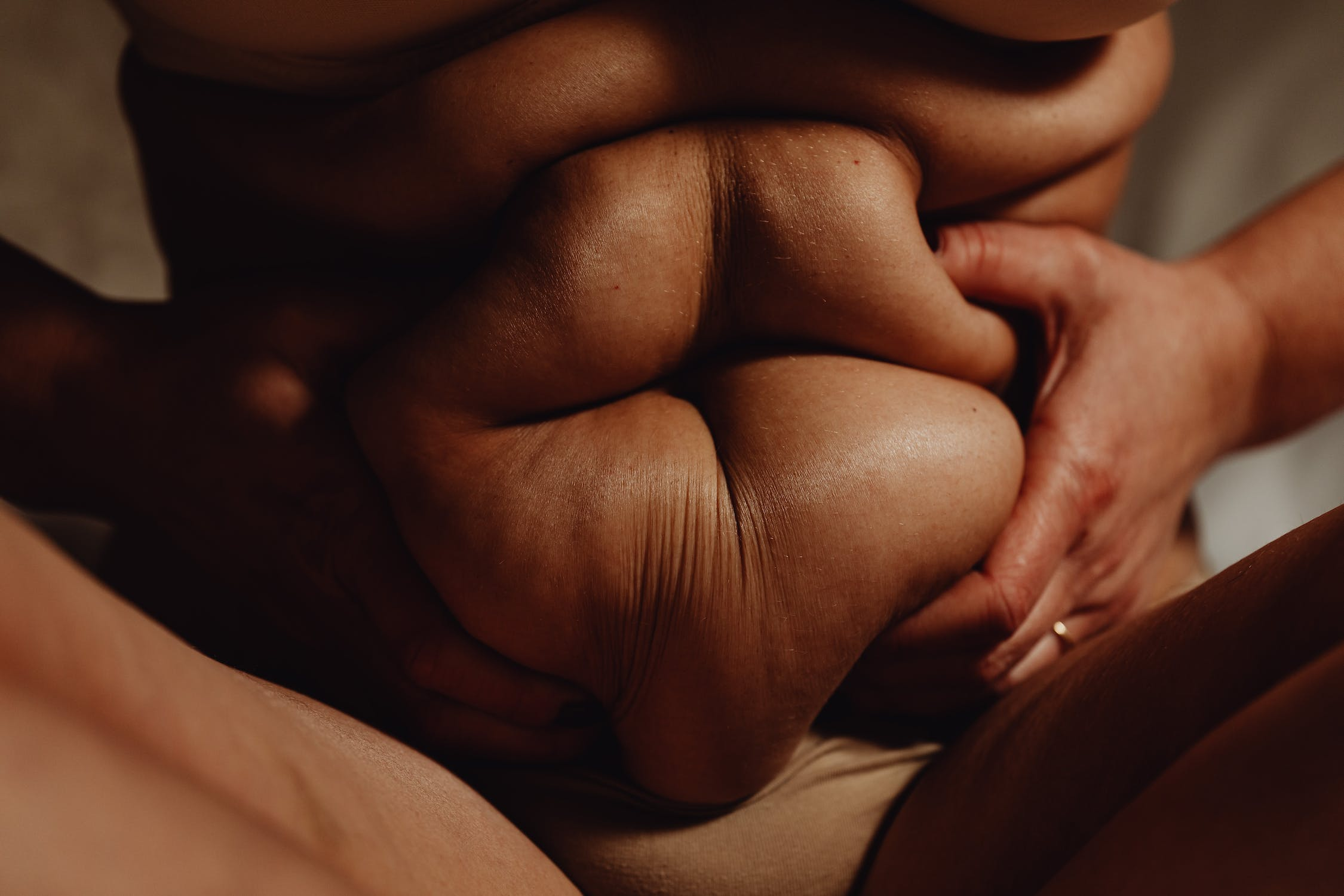
Image by Karolina Grabowska on Pexels.com

trigger warnings: body dysmorphia, suicide, mentions of disordered eating, illness

If you remember what your body looks like, I think you’re one of the lucky ones. If you don’t, then I’m not so glad this is what we have in common. Coming from an older West Indian family, my body was always a discussion. No matter how many soccer practices I showed up to, salads I ate, nor how well I did in P.E. class, whenever an aunt approached me it was always “You’ve gotten bigger!” Even throughout my adulthood my body has gotten bigger. I know I’m big, but I wish they knew that I didn’t need to be reminded every second of my life.  

I think it’s important to note that I wasn’t always fat, but I still struggled with food and dieting at a young age. Having to deal with cholesterol issues during elementary school was the start of my long, relentless relationship with food. I remember sitting in the doctor’s office with my uncle, his eyes glazed over, listening to every word my pediatrician said. My relationship with food not only originates in this moment, but also with my family’s history of heart disease, diabetes, and many other debilitating diseases. By the time I reached high school, my uncle had a coronary angioplasty, stent insertion, triple bypass heart surgery, and several other surgeries for various kinds of cancer. He never wanted me to suffer like he did.  

For as long as I can remember, my uncle micro-managed everything that graced my plate. There were even times we fought at the dinner table so he could see whatever takeout I’d brought home. The stress of bringing home any form of food that he would scrutinize started to transfer into other aspects of my life. In middle school I discovered how uncomfortable it made me feel to eat in public spaces. In high school I even went as far as to become the library aide so I could escape the daunting task of consuming food in the adolescent-filled cafeteria and tried my best to retreat back to the library every lunch break. The library was my safe haven, a place of structure for the moments where I felt the most vulnerable. This is still a habit I have today, I always look for security.

It wasn’t until my senior year of high school that I started my first romantic relationship. He was beautiful, smart, and even had a piercing on one ear that was the jackpot of my teenage girl fantasies. Being with him was the first time someone told me I was pretty. For someone that had only dreamed of having a boyfriend, that meant the world to me. I naively thought that feeling would last forever. As the pandemic raged on, and quarantine forced us into our isolated nests, there became an evident strain on our relationship. Still, we continued to stay with each other. I never noticed when his demeanor changed or that I couldn’t fit into half of my jeans anymore, or even that I was getting bigger than him. I made a huge mistake. You know that horrible mistake people make when they get lost in a relationship because they already have constant bodily validation? Yeah, that one. I gained the “happy weight”, I let myself go. People hate happy weight because being fat makes you feel empty and alone after a relationship. Nobody thinks that you’re attractive anymore and it feels like now there’s this huge responsibility that you have to get back to when you were skinnier. I fucked up.

Coming out of that relationship I became extremely depressed. I moved back in with my family, back to a space I never felt secure in. Endless nights spent scrolling through Tinder, a space where your body is always being perceived, felt completely invalidating. I was a completely different person. And I didn’t feel that way because I had loved and learned valuable lessons about navigating relationships, but it was because I was fat. Everytime I looked into the mirror, a devil appeared on my shoulder pointing out every flaw on my now monstrous body. It’s like my ego had turned against me. 

I didn’t want to live in my body anymore. I thought I was nothing without the comfort of another person telling me I was good enough. I can’t say that I never feel that way today, but I’ve worked on it. I’m not about to go on a spiel about how much it matters to love yourself, nor about how self-love is a journey and not a destination… but would love really be worth it if it meant that I had to be skinny, athletic, or fit any of the aesthetic qualities guys on dating apps wanted? Probably not. But I want to be better, because I know that the moments in between these feelings of doubt and despair are much more important than these superficial views of my body. Though, how I never saw myself changing is still a phenomena to me.

In the end, I’m still trying to upward spiral out of this feeling called body dysmorphia.

If you self-sabotage, clap your hands *clap clap*

A group of people clapping their hands

If someone complimented me, they obviously didn’t mean it. It was a social experiment, a tease, some witty inside joke I wasn’t a part of. Especially if it was a male, they wanted to express their male dominance because they’re insecure about their masculinity. I’m a ‘mere object’. They wanted something from me. They have an ulterior motive, with a million strings attached. These are some of the subconscious thoughts that run through my head when I am complimented for something. The sheer audacity of feeling good from someone’s compliment felt narcissistic. I’d honestly rather be criticized. I had to humble myself.

In Citizen by Claudia Ranken, she writes about how “the physical carriage hauls more than its weight”, in other words how our bodies hold more weight than what is shown on the scale. The weight means trauma and experiences we gained through being a conscious, breathing being. Growing up, I was always taught that if anyone had done a nice favor for me or complimented me, they wanted something. I kept this ideology in the back of my head, like a sticky note I would reference each time I interacted with someone. Over time, I amassed a couple hundred of these notes which eventually turned into a know-it-all heavy weight I lugged around when navigating the real world. “Cute outfit!” a stranger said. “Nice try.” I would think to myself. “You’re not getting into my head that easily.” “You’re so pretty!” Another would exclaim. “Lies.” I thought again. I knew how pathetic I was. I wasn’t conventionally attractive. The phenomenon of having this toxic belief ingrained in my brain destroyed every ounce of self-confidence and feelings of worthiness I had throughout my childhood. It was hard for me to sustain relationships with my friends without these thoughts creeping into my mind because why would they want to waste their time with someone like me? Did they want something? Are they playing the long game?

Eighteen years later, I still have an internal debate whenever I receive a compliment or even a simple praise. The guidebook is etched deep within my brain, so it’ll take quite some time to reverse its effects, but I’ve learned to accept these thoughts and let them free.  My friends are friends with me because they value who I am and appreciate my presence, not because they have a secret agenda (unless they do…just kidding). People give and receive compliments because they genuinely had a reason to. So, when someone compliments you on your drip, take it with pride! Make an effort to throw one back. Spread the love!

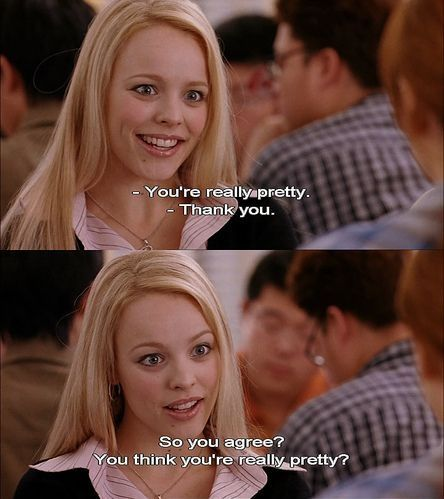
Regina: You’re really pretty
Kat: Thank You
Regina: So you agree? You think you’re really pretty?

We Go Jim

For the entirety of my life up until college I was living with the view that how society saw me didn’t matter, that I could reach my goals by acting and looking however I wanted. I was naturally skinny and with my tall build I looked like a noodle. My social skills were severely underdeveloped, I wore clothes that didn’t help my appearance, I only showered when I felt like it; for a time my hair looked like I went to the barber and asked for the lamest looking cut they could think of. My first semester living on campus I decided to change that. I started going to the gym. I made a friend there, and we started going to the RAC everyday at 7:00 in the morning. I liked the progress that I saw from working out, and my newfound confidence helped me make friends in my dorm. We went shopping together to buy clothes that weren’t hand-me-downs and three sizes too big on me, and eventually I found that my lame old self that I pitied was gone.

This drastic change in my life has altered the way I view society. Society today has taught us that we don’t need to change ourselves because we are perfect the way we are, but that is simply untrue. Unless you are your best self you should always be changing and bettering yourself in everyway possible; that is evolution. Now whenever I see someone defend their lazy actions it irritates me that they believe that they think the choices they are making are correct. “Oh, I have a fast metabolism, I can’t gain weight!” – eat more, “I don’t have enough time to workout.” – cut out the time wasters from your day; these are statements from people that I regularly see do the absolute minimum to take care of themselves, and prioritize indulging in media instead of being productive. They’re unenergized, they’re not social, and they wonder why they are depressed. They remind me of who I used to be before I started working out, and I truly believe that everyone would be an infinitely better version of themselves if they started to “Go Jim”.

“I’m Not Racist, I Have a Black Friend”

“I’m Not Racist, I Have a Black Friend”

For years, I have heard everything under the sun when it comes to being one of the “only’s” in my group. As an adopted and mixed biracial child (27-year-old kid at heart currently), who lived in the mountains of Maryland as a teenager, coming to grips with how the world might view me and my curly-headed naivety was rather unnerving. I came to understand the reference of being the token black friend that allowed for the N-word pass or in other cases, being the only black friend in the class, group, seminar, etc. These experiences heavily shaped my perception of what it means to deal with race.

Personally, I am under the belief that Racism and Phenomenology go together and proclaiming to not see racism or ignoring the effects of racism on our current/past generation(s) is just downright sad. Phenomenology, or in my opinion, the study of the first-person point of view, can contextually be used to define how one person may “feel” in multiple facets of life. Regarding racism, are we to ignore any subject or mention of race, because it did not directly relate to our own lives? Or is race completely made up, and another reason for people to divide themselves from another individual or group?

The biggest change in my feelings of being different, and knowing that I was one of the only’s, came to me when I first heard the N-word, with a harsh r, referenced by a classmate in 9th grade. While it wasn’t said to me directly, it made me immediately focus on the issues behind the people who cannot or will not, for the lack of a better term, filter between what is racist and what may just be an awkward-ass conversation. Being raised within a school that was predominately 95% white was different, but fitting in and being myself was never an issue for me. Hearing the term, “I’m not racist, I have a black friend!” or “you’re not a black person, you’re white” was all predicated-on ignorance and a lack of socialization. I didn’t understand at the time, the importance that we placed on color, but I know what I experienced can be directly linked to misguided views and the sum of young adulthood. Looking back, it’s comedy. Which leads to my understanding of what phenomenology is. Color me shocked after spending at least – 30 minutes thinking deeply about what this long word could be condensed into, but I think the first-person point of view is a great example of what this study means.

When it comes to my personal experiences with racism and bigotry, I feel as if the instances I experienced as a child paled in comparison to others. While extreme to some, I would classify these lessons as just that – lessons. I fall somewhere beneath the idea of creating your own destiny and acknowledging the effects that racism may have had on our entire society. Personally, these instances did not break me and made me even stronger. Hell, now that I am slightly older and have experienced a gumbo-sized stew of diversity in Texas, race means nothing to me. We’re all different and accepting people as different is the key.

As a child, I “felt” as if what I experienced was profoundly true. Even if I was the black friend, call it racist or not, what did that other person feel when they muttered the N-word? If it was of no malice, it’s hard for me to take that comment personally. If I meet someone from a completely different location, that had a different lifestyle than I do, how can I not look at them and wonder where their family tree stems from and how that influenced them today? Asking these questions and looking deeper could 1000 percent be me overthinking, but I think that’s exactly what the study of the phenomena is; putting yourself in another person’s perspective and “feeling” (or at least attempting to understand) why they feel the way they do. Hoping for awareness, I have faith that talking and sharing our experiences as a society can aid in the attempt to ensure blatant racism does not continue to effect generations to come.

Existential Ballet

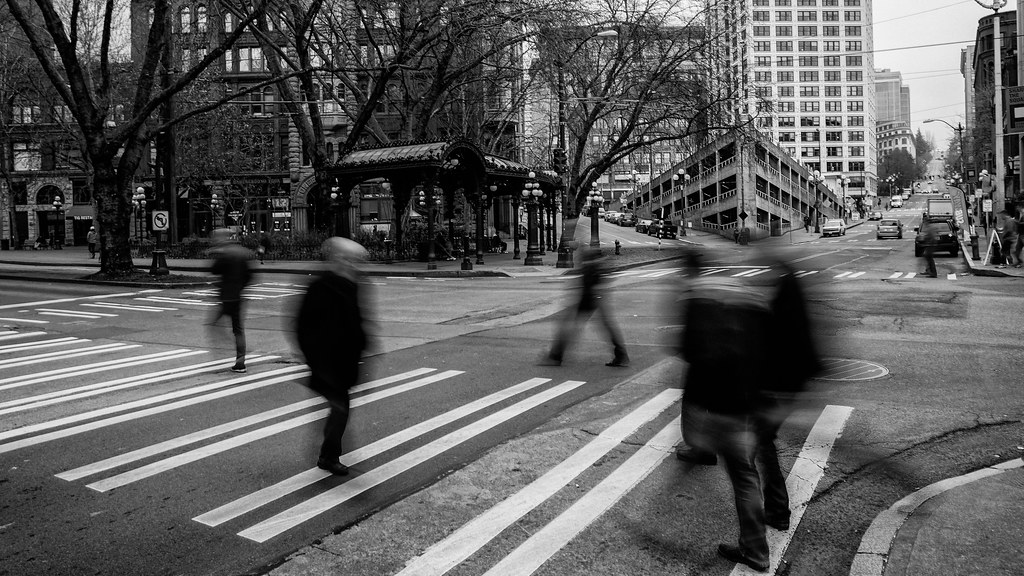
Black and White Stock Photo of busy pedestrians in an urban city.

Bent, Bashed, Broken… I am nursing my own wounds.

I am stretched out wide but still I am shrunken & overlooked.

Sitting on a throne above the heads of many yet I look each of them in the eye.

I wipe their tears & I hear their cries.

They all want to know the secret of my dances.

Why choose to survive when oppression’s vice grip breaks my bones?

Why does my heart continue its dances?

How do I keep up when the earth never stops spinning while dancing rewinds the clock on my face?

The dances that define my divinity burn within a soul that sings the songs & rule the time.

In that time, wherever I stand that space is mine.

It’s there where the dances are done, & in that space my soul’s songs are sung.

Spinning and Swirling I reach high with hopes of experiencing a new feel & don’t worry, I will.

A remarkable existence if I must say.

An adaptive sway for the intimate encounters that pass by my way.

These are the same dances done by the fire’s flames.

I waltz the same waltz that puddles waltz when it rains.

My tears are called resilience & my beads of sweat are named endurance.

You can master the secret of my dances. Watch me give you reassurance.

The messages might escape you but it’s not of your choosing.

The secret to my dance, is to just keep moving.

Acting like a female

https://seedandspark-static.s3.us-east-2.amazonaws.com/images/ProjectImage/000/034/263/large/ALW%20thumbnail%20FINAL%202.jpg?cb=34263

For as long as I can remember, men are not encouraged to be emotional simply because “you don’t want to be a bitch.” It is like an unspoken rule everywhere because it was the case in East Africa, Congo, Jamaica, and now in the United States. I remember back in my early childhood, whenever I fell and hurt myself playing outside, the people around would just whisper “shhh shh stop whining, be a MAN!” It was so engraved in me that every time I saw a boy crying, I would view him as weak, and incompetent; real men don’t cry. However, whenever I saw a girl crying, the first thing I would think of is “I wonder what is wrong with her? Does she need someone to talk to?” As I grew up and started experiencing more of life, I got that revealing moment like “Ok, I see why people cry now.” It’s not a secret that life gets hard. It will get hard for everyone no matter their background, and every once in a while, you will reach a point where you just have to let it all out. 

In my case, I found it difficult to cry, for instance, l will get really emotional but nothing will come out; no tears. So, I will end up forcing it out but to no avail. Next thing you know I’m on YouTube watching sad videos hoping they will pull a tear out of me like my situation isn’t terrible enough. An hour in after doing everything in my power, guess where I end up? On google just like every sensible person. There I typed, “why won’t tears come out when I cry.” The results were varying but I found it funny how one of the results was “you live in a dry climate; therefore, you don’t have a lot of water in the body.” I knew right away that this didn’t apply to me because it was a humid summer evening in Maryland and I sweat all the time. After a considerable amount of reflection and reading sources from mindbodygreen.com, I realized that the reason I won’t fully cry is that I won’t let myself get there, and that is because of all the cultural stigma that has been ingrained in me for years on end. Crying puts you in a vulnerable position and that can be hostile because we grew up seeing people get shamed and called names for simply expressing their emotions. It is very unfortunate that some people end up taking their own lives because they don’t feel comfortable or scared to express their emotions, so they end up burying them deep inside them until they can’t anymore. According to ourworldindata.org, men are twice more likely to commit suicide compared to women and the main reason is that most men would rather take their own lives than put themselves in a vulnerable position like sharing their deep feelings with the people around them. With proper education and awareness, we can eradicate stigmas like this and make it a safe place for everyone to share their feelings and have them be heard by someone. Just like the article by Iris Young Throwing like a girl, some actions and ideas just should have a gender attached to them because not only are they offensive, they can be hostile and take from one’s wellbeing.

on reclaiming your own agency

on reclaiming your own agency

“Being perfect is boring, failing is fun.”  I’ve been reflecting on that phrase my roommate shared with me a few nights ago.  I had opened up quite a bit about my struggles with managing academic responsibilities with the expectations of my parents, in addition to whatever standards I have set for myself.  Unfortunately, “perfection,” or something close to it, is the end goal I’ve been conditioned to pursue throughout my academic career.  This has been farther compounded by the fact that I earned the title of the smart kid out of my four siblings (I even got the nickname “professor” for at least a year and a half).  Pair this with constantly having others comment on the excellence of your family and siblings, and now I’m not just chasing after perfection for my own sake, but to uphold my family name.   

Continue reading →

A monstrous matryoshka

As I had read Susan Stryker’s article on trans rage and the comparison of Victor Frankenstein’s unfortunate monster, I found myself following each word closely. I had so rarely seen anyone talk so openly about the pains and sorrows that are hidden about transgender identity. The discussion in class presented an extremely important point on who is allowed to show and vocalize strong negative emotions like rage and pain. As a person of color, as a queer and transgender individual, my permission of showing these emotions has been quite small, but looking further inward I know that there are other reasons I am not one to show these emotions. For my last post I call upon Stryker’s voice of these negative emotions and a monstrous identity, but not for my transgender identity, but one I am coming to terms with existing within me. I open up the physical patchwork body of mine to see inwards, within the darkness I see a cage chained to the ground. Moving closer I can hear the rattling of anger, I peer inside the cage to see a gnarled and patched up figure, teeth unnaturally pointed and sharp objects partially embedded in its body. I instinctively know these objects were brandished weapons with the purpose of subduing and killing this figure, but they have failed. This figure was human once and I can’t help the sadness I feel seeing what has become of them.

“What happened to you?” I ask cautiously.

The pause feels deafening.

“I’d think you’d recognize us, not many come back from the war of trauma unscathed.”

It’s said that what doesn’t kill you makes you stronger, but no one should be forced to be this strong to the point of being caged in fear.

As an echo to the original article, my comparison of monstrous identity in regards to trauma is not one to be used against all who have trauma. This is my sole reclamation of my past and should never be used against individuals who do not wish to do the same. This post will include raw calls to mental health happenings in response to traumatic experiences. Though there will be no details of happenings, there are insinuations of abuse on varying levels.

Continue reading →