omg you’re so big!

TW: Body Dysmorphia

I hate how much I hated myself. Like it sucks not wanting to be in pictures, not wearing a piece of clothing because it doesn’t flatter you, having to take breaks from social media because you are exhausted from comparing yourself to everyone else on the internet, I could honestly go on about the endless amounts of things I skipped out on because of how I saw myself. In a world where straight, higher class men set the standards for literally everything and everyone, I fell into the trap where I thought I had to change my whole entire being. This is because our society has fantasized a certain look for a “woman.” small, tiny, dainty are just some of the nonstop chatter that would repeat in my head telling me that this is what I had to look like, and I didnt look like that. As a result of this, I started to under-eat and overwork my body. I had successfully fallen into the never ending vicious cycle. This was the start of how I changed my view on working out. I always went to the gym to be smaller. I wanted smaller calves, smaller arms, and a small waist. I wanted to feel “dainty.” When I say I used to overwork my body I was not kidding, like I went to the gym twice a day, everyday for hours. Because I was so scared of gaining weight I would not replenish my body at all, it honestly got very dangerous and out of hand for me.

However, I started going to the gym with friends, and they would say things like “yo look how big my muscles are getting” and they were excited. It genuinely confused me, why did they want to get bigger, but it was all because they had grown up with a different experience. They didn’t view the body as something that needed to look a certain way, but as something that needed to be taken care of. These types of relationships started helping me change my experience and view on my own body.

I started to see my perspective change and view my body in a different way depending on the environment that I was in. Being in the gym, a place where “you’re getting big” and “look at your gains” is the biggest compliment you can get that completely changed my ideology of my own body. I found myself yearning to get those kinds of compliments and over time I also found myself not wanting to be called dainty, but strong. I wanted to be strong and healthy. The gym changed my definition of “attractive,” it was no longer under-eating, basically depriving myself of my nutritional needs, but to fuel and nourish my body. To care after my body so that I could show up, be present, and take those pictures i had once shied away from   

In conclusion, my phenomenology with my own body was destroying myself. I was not able to see myself worthy of nourishment and care, more as a machine that needed to constantly look perfect. I was so stuck in that mindset that I was destroying myself without even consciously trying to. Going to the gym and picking up the weights changed my perspective of my own body. My definition of myself changed when I changed to a different environment. Before going to the gym if someone had told me I looked big, I’d be devastated, but because of how the gym changed my mindset, i have been working on taking it as a compliment.
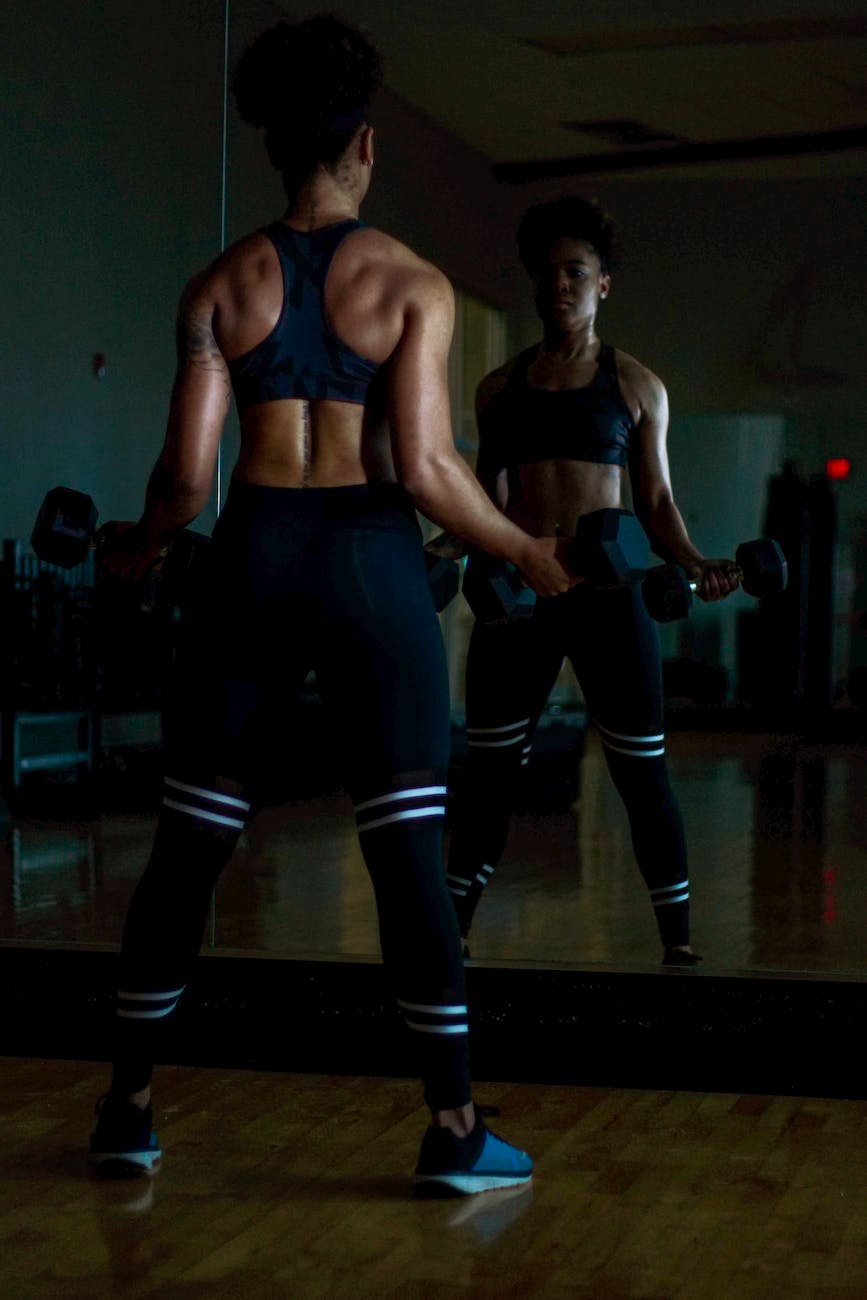
Photo by Eduardo Romero on Pexels.com

Looking through an Artist’s Eyes

Phenomenology of Artists and their perception of the world

Have you ever looked at an Artist’s work and thought “Wow, this exactly encaptures how I feel..”, if you haven’t you need to do your research because it’s truly a life-changing experience that you DON’T want to miss out on. Whether it’s poetry, sculptures, paintings, theater, or music; art always makes me re-evaluate my perception of the world. I often wonder what kind of experiences has this artist had that have shaped their mind and thinking to express themselves this way. How are they able to translate their thoughts into works of art that communicate the same message/experience that they felt or went through?
Self-expression in today’s world is such a complex and difficult thing. I feel like no matter how you express yourself in whatever shape or form, people will have a million different opinions of you ranging from good to bad. Even in simple everyday communication, people have so many different perceptions of the world based on their life experiences that what you say can be perceived in a million different ways. But, how is an artist able to so VIVIDLY and CLEARLY communicate something to people all around the world, who have a million different perceptions, and still give entirely the same message?
If you’re having a hard time understanding what I mean, let me show you some works of art and think to yourself about what this means to you.

“Can’t Help Myself” By Sun Yuan and Peng Yu

“This is just a robot carrying on its programmed motions..” you might think at first glance. But after watching the video for longer than a minute, you might feel an emotional response stirring in you for a multitude of different triggers depending on your life experiences and your own phenomenology.
Does this robot symbolize your feministic way of life? Trying to un-do all of the patriarchy, while society persists to treat you less than a man, not equal.
Or, does this robot symbolize your relationship with your body? Trying every diet known to man but never being considered just right, rather “too small” or “too big”.
Or, does this robot symbolize your struggle to make ends meet? From getting a degree to getting your desired job, your ever-so-increasing standard of living can never make any paycheck enough.
Or, does this robot symbolize your relationship with your parents, a significant other, or an old friend? You love having them in your life, but it’s an ever-lasting circle of ups and downs.
Perhaps, this robot symbolizes your relationship with food. You promised you would do better for yourself but you go back to your stress-eating habits and can never say no when you should.
There are so many interpretations of art, and all of them point back to the viewer’s experiences, upbringing, and gender, which have all shaped them to have those interpretations. But what are those experiences and phenomena that have shaped you, the viewer? What are they for the artist?
To conclude, I personally think it is very interesting to ponder these questions. To me, this is what phenomenology is all about, what makes us do the things we do, or think the way we do.

Unruly Bodies

Unruly Bodies

you caused me to be nonbinary

Content warning: Emotional Abuse, shitty highschool relationship

Photo by cottonbro on Pexels.com

Sometimes I sit and think about what “caused” me to be nonbinary. I used to be so content in my childhood as a girl, where did it all go wrong? As my mom puts it, where did her “daughter” go? Now before you try and stop me, I know that line of thinking is problematic and pathologizing, but sometimes I spiral down that rabbit hole. I want to pinpoint exactly where my relationship with my assigned gender at birth went awry, and to me the answer is clear. I can trace all my problems back to you. You were my first big relationship, my first “I love you”, and also the person who ruined me. You made me question every part of my body, you made me wish I had more curves and bigger tits and less blonde eyebrows. You told me that if I didn’t wear a push up bra to school, you wouldn’t talk to me in the halls. If I didn’t draw on eyebrows to make up for the fact mine were so clear, you wouldn’t even look my way. At the young age of 15 you forced “the ideal body” on me so hard I think it broke me. Now my tits are big, I have a “womanly” figure, but I don’t identify as one. And I think that is due to the two years of you constantly sexualizing my young body.

I know, based off the concept of phenomenology (the study of consciousness through the first person experience of events and, well, phenomena), that this did affect me and my view of myself and the world around me. Your forced perspective on my body changed my view of how my own body moves and is perceived by the world around me. Two years of hearing what I needed to change about my physical body makes me move around in the world feeling awkward and being very aware of how people view my pear shaped body. I don’t think I’m attractive and I interact with people as though I truly am physically unattractive. Based off of other experiences I have had since, I know other people think that I am beautiful and that my body is lovely, but the words you said scarred me forever. As I continue to collect more experiences maybe I can put myself further and further from the experience that was you, but it’s been six years and still you affect me.

I know that realistically, and due to phenomenologists, it was not just you who “made” me nonbinary. I know it was probably a combination of experiences I have had, as well as my own personal relationship with gender outside of you that led me to be nonbinary. That being said, I enjoy how easy it is to say that all my identity issues are because of how you treated me. You already are a antagonist in my story, so why not blame you for everything? You would hate me as I am now, and that gives me power, I think (I hope).

Same But Different

People are all brought into this world as newborns not knowing a single thing. We all have the same beginnings so why is it that we are all so unique? Phenomenological research, answers that question. Everyone experiences the world and interacts with the world in their own distinctive ways. For example, if I compared my childhood to my father’s, our daily schedules were the exact same, but every encounter was completely different.

I woke up and got dressed in fresh, clean clothes. He woke up and wore the same clothes he slept in. I ate a nutritious breakfast with oats and eggs. He ate a plain piece of bread. I rode the bus to school. He walked three miles to school. I sat at a desk and took notes with a pencil and notebook. He snuck into a random class and took notes mentally because he couldn’t pay his teacher. I went home to do homework. He went home to plow the fields. I ate a bowl of spiced noodles for dinner. He had a bowl of plain porridge for dinner. I showered in a bathtub. He bathed himself in a lake. I slept on a soft mattress, covered with a blanket. He slept on a straw mat, next to a small fire.

His background led him to become strong headed and incredibly traditional. Every decision he makes is based on survival, regardless of any emotional appeal. Although, he tries to push his values onto me, I disagree with many of them. The way we each view the world are very unalike because we had different scenarios thrown at us, even if it was the same task. This form of comparison is very limiting because we can only analyze specific situations, but it is still insightful into how people develop their set of morals as they react to their experiences.

“I’m Not Racist, I Have a Black Friend”

“I’m Not Racist, I Have a Black Friend”

For years, I have heard everything under the sun when it comes to being one of the “only’s” in my group. As an adopted and mixed biracial child (27-year-old kid at heart currently), who lived in the mountains of Maryland as a teenager, coming to grips with how the world might view me and my curly-headed naivety was rather unnerving. I came to understand the reference of being the token black friend that allowed for the N-word pass or in other cases, being the only black friend in the class, group, seminar, etc. These experiences heavily shaped my perception of what it means to deal with race.

Personally, I am under the belief that Racism and Phenomenology go together and proclaiming to not see racism or ignoring the effects of racism on our current/past generation(s) is just downright sad. Phenomenology, or in my opinion, the study of the first-person point of view, can contextually be used to define how one person may “feel” in multiple facets of life. Regarding racism, are we to ignore any subject or mention of race, because it did not directly relate to our own lives? Or is race completely made up, and another reason for people to divide themselves from another individual or group?

The biggest change in my feelings of being different, and knowing that I was one of the only’s, came to me when I first heard the N-word, with a harsh r, referenced by a classmate in 9th grade. While it wasn’t said to me directly, it made me immediately focus on the issues behind the people who cannot or will not, for the lack of a better term, filter between what is racist and what may just be an awkward-ass conversation. Being raised within a school that was predominately 95% white was different, but fitting in and being myself was never an issue for me. Hearing the term, “I’m not racist, I have a black friend!” or “you’re not a black person, you’re white” was all predicated-on ignorance and a lack of socialization. I didn’t understand at the time, the importance that we placed on color, but I know what I experienced can be directly linked to misguided views and the sum of young adulthood. Looking back, it’s comedy. Which leads to my understanding of what phenomenology is. Color me shocked after spending at least – 30 minutes thinking deeply about what this long word could be condensed into, but I think the first-person point of view is a great example of what this study means.

When it comes to my personal experiences with racism and bigotry, I feel as if the instances I experienced as a child paled in comparison to others. While extreme to some, I would classify these lessons as just that – lessons. I fall somewhere beneath the idea of creating your own destiny and acknowledging the effects that racism may have had on our entire society. Personally, these instances did not break me and made me even stronger. Hell, now that I am slightly older and have experienced a gumbo-sized stew of diversity in Texas, race means nothing to me. We’re all different and accepting people as different is the key.

As a child, I “felt” as if what I experienced was profoundly true. Even if I was the black friend, call it racist or not, what did that other person feel when they muttered the N-word? If it was of no malice, it’s hard for me to take that comment personally. If I meet someone from a completely different location, that had a different lifestyle than I do, how can I not look at them and wonder where their family tree stems from and how that influenced them today? Asking these questions and looking deeper could 1000 percent be me overthinking, but I think that’s exactly what the study of the phenomena is; putting yourself in another person’s perspective and “feeling” (or at least attempting to understand) why they feel the way they do. Hoping for awareness, I have faith that talking and sharing our experiences as a society can aid in the attempt to ensure blatant racism does not continue to effect generations to come.

Men should not act feminine

It is natural that society has expectations on how genders are supposed to act. Based on how the world portrays men and women in the media, women are expected to be seen as more reserved and act more feminine whereas men are seen as more forceful and masculine. These stereotypes are presented all the time in society and these traits in women and men is what most people would expect when meeting a man or woman. Gender Role expectations has become so prevalent in society that men and women who act outside of the norms would be viewed as more inferior and most likely face some sort of oppression. For example, if a man would be seen showing more feminine mannerisms, they are more likely to be seen as more inferior and not as “manly” like. People would also try to associate sexual orientation with masculine and feminine personality traits. If a woman were to be presenting more masculine mannerisms, people would most likely that she would be a lesbian. A couple years ago, I was trying to catch a bus ride home from my community college and I was just sitting down on a bench at the bus station. There was man who walked up to me trying to sell his mixtapes and played some of his music for me. I gave a listen, and we started talking about music and stuff. Later in the conversation, he suddenly stops talking and looks at the way I was sitting on the bench. I had my legs crossed sitting down and I he apparently viewed that as how a women would sit. He then asks me, “Why are you sitting like that?” and he also asks, “Do you really want to have that lifestyle?”. I told that this is just how I sit and he didn’t say anything afterwards. The fact that he had asked me those questions made me feel like I was different and that I should not be sitting the way I was because that’s not how men are supposed to sit. He was making the association of my feminine mannerism and my sexual orientation and make it seem like I’m choosing to have this lifestyle.

Microaggressions for Dummies (First Edition)

Have you ever wanted to insult people in a way that makes it impossible for them to call you out on it? Are backhanded compliments too direct for you? I have just the thing for you. It’s called a microaggression. You may be wondering; “Gee willikers! What makes something a microaggression? Why is it micro and not regular-sized or macro?” Well, allow me to explain.

Read more: Microaggressions for Dummies (First Edition)

A microaggression is defined in the Merriam-Webster dictionary as “a comment or action that subtly and often unconsciously or unintentionally expresses a prejudiced attitude toward a member of a marginalized group (such as a racial minority)”. This technique is usually used to demonstrate a person’s place in a sociological hierarchy without outright speaking about it.

This can happen in many different ways for many different people. I will now provide a couple of examples I have witnessed.

During one of the meetings for a hobby group, the members were discussing cosplay. One of the people mentions that they saw a person whose gender they were unable to assume. Because of this, they chose to say, “I couldn’t tell if it was a boy or a girl so I just called it an it.” I would consider this a microaggression because their language implied that when a person does not conform to the gender norms engraved into their mind, this person would no longer consider the gender non-conforming person to be a human being. This is obviously bad because we are dehumanizing living human beings for very arbitrary reasons, and alienating trans people who hear ideas or statements such as this.

Another example would be from a friend. They were walking to school and someone, out of nowhere, began to touch their hair. This is unusual because the person had seen hair that was different from theirs, and decided to touch it without asking. The friend found this experience to be similar to that of an exotic animal in a petting zoo. It was also dehumanizing and uncomfortable. 😦

Polymorph

A question plain and simple but as it passes my ears it’s as complex as latin 

Like an ancient spell I don’t quite understand what it’s asking of me

Then I see as I feel my body contort and transmute under the syllables 

Bones crack and fur grows I am now beast relegated to glass enclosures and timed meals

I am watched daily to dangerous to be let free of my cage but just exotic enough to be entertaining 

It’s then that i’m released into open air where my fur is once more just hair my fangs once more become teeth I am human

Yet i feel that beast pawing at me under my flesh waiting to be released by that spell once more 

How a Racist Ruined Christmas

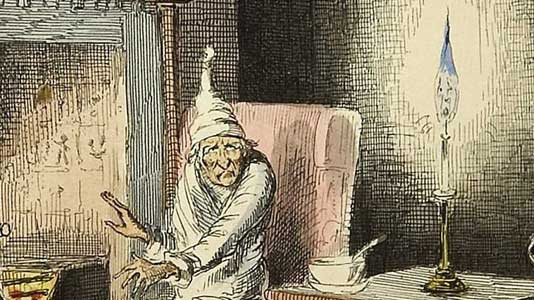
It was Christmas morning in San Francisco, California and my uncle was taking care of my aunt’s pets before coming over to my grandparent’s house to meet up with everyone for Christmas festivities. As my uncle was walking back to his car, one of the neighbors approached him to complain about how he couldn’t see down the hill to get out of his parking space because my uncle’s van was too big. (My uncle drives a large white utility van. It’s for his work and his only means of transportation.) The neighbor, living in an affluent area in San Francisco, immediately assumed my uncle didn’t live there and had no right to park his car there. He didn’t know my uncle was staying with family and that he had just come from the house next door. The neighbor backed up his demands that my uncle moves his car with several rude, racist, and classist comments to my uncle, including the rallying cry of racists everywhere, “go back to where you came from.” The kicker of the story is that my uncle is actually Native American (Navaho). This white man, who is living not only in a state, but a country that was stolen from Native Americans told a Native American man to “go back to where he came from.” This was Christmas morning and my uncle, who has a “let’s all get along temperament, was left feeling pretty down. The whole encounter made him feel like he was just viewed as an unwanted outsider, who could be treated as a lower life form who had no right to park in a particular neighborhood. This wasn’t the first time people have discriminated against him based on his appearance, nor was it the most dramatic and potentially life-threatening occurrence. The thing that really hurt was that it was Christmas morning and the racist Scrooge of the neighborhood had not discovered the true meaning of Christmas. People make assumptions, that’s normal, but feeling justified in acting in a hurtful and hostile manner simply because of these assumptions is wrong. That neighbor didn’t just assume my uncle was Hispanic, he also assumed that because of what my uncle looked like, he didn’t belong in such a wealthy area. The neighbor also assumed that he then had the right to order him to move his car and throw in a racist rant as well. Why? Why did the neighbor feel he belonged there and not my uncle? Why did he feel free to treat someone this way? Because America is a segregated country, not only by skin color but by income and since my uncle didn’t fit the norm of the neighborhood, this man decided to come outside of his multi-million-dollar house on Christmas morning, morph into the love child of Ebenezer Scrooge and the Grinch and feel entitled to dump his racist vitriol on my friendly and kind uncle. The moral of this story is whatever your assumptions are, everyone, deserves to be treated with respect, and don’t be a racist bigot.

Continue reading
What does it mean to be a girl?

What does it mean to be a girl?

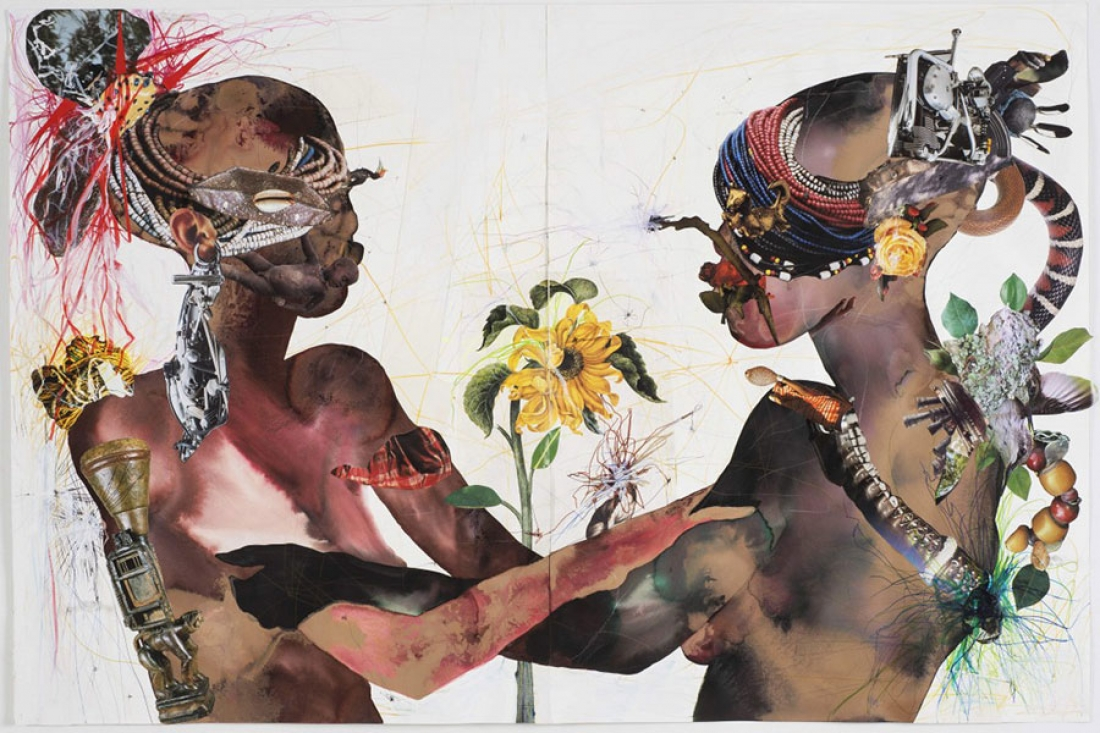
https://www.craftyarts.co.uk/blog/2019/03/inspirational-female-artists-who-challenge-how-we-look-at-art-womens-day/

If you are a girl, you are assumed to be “weak” especially when it comes to playing sports. I have seen a lot of WNBA(Women’s NBA) slander on the internet as if women playing the same sport as men shouldn’t be given the same recognition. Or sometimes, you’ll hear boys insult each other by saying he “throws like a girl” meaning the throw is weak or needs work. Women and men are biologically different but that doesn’t mean they can have the same capabilities in some cultures, women or only seen as objects to continue the bloodline. Their dreams and goals don’t matter, even if they’re supported, they’re given no opportunities.

Then their bodies are talked about, given that society has now placed criteria on bodies. Some are deemed “normal” while others aren’t.  Then they start going to the gym trying to fit into the “normal” category (going to the gym is not wrong but going only to fit into the societal standards says a lot) so they’ll be appreciated by society more. These standards make the girls lose self-worth, they stop loving themselves for the way they are, instead, they force themselves to fall under the societal standards for everything, and then they think they’re worthy of loving themselves or even getting loved by someone. This is how we unconsciously perceive ourselves, through the eyes of society. We don’t ever realize that a lot of what we do is because we want to fit in. We even go to the extent of changing our bodies to fit in. The Brazilian butt lift (BBL) has become a norm now, every woman almost is getting the procedure done. The look of a bigger butt is considered attractive and women want to fit into the new societal standard of attractiveness. That is the same case for wanting fuller lips through Botox. Society puts a lot of pressure on women when it comes to the beauty standard or attractiveness scale. Women are losing their self-worth and in the end, they keep falling into this cycle of changing themselves for others which never does anything for their own happiness. The new procedure will never stop and they will always keep wanting more and more things done to their body. A lot of it is influenced by men as well. The thought of not being “wanted” by a man because of your looks also drives women to change the way they look.