Identity Denial

Identity Denial

I spent significantly more time figuring out a name for myself than I did understanding my sexuality or gender. It kind of came naturally to me once I was open to all the possibilities. Even still, I wish I had chosen another name and while I have one in mind, I never switched to using it because I didn’t want to inconvenience other people. My current chosen name is very basic and easy, while the other I would probably have to spell out regularly. I don’t even know if it’s a bad thing, because when I see my current chosen name I see MY name which means a lot. However, it’s so weighed down by my family being complete assholes about it.

My family frequently points and laughs when my chosen name shows up (on my mail, for example) and make comments when I remove my dead name from things. At thanksgiving, my cousin set the table and went out of her way to write names on napkins for everyone. Despite me being out, she still made the decision to do this, and to write my deadname. I immediately turned it over and someone else judged me. I don’t know, maybe consider not being a dickhead? “Be kind to others” they all say, until they don’t like you, I guess.
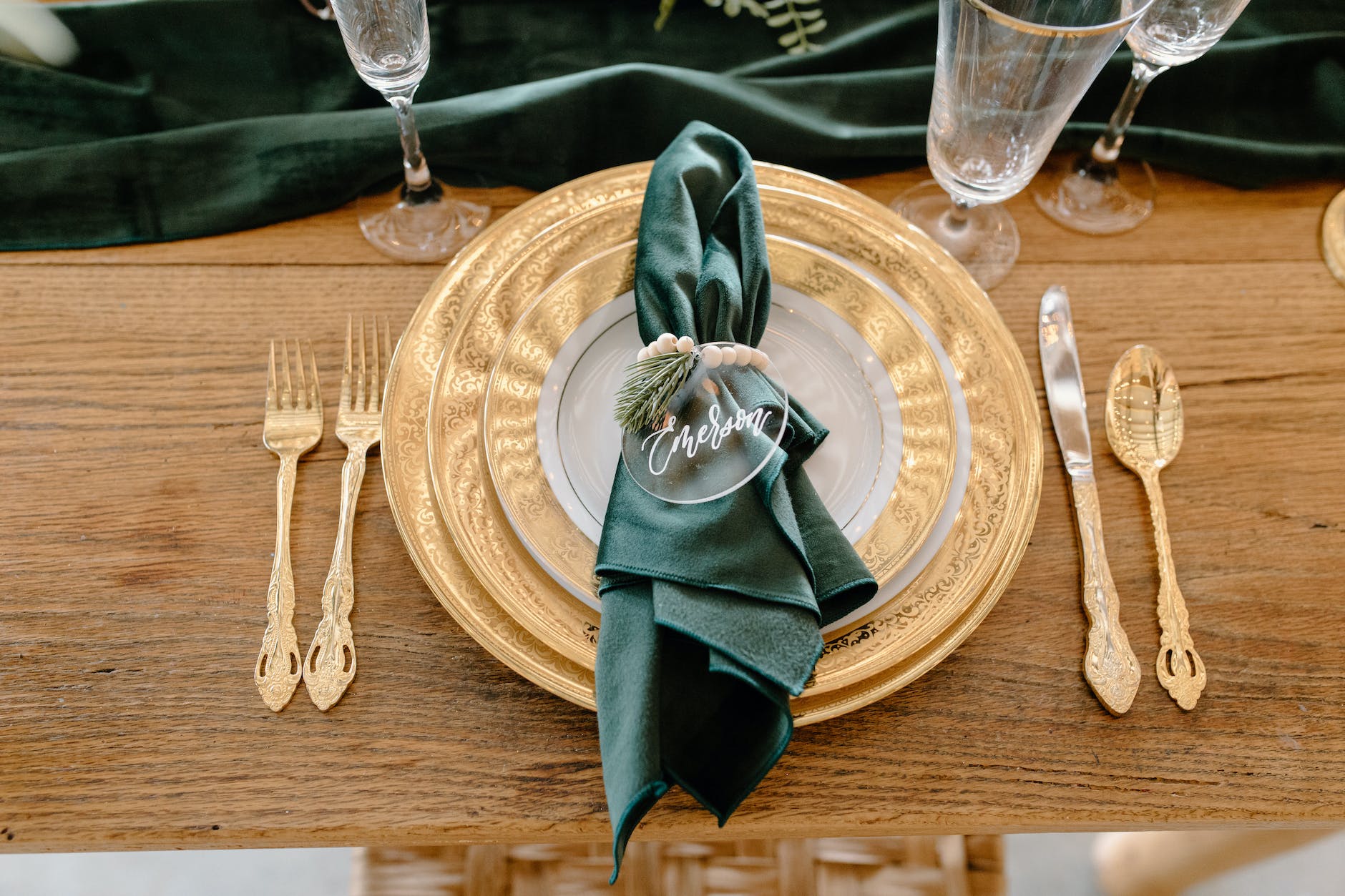
Photo by Tara Winstead on Pexels.com

Nonetheless, a story I think about frequently is that when I was younger and before I considered being trans, I thought I was a lesbian. I came out to my grandparents, who told my dad (which, don’t do that.) and he looked at me and said “No you’re not.”. What’s funny is that he was right, but he didn’t say it because he was right (he would rather I be cis + straight not trans + bi, probably). There’s a lot of denial towards anything other than cisgender and heterosexual identities, and my identity is always erased around my family and yet they all get confused when I avoid being around them.

I long for how things could’ve been. Where I had the guts to pick a different name I like, and I had the confidence to stand up to other people. But maybe I’m just as strong for remaining unchanged in my identities. Maybe I’m still strong for remaining alive. And maybe that is enough.

Teaching on Disabilities

In society there is a common understanding of physical and mental disabilities but no one really has a minimum idea of the issues that disabled people go through or even its day-to-day surroundings which stigmatizes everything around it. I have a close cousin who is physically disabled which my family took care of for multiple summers. She needs special assistance for everything and despite it she is extremely intelligent but people when meets her treats her as if she was a child and most of the time she gets angry due to these childish actions. Another issue is also disgusting the idea of having a family member with a disability as it is seen like it is a lot of work around him/her. Those two reasons give me the idea that the topic is really silently stigmatized. 

Now, already in the 21st century I consider that this silent stigma should completely disappear or be minimal with the upcoming generation. The best time for the new generation to learn the issues that surround disabled people is by teaching these to them at an early age before middle school. I consider that a simple hands-on activity a year by experiencing the daily troubles would quickly reduce the stigma that has been built around for so many years.

The Kids are (Hopefully) Alright

from pexels.com

I’m a Planned Parenthood Health Education Intern stationed in a high school in Baltimore, where I teach classes and do “lunchtime tabling” where the other interns and I have a table in their lunchroom where students come to talk to us. A girl came up to me at lunch and told me she had the implant and was worried it wasn’t working–I asked her why she felt it wasn’t working, thinking she had a pregnancy scare and preparing to talk her through other birth control options, and her response was “I don’t feel any different.” I explained that after insertion, your arm might feel sore, but it will wear off and after then you likely won’t really feel the implant and, while some people experience mood swings, everyone is different and there’s no way the implant could have been expelled or somehow left your body–once it’s in, it’s working. I said if she was apprehensive she should talk to her doctor, but most likely nothing was wrong. Another girl asked me if she was taking her pills right; I asked if she took them every day at or around the same time and she said yes. I told her that’s the right way to take them. Girls, specifically ones already on birth control, often come to me with the assumption they’re doing something wrong with their bodies, worried they’ve somehow messed something up and don’t know exactly how their birth control works. The onus of blame for things like unplanned pregnancy is often placed on women because of gendered assumptions about female sexuality and promiscuity when in reality unplanned pregnancy is something that can be anyone’s “fault,” which is a word I don’t like to use. This blame makes it so much harder to ask questions when you know the response you’ll get might be one that vilifies you, and for teenagers, this is a formidable ground to navigate.

The reading about disability and sexuality made me think about how we decide who gets to experience sexual pleasure without critique; for a subject so personal and intimate, the mainstream dialogue of pleasure is often conditional and unforgiving. The most common thing I hear from the kids is, unprompted, “Oh, I don’t do that,” with a frowning face when they see us handing out condoms or talking about sexual health. Over and over, they tell me they’re not like those people, the ones who have sex, and over and over I tell them that A. I don’t have a single personal feeling or judgment about if they do or don’t have sex and B. if they did “do that,” there’s nothing remotely wrong with it and the only reason I’m involved in the conversation is to help them make safe and healthy choices. It always surprises me how often this response makes them soften. I can tell from the (frankly juvenile) things some of their teachers and administrators say, to each other, the kids, or us, that many of the adults in their lives have made sex a moral stain. It’s hard not to feel defeated a little when I see how deep some of these things run within them, but I feel much better after I teach a class (which I do Dr. Kate, style, structured largely like a discussion because I always want to know what they have to say) knowing that at least one person has talked to them about sex in a way that doesn’t make them feel bad about it.

continuity

an image of a faceless person with a bunch of balled up pieces of paper floating around their head.

all this time we’ve been learning about how the mind and body are connected,

but i feel like i am losing continuity between my mind and my body.

imagine your body is a ship and your life is the water below it; your mind is the anchor.

your ship staying intact keeps you in life. but what happens when your anchor lifts?

when your anchor no longer holds your ship down, it floats freely: your mind floats freely. your body is on autopilot.

this is what it feels like when i am dissociating.

Continue reading

pussy (n.) 1. Nice name for a cat

  1. Slang for women’s genitals
  2. Cowardly

Credit to Urban Dictionary for the lovely definitions.

Being born with a body that possesses a vagina has always been…well, there isn’t one word I’d use to describe it. It can be joyful at times, and a burden the next. It can hold me back from feeling immense happiness, and it can also make me feel on top of the world. I never thought I’d have complicated feelings about my vagina, but now as someone who is taking testosterone and seeing the effects it has on this important body part of mine: I can’t help but feel constantly conflicted. Don’t get me wrong, I am in no way saying I want phalloplasty. I, frankly, would prefer if no surgery had to happen within/outside/around my vagina. But I still can’t help but feel this weight of it pulling me back from fully being myself, and fully feeling happy.

Read more: pussy (n.) 1. Nice name for a cat

And why is that? I mean, the short answer is dysphoria. But OK, try a different path: even if I was cisgender, would I still feel conflicted in having a vagina? Could I join the cisgender women in arms and discuss how owning a vagina makes me the most badass, powerful woman on Earth? I mean, maybe. The reclamation of the vagina as an empowering symbol has its appeal to me currently: I’m a man with a vagina, suck on that Republicans! But still, that concept of my genitalia never meeting the “norm” for a cisgender man will always feel as though it’s holding me back. And yes, I know, the “norms” were created by folks who wanted a mass genocide of the Black, Brown, queer, disabled, and all things deemed “other” – so knowing this, why do I still feel the need to appease this massive dictator of a concept?

One answer could be: it’s just easier to submit to society. Another could be that I’m just starting to unlearn these things as the “norm”, so falling into “old habits of thinking” is prone to happen. And, perhaps, the third answer is just that it is also the “norm” for transgender men to feel dysphoria surrounding their genitals, to feel as though they are “lesser”. And maybe that’s the norm that I find myself stuck in: I have to be depressed about my vagina, because I’m trans and society says I have to feel sad about being trans. By actively going against this, and creating joy out of the otherwise dysphoric – it begins to open up a world of new possibilities. The thing that once felt as though it was holding me back, now holds significant power – just as it does for others.

“You’re fine.”

Growing up, I would say that I lived a relatively normal childhood. I didn’t always have the best circumstances but I did the best with what I had. Obviously, this didn’t stop me from growing up to be majorly mentally ill. I got diagnosed with my first mental illness early on- I want to say in the summer before 6th grade. My general doctor had noticed some things and made the diagnosis after further examinations. After that, there was a steady increase in how many things I was getting diagnosed with and so I was recommended to a therapist.

Continue reading

People Pleaser, I need to stop giving a f*ck

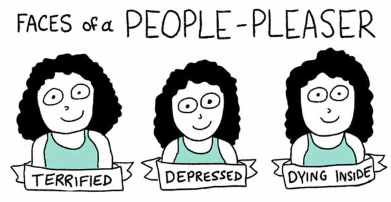
Being a people pleaser is exhausting. Thank God therapy definitely helped me realize this because I cared a little bit too much about other people. As the only child my life has been centered around making sure everything I do keeps my parents happy. I get good grades. My parents are happy. They stay off my case and don’t egg on my anxiety as much. The problem with this little system I started is that I subconsciously started applying it to every human encounter in my life. The less of an inconvenience I was to others the better. The happier and more pleased I made sure sure to keep people around me then I “believed” that my life would be much easier. I catered to everyone’s emotions and let me tell you this resulted in me picking up little pieces of emotional baggage everywhere I went. What I thought was making the world a better place was really draining the life out of me. This is why I am the best, but I also the worst in customer service jobs. The best because I always want to make sure the customer is happy and satisfied and I can keep situations under control. The worst because sometimes I just need to grow a backbone and stand up for myself. Being so understanding is so exhausting and I now make conscious efforts to be a little bit selfish. It’s still a work in progress.

Letting go of the “why”

TW: suicide 

Mental health wasn’t something that was introduced to me until my junior year of high school. Growing up I knew about things like depression and anxiety, but the way it was presented to me was that those things only appear when something severe happens to you. Like it’s only normal/okay to be depressed when someone dies. My family pushed the idea that when you’re young with little to no responsibilities and all your needs are met then there is no reason to have mental health issues. So when my friend in his senior year of high school, who lived down the street from me, in a nice suburban neighborhood, headed to college, in band, with a dog, nice family, swim team, with a car committed suicide I had difficulties processing. Like everyone else my number one question was “why?” You can list a number of reasons why he didn’t fit the “could possibly commit suicide list”. You could also list a number of conspiracies that possibly could have been the reason why he did it. Now that I’m older I’ve realized that those are just questions and answers we search in order to make ourselves feel better because in reality there could be no reason why. Not everything needs an explanation and that’s okay. Realizing that has personally helped me navigate through hard days. 

This is the part where I ignore you.

On the weekend of this past Halloween, I ate shit on the stairs of a frat party. In the 30 seconds it took for my friend behind me to realize that I was sprawled on the floor, it took just as long for everyone to realize they needed to ignore the fat girl on the ground. I didn’t know what just happened to me, but I was embarrassed, in pain, and scared. I was also ignored.

Later in the party, I moved around from group to group trying to awkwardly join whatever conversations my friends were having. I don’t hate parties, but I was pretty fucking uncomfortable. I don’t fit into the white standard that’s present at my PWI, no matter how diverse it may pitch itself to be. I told myself that’s why people probably think I don’t belong here. I believe my constant discomfort everywhere I go stems from my inability to let go of whatever I am feeling.

This whole entire semester I’ve been letting go. Letting go of anger, depression, hobbies… anything that could stop me from focusing on getting my degree. When I do “feel my feelings”, I tell myself it’s the paranoia talking. Worrying about which friend cares enough, or how much someone has wronged me has done nothing but make me spiral. I don’t talk enough about my feelings, I shove them down like I have since I was 3. I never let the people around me know how much I wanted to die everyday in elementary school and that it’s a feeling that has never left me. The abuse of my adoptive aunt stays with me today because of the moments she told me I deserved whatever pain was coming to me, pain that I ignore.

I don’t exactly love to talk about my childhood, but there was also a time when I was in therapy after my mother’s death. I vaguely remember the hours after school between 6PM and 8PM where I would sit in a room playing with toys, refusing to acknowledge my therapist who had eagerly wanted to talk to me. 

My relationship with therapy has never been an easy one. On one hand, my family’s culture has led to internalized feelings about therapy that I can’t ignore. On the other, I know it’s important for me to address the issues that hinder me. Is paying someone to talk to about my feelings really worth it if that was not an accessible resource to my ancestors? They had to overcome so much worse than me.

I think that comes down to the responsibility of our generation. Most of us have dealt with overbearing parents, ones that project onto us, and haven’t acknowledged any of their own trauma. At the end of the day, we are the only ones that can solve our problems… therapy is just a way to do that.