
The holidays are the “happiest” time of the year.
Continue reading
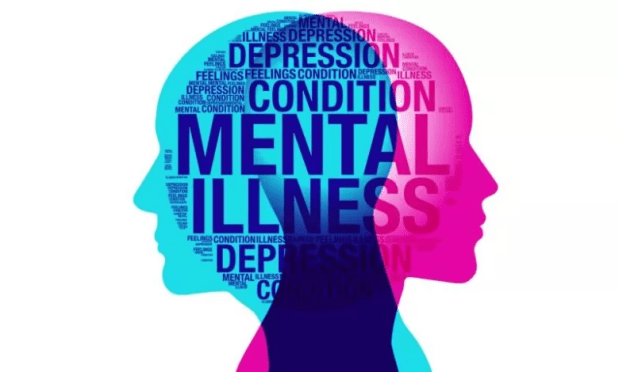
A mental disorder is characterized by a clinically significant disturbance in an individual’s cognition, emotional regulation, or behavior. It is usually associated with distress or impairment in important areas of functioning. There are many different types of mental disorders. Mental disorders may also be referred to as mental health conditions. The latter is a broader term covering mental disorders, psychosocial disabilities and (other) mental states associated with significant distress, impairment in functioning, or risk of self-harm. (n.d.). Mental disorders. World Health Organization. Retrieved December 9, 2022, from https://www.who.int/news-room/fact-sheets/detail/mental-disorders
In 2019, common mental disorders around the globe include depression, which affects about 264 million, bipolar disorder, which affects about 45 million, dementia, which affects about 50 million, and schizophrenia and other psychoses, which affects about 20 million people. Neurodevelopmental disordersinclude intellectual disability and autism spectrum disorders which usually arise in infancy or childhood. Stigma and discrimination can add to the suffering and disability associated with mental disorders, leading to various social movements attempting to increase understanding and challenge social exclusion.
Today, there are multiple dimensions or types of mental health-related stigma, including self-stigma, public stigma, professional stigma, and institutional stigma. People who suffer from mental health issues are considered MAD. For people with mental health issues, the social stigma and discrimination they experience can make their problems worse, making it harder to recover. It may cause the person to avoid getting the help they need because of the fear of being stigmatized.
Personally, I work at a mental health clinic where alot of people are being judged, stigmatized and discriminated by both family and friends. This stigma makes it hard for them to cope, and believe in them selves. Many people with serious mental illness are challenged doubly. On one hand, they struggle with the symptoms and disabilities that result from the disease. On the other, they are challenged by the stereotypes and prejudice that result from misconceptions about mental illness. As a result of both, people with mental illness are robbed of the opportunities that define a quality life: good jobs, safe housing, satisfactory health care, and affiliation with a diverse group of people. Examples of these stigma or misconceptions include; persons with severe mental illness should be feared and, therefore, be kept out of most communities; persons with severe mental illness are irresponsible, so life decisions should be made by others. All of these are very inaccurate.
However, understanding, being non judgmental and supportive is key to developing a healthy space for people with disability. Joining a mental health support group either online or in person can help you deal with feelings of isolation and make you realise that you are not alone in your feelings and experiences. Also, Do not define yourself by your illness as other people might. Instead of saying ‘I’m schizophrenic’, say ‘I have schizophrenia’. because you are not your illness. Lastly, Remembering that you are not alone: Many other people cope with similar situations. People commonly struggle with depression, anxiety, substance abuse, and other mental illnesses.
I work for a community service center under the state department of health and I would like to share some information that I’ve learned over the past couple of months. I’ve been meeting with an older adult, let’s call her Doris, for 3 days a week for months and we’ve become friends. Doris is single and lives with her younger adult sister and sisters’ partner. Doris doesn’t do much during the day but has a strict eating schedule, refrains from sugar, and gets dehydrated easily. During our meetings we do crafts, stretches, online games, and talk about our day. Honestly, I love Doris so much and the time we spend together.
It was such an interesting experience getting to know her. She has a mental disability and from what I’ve witnessed, she doesn’t know how to read, or write, can’t pronounce words correctly, constantly repeats herself, asks the same questions over and over again, has some deformities in her body, and gets easily distracted and angry. But the more I got to know Doris, I also witnessed that she is possibly the sweetest and most understanding person ever. She constantly checks up on me and remembers a lot of information that she brings up to get updates on. She tells me about her worries and I reassure her. The difficult moments that she faces are very unique and I have to be a good listener and role model so that I can give her good advice. So after getting to know how Doris operates, I started mentally prepping before our meetings; maintaining a positive attitude, assure that everything is and will be fine, and focusing on making her happy regardless of what she might say to me.
After reading Margaret Price’s “Defining Mental Disability”, I tried to relate what I’ve learned to how Doris might think. I know she knows that she is different because she has explicitly mentioned that to me. But when she expresses wishes to me that another able-bodied and/or mentally-able person experiences daily, such as having a partner or getting boba tea, I struggle to try to explain to her why she would not get the same chances. Doris draws like a first-grader and her favorite games have to do with Clifford the Big Red Dog and Barney. The fridge and pantry in Doris’s house have to be locked because she will try to eat the food and she has broken the lock multiple times. She has eaten dog food because she felt the urge to throw objects, like the laptop, around when she gets a tantrum. She also picks at her finger and scars it. I don’t mean to put Doris’s business out like this but I want people to know just how different people can be and how accepting we must learn to be. Knowing Doris can be such an eye-opener, as it was for me because I have never met or heard of someone like her. “No term in the history of madness is neutral,” Geoffrey Reaume states. So Doris might be different to you and me, but elsewhere she is neutral. Although she needs help and stability, it is not okay to look down on her or anybody else. Price also mentions that she battled her insurance CIGNA to continue getting coverage for her mental health and it had to be determined by her healthcare professionals. It is so absurd to me that patient-centered care is not the focus in America. The patient’s wellness and that everchanging journey should be accounted for the most. The “well/unwell” paradigm is not linear but rather a spectrum. We can not throw around the word “normal” because what even is “normal”? To Doris, we may not be “normal”. We all make up these terms and conditions in our heads and spread them in society to get accepted but doing so means we marginalize people, humans, sisters, and brothers, that deep down are no different than us.
Here is an experience 99.9% of you have had… you go to the doctor’s office. It’s been a while, the nurse sees you, gets your vitals, and tells you that you need to fill out a form before the doctor sees you. The PHQ and GAD7 form, everyone has to fill them out. And everyone lies to themselves…
Here are some of the questions you have to face:
The questions go on forever it seems, but it’s only 14 questions in total. I guess it takes time to reflect on people’s last priority, their mental health. Sometimes it takes 30 minutes for patients to finish these questions. Why is it so hard for us to reflect on these things? “Me? Oh no, I’m fine, everyone feels like that!” Or do they.
When I worked for a non-profit clinic, we would see all kinds of patients. Immigrants, elderly, young, mothers. I would check patients in and the PHQ and GAD7 questions were on our computers, so I would ask them these questions verbally. When I would ask patients these questions pertaining to their mental health, it was as if I asked them to recall the laws of thermodynamics. I knew the reason they were taking such long pauses, and the occasional awkward chuckles to serious, and unfunny questions. These questions made them nervous. They were thinking of the repercussions of being honest about these questions. The stigma that comes with mental illness is what they feared. They assumed they were going to be thrown in the looney bin for having anxiety, God forbid they have to see a therapist! Why does the stigma of mental illness cause us to view others differently, so much that we have a false image of our mental health? To normalize bad mental health for the sake of not conforming to the mental illness stigmas of society. You may disagree with all I am saying here, but we live in an age where suicide rates are at their highest, and our day-to-day language has more than ever references about suicide. And it’s all ✨normalized✨.
Is it due to the societal stigmas of mental illness that’s instilled in us. Or is it because of the glorification of stress. Yes, glorifying stress is a real thing that we all do, no matter what profession. The more stressed you are, the more you burn yourself out, all for the sake your work or school, the more you deserve. The artist that went three nights without sleeping to finish his master piece, he is such a hard worker he deserves all the praise. The doctor who cut off relations with the world and started living in his laboratory, HE’S going to get a noble prize, he deserves it more than the guy who got a full eight hours of sleep and ate breakfast too.
“You got a 90 on the exam AND had time to brush your hair this morning, well I got a 91% and I haven’t ate or slept in two days, maybe if you were determined enough and made the sacrifices I did you would have done better!”
But like at what cost LOL, determination and success do not correlate how much you can push your body and mental health.
Maybe this isn’t relatable or ringing a bell to some of you, but with the pre-profession community that I’m a part of… I am constantly reminded by this sad reality. Bad mental health is normalized, and its evident in every day of my life. Thankfully, I have supportive parents and community that allow me to be truthful with myself about my mental health. So please give yourself the right you deserve to transparency, and self-awareness of how you’re doing. Sometimes a little reflecting in silence is all it takes to do a quick checkup on yourself. Don’t let the once a year doctor’s visit be the only time you evaluate your mental well-being.

To end on a funny note, here is a meme I made that depicts the behavior I was referencing to.
Warning: Some disturbing and weird and sexist stuff follows.
The COGIATI is a online test designed to test whether you are trans (or in its terminology “Transsexual”, as it was created in the late 90s) or not. It was designed with the idea that we shouldn’t “just” trust whether people are trans, instead we need to scientifically test whether or not this is the case. It is meant to be a “preliminary” test, not truly scientific, but something to be built upon.
The test is absolutely terrible. There is no scientific validity, and it merely tests adherence to stereotypical gender norms, while also failing to account for neurodiversity. It is written only for typical binary trans femmes and even there it fails.
I first took it when I was 10. I probably took it over a hundred times, possibly over two hundred times. Lets take a look at it now.
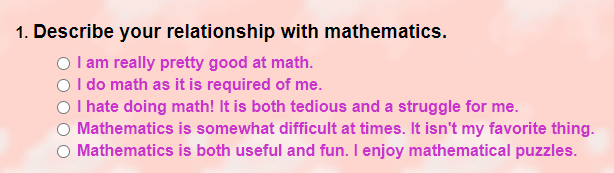
The first question is of course absolutely horrid. I am woman who is great at math, and supposedly this makes me less of a woman. This is not the only sexist question of course, if you are good at driving, the test will asssume you are more masculine. If you can catch a ball, you are more masculine. If you cry at movies, you are more feminine. If you liked writing essays as a kid, obviously you are more feminine
Continue readingDisability is anything that hinders your ability to perform specific tasks or just live your life normally. Some people are born with disabilities and those are the ones that are physical. But what about the other conditions we don’t really think of as a disability.
The thought of never being enough or not feeling confident or traumatized by past experiences. All of those things and many more are a part of disability as well. Because they make you feel less of yourself and hinder your ability to ever feel enough or even perform certain tasks accurately. Let’s say you hate your body and to not get judged you don’t go to certain stores in the mall so the people inside the store don’t judge you. No one might judge you but the thought of just being “different” which is either stemmed in you by you or by someone else, gets in the way of you living your life comfortably.
One other example could be some parents putting high expectations on their child and the child trying hard to get to that level. But until that child gets to that level, anything he does before it will just make it seem like he hasn’t done enough. This is when parents should stop expecting things from their children and instead appreciate them for what they have achieved so they never stay in that “never being enough” complex.
In the end, my point is that every person almost has a disability. The inner demons we all have are our disabilities because those demons make us less able in some situations. The difference is that if the inner demons are worked on, they can go away but other physical disabilities are permanent. So, it will be wrong to say the disabilities we have within ourselves are the same as chronic illness or other serious disabilities. But anything that interferes with our ability to be the normal version of ourselves meaning being at your full potential is a disability.
Abled body people stay in the business of people with disabilities including their sex lives. It is like people with disabilities are stuck in this position that the abled body world put them in where they are helpless or need an abled body savior to help them navigate life. We put them in a mental age, childlike, so that we feel better about ourselves for making life inaccessible to them. To think someone is automatically unable to do something because of their disability is not right. We as a society need to recognize yes there are people with disabilities, but we should not automatically determine their capabilities or assume every disabled person wants our help.

The difference between a person with a disability whether it be mental or physical from an abled-body person is that when it comes to a person with a disability there is another person involved and that is the abled body “savior” who has put the person with a disability at a mental age of a child because of their disability so it is deemed that they shouldn’t be having sex. A lot of human beings are sexual creatures that including disabled people. So why do we treat them differently when it comes to their sex lives and why do we judge abled body people who have sex with disabled people and say that they are taking advantage of a consenting adult? I understand if it wasn’t consensual in that case judgment is the correct response. But because we put disabled people at a mental age society views them as people who can’t or shouldn’t be having sexual desires. Like even the in-class example where an organization surrounding disability got shut down because it was found out that the participants were having consensual sex, adults who can make their own decisions about what they want to or don’t want to do with their bodies were basically told no you can’t do that. This school is at least in my eyes a very liberal school, so why is the topic of sex especially sex between consenting people that just so happen to have disabilities such a sore topic? Have we not moved out of the age of teaching abstinence and virtue?
Sex and sexuality are always a sensitive topicss because it is frowned upon to be opened about your sex life. But when it comes to people with disabilities it isis like their sex life is always put on blast and there is a microscope on them from the abled body community. Crazy right? Imagine if it was the opposite and there was someone constantly being nosey because they think that you shouldn’t be having sex because you are an abled body person, how do you think you would feel?

I used to be told all the time by one of my favorite teachers that hate is a strong word and that I shouldn’t hate anything. Truthfully, I don’t know if I genuinely hate kids or if I hate the idea of what kids can be and their effect on the world. I can’t see myself having kids. I can’t see risking my life for a baby, I can’t see myself giving up my life to raise a child, and I can’t see a life where my partner also cares for a child with me.
It is so hard being a woman of color. If we choose to have kids, we are more at risk of dying during birth because we are minorities. We don’t get the same care white women do when they’re birthing. When we have kids, we are expected to give up our past life to care for our children. We lose all independence because it is expected of us as women and sometimes it is expected in our culture. There is no support while being a mother, husbands or baby daddies can leave or just ignore their responsibilities and many do.
So why should I be a mother? I know I have terrible tastes in partners and I won’t risk my life to raise a child alone and pass down the trauma I went through.
I remember being a kid and I’ll be honest I was a good kid, kind and obedient. My family caused me to be cold, closed off, and emotionless because it was easier to act as if I could care less than to show the hurt they would cause me. Every now and then my mom would ask, “What happened to you? You used to be such a good kid.” I know she risked her life to have me but is it so bad to say that she was what happened? I love my mother but I hate kids because of her. It comes from fear of doing to them what was done to me.
I don’t want to do my best as a parent and still fuck up my kid. I can’t imagine going through all I would have to be faced with a child filled with trauma because of me just as my mother did. Or even worse what if they turn out to be a psychopath despite my best efforts? It is crazy to think about ripping the most sensitive parts of my body apart just to be left devastated in the future.
This is just my opinion. If you love kids and want to have them I wish you all the best in the future.
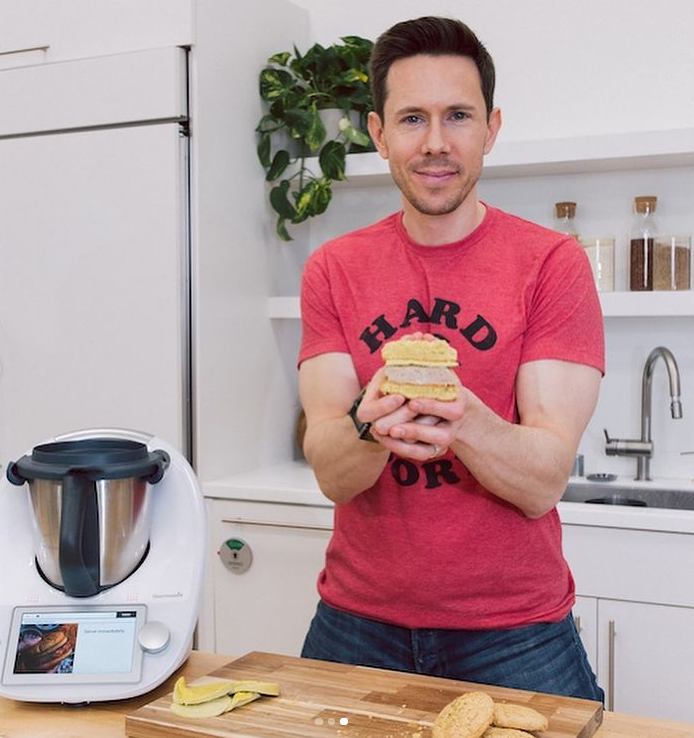
(TW: Discussing food and diets) Recently my parents have been on a bit of a health kick. By health kick I mean that they have become obsessed with sugar and carbs. They aren’t full keto crazy, but it is hard to find bread in my house. I am grateful that I live on campus and can take a break from their obsessiveness, but I find that I have to undo a lot of the messages I am receiving when I live at home. Just yesterday my mom sent me a TikTok from their idol, a man named “Bobby Parish.” He declares foods as “Bobby Approved” if they meet his personnel criteria for food. He even has an app for your phone that you can use to scan products in the grocery store to see if they meet his requirements.
Islam is a fitrah religion as Allah, who created the earth and all of humankind, is its source. It aims to lead Man in every facet of life.
The requirement for sexual relationships in life is a component of man’s fitrah. Islam must therefore provide instructions on how Man should satiate his sexual urges in agreement with the fitrah. The general elements that make up this advice include teaching Muslim youngsters about sexuality.
Islam’s approach to sexuality education aims to help people utilize their sexual urges and impulses in an acceptable and responsible way to achieve goals beyond simple delight and satisfaction.
Islam mandates that only man and woman, who are bound by a marriage tie, may give consent in order to accomplish this.
Therefore, one of the main goals of sex education is to stop Muslims from engaging in Zina, which includes adultery and underage sex.
“And do not commit adultery,” the Qur’an commands zina in verse 17:32, “for, behold, it is an abomination and an evil way.”
Islam’s approach to sexuality education also aims to deter Muslims from engaging in behaviors the religion views as abnormal, like as same-sex partnerships (homosexual acts and transgenderism), bestiality, anal sex, and child abuse.
Islam also aims to control sex as a crucial tool for creating a moral family unit and, as a result, serves as a pillar for a moral society for both the present and future generations.
In other words, Islam associates sex with morally superior goals. It is expected that such an action will be accompanied by a sense of accountability and dedication to a worthwhile cause.
WESTERN PERSPECTIVE
Sex is viewed as a fundamental basic dignity there under the impact of democracy, which places a high value on an abstract principle from constraints. There represents the foundation upon which the right of any adult to freely pursue their sexual desires with another adult, whether of a different sex or the same sex, in secret or in public, is built. If there is also no animal abuse engaged, even having sex with animals could be viewed as fulfilling a human right.
The result of this concept is a growing trend in the West toward an unfettered sexual lifestyle that extends to normalizing same-sex marriage, switching spouses in getting married, abortion, public indecency, and prostitutes.