
Absent Phenomena

The album cover of Avril Lavigne’s first album, Let It Go. Ever since I was a kid I always kind of felt like this when it came to interacting with my peers. Everyone else was rushing around on their way to something; I always was the odd one out, standing alone in a crowd.

            Talking about phenomenology, we defined it as the way a person experiences something. We talked about how our bodies impact the way we experience things, how our upbringings and class and race and sex and gender all play a part in how we experience phenomena. But what happens when your experience is a lack thereof?

            For some reason, modern culture is obsessed with sex. Half-naked bodies are plastered on billboards wherever you turn. A lot of the “fashionable” clothing is scant and at this point is so small it serves essentially no purpose. It can be hard to find an adult TV show without a sex scene somewhere. And sometimes, with all of this stuff going on, with all of this sex everywhere, I feel like an island.

            I dislike sex. Borderline to the point I hate it in a way. I don’t hate the concept, I believe what happens between consenting adults is their business. But I hate the way everyone talks about it. After years of being conditioned (with good intentions) that sex is a bad thing and should be kept very secretive, I am made so violently uncomfortable by the whole concept that I often leave completely when a sex scene comes on TV. I get depressed because many shows that I thought were promising end up completely ruined because they’re saturated with it.

            Outside of the general disdain and disgust, I also just can’t relate. Whenever I looked at bodies that most people would want to have sex with, the only thing I could ever feel was wanting to be them. Because my lack of interest made me think I was broken, I ended up getting myself into a bad situation which just added to my disdain for sex. But when that didn’t magically cure me, I went to college to do it again because clearly there was something wrong. Eventually I found out about asexuality and that it wasn’t entirely unheard of to just not be interested in sex. That was nice, and I stopped having to make stupid decisions to try to fix myself. I ended up settling down with another person who also dislikes how our culture is saturated with sex. And with him, I experience so many phenomena: walking around the inner harbor holding hands, just listening to the sounds and feeling the smells and the way the air tastes. We go to synagogues and I get to experience the strange phenomena of the altered sense of reality on Yom Kippur. I get to experience and reflect on all of these things, never having to experience the phenomena of sexual interaction or attraction or anything that involves naked bodies.
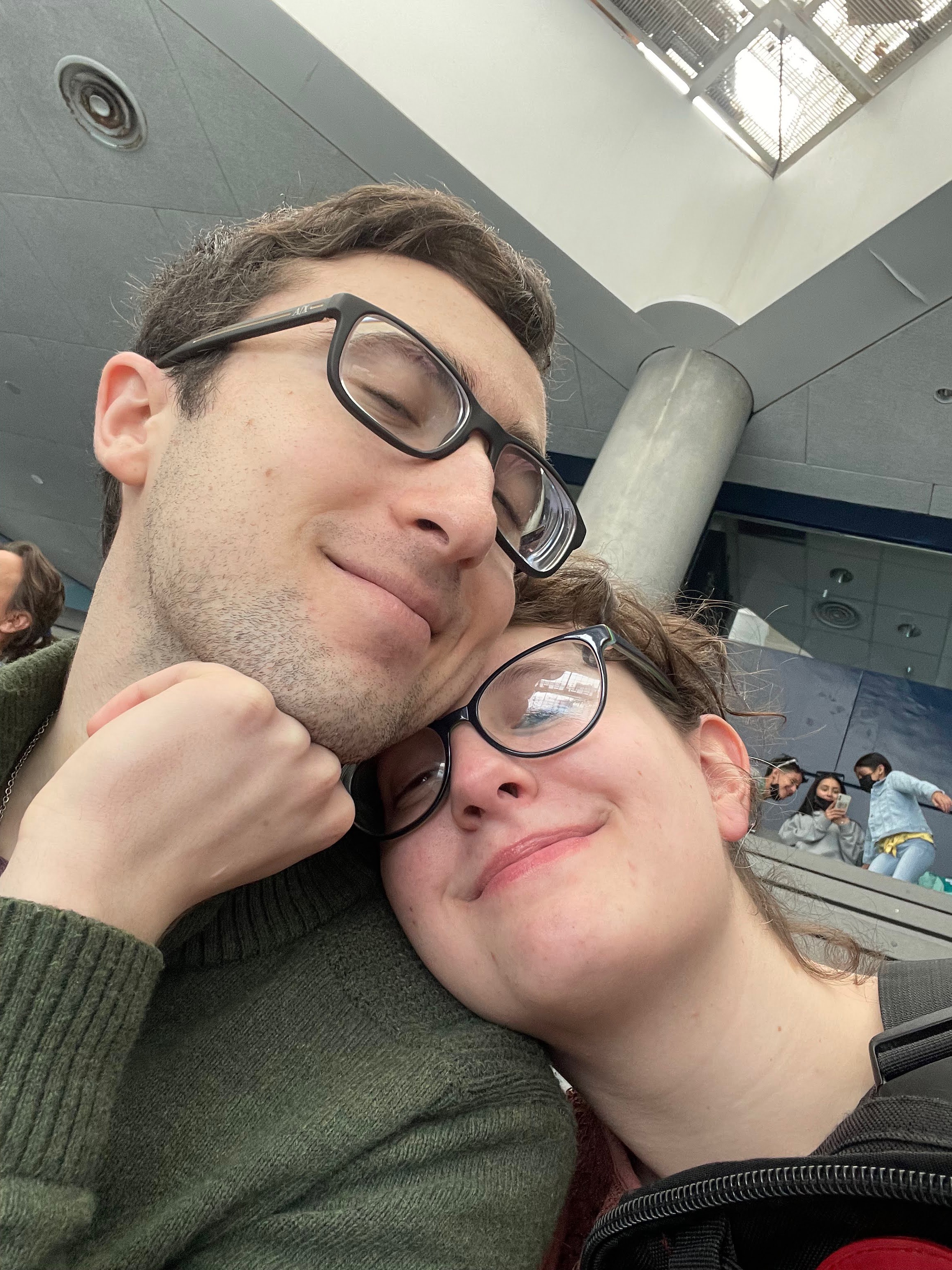
My adorable boyfriend and I at the National Aquarium. October is our three-year anniversary ❤

            In this class, I’m sure at some point, people will end up discussing phenomenology and sex. And it is at those points where I sit, stare into space, and phenomenologically analyze the experience of zoning out in class.


Surgery as a toddler

Surgery as a toddler

My nephew just got surgery, he’s 1 year old. It was an extremely hard thing to experience because he is so young. He had to get surgery to remove one of his kidneys because when he was born it wasn’t functional. We prayed that it wouldn’t cause him any problems so that he wouldn’t have to undergo surgery. But of course as time passed, the problems begun to arise. His kidney began getting an infection, no amount of antibiotics would make it go away. It got to the point where he was basically on and off antibiotics his whole life. It started to effect his other kidney negatively because the infection began to spread. That’s when the doctors knew it was time to do something, we could no longer just hope and pray.

Can you imagine a baby having to undergo surgery? A baby that can barely even understand what’s going on? It broke my heart. Honestly, if it could’ve been me then I would’ve done it. It’s interesting how the body reacts to certain things, if you personally didn’t know his condition then you would’ve thought he was a happy healthy baby. He did all the things a normal baby did, he laughs, he dances, he actually just started walking! But behind closed doors his body was suffering, and there were bad days. He’s one week post-op now, he’s getting better everyday. Little bodies seem to heal faster, Probably because they’re still basically fresh out the womb. Whats crazy is that he probably will never remember what he had to go through because of how young he is, All he will have to remember this by is his little scar because it will always be on his body. He’s a tiny soldier, and that scar will be his battle scar. I’ll be happy when he is fully healed and this is all behind us.

I Too, Am Uncomfortable

In my day-to-day life, I am constantly aware of how I interact with the world around me and how I am being perceived. I want to be masculine, but I also want to be approachable and friendly. I try to be funny but I don’t want it to come off like I’m trying to “woo” someone and make them uncomfortable, I just want to be likeable. I want to wear nice clothing but also feel comfortable in the clothing. I feel pressured to be fit and to look strong.

I constantly am worrying over how people view me. “Am I being weird?”, “Am I making people uncomfortable by just existing in this room?” I just don’t interact with people who I don’t know anymore because of these anxious thoughts. I make myself unnoticeable and try not to attract attention. Even now, I don’t actually know if I make people uncomfortable. I’ll be sitting in class and all it takes is for me to make eye contact with someone for me to start thinking, “Oh no, they thought I was staring at them don’t they.” And thus begins the anxious spiral. Maybe these feelings are true: that people do think I am weird and I am making them uncomfortable. I am pretty sure its just anxiety.

Through much of high school I was never athletic. I was not sporty or fit, I played video games and I went to school and those where my two activities. I played tennis in my first year, and I was pretty good, but even still I did not look it. I was on the heavier side, I had acne, I had a terrible haircut. I didn’t feel very self-conscious for a while, but eventually that’s all I really thought about. When the pandemic happened, I decided that I hated how I looked. I started going on my families elliptical every day in between some of my classes, I started working out with my brother and my day every other day, and I would do leg and ab workouts every night before bed. It got to the point where I was exercising so that I could eat. I would have to earn the food, I couldn’t just eat it.

Nowadays I feel like I look pretty healthy. I (usually) eat right, and I stop myself from working out just to eat. But even though I’ve lost weight and gained muscle, I still pick at my shirt where I used to be bigger. I still cannot wear tight-fitting shirts, or even shirts with tighter fitting sleeves. I still love the colder months when I can put on a hoodie and forget about how I look.

In the reading about the definition of phenomenology we learned how it is the study of experiences from various first-person point-of-views. Regardless of how other people will see me, my experience in this world will always have me perceiving myself as less. In a similar way as we had talked about in class, where a women will be destined by society to feel out of place and always conscious of where they fit into, I am as well. I will constantly be wondering if I am doing the right thing, wondering how people see me, all the while viewing myself in a negative light. Life goes on and one day we may not have these standards. Until then I just remind myself that it does not matter much what others think of me, and that I should be happy that I’ve gotten to a healthier place than I was.

Shel Silverstein’s “WhatIf”

A funhouse of the self

I have a body, and I don’t think that I particularly like it. I think there is something wrong both with my body and something wrong with the fact that I don’t like my body. I like to think I am worldly enough to know that “fat” is not a bad word, that to be fat is not insulting or a negative aspect of myself and yet whenever I’m trying to convince myself to keep going on the treadmill the mantra in my mind is variations on “stop being a fat bitch”. I guess that is my self-awareness coming through. 

The encyclopedia entry on phenomenology talks about how phenomenology develops awareness in many forms through various experiences. I like to think I am good at being self-aware, I feel like I have to with all the expectations placed on me. Going over every little thing I do, say, and all my experiences from a third-party perspective. This third party in actuality is all of my perceived thoughts and shortcomings about myself coming back to influence me in fun new ways. It’s like a weird meta-self-awareness. My idea of self comes from what I think other people think, which comes from what I think about myself, which is influenced by society. It’s circular thinking that I can’t really break out of. I am experiencing immanence, trapped in myself by my own thoughts.   

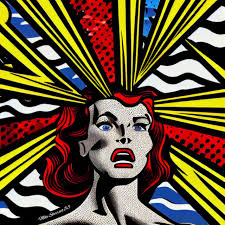
pop art style of a brain explosion

My idea of self is tinted. Tinted by the fact that I present in a feminine way and therefore am told that I need to have certain interests. Tinted by the ideas of my family and how I am to be like them in all aspects. Tinted by the idea of what it means to be black while not being “fully black” (I’m mixed). I think most of all I am tinted by the words people use. How fat is not a bad word, but I still feel self-conscious for being fat; how I can hear my mom telling me to not call us poor even though there was a winter without electricity; how I feel queer in a hypothetical way but too afraid to claim the label for myself. This tint is not necessarily a bad thing, it is a method of self-evaluation. I can think about how the words I say come off to others in unintended ways and how to fix that, or how even though society tells me I can’t be into traditionally nerdy things I still can because it’s a tint, not who I am. Where this self-evaluation is harmful is when it is no longer a tint and my perception of myself is distorted from trying to match all the ideals enforced on me by me. It’s a weird funhouse mirror that is also a two-way mirror at the same time. Focused on me with aspects of society mixed in, but all in a wonky self-conscious masquerading as self-awareness way.  

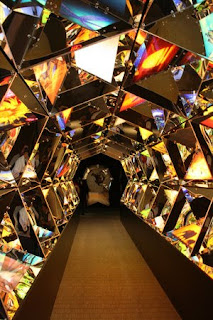
Spiral of mirrors with broken images
Where Do Women Belong in Places Like the Work Field?

Where Do Women Belong in Places Like the Work Field?

As a cis woman, I have personally worked in multiple jobs, primarily full of men. I gravitate towards more physical jobs, meaning I work with more men. Throughout my life, I’ve heard many phrases to try to put down a woman for expressing an opinion different from the male’s perspective. Some of the insults they use to try to shut up women are, “Go back to the kitchen where you belong.” or “Shut up and go make me a sandwich.” some men will even refer to women as objects like dishwashers. However, in the work industry, those two tasks of cooking and cleaning are dominated by men. While working in the kitchens over the years. I have had to work and train grown men twice my age. While instructing these grown men, I was constantly disrespected and was not listened to during instruction, which ended up causing safety problems. I was only treated with respect when the male manager noticed them actively ignoring and disrespecting me. He called them out and explained that I was well-trained in my job and that they needed to take me seriously since I played a role in whether they got to keep this job. During these experiences, I had men flat-out tell me that I don’t belong in the kitchen due to my gender and size, which is ironic because I’ve heard men tell me that I do belong in the kitchen. While working my shift, I had to listen to their opinions about my inability to get things done due to my body not fitting the standard for someone to work in the kitchen. I heard, “She is too weak to do this,” “She is too bubbly to work back here,” or “She is not going to make it long in the kitchen because she is too sensitive.” It made me feel like I needed to constantly prove to myself and my male coworkers that I was someone to be respected for my work ethic. I always worked the hardest, and my personality started to change to be more aggressive and louder for my male coworkers to listen to, but then I was labeled as a “bitch”. However, if I told my male coworker to do the same thing I did, he would be seen as “forward” and “direct.” It is just a simple example of how readings like Not Just the Reflexive Reflex and Throwing Like a Girl mention how we still have these situations where women are still faced with this issue that we are seen as somewhat less than compared to men because of the body women are born with and their potential capability to have children.

I am medicated for mental illness (and that’s OK)

My entire life I have been hearing a narrative that antidepressants, (a category of drug that includes things like SSRIs, SNRIs, TCAs and MAOIs,) are intrinsically bad or indicate some kind of personal failure. People have used different arguments, saying that antidepressants never work or that they work too well and cause people to become emotionless robots. I’ve heard people imply that it’s insulting to even suggest medication as a treatment for mental health issues. Personally I disagree with these assertions and I would argue that the bad rap mental health medications get is born out of bad personal experiences, ableism and misunderstandings of how psychiatric medications are prescribed. (I am going to mostly talk about antidepressants here because that’s what I have the most experience with and knowledge of, but similar principles apply to other categories of medication as well)

I started taking antidepressants over a decade ago, as a treatment for a laundry list of mental illnesses and neurodivergences that started presenting from the time I could speak. I would have severe panic attacks and meltdowns on a daily basis, each lasting for hours at a time, complete with kicking, screaming, and endless sobbing. Eventually after several failed attempts at holistic treatments I was prescribed Citaloptam, an SSRI (a type of antidepressant), to help me manage my emotions and prevent panic attacks, as well as benzodiazepines to take as needed when my panic attacks became out of control. Prescription medication was not the first choice treatment from my doctors or parents, no one wanted to have to give a 9 year old benzos, but it was necessary in order to keep me safe, stable, and calm when I would otherwise be a non-functional mess. I would go on to try a dozen different meds before the age of 15 before settling on the cocktail of drugs that I’ve been taking for the last 5 years or so, which is a combination of an SSRI, an NDRI, and a medication classified as an antipsychotic that is also used to treat anxiety and depression. 

Of course, meds alone don’t cure mental illness, that’s not how that works. Therapy, in the forms of group therapies, DBT, CBT, and individual talk therapy have all been parts of my treatment regimen over the years, and they have helped me immensely. Gaining accommodations, correct diagnoses, and removal from environments that exacerbated my mental health issues were also important steps in my journey. But the antidepressants and other meds I took were instrumental because they lowered my baseline level of distress and made me capable of participating in my treatments and helped me be able to access the resources at my disposal. I cannot stress enough how much antidepressants have improved my quality of life.

But that’s just my story, and my experiences are not universal. Not everyone needs meds, and meds don’t work for everyone, especially on the first try. If your mental health issues are mild, not severely impacting your day to day functionality, and not causing you significant distress, psychiatric medication may not be right for you. In that case maybe talk or behavioral therapies would be better suited for you. Even if medication is right for you, it’s quite possible or even likely that the first one or two or three that you try won’t be effective. (Often psychiatrists will cycle patients through several different SSRIs, despite the fact that they don’t work for everyone, before trying other forms of psychiatric medication. This is because SSRIs have been found to be the safest and least addictive type, as well as having the least significant side effects compared to the other types of antidepressants. The fact SSRIs have the fewest adverse effects make it an appealing first choice for doctors, but I digress.) Psychiatric medications are unfortunately not an exact science with a one size fits all solution.

But that doesn’t mean that antidepressants don’t work for anyone, in fact, for some people like me they are as necessary as any medication for any other kind of chronic condition. When people imply that the suggestion of antidepressants is bad, or that antidepressants never work and aren’t worth trying, it reinforces the stigma around them and mental illness in general. I fear that this narrative could prevent people from seeking professional mental health treatment, or cause people who are already on medication to feel bad about it, to hide that fact or stop taking their meds altogether. Taking psychiatric medications is not ‘taking the easy way out’ or a sign that someone hasn’t tried hard enough to treat their issues on their own, it’s a morally neutral act. Thank you for coming to my TED talk.

“feminine essence”

What is feminine essence? This phrase has lingered in my head for a couple of days and I would like to take the chance to say that femininity is something so unachievable and so insecure in terms of permanence. Especially in modern-day society where the female body is constantly being picked apart and forced to contort itself at every turn. Think cosmetic consumerism, the normalization of plastic surgery, and the sexualization of girls from a young age.

I do not bring these things into question as a means to invalidate the choices women make for their bodies, but there is such an expectation to look a certain way and to change with the times. What if I just want to feel normal with the nature of my body?

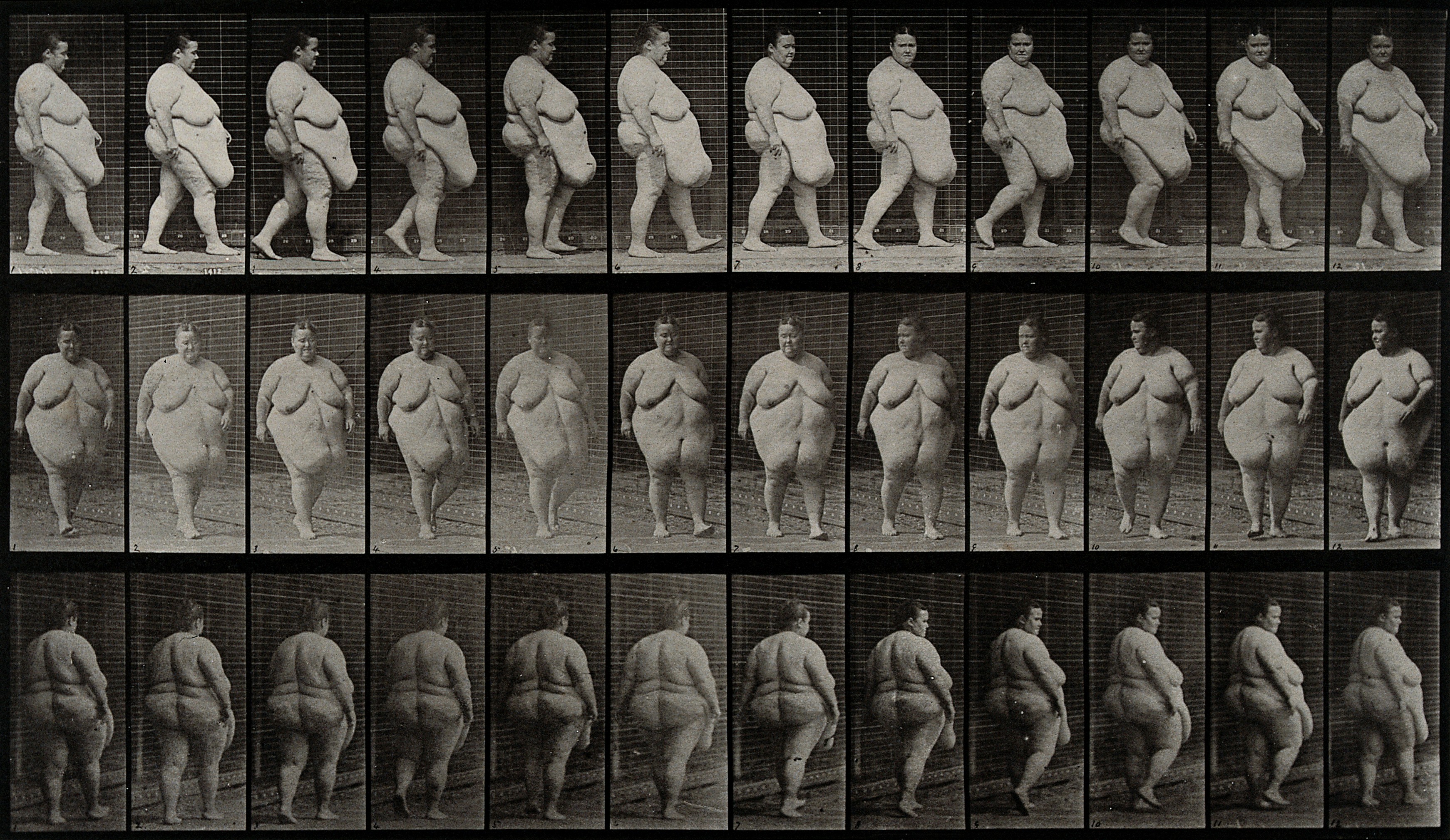
36 chronologically taken photographs of a fat, naked body.
revealing right side profile, front profile, and back profile

Docile Department Store Bodies

     When I find myself in need (or want) of new clothes, I often find myself in thrift stores. Early in my transition, this was where I shopped. As soon as I could drive, I would make my way to the local Goodwill and buy a $4 oversized rugby shirt. It was low stakes, high reward. I did not have to drop $20 every time I was curious if I might like to wear something, especially since I was still figuring out my style and tended to wear something for a week before burying it in my closet.

     Now in my life, I can comfortably buy brand new clothing from target, but I rarely do. Something about thrift stores is so inviting and comfortable, and on the contrary, something about department stores has such Bad Vibes. Foucault kind of helped me understand why.

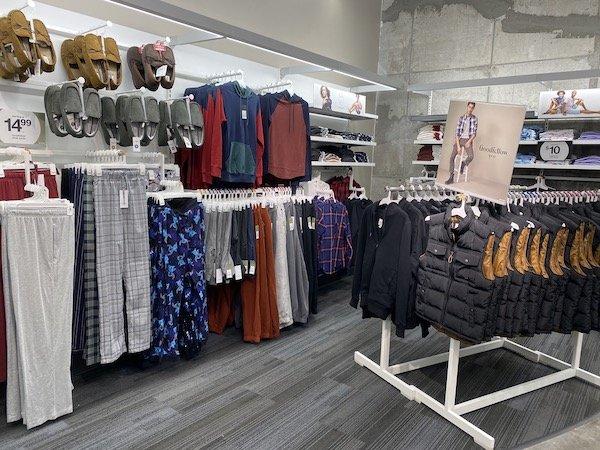
     Discipline is written all over department stores. Everything is in its place, to a meticulous extent – clothes folded or hanging from hangers in neat rows, sleek monochrome mannequins with ironed outfits, identical products stacked in rows of tens. The bodies of the employees have to work on their feet, constantly scanning to see if anything needs to be refolded or if they can smile for a customer or answer a question. The clothes themselves are even surveilling the customers, with tags that will sound an alarm if one step is taken outside of the store with them. I think the worst part for me in department stores is how much power I can feel being taken from me when I look at the options of clothes I can buy. The ultimate reduction of individuality is a stack of the same exact shirt in any size. 

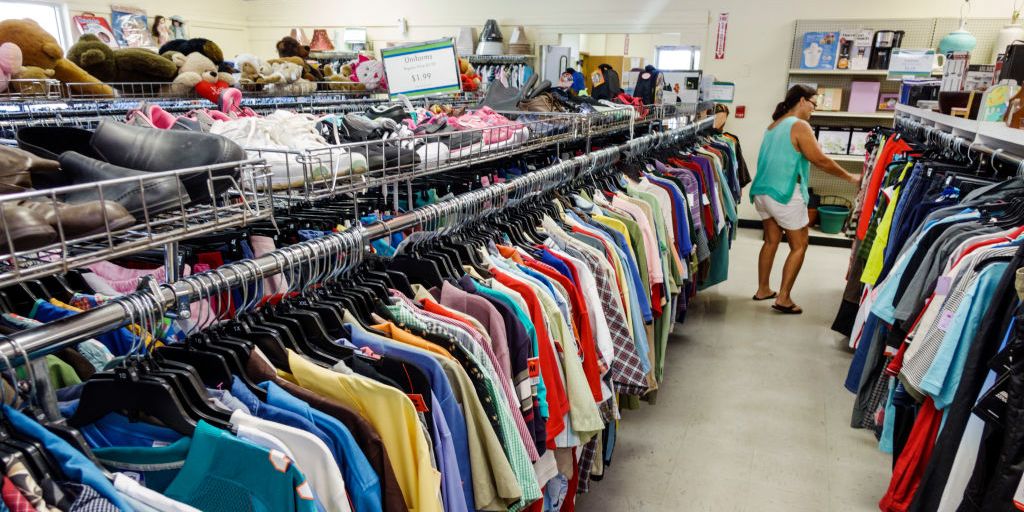
     Alternatively, the relaxing, comforting feeling of walking into a thrift store is unmatched. There are so many ways thrift stores subvert discipline and control. Thrift stores defy the intended life cycle of a piece of clothing or product. Our society wants us to buy new, use, and buy new again, and by ignoring this rule, we can escape a kind of control. Further, thrift stores neglect little details – there is imprecision everywhere! Stains on clothing, clothing you can tell has been worn for a lifetime, clothing that has been out of style for at least 20 years, differently gendered and sized clothing all mixed up together. The maximization of time and money is not evident, either. Employees take their time checking out customers, sometimes impressively slow, and products are usually less than $5! Even considering all of these glories, my favorite thing about thrift stores is the community it takes to curate what is inside. Anyone can contribute to what a thrift store/consignment shop sells, effortlessly ignoring trends in society, providing a vast array of options, and encouraging people to listen to their own desires.