
My parents were older when they had my sister and I. They, as a couple, decided to wait until they were mentally and financially ready to raise children. When we were born, my mom was the type of parent with a ridiculous number of books to learn how to be the “perfect” parent (which does not exist). My dad followed my mother’s lead while using his teaching skills on us.
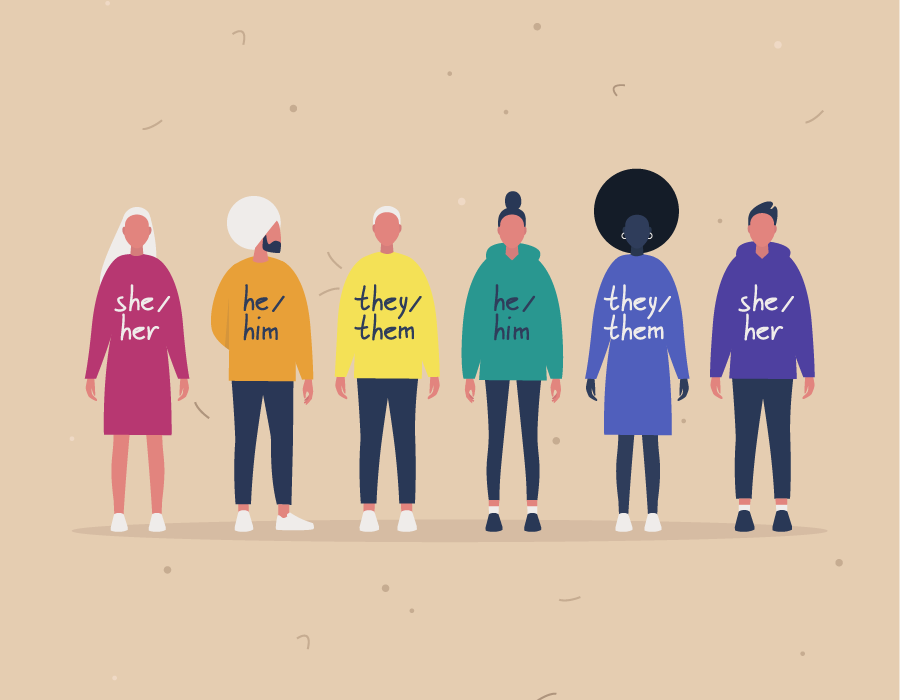
From a young age, I understood that love comes in different forms, which are all valid. My parents are friends with biracial, gay, and lesbian couples, etc. When I would ask my parents questions about these friends, they would explain it to me in a kind, respectful manner. After they answered my questions, it was normalized to me because my parents treated them like any other person, which was essential. After all, parents teach children by example.
Later, in elementary school, my mom had my sister and I join the 4-H club. This club taught us a lot about social and physical skills, like sewing, baking, working with hardware tools, etc. We also did fundraisers where I would help cook and serve food to the homeless shelters, gather and donate food for people experiencing homelessness, and clean parks and beaches. 4-H would have competitions where I would have to give speeches and demonstrations. These competitions helped me to be more confident and learn how to communicate with others effectively.
My parents made sure at a young age that we could adapt to the world and be open to everyone around us. They continued to improve themselves for us, which is what my mother did until her last breath. I am thankful I had a childhood with parents who sincerely wanted the best for my sister and me. I am grateful for a father who continues to try to support us in every way possible while struggling with the loss of his partner of over ten years. I am thankful that I can eat delicious food with my immediate family. I am thankful.
Happy Thanksgiving!
You might walk into Foot Locker or Hollister in the mall to do routine wardrobe updating. Minding your own business, until you’re not. You hear a rather strange noise being emitted from someone. There is a possibility they might suffer Autism Spectrum Disorder (ASD), but that’s not what flows through everyone’s mind. Or it might, but you don’t care about that, you’re just trying to shop. Many people today are rather judgmental than open and accepting, which needs to change.
There’s this tendency of stopping and staring, rather than moving on with yourself. The caretakers have it handled, and there’s nothing that you can do but cause embarrassment by staring and talking down. It’s impeccable how often I see piercing eyes judging another human being for something they cannot control, but can only work on with time and caring people.
It is also insane how we generalize autism to specifically children, when in fact those children do age just like any other child. Reading Stevenson et. al on Infantilizing Autism, many facts and statistics were revealed on the number of ways that Autism Organizations infantilize the disorder. On page 2, authors stated, “In 2008, the most prominent autism charity, Autism Speaks, reported on its website an estimate of the number of “autistic people.” That estimate was identical to their estimate of the number of “autistic children,” thereby denying the existence of any autistic adults.” In my opinion, that’s almost dehumanizing.
Overall, we just need to do better with our attitudes and opinions to neurodivergent beings. They are just as human as we are, and making this change would invite those into a safe space rather than excluding.
Who am I?
I,
I’m my thoughts,
My dreams,
My aspirations.
I’m my name,
My looks,
My imagination.
That’s what I see,
When I stare,
Into my reflection.
My reflection,
Ripples in the river of life,
The shallow,
Shallow river of life.
To the world,
I am my reflection:
I am only what the world sees,
Only what the world decides I am.
My body is but a vessel;
Why must the world ignore me,
But acknowledge the vessel?!
Books, merely objects
Are still judged
By only their covers,
So who am I to demand
They not judge me
By only what they can see.
The inside of a book
Is where the value lies
But most people don’t bother;
It’s easier to judge
From the outside
My body is a part of me,
It embodies my soul
My personality,
But it is not all I am.
I am not my scars,
My disability,
I am me,
A completely separate entity.
I, Me,
Not just what you see
Ever since I was a child, becoming a doctor has always been my dream/goal. Watching my mother and grandmother struggle with health issues and chronic illness has been my motivation to be in the healthcare field and help people like them. I’ve always been one-track-minded when it comes to becoming a doctor. In high school, I even joined a program catered towards kids who wanted to pursue a career in healthcare and help prepare them for college and the courses they would be taking.
My family has always been proud of me and encouraged me to pursue my goals. They’ve always expected nothing less of perfection regarding my grades and overall performance in school. I want to become the first doctor in my family and they want that for me as well.
It wasn’t until last year when I became sick and this year when I had to care for my mother following brain surgery, that my grades dipped below that line of perfect and my performance in school was lacking. The whole time I couldn’t even focus on taking care of my health because I was so worried about how I was doing in school and what my family would think of me.
I didn’t start doubting my ability to achieve my goals of doing well in my undergraduate year and making it to medical school until this year. I’ve worked so hard and I know I shouldn’t be so hard on myself, but honestly, this doubt has in a way uprooted my self-worth.
I am slowly learning not to quantify my self-worth based on how well I am doing in school and how much that is pleasing other people, but at times it can be hard. It’s those moments while I’m on the phone with my grandparents and they mention how I’ll be able to help my grandmother with her knee when I become an orthopedic surgeon, or how successful I’ll be when I become a doctor and how proud of me they’ll be that I find myself fighting back wanting to tell them I’m struggling mentally I’m not sure if I even want to be a doctor anymore or if I’m worthy or becoming a doctor, or if I deserve to receive their praises or for them to be proud of me.
It wasn’t until these last two weeks that I had stress-induced muscle spasms and migraines that I finally decided I was going to ensure I put focus on my mental, physical, and emotional health. I cannot be consumed with what other people think of me, even if it is family members. I have to live my life for me.
What is it like living with PTSD? For me, I freeze a lot. Sometimes my body just freezes for hours at a time and I am stuck in a trance-like state doing nothing. This makes it very difficult for me to keep up with everyday life because the smallest trigger can put me in a catatonic state for hours until I feel I can move again. For example a few weeks ago I was having a completely normal day when something so unexpected and niche triggered me into taking a seat and staring at the wall for an hour and 30 minutes straight. I always eventually snap out of it and catch myself like -what am I doing?- and then I have to kind of shake it off and really motivate myself to do some work, self care, or anything really. Most days it is a big feat if I brush my teeth and take the bare minimum care of my body.
TW:
right when you’re developing social skills and learning how to move through the world, I got hit with truckloads of guilt and shame and my little 9 year old body couldn’t handle it. I went into a depression for at least six years, I never made any social media accounts, stopped inviting people over, dropped all my sports and stuff. I just isolated myself for my entire youth, as a college student finally making an Instagram and all that; I can’t help but notice how much of the world passed me by while I was stewing in the darkness. There’s a whole human experience I never got, and now I’m too old for anyone to care and I have to try and catch up with the times alone. I know this stuff sounds stupid but it’s just another thing I took away from myself. I’ve felt grown my whole life and now I just wish I could go back. There’s not really a way for people to see any of that from looking at me. They see an able bodied young person which should allow me to live my life to the fullest. In reality I feel like I have a huge weight on my mind all the time.
End of TW:
The Invisible disability project defines invisible disabilities as any physical, mental, or emotional impairment that goes largely unnoticed by society.
I think society is aware of invisible disabilities such as PTSD but doesn’t really give much wiggle room for the tedious processes involved in living with/healing from trauma.
And I understand, maybe it is just that the current framework of society is solely based on productivity. In my experience, if someone isn’t able to produce and contribute something then they are valued less and often struggle without a support system.
On a lighter note this is an image that I feel my brain would look like, its a fire fortress waffle house.

The COVID-19 pandemic has changed my life forever. After the pandemic, I was diagnosed with severe anxiety and depression. And the last 3 years have been the worst of my entire life. My senior year of high school was terrible, my freshman year of college was ten times worse and it always feels like nothing ever goes right for me. I’ve done so many things just to feel normal and fit in. I have literally gone to so many different dermatologists and have spent almost $400+ for my skin to get clear and at one point it did. But of course, my ance had to come back and now makes me feel more insecure every time I look in the mirror or even when others look at me. I’ve tried to dress in a certain way, drink, smoke, etc. just because I felt like all of my friends were doing it so if I didn’t I was “boring” or just ruined the mood.
But after being in therapy for a few years now, I’ve recently slowly come to except myself. I think ever since I was young, I tried to fit in no matter what and my anxiety and depression made this even worse. Also when looking at social media, I have always compared myself to people I saw and questioned why I didn’t look or do certain things like them. But I’ve come to learn that there is no such thing as a “perfect” or “normal” person. As humans, we express ourselves in many different ways with the way we dress, talk, and go on with our daily lives. Our differences don’t make us unnatural but are what makes us all special in our own way. While I have improved over the year myself, I still have a long way to go and I hope one day, I won’t give a fuck about what other people think about me and be cunty. :)))
“So tell me what you want, what you really, really want, I’ll tell you what I want, what I really, really want”
First lets define disability and impairment. Susan Wendell uses disability activist’s and United Nations definitions explaining:
Disability activists and scholars usually distinguish impairment from disability, treating impairment as the medically defined condition of a person’s body/mind, and disability as the socially constructed disadvantage based upon impairment.
Wendell, S. (2001). Unhealthy Disabled: Treating Chronic Illnesses as Disabilities. Hypatia, 16(4), 17–33
For some people the limitations they face in day to day life isn’t based at all on impairment, but rather how society disables them. And even for people who are looking for treatments to make life more livable, society is still a huge disabling presence. Some examples of how society can disable include, uneven sidewalks, broken or lack of elevators or in general poorly made and maintained spaces. Those are some of the more obvious physical barriers. There is a larger social barrier that people with disabilities face and that’s prejudice. Especially for those with invisible disabilities the strain of people assuming they are fine, that they are “faking” and don’t really need the help they are asking for, causes such an intense mental and sometimes physical strain.
From personal experience people don’t trust that you know what’s going on with your body and with what you are able to do. When covid was really bad I got sick, but not in such a way that I needed to go to the doctor. During this time going to a doctor if it wasn’t necessary was not just looked down upon but also dangerous. When I told my professor I couldn’t come to class I was asked to get a doctor’s note, which I was unable to produce and ended up getting points marked off in the course. Another time I was hospitalized and the doctors told me they contacted my professors. Either the professors didn’t care or they weren’t told because when I came back most of the professors said I couldn’t make up the work and should just drop the class and take it next semester. Instead of preparing and trying to figure out a way for me to make up the work. Not only did I lose thousands of dollars in tuition, I ended up going under the credits needed to be full time and I was kicked out of my housing. This whole time disability services didn’t do anything because they said “We can’t do anything retroactively”.
Recently someone asked me if I could change anything about my university to make it more disability friendly what would it be? There’s the obvious: fix the sidewalks, routine maintenance on elevators and doors and changing certain stairs into ramps, but there’s also making professors have recorded lectures or accessible online materials. I’ve had multiple professors that use pre-lecture videos to prepare students for class discussion, and while going to class is important, in times of extremes like hospitalization these pre-lectures are wonderful supplementary materials. I’d also like to see disability talked about more and normalized not just in the university setting but in the work place too. So hopefully that answers the statement: “tell me what you want what you really really want.”
There is such a disparity between Chinese and American culture, in terms of sex and gender embodiment. I lived in China for a few years before moving back to the states, so I was able to experience the social culture of each country. In China, it is very conservative and traditional. Everyone is expected to adhere to ‘traditional’ gender roles, otherwise they are criticized by society. This kind of mindset has been long ingrained into Chinese culture, leading it to become the norm. Whereas, in the US, the culture is different. Although there are still unaccepting individuals, society can be receptive to people defying traditional gender roles. Here, there are numerous settings where individuals are not expected to adhere to ‘traditional’ gender roles and society welcomes those who identify differently than what they were assigned at birth. There are more advocates for gender embodiment and sexuality studies in general, which is rare or unseen in China.
The culture that I have seen in China has been perpetuated by my parents. Growing up, it was never a question of whether I identified as a woman or if I was cisgender. To them, there was no doubt that a daughter of theirs would be anything other than a cisgender female. I did not know any better so I never questioned their assumptions. Looking back, I realize how limited and confined I was. I was never able to explore my gender identity. It was not until high school that I learned about gender embodiment that extends beyond ‘traditional’ roles. I realized that I did not have to confine myself to that restrictive mindset and that I had the option of identifying as another gender.
As emphasized by Stryker and Stone, gender is not just a ‘natural’ part of the human body that is apparent just by looking. Stryker describes the relationship between the body and gender identity, where it extends beyond physical appearances. There are performative and dynamic aspects of gender. Stone also emphasizes how the embodiment of gender includes more than physical attributes. It involves subjective experiences, identity formation, and the negotiation of societal norms. Gender embodiment has been largely influenced by social constructs but it differs between every individual. Subjective experiences lend gender to vary amongst people, but gender identity should nonetheless be recognized and respected in all cultures.
I picked up my laptop and walked over to my bed to write this lol. She just looked over at me oh my gosh, how does she know? I really could have picked a more secretive title but nahhhhhh. Honesty is the best policy or something like that. Anyways, yeah this blog is inspired by my overthinking and UMBC dorms, shoutout to you all.
Okay, so I’m quite a curvy woman. What can I say, it’s in my genes. Naturally, this means I take up more space as I have some meat on my bone. Surprisingly, this is something I am still getting used to even though I’ve lived in this body for a while. I digress, my roommate is skinny WHICH ISN’T A PROBLEM but it means we take up space differently. I need to give you guys a visual about what I’m about to get into.
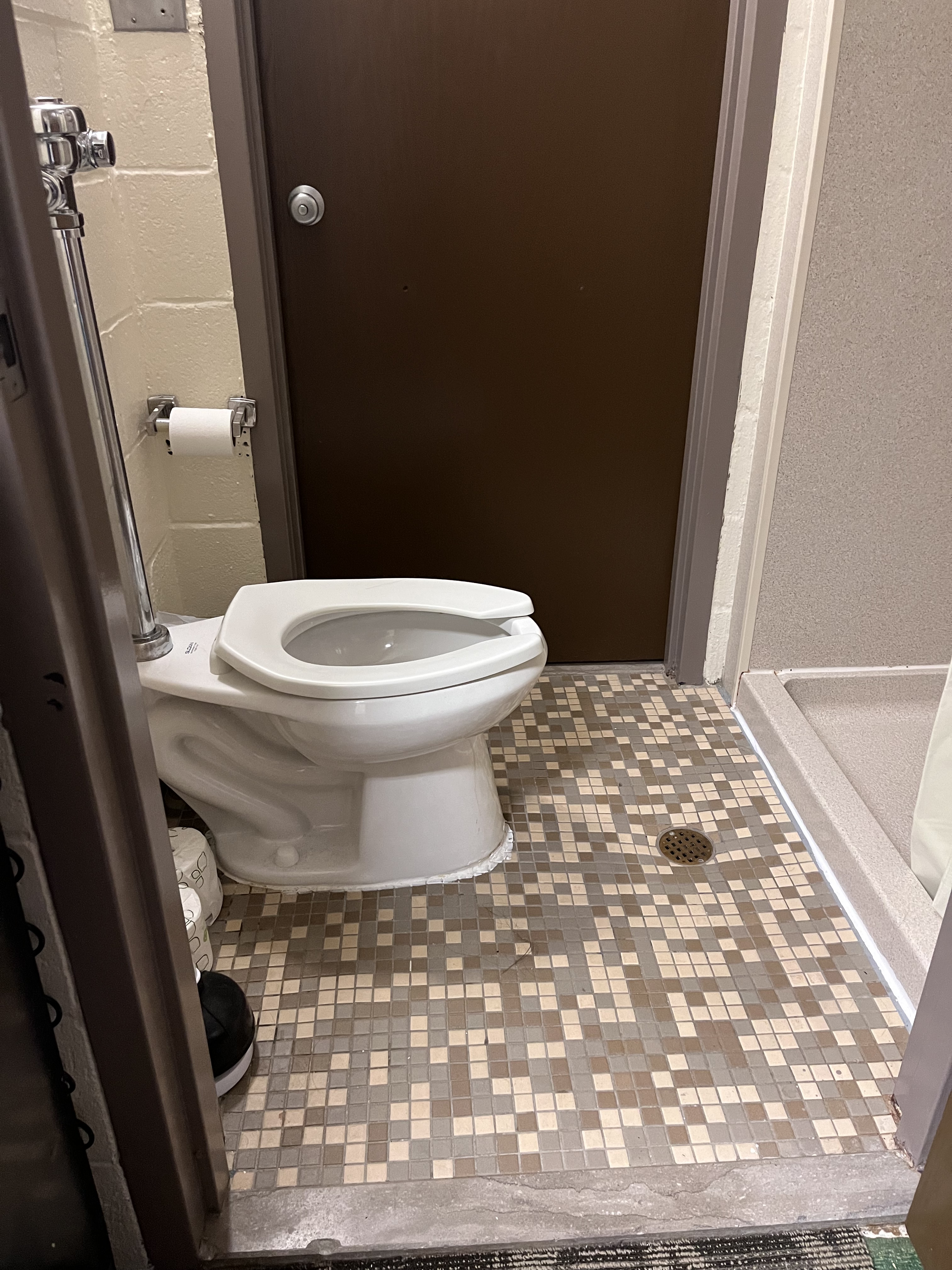
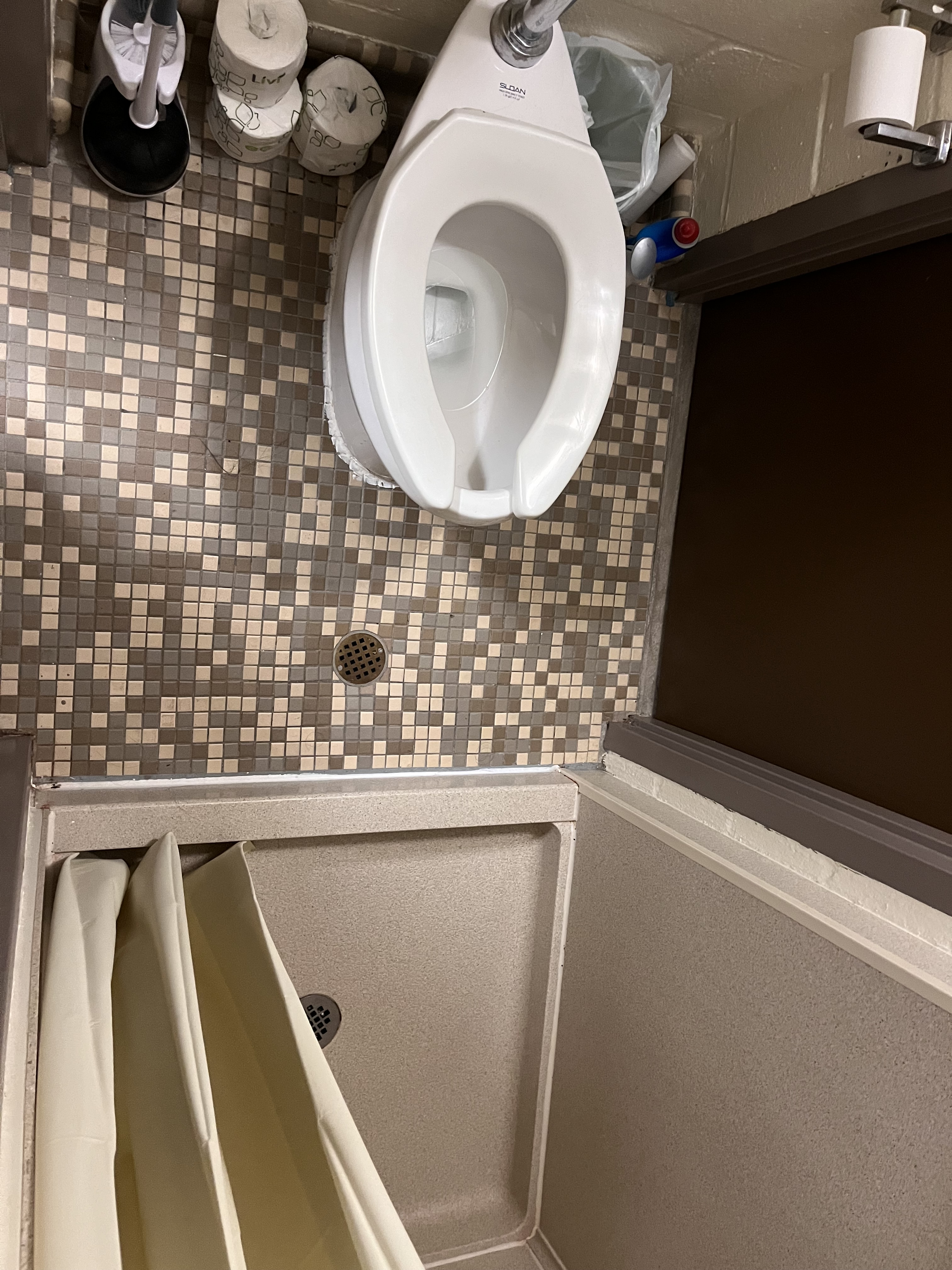
Here is our marvelous bathroom that we share with two other people. Pretty neat right??? Wrong. It’s incredibly small. And yes, I sound ungrateful for having a working bathroom and all but…who the hell were these bathrooms made for? I for sure have gotten used to it as it’s almost the end of this semester and I’ll continue to live here next semester but oh boy… it was an adjustment. You can’t see it in the pictures but we have a shower holder thingy that has all of our soaps and loofahs hanging in the shower. I can’t tell you the number of times, I’ll be showering and I move my arm to wash another part of my body and I accidentally elbow the shower holder and, thus making it fall. Not to mention that it is METAL and loud as fudge.
There are so many unspoken things that go into having a roommate. Of course, we talked about all the usuals at the beginning of the semester: guest policies, renting a minifridge, not having sex in each others’ bed (this is a joke btw). All of those are great and all but no one ever talks about *cues dramatic music*

Where the hell are you going to change? This is something that is inevitable and going to happen every day, probably more than once. I have never liked changing in post-shower bathrooms because it makes me feel sticky with the humidity from the hot water but I would do so if I knew I had a roommate to be courteous. HOWEVER, there is like no room to manuveur into shirts and pants in there without something getting wet and/or banging the doors when you move. There’s even less room when I am avoiding my feet touching the floor mat as it is dirty and wet. I am so squeezed up in there, it’s such a stress-inducing activity.
This is why I change in the room, regardless if she is in there or not. I still am mindful and make sure I have the towel wrapped to cover up my girl parts but I get the sense that she doesn’t like that. Since she changes in the bathroom, I feel like it’s a guide for me to change in the bathroom, but I physically can’t and that kind of sucks.
 Unruly Bodies