How I gained body acceptance (with a lil’ help from Bitchy Bitch)

As you can tell from my username, I love vintage stuff.  I’ve been this way my whole life.  I was that dorky little kid who listened to the Beatles and Buddy Holly, and when you came to my house to play Barbies with me, the story had to take place during World War II on the home front.  By far, my favorite aspect of vintage culture was always Archie comics.  Does anyone remember Archie, the redhead teen from Riverdale? When I was maybe seven or eight, my mom bestowed upon me her huge collection of Archie comics from her 1970s childhood, and about a year later, my aunt sent me an anthology of Archies from the 1940s entitled Archie Americana Series: Best of the Forties.  I was obsessed.  I was particularly taken with Veronica, Archie’s spoiled, snarky, and bee-you-tiful girlfriend.

Continue reading

Women in Public ≠ Public Property *TW assault*

I’ve been thinking a lot lately about the issue of women’s bodies being viewed as public property. From cat calls to groping, it seems that many men have a clear sense of entitlement to women’s bodies in public spaces. This way of thinking and acting is incredibly prevalent in our society, and the cultural encouragement of this behavior is especially disturbing. I recently watched several videos by Stuart Edge and Andrew Hales that completely condone this type of behavior by harassing women and then playing it off as a fun joke.

Continue reading

“I’m Having Their Baby”

The Oxygen Network will be presenting a show entitled “I’m Having Their Baby” on July 23rd, 2012. The show highlights women who will be giving their children up for adoption. The adoptive parents include gay couples, infertile couples, etc. The interesting part is that we see the story from both sides. Oxygen shows us what the birth mother experiences along with the adoptive parents. I believe that it will be interesting to see how the families of both sides feel regarding the adoptions.

I believe that this is a show unlike any other on television at this time. Adoption is rarely discussed, especially from both points of view. Since abortion is such a charged topic, adoption seems to follow. Women who chose to give up their children are looked down upon at times, depending on their situations. Sometimes, society feels better about a woman choosing to give their child up for adoption that abort the pregnancy, but sometimes the situation is reversed. It is even more interesting that adopting a child is seen as a noble cause or creating a family, but giving a child up is looked down upon. Isn’t what a woman does with what is inside her body up to her?

I definitely see birthing a baby to give to someone else as an interesting body project. Anyway, I’m looking forward to this show! Will anyone else watch with me?

Fan Fiction and the Tourist Approach

Because a bunch of people have asked, here is a link to my final paper on mpreg, or male pregnancy fan fiction. Please be gentle- it’s not a prefect paper, and only scratches the surface on this subject, theoretically and otherwise. In the end, fan fiction represents a fascinating place for intersectional theories to do their thing- I wish I had more time to dig deeper on it.

“Boobs Don’t Work That Way”…No really, they don’t!!!

Images such as these pervade comic book character art. Women are normally in sexy, revealing outfits; and, their bodies are often doing some pretty impossible things. A blog called Boobs Don’t Work That Way brings awareness to how ridiculously women are portrayed in comic books. The picture of Wonder Woman displayed here is not unique. Attempting to make her sexier, she is drawn into this impossible pose where her breasts and behind are shown at the same time. Also, her breasts are extremely large, and there is no way that her costume could logically support them. The commentary on the blog regarding this picture is as follows:

“It always freaks me out when boobs are drawn as almost a separate entity. This one looks like it’s about to pop off and and start a solo career.”

Other interesting points the blogger makes include the way fabric unrealistically stretches over breasts in some costumes, suctioning itself to each breast individually, the fact that nipples rarely have areolas in comics, and that breasts are not always perky and perfectly spherical.

I find it interesting that beauty for women in comic books is literally impossible for us as humans. The beauty standard is completely unrealistic. Do comic book artists feel that women will not be sexy without their impossible breasts? Or do they enjoy creating a fantasy woman? I’m not personally sure which reason correctly demonstrate how artists feel, or if there are other reasons. The blog is not being updated, but the pictures and commentary are excellent. Check it out!

Fed Up With Facebook

“Does she seriously think that she looks good???? Yuck”

“It’s like those ladies at the beach or pool who wear bikini’s and their fat it bulging out and yet they think they look good! Good enough to appear day after day like that! Ladies, think of how many eyes you are hurting!!! Lol.”

“She looks so ridiculous…cowhide, leather, beef jerkey, lost at sea…exactly. Attractive…NOT!!! She truly looks like she is in her sixties. Whether she actually brought the child into the tanning bed or not, she is a terrible role model. She needs some psychiatric help to get over that obsession with tanning.”

Although I am not the biggest fan of perpetuating harmful ideas in order to make a point, I am just about to do that. Even though I find the above comments repulsive and upsetting, I think it is important to pull them away from the Facebook context and to put them on here so that our blog readers can consider what they have been seeing on Facebook.

The above comments are in regards to the recent story about the mother who had her young daughter use a tanning bed even though it is against the law. I will be honest, I do not know a lot about this story, perhaps I would have read more about it if I hadn’t seen these comments on Facebook bashing her. I am not defending her actions, but I also want nothing to do with condemning her either, I don’t know her.

However….

If I were to take the route of acting like I know something about this woman, I would say that it does appear that she has some sort of disorder, maybe an addiction. If we look at the story through this perspective I wonder if these people who made the above comments would be saying the same kind of things. Let’s replace the addiction of tanning with alcohol. Would this public speculation even make sense anymore? Because of the physical marker of this disorder, people feel that they are able to openly comment of the “unsightly” nature of it. Then again, maybe these same people think alcoholics are disgusting too. The physical aspect of this disorder mixed with the chance to criticism a woman in her role of being a mother has created a Facebook freak show frenzy. How about we all do ourselves a favor and think before we post?

“American Able” – Challenging Media Representations of Disability

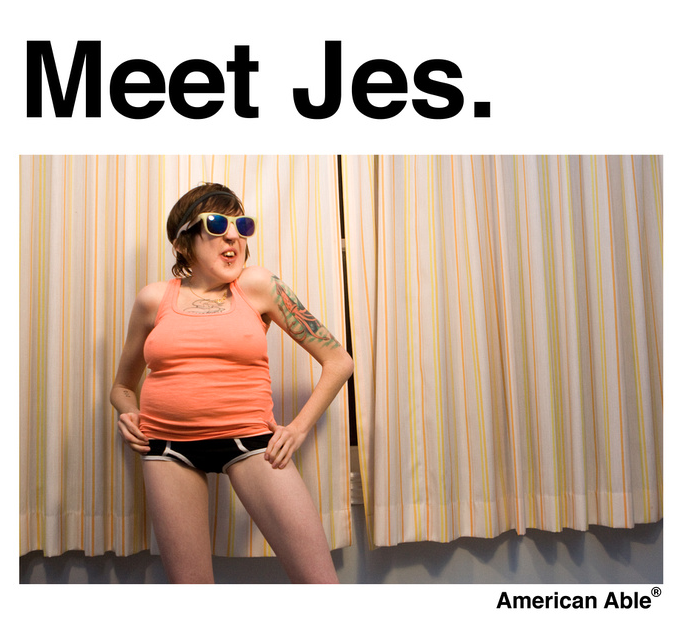
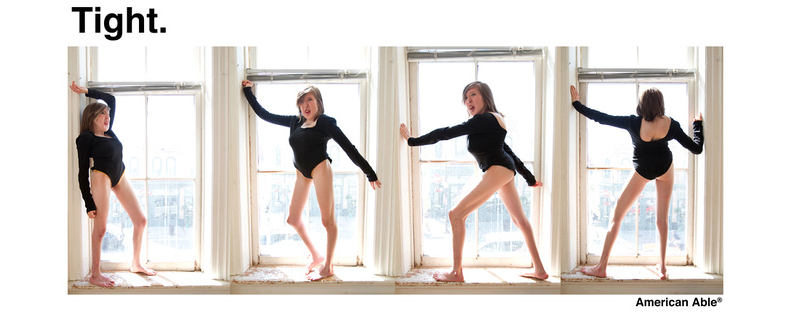
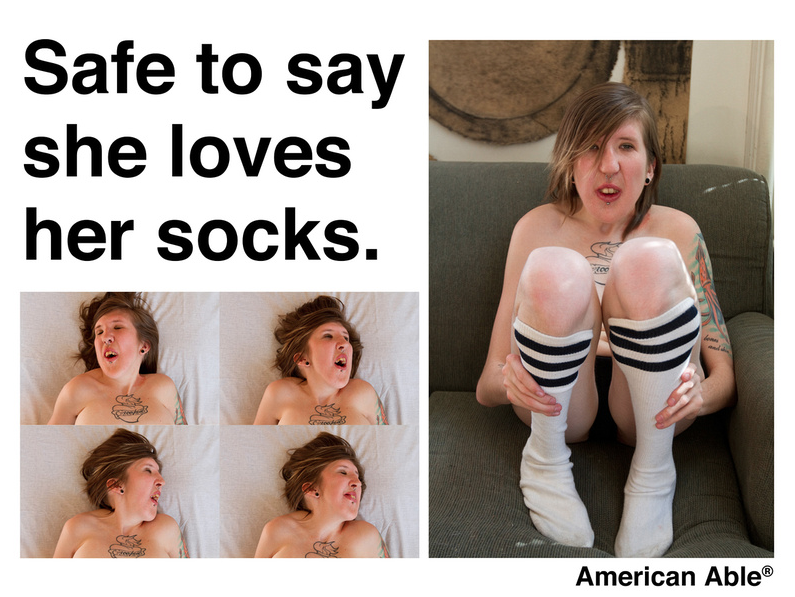
Here’s a description of the project from the the artist Holly Norris’ website:

“American Able” intends to, through spoof, reveal the ways in which women with disabilities are made invisible in advertising and mass media. I chose American Apparel not just for their notable style, but also for their claims that many of their models are just ‘every day’ women who are employees, friends and fans of the company. However, these women fit particular body types. Their campaigns are highly sexualized and feature women who are generally thin, and who appear to be able-bodied. Women with disabilities go unrepresented, not only in American Apparel advertising, but also in most of popular culture. Rarely, if ever, are women with disabilities portrayed in anything other than an asexual manner, for ‘disabled’ bodies are largely perceived as ‘undesirable.’ In a society where sexuality is created and performed over and over within popular culture, the invisibility of women with disabilities in many ways denies their sexuality, particularly within a public context.

Too often, the pervasive influence of imagery in mass media goes unexamined, consumed en masse by the public. However, this imagery has real, oppressive effects on people who are continuously ‘othered’ by society. The model, Jes Sachse, and I intend to reveal these stories by placing her in a position where women with disabilities are typically excluded.

I think this project is extremely fascinating in its critiques of advertising and mass media, specifically American Apparel, and the projects counter-depictions of disability.

How is Norris’ explanation of the invisibility of disabled bodies in mass media, including the de-sexualization and undesirability often seen intrinsic to disability, parallel to Garland-Thomson’s “Integrating Disability, Transforming Feminist Theory”? Do you believe that the depictions of disability in American Able are revolutionary? Can these counter-depictions of disabled bodies truly change advertising and mass media and the ways in which we view disability in our society?

Some of the following images by be not safe for work (NSFW).

The Adipositivity Project

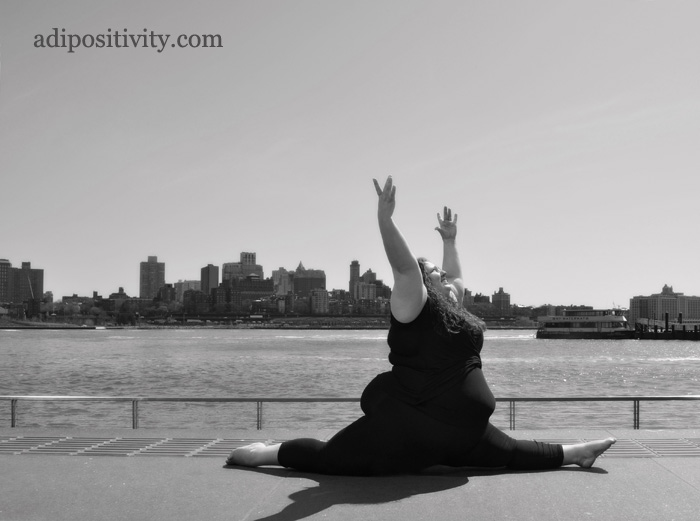
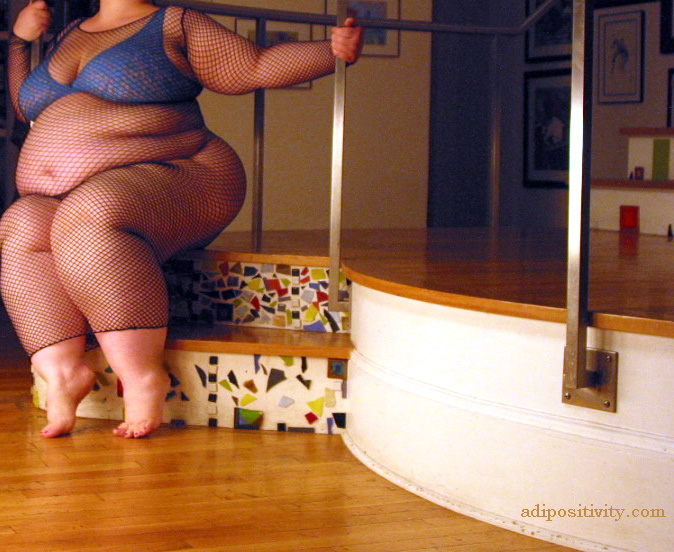
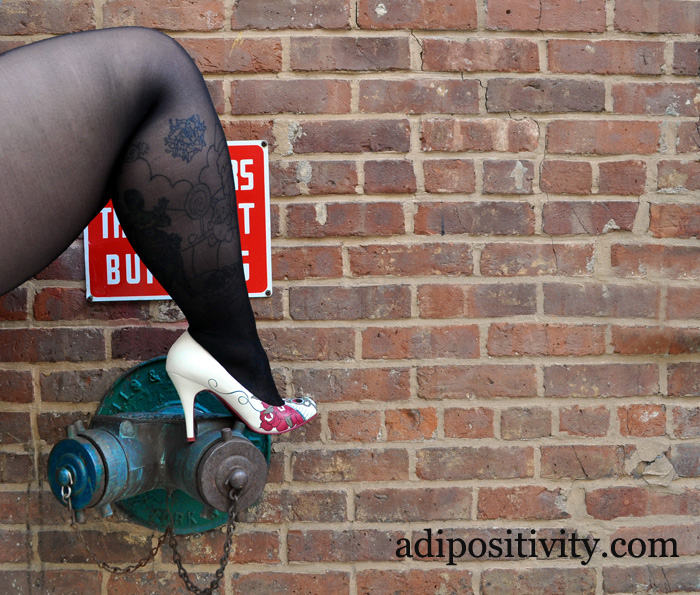
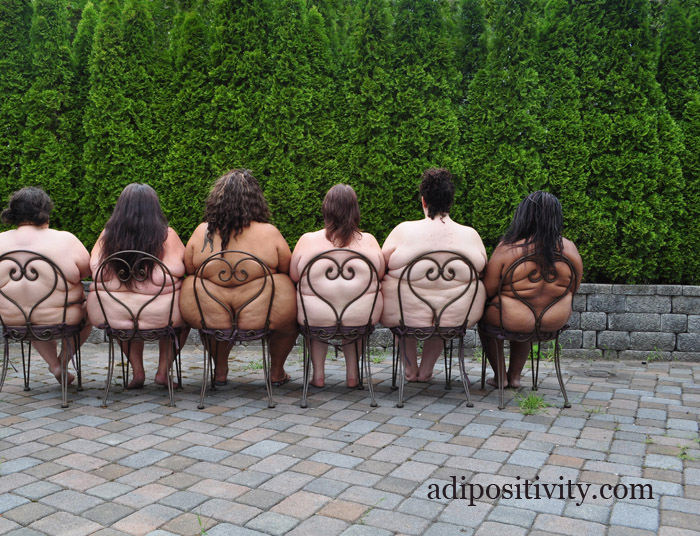
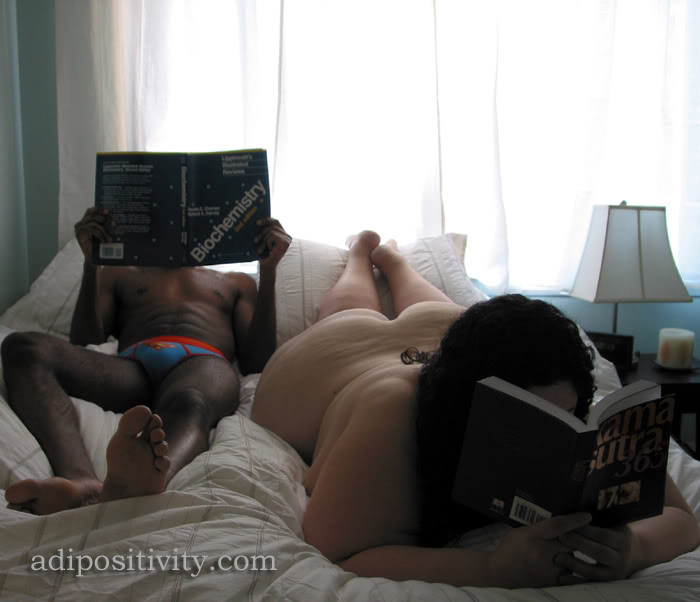
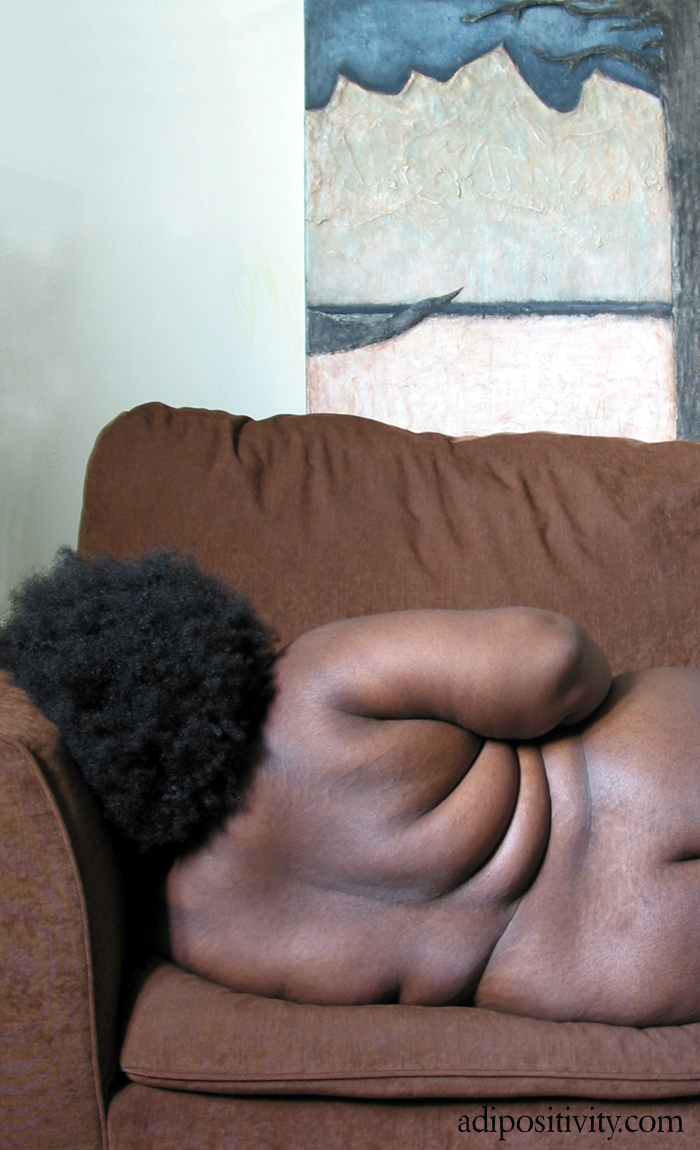
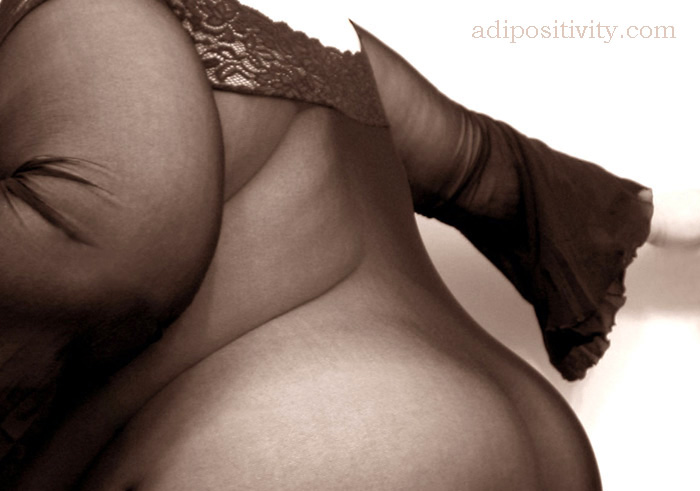
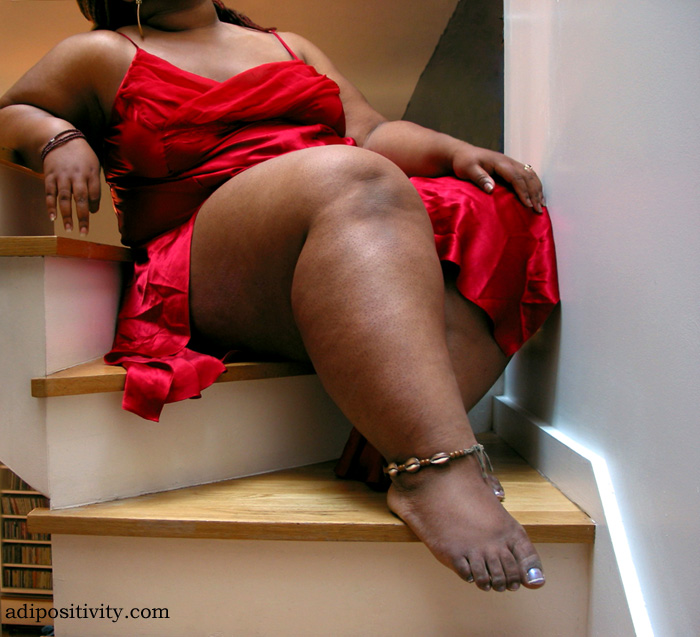
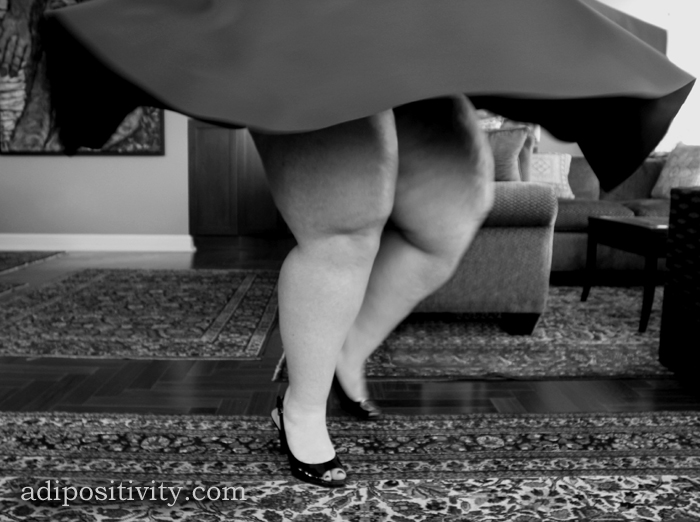
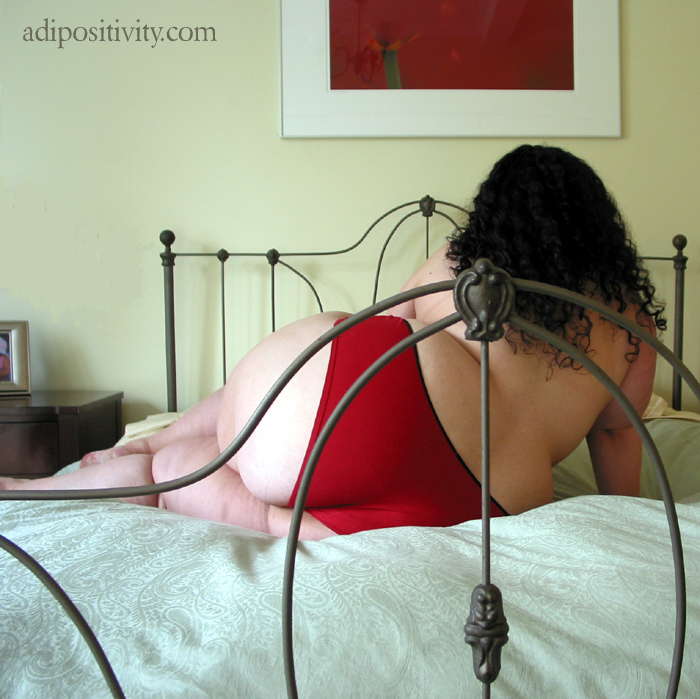
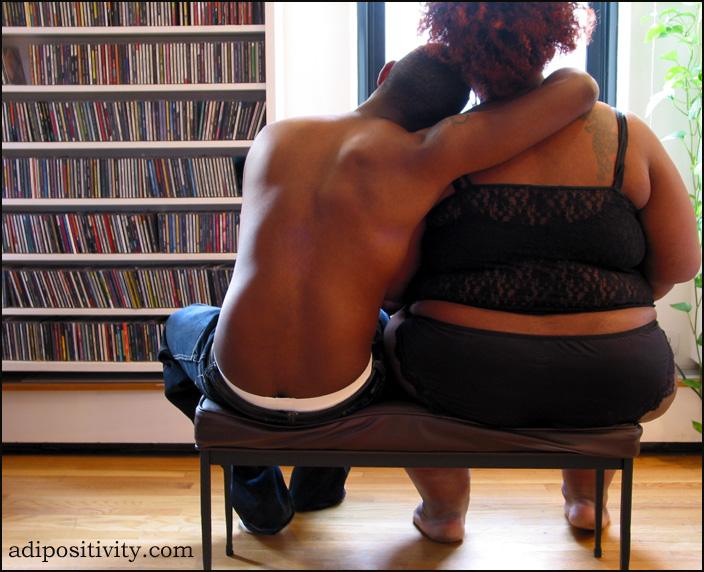
I’ve been aware of The Adipositivity Project for a number of years.  Most people who float around Fat Acceptance circles online are aware of it, but when I’ve shown it to friends who aren’t aware of FA, it’s always surprised them.  I thought, given the reading for our next class, this was at least visually on topic.  I’m also always a fan of activism through art and you can’t say Substantia Jones’ photographs aren’t beautiful or radical.   Many of the photographs are nudes, so beware if you decide to click through.  I’ve pulled some of the more modest ones to show the intent of the images.

Adipose: Of or relating to fat.

Positivity: Characterized by or displaying acceptance or affirmation.


MISSION:
 The Adipositivity Project aims to promote size acceptance, not by listing the merits of big people, or detailing examples of excellence (these things are easily seen all around us), but rather, through a visual display of fat physicality. The sort that’s normally unseen.

The hope is to widen definitions of physical beauty. Literally.

The photographs here are close details of the fat female form, without the inclusion of faces. One reason for this is to coax observers into imagining they’re looking at the fat women in their own lives, ideally then accepting them as having aesthetic appeal which, for better or worse, often translates into more complete forms of acceptance.

The women you see in these images are educators, executives, mothers, musicians, professionals, performers, artists, activists, clerks, and writers. They are perhaps even the women you’ve clucked at on the subway, rolled your eyes at in the market, or joked about with your friends.

This is what they look like with their clothes off.

Some are showing you their bodies proudly. Others timidly. And some quite reluctantly. But they all share a determination in altering commonly accepted notions of a narrow and specific beauty ideal.


I love this project, especially considering the attempts by the media to include “real” bodies through the use of marketing like the Dove Campaign for Real Beauty and “plus size” (really a size 6-12) models, and how different these fat people look from those culturally approved fat bodies.  These aren’t the media portrayed idea of what is “real” (and how problematic is that word in regards to any person?).  These (mostly) women, according to the BMI (another problematic method of judgment!), are obese, or more likely morbidly obese (sometimes called Death Fat in the FA community).  Most of them probably weigh somewhere in the neighborhood of 200 or 300 or even 400 pounds – yet I don’t think they look like the stereotypical bed-ridden mordibly obese person most non-fats think of when they hear those numbers. Or maybe they do look like those ZOMG FAT people to you.

However you see them, these people are fat, but they have accepted the bodies they have and are living their lives in them.

October Baby


Recently my dad asked me if I would like to go out to dinner and a movie with him and I was touched! I thought it was sweet of him to want to spend some time together. Little did I know what I was in store for. When I asked my dad what movie he would like to go see he said there was a movie out that he had been wanting to see, so I just agreed not knowing what it was, thinking whatever it was it couldn’t be TOO bad, but I was completely wrong.
When we got to the theatre he asked for two tickets to October Baby, I had never heard of it. My dad and I settled into our seats in the nearly empty theatre. As the movie began I could tell it was going to be sappy, melodramatic, and a real tear-jerker for those who could connect with the message of the film. I also quickly realized that it was a Christian Pro-Life film.
The film tells the fictitious story of a Christian girl in college who discovers after having health issues that she is the product of a failed abortion. She learns that her parents are not her biological parents and she was adopted. The main character has a difficult time coming to terms with this and goes on a road-trip with her quirky and hip friends to find her birth mother. She is able to find her birth mother after meeting a nurse who used to work at the abortion clinic and remembered the day of the failed abortion. The nurse tells horrific stories of what would go on at the clinic and there are many tears. When the main girl confronts her mother she denies being her mom and in the end the main character writes her a note letting her know that she has “let go” and has forgiven her. Also at the end, you see that the nurse who used to work at the clinic now works in the Labor and Delivery Unit in a hospital. A happy ending for all…
Just when I thought the torture was over, a video of an interview with the actress that played the birth mother started to play during the credits. So of course my dad wanted to stay to watch that. She basically said that she felt that this role was perfect for her because when she was younger she had an abortion and through playing this role she felt some closure. She also felt like she was doing her part to help other women from making the same “mistake” that she did.
By the end of this film I was furious. My dad is Christian and although I was raised Catholic I made my dad aware that I was not religious back in high school. The issue of religion (and politics) have created a large barrier in our relationship. So as the film ended and he asked me if I liked it, I was angered, how could he think I would enjoy this movie? Does he know me at all?  I told him that I really hated it. He then called me a week later asking if I had thought about it and liked it anymore. I answered, “No, Dad. I still really hate it.”
What I found problematic with this film is the fact that it was basically instilling false fears into peoples minds about a sensitive subject that is already under attack politically. People were walking away from this film feeling validated in their viewpoints against abortion and women’s rights. Does my dad now think that failed abortions happen all the time? I am not trying to imply that this never happens, it does. But is it really something that needs to be embraced into the anti-choice movement? Also, I believe that if access to safer abortions were increased in the first place this would not be a problem to consider at all. This option of course was not considered in the film though. Instead, they simply vilified the birth mother and portrayed her as a vein,s elf-interested lawyer who has chosen to turn her back on her daughter. Even though the women who played the birth mother has gone through the experience of getting an abortion in real life and should understand the hard decision it can be, she chose to accept this portrayal.
Needless to say, before I ever accept another offer to go to the movies with my dad again, I will thoroughly research the film.


Here is the link for the film’s website. On there is the video of the actress discussing her abortion that played during the credits. The video is called “October Baby Stories: Shari”      http://octoberbabymovie.net/#