What Does It Mean To Be Disabled?

What makes something a disability? Can mental illness be a disability? If your disability is being treated, and doesn’t currently disable you, are you still disabled? Are you still disabled even when your disability goes from being primarily visible, to primarily invisible? If you were in Special Education as a kid, but have made Dean’s List the last 3 semesters, are you still able to call yourself disabled? Do you say you are disabled? Do you say you were disabled? Do you count your issues as a disability at all? Is that undermining the plights of actually disabled people? 
Last year I was in a math class, and two girls sitting next to me got to talking about the fact they were both people who grew up disabled with chronic illness conditions. I couldn’t help but overhear them, and as they talked I realized I related to everything they said. From not being believed by doctors, to getting denied accommodations in school, to missing out on formative experiences due to disability and trying treatment after treatment with little to no results. But as much as I wanted to join in and say “me too” I couldn’t. I didn’t know how they would respond. 

As someone with severe anxiety and panic attacks, I’ve always felt like I straddle the line between mental illness and disability. People don’t like to consider mental illness a disability. Even in writing this anonymously, part of me is scared that I will get criticized for calling it that at all. I feel this need to go out of my way to justify that my experiences were bad enough to get the label of disability, to put my heart and trauma out on the table so that no one thinks I am trying to claim a label that doesn’t apply to me. But that’s exactly the problem.

I don’t want to have to explain the fact that I was a completely non-functional child, a total mess. It’s no one’s business that I had daily severe panic attacks that would last for hours, complete with kicking, screaming, and endless sobbing. It isn’t fun to recount the fact that multiple therapists told my parents that my issues were too severe for them to treat. I don’t want to have to explain the years I spent in Special Education classes in order to participate in a conversation about disability.

I am not the gatekeeper of disability. I don’t know what counts and what doesn’t. But in my opinion, while not all mental illnesses are disabling, some of them are, and I see no reason for that to be any less valid than any other kind of disability. Maybe there is no one firm guide to disability, maybe it’s more fluid and complicated than that binary allows.
Body Image

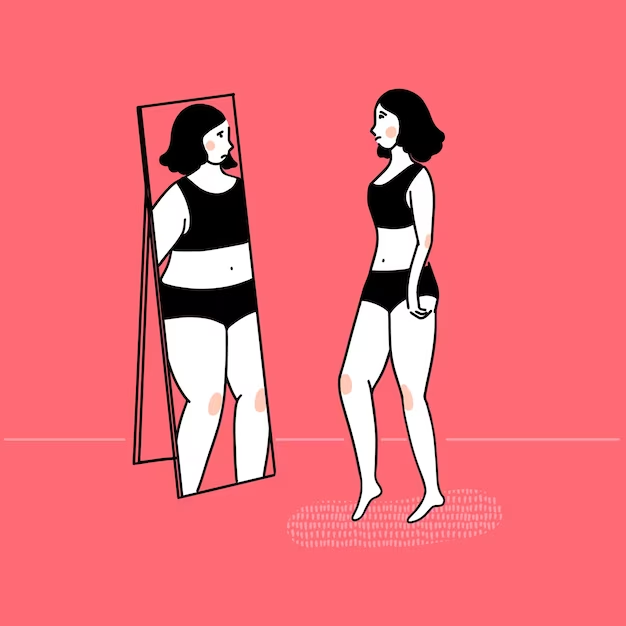
In a world where appearance is very important, a lot of us have body image concerns that impact our daily lives and mental well-being. The reflection staring back at me in the mirror can make me feel powerful or powerless, influencing how I perceive myself. For me, my body image plays a big role in my day-to-day life. It affects everything from the outfits I choose to wear to how comfortable I feel in public spaces. I’ve had moments when I’ve stood in front of the mirror, scrutinizing every curve and flaw, which, in turn, altered my perception of my body. But I’m not alone in this struggle. Many women in society deal with similar feelings, haunted by an idealized image of beauty shown by the media. It’s a constant battle, one that has many effects on my mental health. Choosing an outfit can be a hard when you’re conscious of your body image. I often find myself hesitating to wear certain clothes, fearing they would draw attention to the areas I’m most self-conscious about. It’s something I go through daily, an internal dialogue of self-doubt that many can relate to. Walking out in public can also make me feel self-concious about my body. Thinking about the fact that others perceive my body and can form their own opinions about it. It’s as if I’m constantly under a spotlight, and the pressure to look like unrealistic standards can be overwhelming. The mirror itself can make me feel good or bad about myself. It’s easy to become fixated on certain flaws, inadvertently distorting my self-image. My body image concerns can sometimes have a negative effect on my mental health. It can lead to feelings of depression and anxiety. The comparison to unrealistic beauty standards takes a toll on my self-worth. Supportive communities and professional help can offer guidance. Learning to love and accept myself as I am is a lifelong process, but it’s worth it. I am slowly working towards loving myself for who I am and being okay with all of the features I was born with. 

My brain vs. My body

When I was little, I was always complimented on how “skinny” I was. I played sports at that time (club lacrosse and soccer), and my mother had full control over everything that I ate. My parents put me in sports as a child and I grew up playing them. I stayed the same “skinny” physique until around Sophmore year of high school. I decided to stop playing club lacrosse for mental health reasons, and I was told by the track team at my high school that I was not fast enough anymore. Then, for the first time in my entire life, I had to figure out how to keep myself healthy on my own when it came to working out and moving my body. I stopped for a while, I wanted a break from it, but I started to hate the way my body looked. I started to stalk models and other girls that society deemed beautiful and would shame myself because I did not look like them. My parents would tell me often to go to the gym because it would be good for me, but at this point I was in a depression. I slowly hated who I had become and who I looked like, and this continued for years and years. During this time in high school, I stopped eating for periods of time. Never having a stable healthy relationship with food, I either restricted or binged and always felt guilty no matter what I ate. I started to gain weight and my family started to make comments on what I was eating. I would get shamed for eating chocolate or would be told to loose weight so I could fit back into my school uniform. Then I began to skip meals and my relationship with food got worse from there. I was constantly on my phone wishing I was someone else and wishing I had a different body. This progressed for years, until last year of college. I met a group of people that made me feel like I did not have to be perfect, that I could be myself around and changed the way I view my body. I still struggle with this a decent amount but I am extremely grateful to have people in my life that always remind me that I do not need to change a single thing about my body and that social media is not always healthy.

A Large Body

I was five years old when my mother smiled at me and told me that I was losing weight. She expressed her excitement about this to me and told me that I should keep doing whatever I was doing that made me look smaller. At the time, I had absolutely no idea what I was doing but I wanted to do exactly what she told me. Unfortunately, I have never been able to exist outside of my weight since then. 

There has never been a time where I felt that I was at an adequate weight. I was constantly reminded by family how big I was and still am. Adding to this, family and family friends also expressed how abnormal I was in comparison to the rest of my family seeing as I was the only overweight child my parents had. I was continually told that I needed to lose weight because it’s not good for me to be overweight as a girl. My weight also affected the family image as I was the only one with a visible flaw in my appearance. 

As I look back at old photos of myself, I realize that I actually wasn’t overweight in high school. I just had a bigger build in comparison to other girls my age because of the sports I played in combination with my genetics. I wasn’t overweight, I just wasn’t skinny. My perception of my entire being was completely skewed during that time.

I associated my weight with everything. I thought about every step I took and wondered if it sounded heavy. I was aware of my breathing, in hopes that it didn’t sound too loud as I didn’t want to sound like I was panting. I would suck my stomach in on days where I felt like I looked bloated or bigger because I didn’t want anyone to think that I had gained any more weight. I would starve myself so that I could feel and appear lighter. I would purposely wear oversized clothing to give the illusion of a small body hidden under clothing. I would make sure to keep my opinions to myself to avoid being verbally attacked in case someone may have been offended why what I said. 

I often felt physically weighed down by my body because of the amount of weight I believe I carried. Learning that I wasn’t overweight in high school, often makes me reflect on the different perceptions, feelings, and experiences I have had of my body. I often wonder if the feeling of “heaviness” I often felt was something that was entirely in my head. I thought to myself that people didn’t like me or find me attractive because I was too big and thus, undesirable to be around. I now wonder if the negative perceptions people had of me even had anything to do with my weight at all as a teenager. I wonder if the size small that I so desperately wanted to fit into was ever a size that was and would ever appropriate for my body then and now.

Where Does Plastic Surgery Stand When it Comes to Beauty Standards?

I will specifically be speaking about voluntary cosmetic plastic surgery. Think nose jobs, botox, BBLs, lip filler and tummy tucks. I am not touching on reconstructive plastic surgery or any procedure that is for a medical reason.

What causes someone to desire a certain cosmetic procedure? For most cases, the short answer is the unrealistic beauty standard and insecurities. Growing up as a woman you are constantly and subconsciously soaking in these presented beauty standards like a sponge. The picture that is painted shows that the most perfect women are fit, have perky boobs and butt, an hourglass shaped body, clear skin, a complexion that glows, full lips, bright eyes, perfectly symmetrical eyebrows, straight teeth that are pearly white….. the list truly could go on forever. As we all know, this creates insecurities in return. You begin to grow up as your own biggest critic, freaking out before school because your hair won’t lay right, and crying in the dressing room when you’re shopping for new clothes. It is one thing to feel this way when you’re young. It is another thing to grow up and have these thoughts and realize, your insecurity may be something you can actually change for good, if you have the money.

Plastic surgery has become much more common in the last 20 years. It used to be something that was exclusive to the rich and famous. Now, you might know someone personally, maybe yourself, who has gotten some kind of procedure. For me, I know multiple people in my life. I know someone with lip filler and a nose job. I know someone who had their ears surgically pinned back. I know someone who has gotten a full body transformation including a tummy tuck, brazilian butt lift, fake boobs, botox, cheek filler, and more. I would say that most people getting some kind of plastic surgery done are doing it to rid some kind of insecurity, and I don’t blame them. Why wouldn’t you take the chance to finally get rid of that one thing that bothered you so much if you could? You won’t have to worry about it anymore, and you can finally feel more confidence when it’s gone. I absolutely believe that you can do whatever you want with your body, and you should. My confusion where plastic surgery stands morally comes in here. If you partake in plastic surgery in order to fix your insecurity and become a closer fit into the beauty standard, aren’t you now contributing to said standard?

There is a mold that women today feel that they need to fit. There is a very small number of people born naturally to fit these guidelines. Everyone today is trying to fit this similar look, and by conforming to these guidelines in the form of getting plastic surgery, aren’t you just creating a wider range of people who fit this standard? Therefore, contributing to this unrealistic beauty standard, that is usually unreachable without some kind of plastic surgery. It kind of contradicts the saying “you are beautiful just the way you are” or “everyone is beautiful in their own way” that most people have heard at some point in their life. With an increasing amount of people getting plastic surgery to fix their insecurities, there becomes less variety of people and how they look. I think one of the most amazing things about humans is that not everyone looks the same, but there has been a slow and steady increase in people who are trying to look similar. At least in the United States of America, which is the only place I can really speak on because it’s the only place I’ve lived. 

So, my mind is kind of back and forth trying to decide where plastic surgery stands morally in the sense of beauty standards. Everyone has the right to their own body, and you should always do what makes you happy. No one should tell you what you can and cannot do with yourself. Then again, is partaking in cosmetic procedures a further contribution to the  unreachable beauty standard? I’m not sure where I stand on this topic, but it’s interesting to talk about.

I feel that it’s important to mention that I am in no way judging anyone for choosing to receive some sort of cosmetic plastic surgery. I am simply pondering where the concept stands morally in the sense of beauty standards. Please do what makes you happy. 

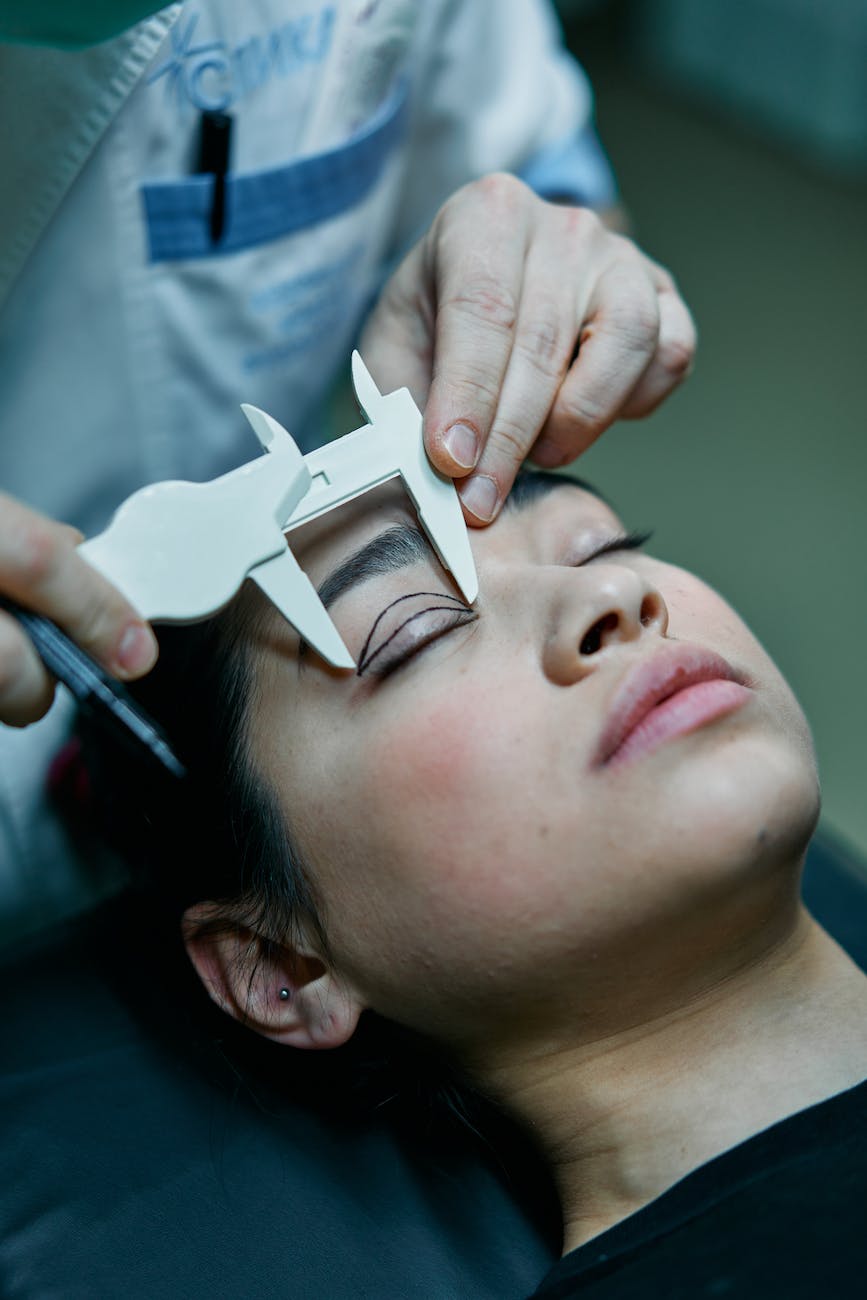
This image shows a woman laying with her eyes closed. There is a surgeon measuring and marking lines on her eyelid. She seems to be soon undergoing a plastic surgery procedure.
Photo by cottonbro studio on Pexels.com

When will my grandmother be “allowed” to participate in society?

7 years ago, my grandmother went in to receive a colonoscopy. A colonoscopy is an outpatient procedure, meaning you can go home the same day.  My grandmother had health issues and dealt with chronic illnesses, so it was a routine procedure for her to get. It was so routine that my family and I didn’t even think twice when she mentioned getting it done.

We were visiting our family friends, I was sitting on the couch with my father and my brother, our family friends sitting across from us. My father had just asked them to turn down the music we were listening to and I could see the look of seriousness on his face, different from just 5 minutes ago. He’d received a call from my mother. During my grandmother’s colonoscopy, the surgeon punctured her intestines, causing blood and intestinal fluid to leak into her abdomen and eventually cardiac arrest. My grandmother’s heart had stopped three times and she had lost significant amounts of oxygen to her brain, resulting in brain damage.

The physicians didn’t believe my grandmother would make it or even that she would be where she is today. My grandmother had to relearn how to walk, how to talk, how to eat, etc.. It was through being with my grandmother through all this that I learned how unfit and unaccommodating our society really is to people with disabilities. 

As Sunaura Taylor described in “Examined Life” by Judith Butler and Sunaura Taylor, at what point between health and death are disabled people viewed as human. When people refuse to help my grandmother in the store, or the looks and comments she receives whenever we’re in public, makes me vehemently question why? Why is my grandmother dehumanized and made to seem as though she’s making other people feel uncomfortable just by existing? She is still a human being who deserves respect. Those with disabilities are human beings who deserve respect and deserve to participate in society. When will my grandmother be “allowed” to participate in society?

That Girl from the Gucci Store

SZA has been one of my favorite artists for a while. So many of her songs hit different for me in so many ways, giving me a link to femininity in a way that I don’t really have otherwise. From messy breakups to the unhealthy behaviors that follow to hating everyone but especially yourself at times, to finding those small moments where everything feels like you can be at your best. I went to her concert last night and was amazed at the energy of the crowd for the entire setlist – you could tell which songs meant the most to us and what lyrics we could sing too passionately about amongst people who have felt the same feelings about them.

One of my favorite songs from her has to be “Special” from her new album, SOS, which she performed during the segment of the show where she came out on a lifeboat and floated across the arena. I’d always scream sing the intro to this in the car when I’m driving late at night trying to escape my head, so it was extra special that I got to see this live and see everyone else live the same moment I was.

I wish I was that girl from that Gucci store

She never wore any makeup and she owns couture

I got pimples where my beauty marks should be

I got dry skin on my elbows and knees

I never liked her, wanted to be like her

Hate how you look at her ’cause you never saw me

Like I was an art piece, like I was an ordinary girl

Toward the end of Young’s “Throwing Like a Girl”, she gives us this quote: “she gazes at it in the mirror, worries about how it looks to others, prunes it, shapes it, molds and decorates it. This objectified bodily existence accounts for the self-consciousness of the feminine relation to her body and resulting distance she takes from her body.” Now, if you’ve listened to SZA’s discography, you know that so much of her music speaks about being a girl – that is, living up to every expectation placed on you. The way she talks about femininity makes girlhood so much more relatable to me when she discusses the standards we place on ourselves when we see other women and can believe they are art pieces, but are still working to believe we can also be seen in the same way. I think it, all the beautiful women I saw singing along probably think it, and SZA herself must think it if she decided to sing about it.

The girl from the Gucci store that she wishes she was must think the same way, then.

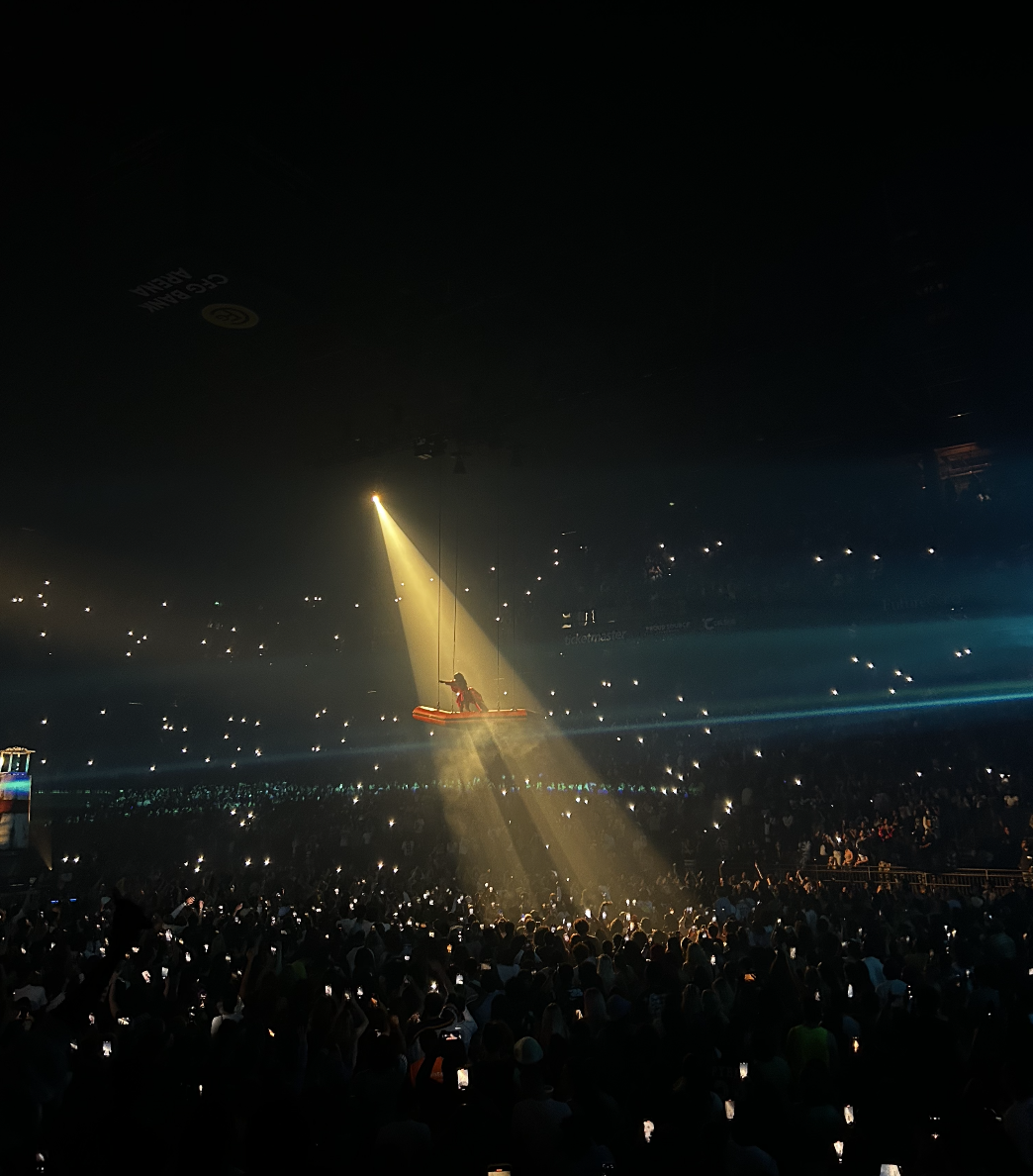
Image of SZA in a red dress on her floating lifeboat 50 meters above the arena’s floor with a warm spotlight washing over her while she reaches out to the left.

F-A-S-H-I-O-N What Spells Gender Neutral Fashion?

First it has to be acknowledged that there is no one “look” and everyone perceives labels to mean different things. How one styles their clothing is going to reflect what they think looks good on them and expresses themselves accurately. Everyone has a unique perspective that has been shaped by their experiences. Just because I perceive these things as gender neutral does not mean everyone does and it should also not be assumed that wearing any style associated with gender neutral or gender non-conforming makes someone gender-non-conforming. To that end, wearing or dressing in a way that might convey a gender (such as wearing more masculine or feminine clothing) does not mean that someone identifies as how you are perceiving them. As tik toker kissmychaase put it “Even when I’m fem I’m still a them.” meaning even if this person dresses feminine they still go by they/them pronouns and that should be respected.

The clothes, shoes and accessories we put on our bodies says a lot about who we are and deeply influences how others interact with us. In “not just the reflexive reflex” by Mary Kosut and Lisa Jean Moore clothing and accessories are described as part of an identity-kit. When this identity-kit is stripped away it takes a chunk of someone’s individualism and uniqueness. Clothing is important, it allows self expression and can create comfort.

Fashion is outfits (clothing and accessories) and make up that project one’s belonging to a certain group. There are many types of Fashion. All of it is subjective and while some outfits are easier to deem as part of a subculture, others are harder to identify or explain. Some examples of fashion subcultures are Goth, Lolita, Hipster and so many more.

Gender neutral fashion is one of the most extensive groups of fashion. Mostly because it encapsulates so many other subcultures and can drastically change with each one. Each subculture, country and group of people are going to have another perception of gender and normal, and with that the idea of gender non-conforming changes.

America and many other parts of the world live in a gender binary, the perpetuation that there are only two genders male and female and someone is either part of one or the other. In Western society things like skirts, frills, lighter colors and dresses are considered feminine and associated with women. While simpler colors, pants, collared shirts, and suits are considered masculine and associated with men.

Gender neutral fashion usually aims to make it unclear what someone’s gender is, this can include techniques such as baggy or more rectangular clothes to hide body shapes, underwear like boxer briefs which can work for anyone, and culottes which can be described as pants that are flowy enough to also look like a skirt.

Here is an article with some brands and examples of gender neutral fashion :

https://www.bustle.com/articles/100668-7-gender-non-conformist-gender-neutral-clothing-brands-to-support-right-now

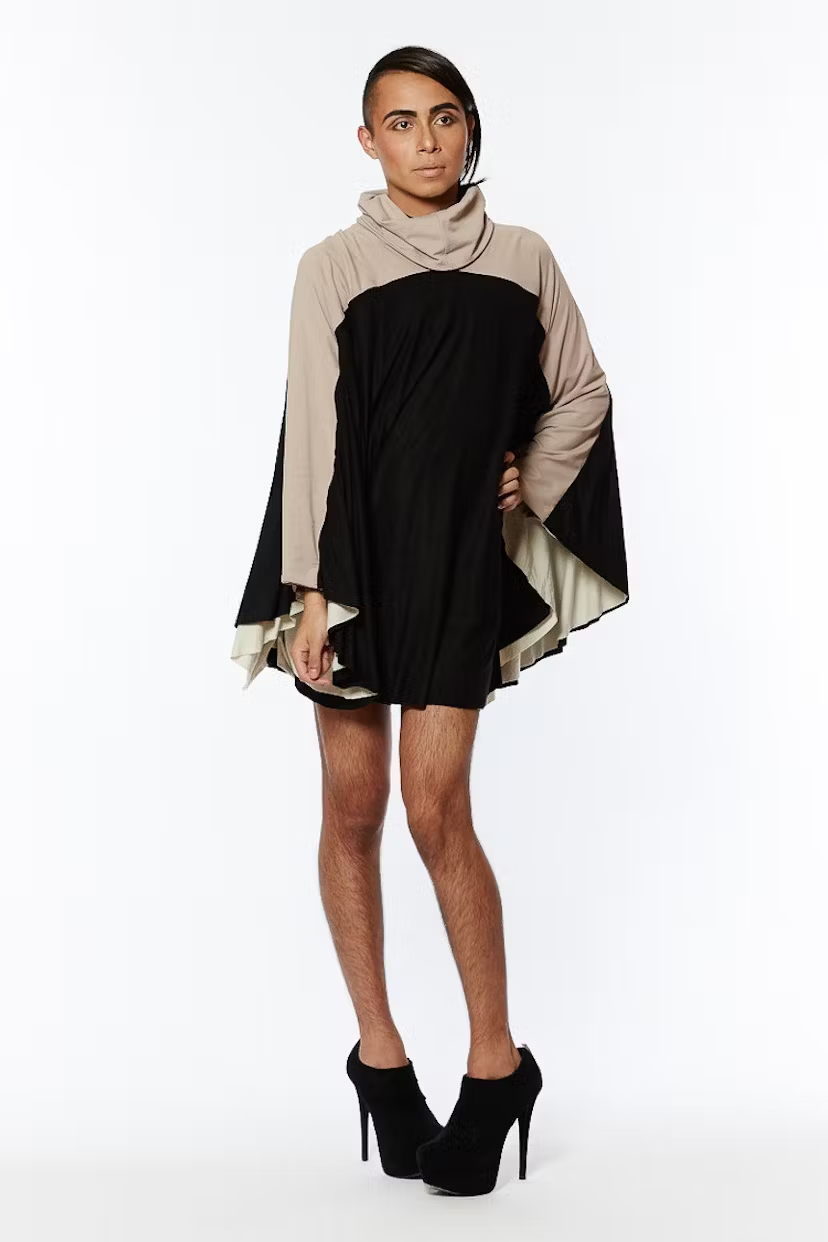
and here is one of the pictures that stood out to me

Person with Nude make up
unshaved legs 
wearing a black poncho with cowl turtle neck and arms are sewn in to make sleeves that are part of the poncho, the arms, shoulders and turtle neck are all a light beige making a single light beige stripe at the top of the garment
black boot heels 
white backdrop

Also worth noting gender and pronouns are not the same thing, gender neutral, genderqueer, genderfluid are all labels and can only be applied if the individual chooses to apply them themselves. No one gets to say “oh you use [some set of pronouns] you must be [this gender]” and vice versa. No one has to have a label and you can also have multiple labels. They are just sets of words to help unify groups of people.

And make looking for clothes easier (mostly joking).

I used to hate my body

As a child, I was carefree and never really paid attention to those around me. I would do the things that I enjoyed most, like playing, dancing freely, and singing loudly. However, as I grew older, I started to experience anxiety and became very self aware. I remember feeling uneasy about my body at the age of 10 when I first began to go through puberty. I disliked the changes my body was going through and felt like I didn’t fit in with other girls my age. I began to compare myself to the women I saw in magazines and on social media, wanting to conform to their beauty standards. I would always ask my mom for new clothes and to straighten my hair so that I could fit in more. My mom would always say no to new clothes because of our financial situation, and she was also very strict about me not straightening my hair. I didn’t understand why at the time, but I later learned that my mom had damaged her hair from straightening it constantly when she immigrated to the United States. She wanted me to appreciate my natural curls and see them as beautiful, which I now do. This experience is just one example of how industries turn our bodies into products, and it is something that millions of people struggle with. Although I still have moments of self-doubt, I have learned to embrace and love my body for what it is.

My bare face

My bare face