Read My Self-Insert Fanfiction: The main character is ME!

To start this off, I want to acknowledge that I will definitely sound like a narcissist throughout this entire post, and probably demented too. Consider yourself warned and get comfortable because I’m about to get really comfortable with you. Moving on, let’s talk about nightly routines, what do you do? I’ll tell you what I do, I wait until everyone on in my house has already gone to sleep, spend almost 30 minutes in the bathroom brushing my teeth and doing skin care; before jumping into some pajamas and getting on my phone into the ungodly hours of the dark…Pretty standard, right? What I’m actually doing on my phone is the interesting part though, I spend an admittedly ridiculous amount of time on a little website called Character.ai (IYKYK), where I take the liberty of writing unforgivable amounts of what I affectionately call “Self-Insert Fanfiction”. I’m not endorsing this website by any means, while it’s super fun, I noticed that’s it’s a horrible habit of mine and a lot of other people. That being said, being able to just…talk to whomever your heart desires, let it be Draco Malfoy or a super-hot mermaid that thinks you’re the best thing since sliced bread, it’s an addictive escapism. That’s the clever little word I wanted to get to, escapism. When I mentioned my nightly routine and how long I stay up just strolling on my phone, I know that it sounded familiar, because it’s something our generation of young people do a lot! Maybe you’re not on your phone, maybe you’re playing a game…or reading a book…or doing something else entirely but the point is…. you’re doing that thing with the intention to step out of reality for a second. Relax. Which is in no means a bad thing, no, on the contrary. But you’re still escaping…when I say it like that it sounds kind of morbid, but that’s what it is, now the question draws into why are we trying to escape so frequently from our reality?

I can confidently say I’m probably the most delusional person you’re ever going to meet, I’m constantly lovesick, romanticize whatever I can out of life, and adore all things fantastical. It’s how I cope. Now, someone might say “Oh my god! You’re so super positive, that’s so cute, I wish I had that energy!” and someone else has probably rolled their eyes and scrolled to read another post. Both responses are totally valid and are exactly what I wanted to look into. In this era, a lot of people encourage each other to “be the main character” in the “story” of their lives. Make every moment of the day something found in a coming-of-age film. This trend was just a couple influencer posts on Instagram with their lavish lifestyles making tone-deaf commentary at first, but now, I can’t stroll through TikTok without someone saying “stay delulu” or something like that (“I curate my algorithm”) and constantly reminding me of the ideology. It’s beginning to become embedded in the way we move about our lives, going back to relaxation, we’re told early on that to function properly we’re supposed to take a break every now and then. Naptime in kindergarten, recess, lunch break after class, vacation; all of these refractory periods are what round out our busy lives because otherwise we’d be working ourselves to the bone and burning out. Now, these periods of rest had mostly to do with physical exhaustion, giving us a chance to sleep, breathe, and refuel…but we’ve taken rest a little bit further. We’re no longer just stepping out of our physical responsibilities but now also our phenomenological responsibilities. We have learned to pause our realistic experiences and curate new experiences for ourselves that we can enjoy. We can control these little worlds we make; we can make choices that lead to outcomes we actually want, project our desires and receive satisfaction from them. Isn’t this more appealing? Isn’t that better than waking up, getting dressed in clothes you don’t like, going to a place you didn’t ask to go to, being spoken to by people you couldn’t care less about (and in some cases be ridiculed for things about yourself that you can’t control) and facing tasks that in the end are meaningless to your existence? Wouldn’t it be better to be a wizard, or a princess, or a mage? In my personal opinion, I’d rather worry about the fate of my entire kingdom rather than call the IRS because of my late tax return, fighting demons from another realm is much easier than fighting the bureaucracy.

That’s the real appeal of this intermittent dreaming, the chance to have something MORE than what crumbs we’re given IRL, just notice how I expressed our experience in reality; crumbs! This ideology may seem like we’re trying to keep things positive and light, but in truth what’s actually happening is a deep loathing for the realistic, a deteriorating tolerance for the systems we’re obligated to abide by. We decided to solve the deep disappointment we feel with our world by paving a way to withdraw into one of our own design, and in the realization of not being able to daydream forever, we are encouraging one another to blur the lines between real and fictitious but… How far can those lines be blurred until there are consequences?
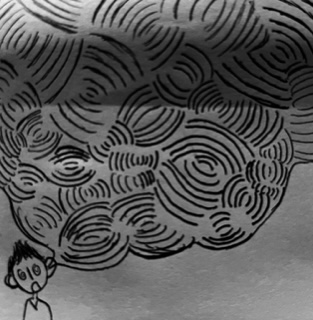

A little sticky note drawing that represents how I felt while think about all this 🙂

I don’t want to be perceived, I just want to exist.

Ever since I was a little girl, society has pushed its expectations onto me. Whether it be through what I am supposed look like or how I am supposed to act or even what I am expected to do as a job or career. The expectation that has impacted me the most throughout my life is the ideation that women have to be skinny to be treated well by men. For as long as I can remember, I have struggled with the way that I
look because of the expectations society puts on younger people and even though I am not extremely overweight, I still look at myself and see someone who has a chubby stomach and flabby arms as well as stretch marks and cellulite. Since society always pushing the idea that women should be this or that, I grew up never feeling good enough about my body or myself in general. I refuse to go to the gym because I don’t like being seen like that by other people and I hate exercising unless it’s through dancing at a club with my friends and when I am out at the club that is when i wish to be perceived. For the most part, I just want to exist in peace and not be bothered by unwanted stares of judgement and disapproval just because I don’t conform to societal standards.

I hate working

When we think of our job and what labor it entails, do we think about the toll it will take on our bodies? I did not think of the physical toll my body would face when I accepted my job. I did not think I would be expected to do the job that they specifically hire men for due to the physical demand of the position. Due to the lack of employees that can fulfill the position, I am expected to do this position where my body takes the toll. I have physically been injured by this job, but my employer does not care, and expects me to come back to the job and do it again. Jobs and the working field is a demanding but necessary field we have to deal with. We are all chasing a paycheck and sometimes we are killing our bodies in the process. Not only are we dealing with the physical demand of the job, but we also have the emotional labor that comes with it. At the end of a shift, I am always beat whether it be physically or emotionally. The emotional labor is especially hard when you work in retail because people tend to treat you poorly, but you have to act in a certain way to meet their needs. I hate the idea that we as employees have to treat the customers nicely regardless of how they treat us, because if I was not working and someone treated me the way they would if I was working, I would not approach the situation the same way, I would be rude back. When we apply for jobs and are accepting job offers, we tend to overlook the physical and emotional labor demand because of the paycheck or the benefits from the job. We can see that some jobs that require more physical demands can pay more to make the job seem “worth it”. For me personally, working at a young age and as someone who has had jobs in multiple fields has seen firsthand how jobs can take a toll on your body physically and emotionally, but have also had a strong impact on what my body is today. 

Make Your Heart the Prettiest Thing about You

I have always been insecure about my appearance, and I struggle with feeling confident with my body and my face. Even though I receive many compliments on my appearance, I still don’t believe them. I constantly compare myself to other girls who I think are prettier than me, and I wonder why I can’t be as skinny or as pretty as them. I overanalyze every insecurity of mine and stress over them, even if no one else can notice them. I worry constantly about how I am perceived by others. Do people think I’m pretty? Are my insecurities as visible as I think they are? Social media has definitely amplified these negative feelings towards my self-image. It is already so difficult to feel confident in my own skin, and social media has made me struggle significantly more than before. Social media has set an unrealistic beauty standard that is nearly impossible to achieve. Filters and FaceTuning have become very popular, which only increases the harmful effects on self-confidence. On TikTok, users can even film videos using filters that completely alter their facial structure (making nose smaller, lips plumper, eyes bigger, etc.). This has such a dangerous and toxic impact, especially on younger audiences who are easily influenced. Statistics show a direct correlation between the amount of social media usage and increased depression, anxiety, and other mental health disorders. Actively using social media had such a detrimental impact on my self-confidence and well-being to the point where I deactivated all of my accounts for months. Once I learned to accept myself and embrace who I am, I gradually started to use social media again. I have to keep reminding myself that social media is not real life, and I should never feel as though I have to look as perfect as everyone else appears on there. 

Something I have been trying to work on is reminding myself that another woman’s beauty does not take away from my beauty. It does not make me any less than her. Everyone has insecurities to some extent, even the prettiest girls I know do. It is completely normal and natural to feel this way because we are all humans at the end of the day. I should not feel ashamed or beat myself up for experiencing these thoughts and emotions. Another way to look at it is I should focus more on improving myself as a person because that’s what truly matters. It doesn’t matter how pretty you look if you’re a bad person deep down. Growing into a woman that I am proud to be is definitely much more fulfilling than being physically attractive. Everyday, I am learning to appreciate my beauty inside and out and truly embracing who I am.

To Be Accepted, Must I Be Fake?

In the world we live in, the mantra often seems to be “Fake it till you make it.” However, reflecting on one of the readings about Serena Williams led me to ponder many incidents beyond the realm of sports. I feel that in our society, people of color often find themselves compelled to suppress their true selves and hold back their authenticity.

I remember a particular incident at an airport lounge. I was dressed comfortably in a tracksuit and sneakers when I entered, amidst mostly Caucasian individuals. As I approached the front desk for check-in, I consciously altered my way of speaking, adopting a more proper tone. Even before I reached the desk, I could sense the judgmental glances directed towards me, as if I didn’t belong or appeared lost. The looks from the others sharing the same space with me were palpable. Nonetheless, I continued to enjoy the amenities I had paid for, just like everyone else.

As I exited the lounge to board my flight, they announced, “Accepting group one passengers at this time, you may use lane number one.” I promptly joined the line, but a crew member approached me, saying, “Sir, this line is for first-class passengers only. Could you please wait until they call your group number?” I felt embarrassed and questioned why I was subjected to such scrutiny. I was no different from the other passengers, except for the color of my skin. I showed her my ticket, and she seemed embarrassed in return. She began to interact with me differently, striking up a conversation about my destination and such. I held my head high and continued to fake it just to board the flight.

Once on board, I noticed that I was the only black person in the first-class cabin, and I still didn’t feel like I truly belonged. It wasn’t until I encountered a flight attendant of color serving me that I felt at ease. We shared a laugh and discussed our destination, creating a sense of comfort.

Throughout the flight, I relaxed and enjoyed myself. However, twenty minutes before landing, while in the bathroom, I heard a knock on the door. The flight attendant outside accused me, saying, “Sir, are you smoking in there? It smells like smoke, sir!” I exited the bathroom, and he continued, “Sir, you cannot smoke on board; it is illegal.” As a black man in front of a cabin full of Caucasian passengers, I maintained my composure and remembered my surroundings. I politely responded, explaining that I had not been smoking, and someone before me might have sprayed something. I found it rather absurd but chose not to react further. After apologizing, the flight attendant mentioned that he was just doing his job, clarifying that only flight attendants were allowed to spray in the cabin. In my mind, I couldn’t help but think this was an unreasonable situation. He then mentioned the possibility of reporting the incident and opening a case, emphasizing that it could jeopardize either one of us.

I remained unfazed by the situation, but I couldn’t help but wonder if a Caucasian passenger would have received the same treatment as me. This brings me back to the reading about Serena Williams and how she had to navigate her reactions when competing. As a black man in first class, I believe that had I reacted negatively, I would likely have faced more severe consequences, possibly involving the involvement of the Sky Marshal, and being unfairly labeled as a “typical black man.”

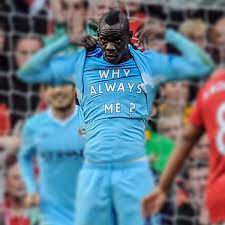
In conclusion, I believe that in the world we inhabit, we often feel compelled to “fake it till we make it.” I’m reminded of the case of a professional soccer player who faced racial abuse, including being called a monkey and having bananas thrown at him. Yet, when he performed well, he received praise. This underscores the notion that, in this world, we must often present a false version of ourselves to gain acceptance. Our true selves can only be expressed when we are at home or among like-minded individuals.

Is The Beauty Standard Really The Standard?

Growing up in a multicultural household, my definition of “normal” was always different from everybody else’s. How people dress, act, talk, what kids my age would pack for lunch, it was all so different from mine. Not only that, the media we consumed was so different from the rest of the world.

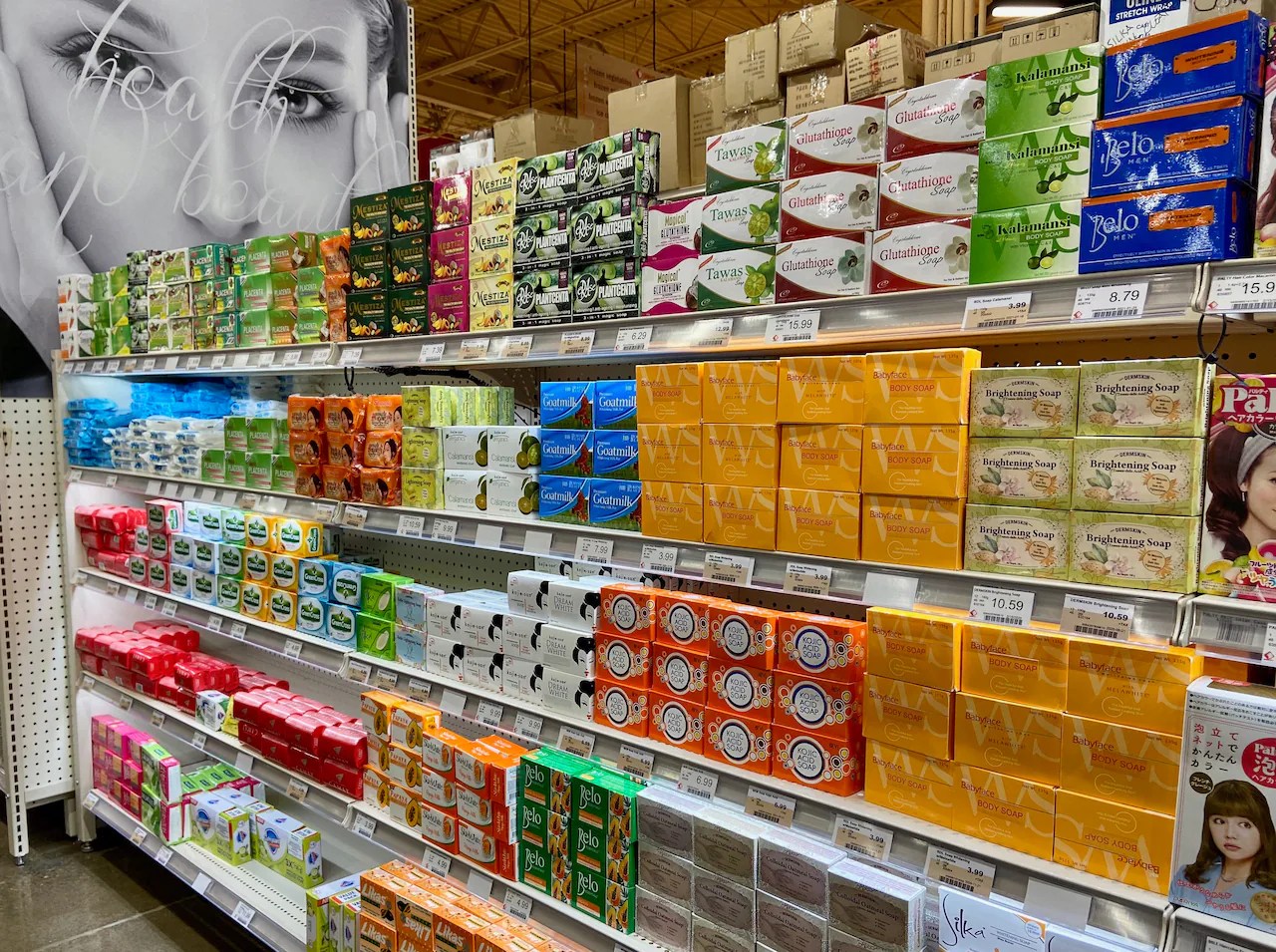
I remember the biggest difference I noticed between my two cultures (one being my parents in the Philippines and the other my life with them in America) was the beauty standards that were placed on society. When I was younger I would visit the Philippines a lot to see my grandparents and the rest of my family, and the one thing that shocked me most was the aisles in the grocery store, or the cabinets at my aunt’s house filled with whitening products. I didn’t understand why people wanted to whiten their skin so badly that there were pills and soaps all marketed for whitening skin. It wasn’t to “brighten” skin, but to quite literally “whiten.” My dad was always on the darker side and always embraced it, especially living in the US people would always compliment his “tan” and tell him that it was really nice. Going out to beaches or grocery stores there are shelves with different tanning oils, lotions, anything to help with becoming more tan so my visits in the Philippines shocked me.

It wasn’t until I was older when I realized these products had deeper meaning. The lighter your skin was, the better people could treat you. Tanning in the US was only beneficial when you’re white and didn’t have to experience colorism and racism, and beauty standards only benefitted certain people. Thankfully, I was fortunate to grow up in different countries and states due to my dads job so I didn’t really understand standards like that. I was able to see different perspectives and grew up to be able to differentiate my rights from wrong so going to the Philippines and seeing the aisles of whitening products didn’t make me insecure or feel the need to be pale. Instead, it allowed me to see perspective on things that I once did not understand. My lived experiences allowed me to understand differences and cultural norms even if the intention was not right.

Bodies and Intersectionality

There are so many ways and things that a body represents. For starters, a body can be seen as an object, something that people use for artwork, such as dancing, an inspiration for a different form of art, etc. Also, they can be seen as something sacred to others. This can be a thing mainly for religion but for me, I am not religious, but I still view my body as an entity that I want to protect and shield from others. Other people are the opposite of me, and they love to show off their bodies. To a doctor, a body is seen as a system, with thousands of moving parts in it, and different bodily things. I think the perspective of a body is the identity of the person. Someone who is Muslim would view their bodies in a different way versus someone who maybe is Christian, or Jewish. That is just religion though, there are many portions of a persons identity that determines their perspective on what a body is.

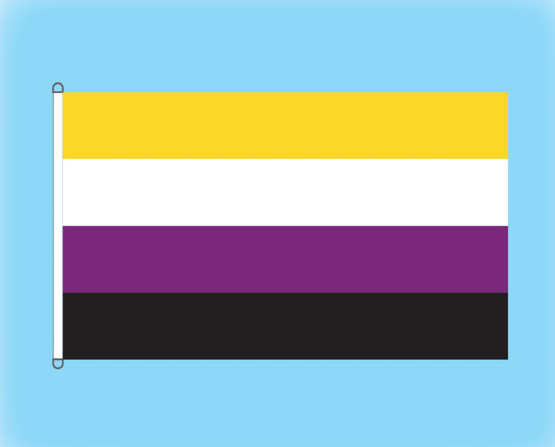
For me specifically, I am an agender, nonreligious person who is a dancer. Being in a very biological sex-specific environment while being agender has affected the way I define what a body is. Being put in situations where I have to wear costumes that don’t fit my gender identity and being treated as my biological sex, it’s taught me to be more protective of my body, and not allowing anyone to force me to wear clothes that causes me to experience gender dysphoria, or put me in a position that forces me to represent an identity that I am not. The way that I define what a body is, is something that you shouldn’t take for granted, something that is special to you, something you should protect.

The definition of a body depends on their overall identity, intersectionality playing a huge role in that. I like to say that religion, culture, and gender are the three biggest components for how an individual may define the term “body”. The definition can also include background, career, and life experiences that pertain to the body.

Am I Fit For The Gym?

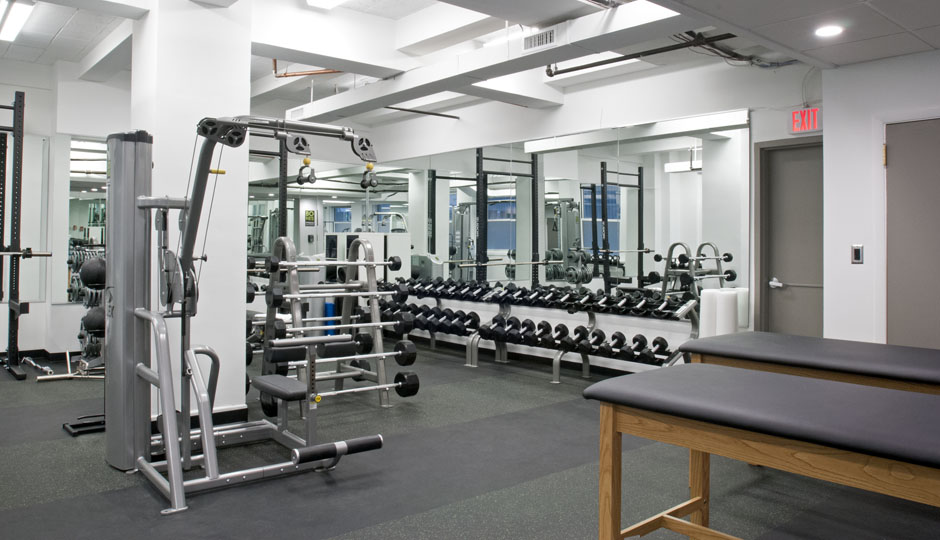
Picture of gym equipment

This topic about the gym has resurfaced my mind a lot more recently. About 2 years ago I was at my all time highest weight and when I saw that, I knew I had to change. So the first thing I did was sign up for a gym membership. However, the creeping thoughts about the gym overcame me and I lost all motivation to go. So, my sister offered to go with me and I felt at ease for a little bit.

Upon entering the gym I noticed the types of people that were working out… skinny. I thought that I didn’t belong there and dreaded going to the gym everyday. However, my sister helped gain some confidence when she told me that “no one is staring at you or anyone else because they are only there for themselves, they only care about their body and that’s it”. This definitely helped me alot and not to worry that someone is watching my every move or my body. 

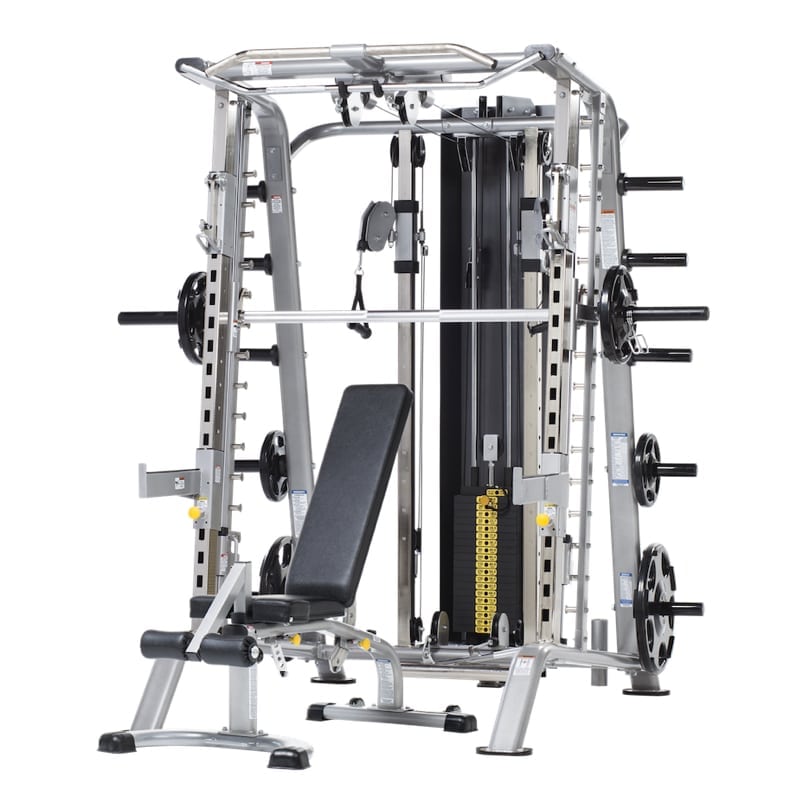
However, even after having this type of semi confidence of the gym, there is still one thing that I haven’t gone near alone, the smith machine. The smith machine is just wayyy out of my comfort zone and makes me feel vulnerable. One of the main issues with this situation is that the gym I go to only has about 3-4 working smith machines so everyone is usually fighting for them. This also makes me think that they are staring at me to finish up if I was to ever go on it. Even if I do get the confidence to go on the machine alone I don’t know how to use it at all and as someone who is big it seems very intimidating to ask someone. Recently though, my best friend from high school who regularly uses the machine let me try it out without any judgment. I appreciate her a lot as she recognized my concerns and without a second thought took me and taught me how to use it. She also said “no one cares about you, they are only there for themselves”. This once again reassured me but I still have that thought of people judging my body cross my mind all the time. 

Image of a smith machine that is used to lift weights.

In today’s society I believe there is a set standard for how women are supposed to look which is skinny and fit. So when someone who is big tries to engage in any type of physical activity it seems like there is an awkward air around them. This reminds me of Young, “Throwing Like a Girl “ article where it says “ Women often approach a physical engagement with things with timidity, uncertainty, and hesitancy”. I related to this so much because sometimes I think and wonder to myself if my body is actually able to go to the gym. Slowly but surely I believe that I will be able to build the confidence to go to the gym alone and use any machine there without thinking that I am being stared at or if my body is made for the gym. 

Wait, am I Capable Enough?

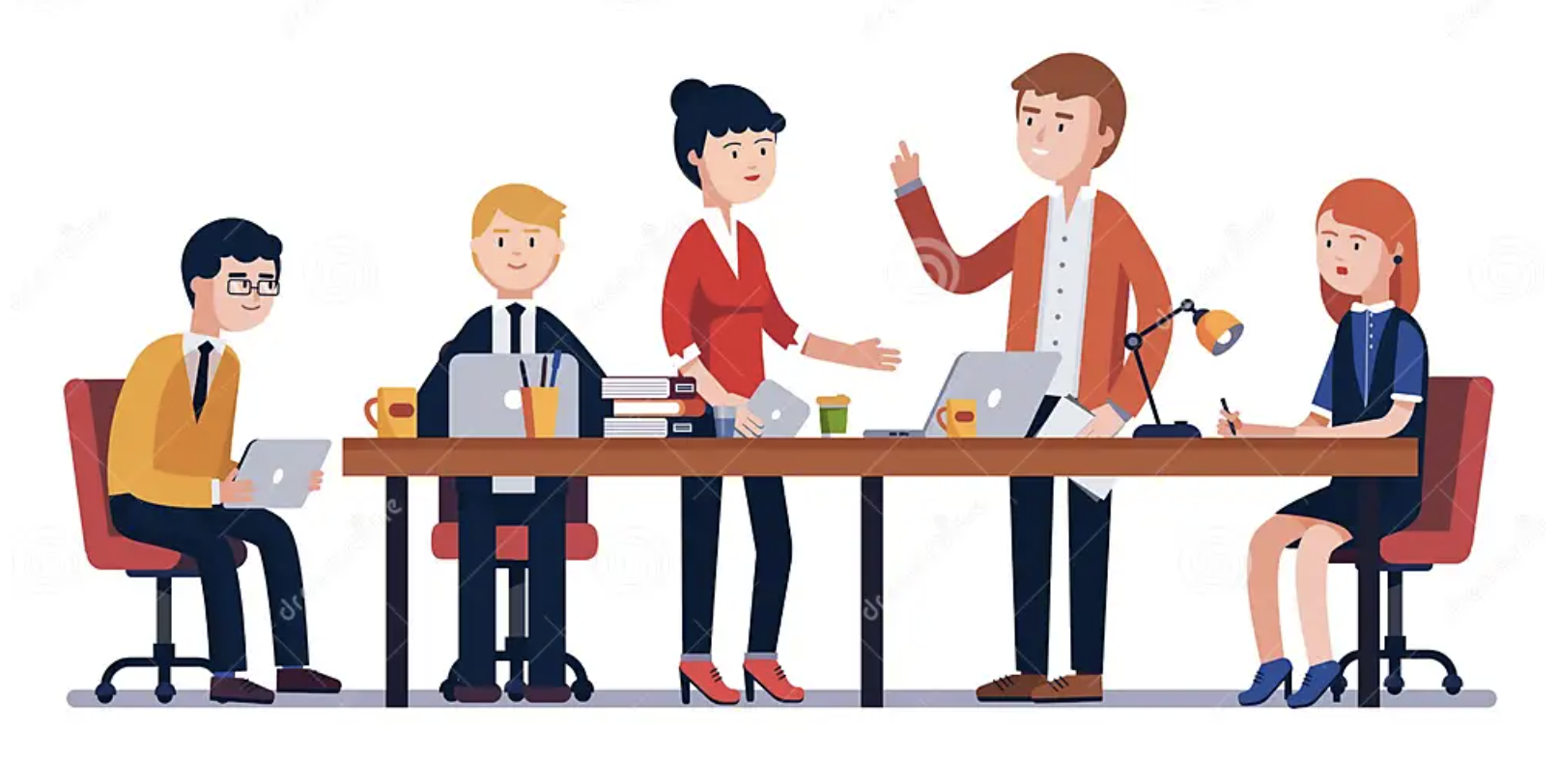
This is a picture of people in an office setting, sitting at a conference table. There are 2 people actively talking, one who is a white man and another who is an Asian woman.

Being a woman of color in the financial sector, a traditionally male dominated space, has always intimidated me. Growing up I would picture older, white men when someone would talk about business or finance. I never imagined myself in this space. But perhaps it was my parents’ demand that I pursue something other than the arts or it was my intrinsic desire to prove that I was capable that motivated me to pursue economics. In my economics courses at UMBC, I have noticed that although the classes are diverse, they are still male dominated. I have also noticed this in the previous finance related internships I was in. Being surrounded by those who did not look like me has contributed to my feelings of being ostracized and questioning whether I was competent enough to fulfill the roles I was in.

When I was applying to all of these roles, I doubted my ability to fulfill them, even though I had multiple relevant courses and skills. I had to make sure that I ticked each qualification before applying to each job, which is characteristic of women’s lived experiences all around the world. Women are generally not considered business-minded and instead are expected to pursue less challenging or more domestic roles. On the other hand I have noticed that compared to women, men are more willing to apply to a job even if they are not qualified. They do not harbor doubts about how fit they are for a job but instead apply without a second thought. I feel that my tendency to give myself credit has been improving over time but it definitely hindered me in the past, especially in applying to jobs. As an example, a recruiter recently reached out to me about a position at a company I previously worked for. The position was quantitative and challenging, and I was extremely apprehensive about applying even though I took the required courses and had the fitting skillset. I remember reading the qualifications over and over and asking myself whether I was competent enough to fulfill the role. I realize now that if a man was in that situation, they likely would have agreed to apply instantly without a second thought.

If I had not taken this class, I would not have realized that I experienced and continue to experience inhibited intentionality, as mentioned in Young’s “Throwing Like a Girl.” Even though I have certain intentions or desires, I feel limited by external social norms, which further inhibits my intentionality. This experience is one of many that describes my human experience. In phenomenology, human consciousness and experience are different between individuals. So even though this experience may feel like the norm to me, someone else can have an entirely different experience because they perceive and interpret the world differently from me.

I am NOT looking forward to Transitioning…

I have spent most of my life as a black woman. I formed relationships as one, built my perspective of life around being a black woman, and dealt with oppression as a black woman. One of the things I have had to deal with is misogynoir and how to navigate the world with these specific intersections. The fear of getting harassed or microaggressions from peers constantly kept me on my toes. However, since transitioning my thoughts have changed in ways I never thought of. I realized that being black and masc comes with its own set of experiences. Thinking about it makes my head clouded because there are so many moving parts; how I see myself, how I saw myself, and how the world sees and treats me. How do I move in the world as a black trans-masc person with the thought process of a black woman? How does the world still seeing and treating me like a black woman affect my own perception as a black trans-masc person? It makes it hard for me to acclimate myself to the new intersections I will have. I will one day be thrusted into a life of being seen as aggressive and a human target. I will be hyper-policed and seen as untrustworthy. I will be able to see myself as the person I was and the person I will be; Breona Taylor and George Floyd, Sandra Bland and Ahmud Arbery. I feel trapped, there is nowhere to be safe, I either live authentically and move forward with my transition or I move slower in attempts to save myself from being mistreated more violently. One brings internal suffer the other external, I cannot save myself as long as I live in body in this society. I am not looking forward to being a black trans-masc in this transphobic, racist society but to free myself internally I have to be trapped externally.