Do These Pants Make My Ass Look Bisexual?

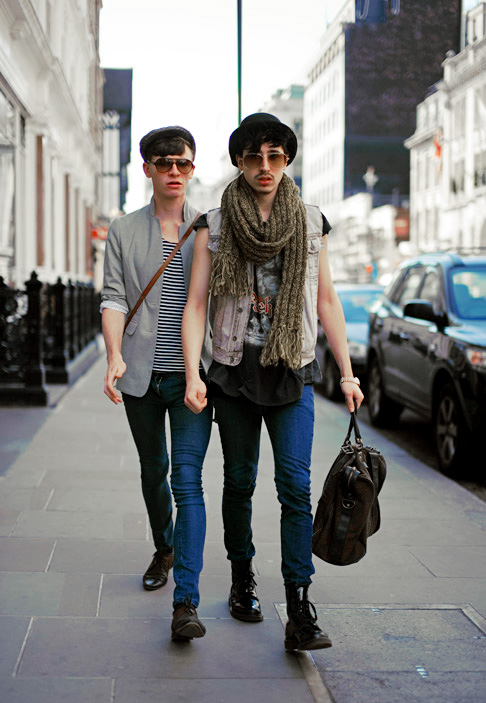
Why does what I’m wearing define my sexual orientation? I’m a 22-year old female, and I often change the way I dress, even on a day-to-day basis. I may feel like wearing a tight skirt, heels, make-up, and jewelry and shaving my legs on Monday. On Tuesday I might wear sweatpants and a T-shirt and throw my hair in a messy bun, and on Wednesday I may wear a baggy pair of guy’s jeans with paint stains on them, a tank top, and skater shoes but do my hair in a cute way. I enjoy dressing in any way that makes me feel comfortable, and I usually do.
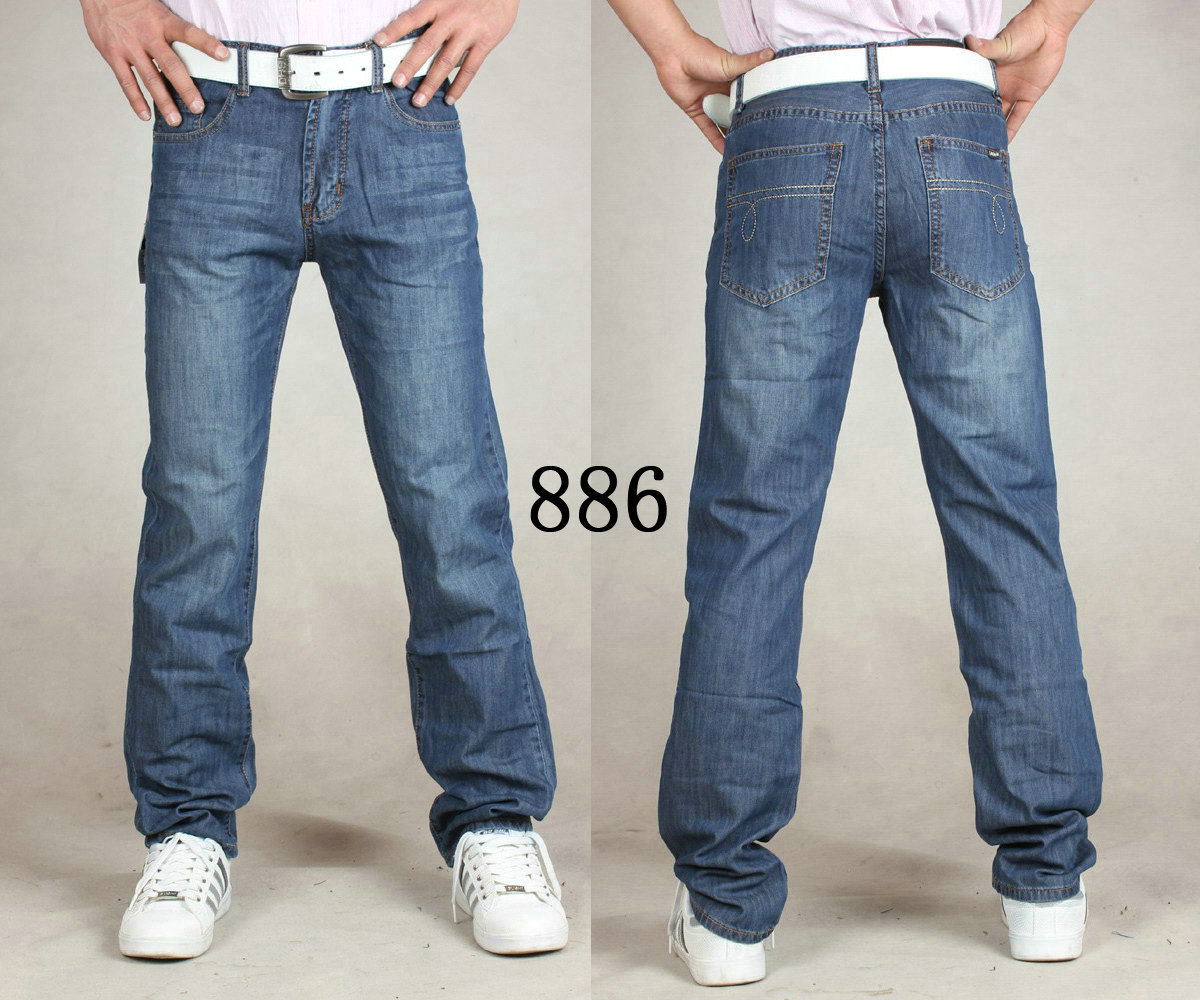
But recently, I got a girlfriend, and even though I dress the same way I’ve always dressed, with my same unique style I’ve always had, I’ve heard some interesting comments, even from people that I know care about me and aren’t trying to be offensive. But if I’m dressed up (and meet society’s beauty standards) I’ll hear people say things like “Are you really a lesbian?” or “I don’t understand how you’re gay” and when I dress down, or “more like a guy” I hear “You’re such a lesbian.”

And I’m not even a lesbian! I’m bisexual!
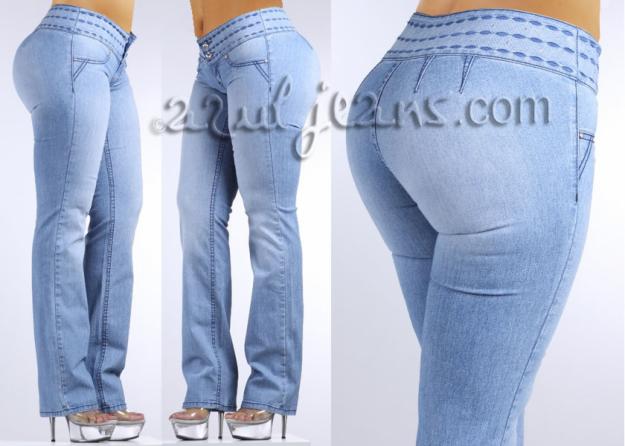
I feel as though society often judges people as being gay or straight based on what they’re wearing. A recent conversation with my (straight, male) roommates went like this:

Roommate 1: “What are you wearing?”
Me: “Jeans.”
Roommate 2: “She has a girlfriend, she can wear what she wants.”
Roommate 1: “She’s only half-gay.”
Me: “What does that have to do with it?”
Roommate 1: “Well sometimes you dress like the straight half.”
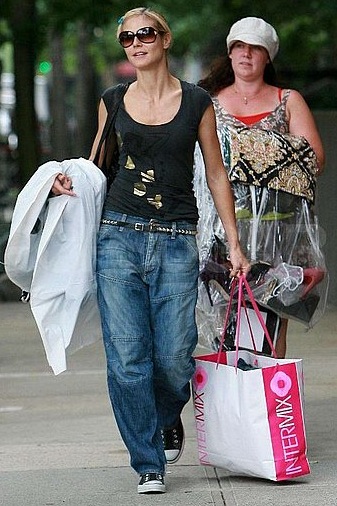
First off, I consider myself a hundred percent gay and a hundred percent straight, and I hate it when people call me “half gay.” It’s not like I find women attractive half the time; I find attractive PEOPLE attractive ALL the time. Second, how come I can only wear “whatever I want” because I have a girlfriend? It’s not like my girlfriend dresses me. Could I wear girls’ jeans if I was a lesbian? Could I wear guys’ jeans if I was straight? Why are my roommates only saying things now? Don’t the same rules apply now as when I was single? Or am I “more gay” when I have a girlfriend?

It’s also weird to me that clothes can make you look gay (“He’s totally gay, look at his pants.”  “I can’t tell if he’s gay or if he just dresses really well…”  “She looks like a dyke in those pants.”) or even make you look straight (“Can you believe he’s gay? He dresses so straight!”) but I have never heard of clothes making you look bisexual. If bisexuality, homosexuality, and heterosexuality are all valid sexual orientations, why don’t our clothes make us look bisexual? Where can I buy pants that make me look like I date boys and girls?
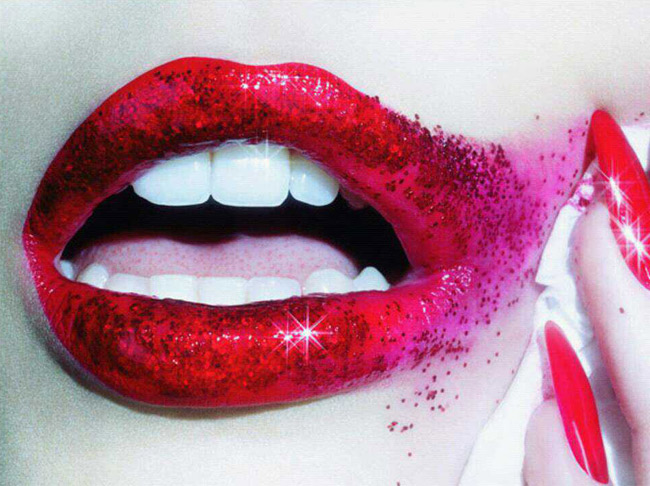
Can I be a feminist and still wear lipstick?

Have any women out there felt a conflict or contradiction between their feminist identity and desire to adorn their bodies? That is, can I shave my legs and simultaneously protest patriarchy? I know of many women (including myself) who have struggled with this and similar questions. In a culture so rampant with images of plucked, primped and worked-out women and men, it’s sometimes hard for me to decide if I want to display my feminist protest on my body or wear pretty clothes, shoes and jewelry.

When I read Gala Darling’s post “Am I A Hypocrite For Professing Radical Self Love While Wearing 5 Inch Heels?” or “Can you call yourself a feminist and still wear lipstick?” I was thrilled to read her take on these very questions. As a woman who blogs about fashion and style and who also boasts a “Radical Self-Love Bootcamp” program, Gala Darling’s work may seem to contradict itself. So she asks the million-dollar question about lipstick and feminism, and raises very good points about bodies, body adornment  and our selves.

Gala points out that when we (women and men alike) display our bodies the way society wants us to, we are rewarded for this behavior. This could be by wearing makeup, stylish clothing, shaving, etc. Gala calls this “beauty” privilege.”  Beauty privilege can be as simple as a smile from the person ringing up your groceries! In a lot of ways it’s easy and comfortable to conform to beauty standards when you can in order to access beauty privilege. Of course, not all bodies have equal access to this privilege. It is overwhelmingly easier for able bodies, thin bodies and white bodies to access beauty privilege. Access to money helps beauty privilege too!

Further on the subject of beauty and feminism Gala explains, “I’ve spent some time recently thinking about “beauty” & trying to reconcile that with truthful feelings about myself. A major & difficult piece of the puzzle is that none of us grew up totally free from societal influence, & so it is almost impossible to separate what we really want from what we think we want…. The place I keep coming back to is that even when I recognise that my ideas of beauty have been passed down to me from society, it doesn’t feel good to me when I choose to deny myself something which provides me with genuine enjoyment….

Gala argues that body adornment is akin to art. People are attracted to aesthetically pleasing objects, whether natural or manufactured, and enjoy being surrounded by them. Of course there is variety in peoples’ tastes, but I think it’s fair to say that most of us like having pretty things around us!

She further notes that “wanting to feel beautiful does not make you a bad feminist or a bad woman. It does not mean that you are being oppressed or that you lack the ability to think for yourself. Wanting to adorn ourselves is natural & normal — very few of us live in houses that are all function & no form, & while we COULD all drive boxy Volvos, the truth is that most of us are attracted to beauty — however we choose to define it.”

Lastly, I found this point quite persuasive: “Some women say that if we wear lipstick, we’re only doing it because society has told us to. I would argue that the woman who tries to buck society by NOT wearing lipstick is just as influenced! No one exists in a vacuum, & almost all of our decisions are effected by external sources.”

I find Gala Darling’s discussion of beauty, bodies and feminism quite persuasive. I like wearing clothes that flatter my shape. I like having smooth legs and putting glittery eyeshadow around my eyes. I love earrings and bracelets. This doesn’t make me less of a feminist, right? What are your thoughts?

I Can Has Material Bodies

The construction of bodies is based on an assumption of materiality which manifests itself in the image of Da Vinci’s sketches of man. With arms and legs, the body is type cast as a spectacle to be witnessed, constructed, and cultivated. The importance of this construction of the body in this manner is we have the privilege of assigning these traits to other objects and animate images. Personification of forms in this manner speaks to our ability to systematically idealize an “imagined other” to reinforce the  traits we value in ourselves.

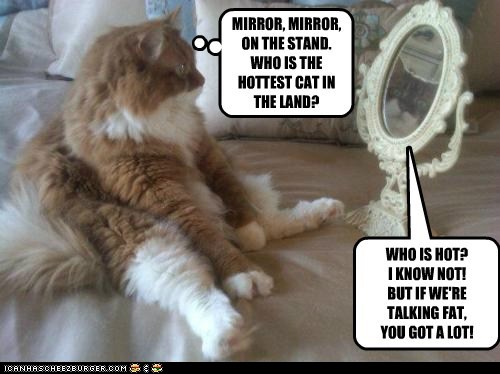
This academic jargon is a round about way to ground a discussion of LOLcats. Icanhascheezburger.com is an online community in which various posters contribute and caption pictures of adorable cats. I believe that the ways in which we attribute human qualities to the cats is indicative of our nature to cultivate bodies that matter. There is a particular drive in trying to personify cats as human, giving them contextual markers of human-like reactions and even (although adorably misspelled) speech, that we make these bodies bodies that matter – bodies that gain meaning of contextual placement and situational histories. These are taken from generous readings of the visual texts that we apply our own experiential lenses to and draw meaning from.

This cat, for instance, is sitting and looking into a mirror. His position is very atypical of cats and is closer to the posture of a person sitting. But what is more important is the text overlay that points to humanness: vanity, attractiveness, body image, and even self-recognition. These traits work in a way to humanize the cat and make it a body that matters because we can essentially connect with what the cat is asking – validity of attractiveness. The incorporation of body image (the fat) is also a reflexive way in which we think about other bodies because to be honest, hell, how can we say a cat is fat? Are there really standards by which we can measure animals in the same way we measure humans and try to denounce an average as an idealize weight? Do cats even have the same desires to compare versus other cats? I doubt this.

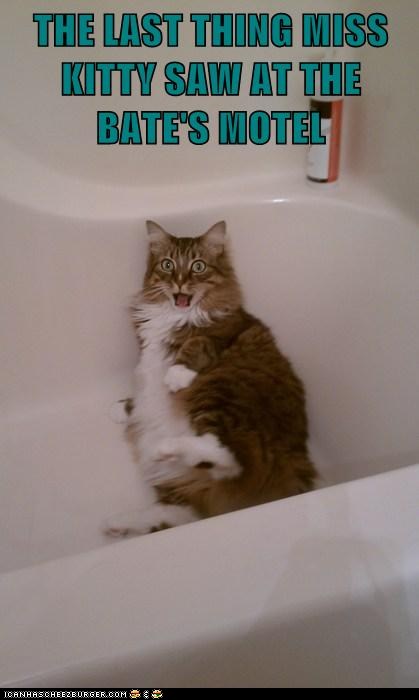
This cat I am using to illustrate the contextual clues that we apply to the bodies as if they are relevant even across situations. This cat is sitting in the bathtub probably mid-meow, but based on the assumed look of shock (fear? surprise?) we attribute to the look and the almost defensive looking pose, we situate the body in the same context as the woman from Pyscho who had been stabbed by Norman Bates. I think it is interesting the way we transpose the meanings of the body to read emotion and intent in the bodies that aren’t even of human nature. By this proximity, we are animating real life to construct a mindset that everything operates in the same nature that the human body does which is problematic. We cannot control or assess the intent of other bodies in the same way, but based on these situational clues, we try to read into images the same meaning we would if they were human – materializing the bodies through history and experience.


Or maybe I just need some more cats and accept my fate.

Henry Hyde’s Dark Legacy

Henry Hyde (R-Illinois) had a remarkably long career of 37 years in the U.S. House of Representatives, garnering his fair share of damnation and praise, celebration and scandal.  He was a Republican from Chicago who kept getting reelected, which was an achievement unto itself. He led the calls for President Clinton’s impeachment trial, although it was later revealed that he himself had at least one extramarital affair.

History, however, will remember Henry Hyde for a singular amendment that he attached to an appropriations bill in 1976, which barred federal funds from being used to pay for abortion services for Medicaid recipients, except in cases of rape, incest, or when the life of the woman was endangered.  Hyde was staunchly anti-abortion- this amendment was his way of trying to limit access to the newly-legal procedure by closing off the federal purse strings for it.  The law was upheld as constitutional by the Supreme Court in 1980, and has been attached to every appropriations bill for Medicaid since.

The Hyde Amendment was the first major victory for the anti-abortion movement, and this new tactic became a popular approach across government.  The Hyde language no longer covers just Medicaid recipients, but also those covered by Indian Health Services, the Tricare program for active duty and retired military, and every single health insurance plan offered to federal employees, just to name a few.  Hyde was even the inspiration for the Stupak-Pitts Amendment to the recent Affordable Care Act, which further reiterates that anyone who receives health insurance from the federal government will be prevented from seeking abortion care except in the most dire of circumstances.

It is perhaps the ultimate mark of a patriarchal government to control so completely the reproductive lives of those who are most directly connected to it, be they a Medicaid recipient or a front line soldier.  What is perhaps the most shocking thing is the complacency with which the average American faces this fact.  The majority of the individuals involved here- the poor, minorities, government employees, Native Americans- are part of groups so vilified by the media and public sentiment that it took many mainstream reproductive rights organizations until the arrival of the Stupak-Pitts Amendment, with its much broader reach, to raise the issue on a national level and tap into public outrage.

Still, the fight against Hyde is not a popular one.  There is a sense that those who rely so much on the government should be subjected to its rules, as though they were living under the roof of a strict parent.  Smaller organizations such as SistersongINCITE! and the National Network of Abortion Funds (NNAF) continue to press for the repeal of Hyde as part of a larger reproductive justice framework, and they are starting to gain some traction among younger activists.  In April, affiliates of NNAF raised almost half a million dollars through dozens of popular fundraisers to provide direct assistance to women who cannot afford abortion services because their insurance (in whatever form) does not cover abortion services.  The rising need seems to be being greeted by a rising tide of activism.

Henry Hyde left us an unfortunate legacy that far too many have ignored. Here’s hoping there’s still time to reverse it.

Are you tough enough to compete with the guys??

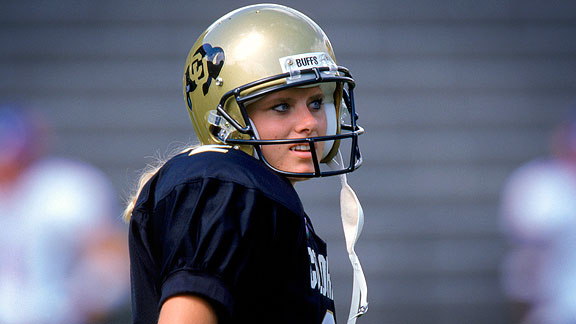
I was reading this article on espn discussing women trying to break the barrier and play football. when I started reading it I became excited that this is even a topic on espn because I know a lot of women who really enjoy playing this sport. Women who do play for a team that is not an all women’s league are mainly kickers for their program which is coincidentally the less contact position.

What I guess I don’t understand is why men feel they need to subject women as this delicate flower that will get crushed if they play football. there are very tough women out here who are even as tough as their male counterparts. Another thing that interested me is that their would be conflicts off the field if women were to play in the NFL. one thing that really stuck out was the lockeroom and how most of the bonding goes on their. even though that is true im sure the coaches and the players can find a way to bond with the opposite sex outside of the lockeroom, it has already been proven because men and women do it everyday. I don’t think that the lockeroom is the biggest situation so I think they are just trying to find ways to keep women out of the only sport that is male dominated.

another problem I have is when they discussed coaches telling females they can’t play football in high school because they don’t want them to get hurt. is that a stereotype or what i think if we were given the chance a lot of women can beat a man at any sport and hit and run with the best of them.

I guess with me being an athlete and playing football when I was younger, I just don’t see the problem with a female joining the sport

Adding a little sparkle to your genitalia

ImageWhat would you like to accessorize today? Your ears? Your neck? Your wrist?

Perhaps your genitalia?

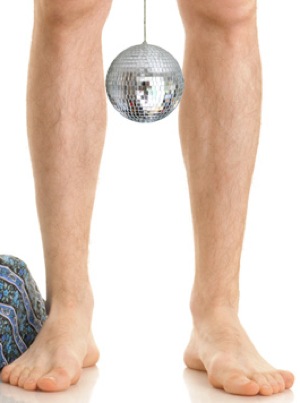
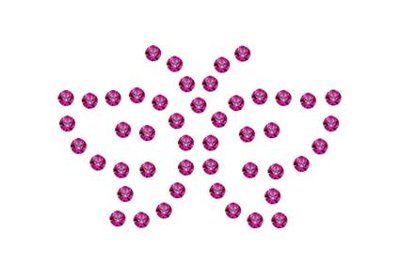
With vajazzling, which is the practice of placing glitter and jewels to the bikini area, and pejazzling, which involves Swarovski crystals being used upon the male genital area, you can now do so.

I recall my initial reactions to the aforementioned practices. I viewed them simply as odd methods of embodiment to engage in, without giving much thought into what they may mean in terms of body-related societal expectations.

While analyzing vajazzling and pejazzling, I wondered about whether or not there could possibly be a link between them and an increasing openness towards body parts that have been considered too taboo to even discuss at times. After all, the method of adding glitter, jewels, and crystals – products that shine, that are meant to be worn in order to increase visibility of oneself – draw attention to the places they are being applied upon. Therefore, it appears as though the phenomenons involve an attempt to incite viewer interest in the genitalia. By doing so, the practices seem to remove the earlier restrictive societal expectations placed upon genitalia (in terms of the encouragement of a lack of thinking about them, discussing them, making them more “apparent”, etc.), and replace them with a more unbarred mindset.

ImageHowever, could vajazzling and pejazzling signal another form of thinking (that may be seen as not so transformative in nature)? Perhaps, they point to beauty standards that are shifting to encompass more body parts (i.e. not just the face) and that delineate that one must consistently change parts of themselves to appear better. In this case, those who engage in the practices could be adhering to a societal ideal that entails they should change their genitalia, or, at least, make it be more visually appealing.

One article states, “following on from the almost cult-level success of the ‘vajazzle’ comes its evil twin brother, the ‘pejazzle'”, delineating that not everyone is all too happy about these forms of embodiment. This may mean that society is still remaining closed-minded about genitalia, that it has not gained much ground in fostering a “need for change” mindset towards the parts, or maybe neither. What do you think?

Double Standards

Lately I have noticed that there are so many double standards nowadays. Today I was at my friend’s flag football game and noticed that there was one female player on the opposing team. I was happy to see a female allowed to play with males in a sports game but got upset when I found out that the team gets more points when a female scores. It seems hypocritical to allow a girl to play but then give us a handicap. Even when it comes discussing sports males automatically think that females do not know anything. However, in my group of friends my best girl friend knows more about football than some of my male friends. It seems that because men are always placing a certain stereotype on females, we in return do the same. 

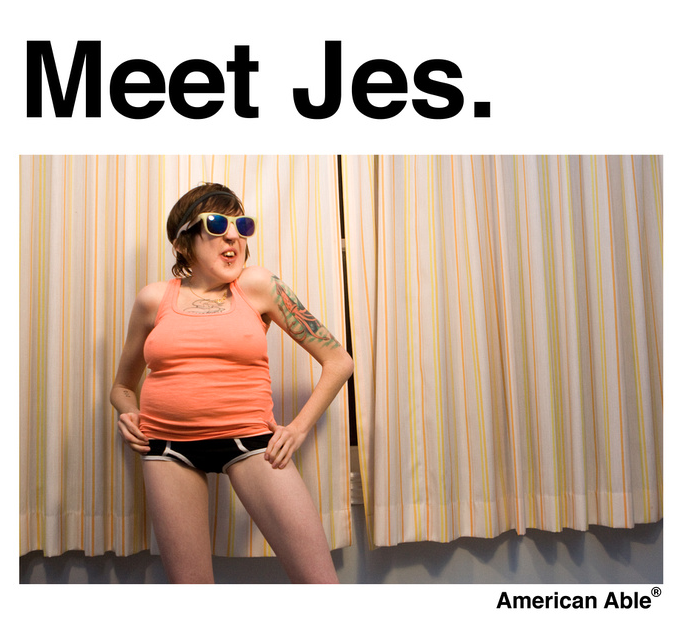
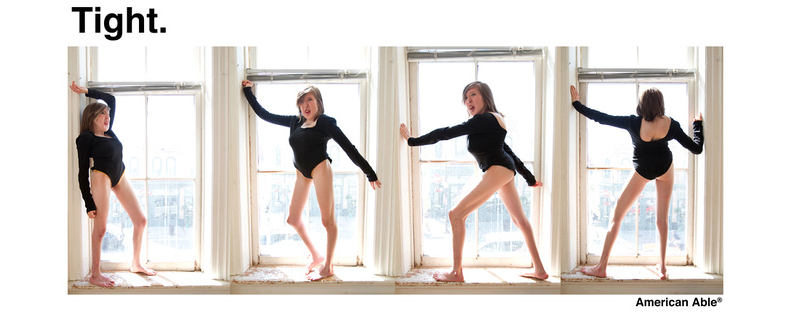
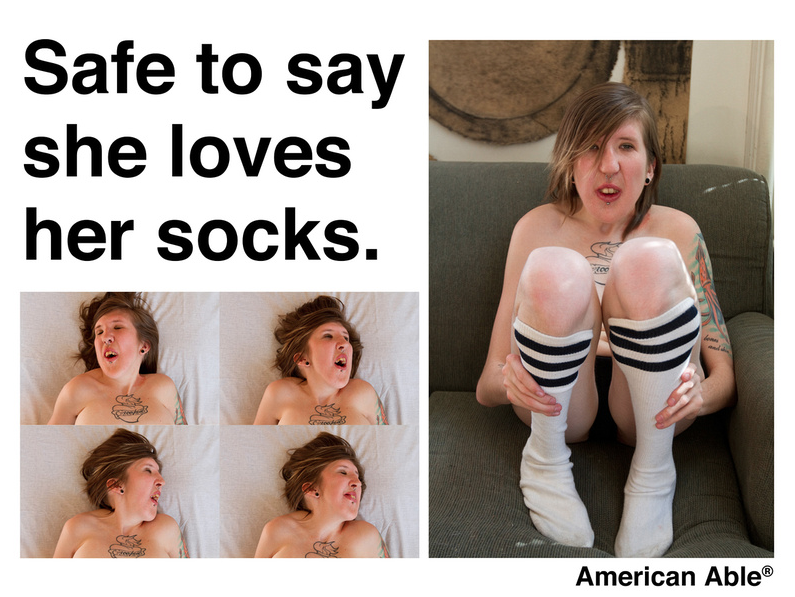
“American Able” – Challenging Media Representations of Disability

Here’s a description of the project from the the artist Holly Norris’ website:

“American Able” intends to, through spoof, reveal the ways in which women with disabilities are made invisible in advertising and mass media. I chose American Apparel not just for their notable style, but also for their claims that many of their models are just ‘every day’ women who are employees, friends and fans of the company. However, these women fit particular body types. Their campaigns are highly sexualized and feature women who are generally thin, and who appear to be able-bodied. Women with disabilities go unrepresented, not only in American Apparel advertising, but also in most of popular culture. Rarely, if ever, are women with disabilities portrayed in anything other than an asexual manner, for ‘disabled’ bodies are largely perceived as ‘undesirable.’ In a society where sexuality is created and performed over and over within popular culture, the invisibility of women with disabilities in many ways denies their sexuality, particularly within a public context.

Too often, the pervasive influence of imagery in mass media goes unexamined, consumed en masse by the public. However, this imagery has real, oppressive effects on people who are continuously ‘othered’ by society. The model, Jes Sachse, and I intend to reveal these stories by placing her in a position where women with disabilities are typically excluded.

I think this project is extremely fascinating in its critiques of advertising and mass media, specifically American Apparel, and the projects counter-depictions of disability.

How is Norris’ explanation of the invisibility of disabled bodies in mass media, including the de-sexualization and undesirability often seen intrinsic to disability, parallel to Garland-Thomson’s “Integrating Disability, Transforming Feminist Theory”? Do you believe that the depictions of disability in American Able are revolutionary? Can these counter-depictions of disabled bodies truly change advertising and mass media and the ways in which we view disability in our society?

Some of the following images by be not safe for work (NSFW).

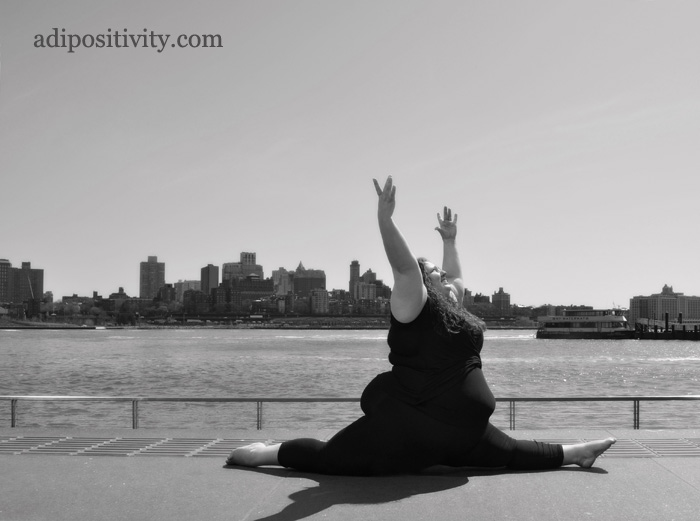
The Adipositivity Project

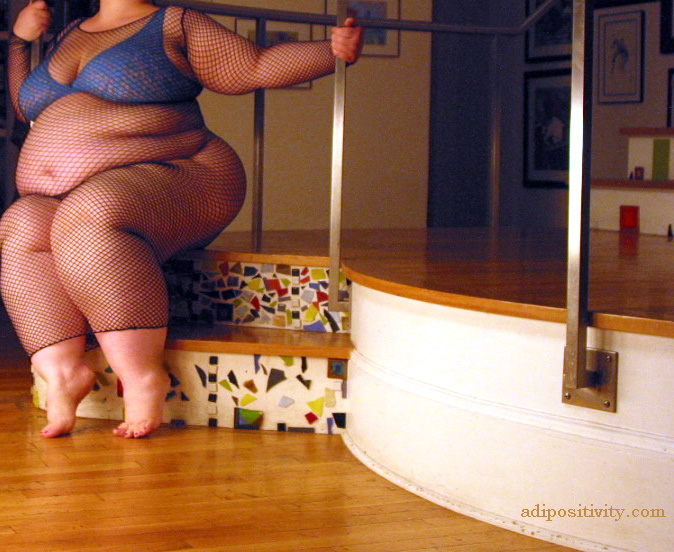
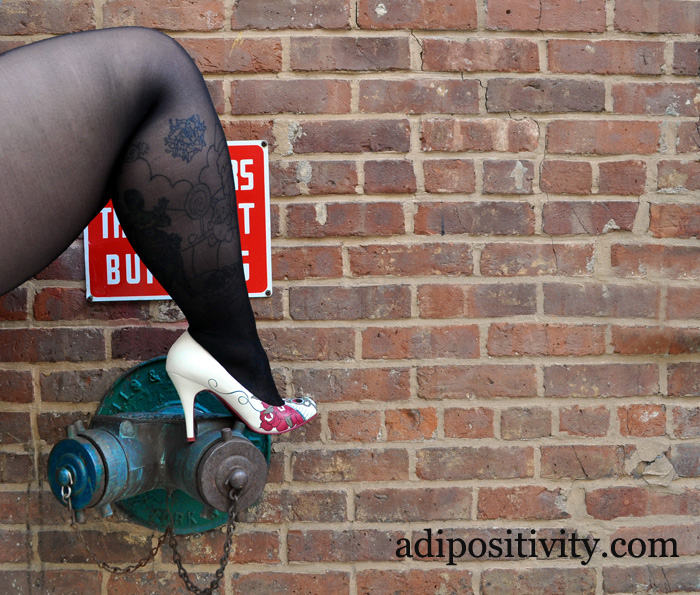
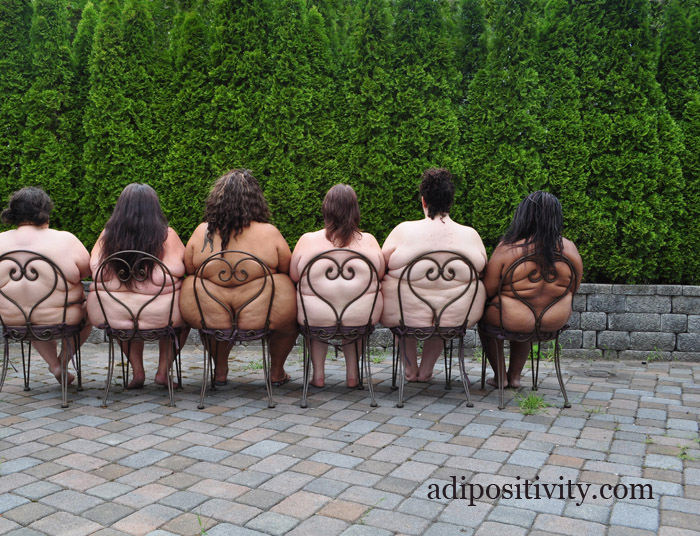
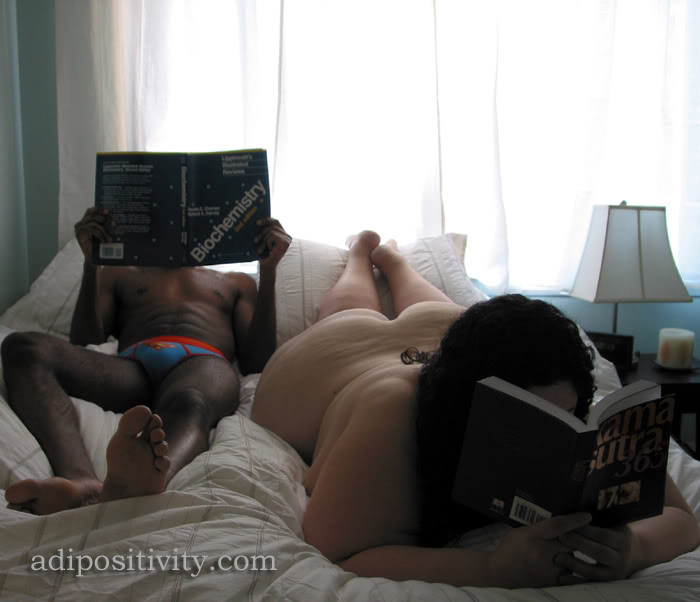
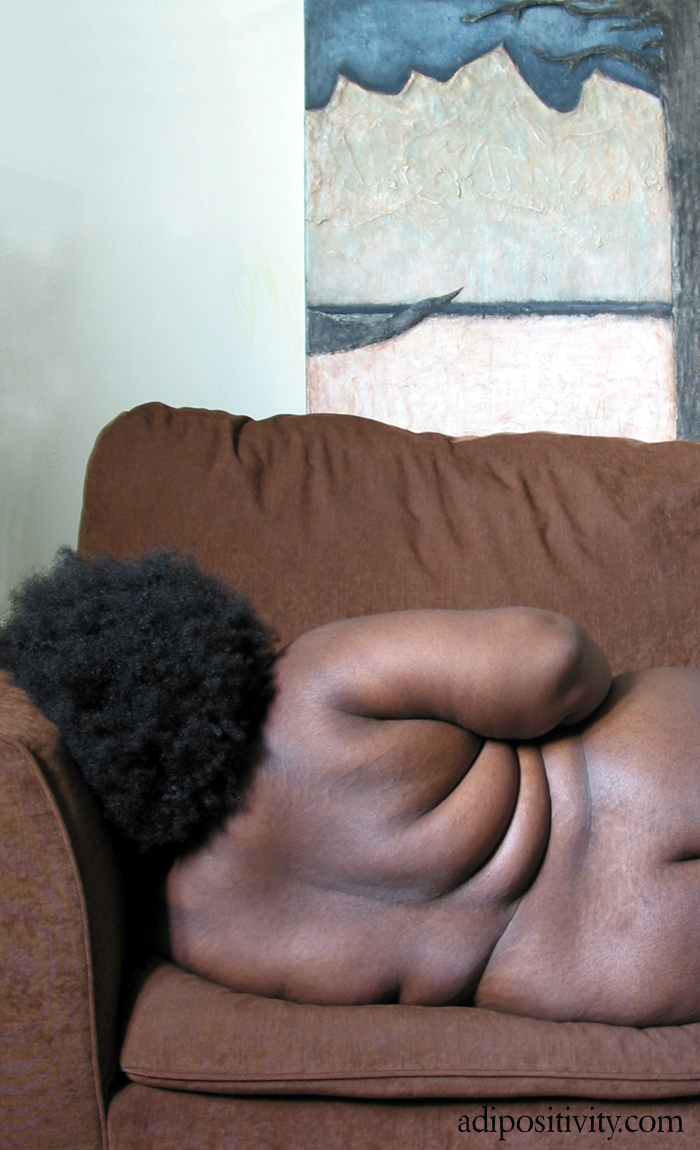
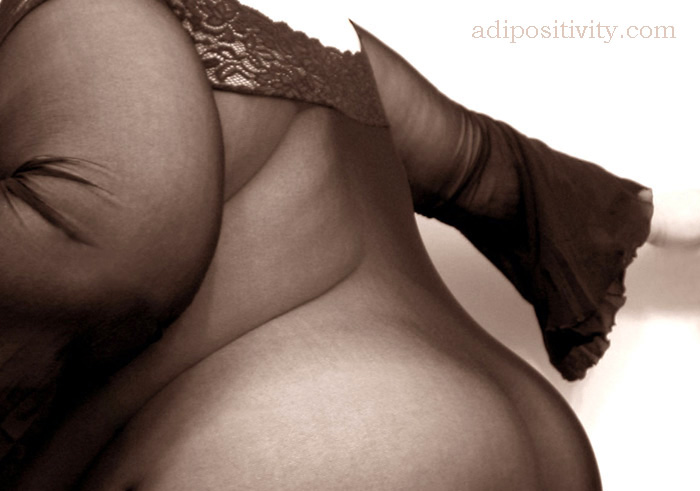
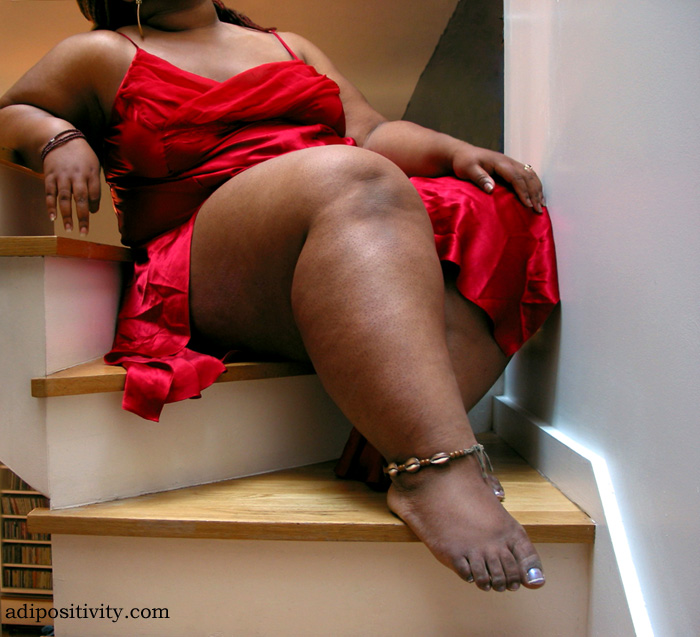
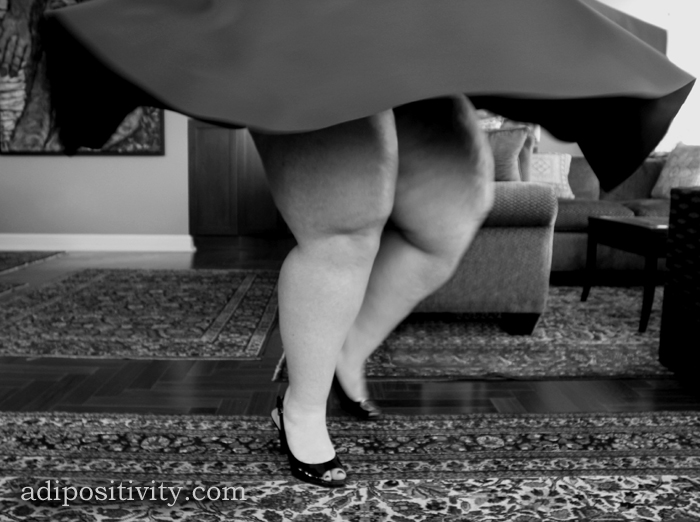
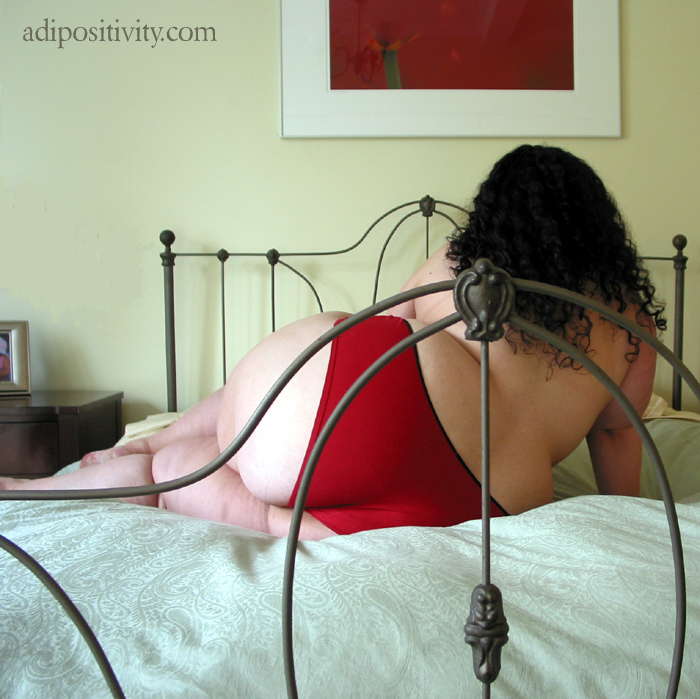
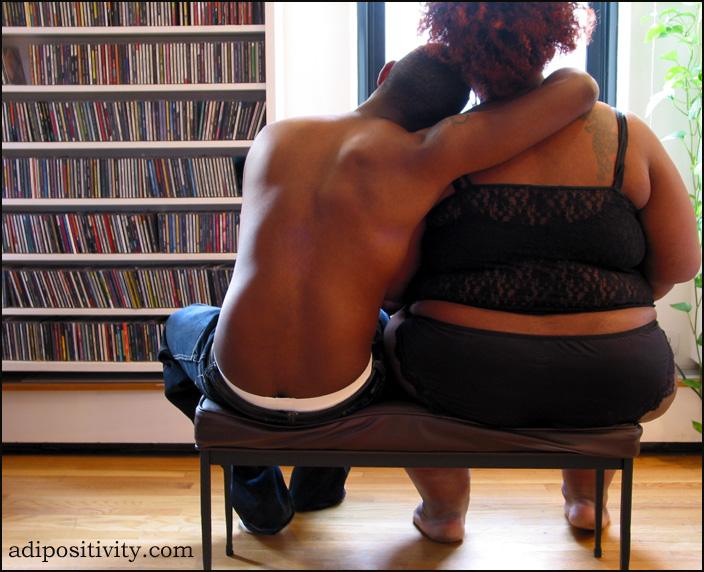
I’ve been aware of The Adipositivity Project for a number of years.  Most people who float around Fat Acceptance circles online are aware of it, but when I’ve shown it to friends who aren’t aware of FA, it’s always surprised them.  I thought, given the reading for our next class, this was at least visually on topic.  I’m also always a fan of activism through art and you can’t say Substantia Jones’ photographs aren’t beautiful or radical.   Many of the photographs are nudes, so beware if you decide to click through.  I’ve pulled some of the more modest ones to show the intent of the images.

Adipose: Of or relating to fat.

Positivity: Characterized by or displaying acceptance or affirmation.


MISSION:
 The Adipositivity Project aims to promote size acceptance, not by listing the merits of big people, or detailing examples of excellence (these things are easily seen all around us), but rather, through a visual display of fat physicality. The sort that’s normally unseen.

The hope is to widen definitions of physical beauty. Literally.

The photographs here are close details of the fat female form, without the inclusion of faces. One reason for this is to coax observers into imagining they’re looking at the fat women in their own lives, ideally then accepting them as having aesthetic appeal which, for better or worse, often translates into more complete forms of acceptance.

The women you see in these images are educators, executives, mothers, musicians, professionals, performers, artists, activists, clerks, and writers. They are perhaps even the women you’ve clucked at on the subway, rolled your eyes at in the market, or joked about with your friends.

This is what they look like with their clothes off.

Some are showing you their bodies proudly. Others timidly. And some quite reluctantly. But they all share a determination in altering commonly accepted notions of a narrow and specific beauty ideal.


I love this project, especially considering the attempts by the media to include “real” bodies through the use of marketing like the Dove Campaign for Real Beauty and “plus size” (really a size 6-12) models, and how different these fat people look from those culturally approved fat bodies.  These aren’t the media portrayed idea of what is “real” (and how problematic is that word in regards to any person?).  These (mostly) women, according to the BMI (another problematic method of judgment!), are obese, or more likely morbidly obese (sometimes called Death Fat in the FA community).  Most of them probably weigh somewhere in the neighborhood of 200 or 300 or even 400 pounds – yet I don’t think they look like the stereotypical bed-ridden mordibly obese person most non-fats think of when they hear those numbers. Or maybe they do look like those ZOMG FAT people to you.

However you see them, these people are fat, but they have accepted the bodies they have and are living their lives in them.

October Baby


Recently my dad asked me if I would like to go out to dinner and a movie with him and I was touched! I thought it was sweet of him to want to spend some time together. Little did I know what I was in store for. When I asked my dad what movie he would like to go see he said there was a movie out that he had been wanting to see, so I just agreed not knowing what it was, thinking whatever it was it couldn’t be TOO bad, but I was completely wrong.
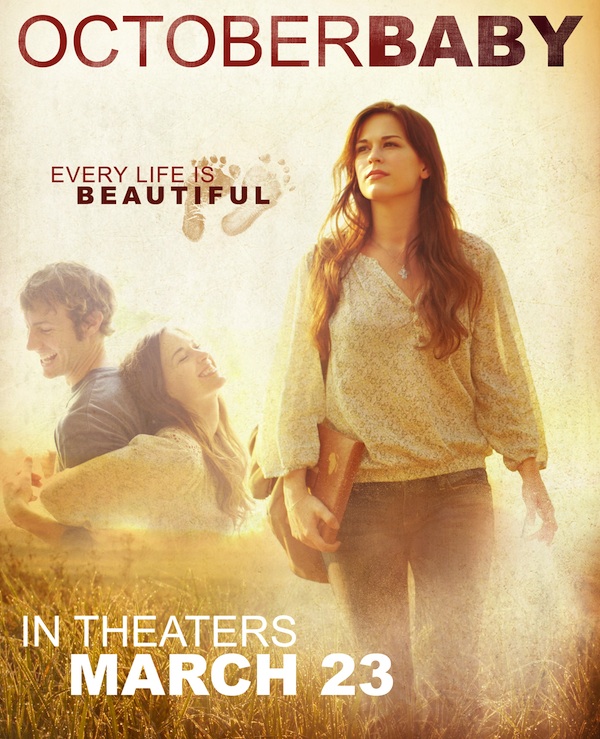
When we got to the theatre he asked for two tickets to October Baby, I had never heard of it. My dad and I settled into our seats in the nearly empty theatre. As the movie began I could tell it was going to be sappy, melodramatic, and a real tear-jerker for those who could connect with the message of the film. I also quickly realized that it was a Christian Pro-Life film.
The film tells the fictitious story of a Christian girl in college who discovers after having health issues that she is the product of a failed abortion. She learns that her parents are not her biological parents and she was adopted. The main character has a difficult time coming to terms with this and goes on a road-trip with her quirky and hip friends to find her birth mother. She is able to find her birth mother after meeting a nurse who used to work at the abortion clinic and remembered the day of the failed abortion. The nurse tells horrific stories of what would go on at the clinic and there are many tears. When the main girl confronts her mother she denies being her mom and in the end the main character writes her a note letting her know that she has “let go” and has forgiven her. Also at the end, you see that the nurse who used to work at the clinic now works in the Labor and Delivery Unit in a hospital. A happy ending for all…
Just when I thought the torture was over, a video of an interview with the actress that played the birth mother started to play during the credits. So of course my dad wanted to stay to watch that. She basically said that she felt that this role was perfect for her because when she was younger she had an abortion and through playing this role she felt some closure. She also felt like she was doing her part to help other women from making the same “mistake” that she did.
By the end of this film I was furious. My dad is Christian and although I was raised Catholic I made my dad aware that I was not religious back in high school. The issue of religion (and politics) have created a large barrier in our relationship. So as the film ended and he asked me if I liked it, I was angered, how could he think I would enjoy this movie? Does he know me at all?  I told him that I really hated it. He then called me a week later asking if I had thought about it and liked it anymore. I answered, “No, Dad. I still really hate it.”
What I found problematic with this film is the fact that it was basically instilling false fears into peoples minds about a sensitive subject that is already under attack politically. People were walking away from this film feeling validated in their viewpoints against abortion and women’s rights. Does my dad now think that failed abortions happen all the time? I am not trying to imply that this never happens, it does. But is it really something that needs to be embraced into the anti-choice movement? Also, I believe that if access to safer abortions were increased in the first place this would not be a problem to consider at all. This option of course was not considered in the film though. Instead, they simply vilified the birth mother and portrayed her as a vein,s elf-interested lawyer who has chosen to turn her back on her daughter. Even though the women who played the birth mother has gone through the experience of getting an abortion in real life and should understand the hard decision it can be, she chose to accept this portrayal.
Needless to say, before I ever accept another offer to go to the movies with my dad again, I will thoroughly research the film.


Here is the link for the film’s website. On there is the video of the actress discussing her abortion that played during the credits. The video is called “October Baby Stories: Shari”      http://octoberbabymovie.net/#