Since middle school, my body has been subjected to various types of work. When I was about 11, my parents started their own wholesale distribution company. They would order items from overseas and deliver them to different stores throughout the DMV. They felt that this routine was not enough to support our family so they began to sell their products at local flea markets on the weekends. When I was finally old enough, my parents brought me along with them to help out. The first time that I worked with them was arduous. We left for our local flea market at 3 AM because my parents wanted to get the best spaces. We slept in the car until about 5 AM, when it was time to set up our “shop.” I helped my parents unload the box truck, moving banana boxes that were filled with random items from their company. I was on my feet and talking to customers all day. We started to pack up around 1 PM, where we had to put all of the items back onto the truck one by one. When I got home all I could do was lay down and the next day, everywhere on my body felt sore. I have continued this routine every weekend, whether it is raining, snowing, or 95 degrees outside. This has affected both my mental and physical health. Having to forgo weekend plans that my friends make or talking to rude customers leads this work to be emotional labor for me. As Hochschild describes it, emotional labor is work that involves evoking and suppressing feelings. When I work with my parents, I feel mentally and physically drained. My body has adapted to strenuous activity but I still feel worn out every time I come home from work.
This routine has led me to not only dread the weekends but to wonder what my body would look or feel like if I did not engage in physical labor. When I look at myself, I do not see the “petite” and “small” girl that I am often described as. Instead I see someone able to lift heavy boxes and be on their feet for countless hours, propelled by many years of experience in physical labor. I am still unsure of which one I prefer. Society condemns those who are not stick-thin but part of me wants to overcome the stereotype that girls are weak. As mentioned in Slavishak’s “Made by the Work,” bodies are often symbols. Bodies that are bigger or muscular are seen as tough, strong, and capable of work. Whereas bodies that are small and non-muscular are seen as frail and not meant for physical labor. On first look, anyone would assume that I am the latter but in reality I am capable of doing work.
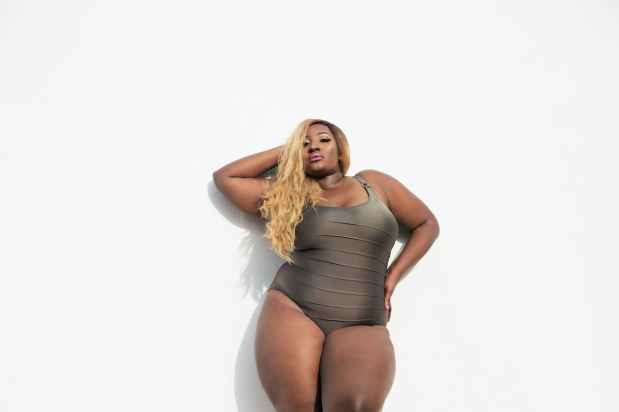
In class, we were talking about how social media creates body standards. However, I kept thinking about how my social media wants you to be big in the right places. I see social media rewards bigger people who collect fat in their thighs, butt, and chest. It simultaneously punishes people who contain fat anywhere else. I, myself, only go to the gym to build the body I want, not for health and definitely not because it makes me happy. I see this in conversations with my friends. Everyone wants a bigger butt and a smaller stomach. I see it in how clothes are made today. Certain clothes that are stretchier in the butt and tighter in the waist to force an hourglass figure. There is so much emphasis placed on having a curvy figure, and it does not look as nice if you don’t have that figure. I see it in models promoting different things and celebrities that people admire. It seems like they all have BBL bodies. BBL stands for Brazilian Butt Lift when a plastic surgeon takes the fat from your midsection and puts it in your butt. All celebrities have plastic surgery, but it shapes the body expectations of those without. Some celebrities, like Lizzo, promote body positivity, but she does not exist in a vacuum. Many try to shame her for who she is, and although it speaks volumes when she ignores them, it continues to be herself; sometimes, other voices are louder.
So just to recap, you must have a big chest, a big butt, and a tiny waist, all while being under 150lbs. If you work out in the gym to build this body, you will be muscular, which isn’t feminine. If you get plastic surgery, you lose because you paid money to change your body. All in all, you can’t win.
When I was 10 my doctor at the time yelled at me and made me cry for not losing weight. That’s when I remember starting to look at health as being skinny and losing weight as a need.
The next doctor I went to also said I needed to lose weight. So, when I was old enough 12 or 13 my doctor recommended I do Weight Watchers with my mom. The idea being I just needed to become more aware of what I was eating and that would help with my weight. We had x amount of points and every food was associated with a point value. My mom was so into it, we would get the cookbooks and the special low point foods, keep track of our weight at home and attend every meeting.
From the outside it would seem like a good idea, not a diet just looking closely at what you ate and making sure to balance it, and the meeting should be there to hold you accountable. But there was a more insidious side, tracking led to bargaining: “I’ll skip on this so I can indulge later.” And the meetings became commiserating about being overweight and pushing the idea of how much better life is being skinny or how much better it would get if we lost weight.
From a young age I found my self image turning into self hate and a need to be skinny. By high school I quit WW not because I realized the negative effects, but because it was too hard to maintain. But the ideas stuck with me that my life would be better if I was skinnier (I wasn’t even that overweight), that it didn’t matter when I ate just how much in a day, and that health was just based on the body. I wanted to be like my stickbug friends and classmates. One of the saddest memories I have from high school is how I slowly and secretly started to develop negative eating habits. I would bring just oranges to school for lunch because in the WW version I did they were 0 points so in my mind I could eat as many as I wanted without gaining weight.
I wouldn’t eat breakfast and I would bring 8 of the small oranges or cuties to school and just eat that for lunch, then when I got home I would have an entire TV dinner and for dinner I would eat as much as I possibly could, often going past fullness. All my friends saw were the oranges and they commented “wow you’re so healthy” and those comments made me go further, only eating oranges some days. I was so depressed, I never lost weight and I always felt weak. I was involved in sports and some days I felt like I was going to faint because I wasn’t eating. But I hid all this from my parents. They only ever saw what I ate for dinner so I would lie and say I already ate or that I hadn’t eaten if I ate a concerning amount at once. I wasn’t losing or gaining weight, so no one ever saw how much I was suffering. It began to feel normal: if I don’t eat all day then it doesn’t matter what I have when I do eat. I’m still not fully over it, having a meal plan in college helped because I wanted to get a meal every meal period. It wasn’t until listening to the Weight Watchers episode of the podcast Maintenance Phase that I remembered just how bad Weight Watchers had been for me and I started to remember all of those aspects that hurt me and shaped my young mind. There is no happy ending. I still find myself starving through the day and binge eating at night, but at least I’m aware that it’s something I need to work on.
trigger warning // slight mention of disordered eating and beliefs that stem from it
If I walked outside right now to get something to eat, I’m either going to be shelling over 20 dollars just to sit down at a restaurant and tip enough to hopefully make sure that server makes a livable amount by the end of the day, or I’d have to shut off my morals and go to the nearest McDonalds and convince myself that my Oreo McFlurry and fries were worth contributing to the company handing out Happy Meals to Israeli soldiers.
If I went to the grocery store and stood in front of the milk section, I’m going to have to consider whether the stomach ache from the milk you get here in the US that isn’t even ethically obtained or sustainably produced is worth saving the money that I’d have to spend on a plant – based substitute like oat milk.
If I make vegetarian food, people will always ask if what I’m eating really is enough for me and if my protein intake is any good when eating meat is their cultural practice while eating vegetarian is my own. Besides, even if I ate meat here, how could I when the industry engages in so many acts of animal cruelty and processes it to the point of no return?
If I decided that I’m going to cook for the rest of the week, I’m going to have to spend all night meal prepping on Sundays after work, and that’s only if I manage to have the energy to do anything besides eat my free food from my job and collapse into bed, not ready to do it all again another week with less willpower to keep going as the weather gets colder.
If I decide to eat to my hearts content, I’m going to have to work it off in some way so I don’t feel disgusting for eating however much my body needed.
If I walk into my kitchen, I’m hit with so many choices that I have to make my peace with before I can even decide what to put on my plate. When simply eating food has become such a complex issue, one of our basic needs as humans, that’s how you know our society has messed up our perception of what we need to live.
This is pretty long. I started this last week but it took forever for me to get out completely so I’m going to try again today. All capitalization is intentional.
The title of this post is inspired by a tweet I read from Dr. Zalika U. Ibaorimi a few years ago which said “Desirability is not a safe space”. This is one of the most memorable statements that I’ve read regarding desirability. It is such a short sentence but one that made question what I had learned regarding the subject before reading that tweet.
Before then, I understood the politics of desire/Desirability to mean that those deemed desirable (thin, light skin or white, loose hair, able bodied, muscular, etc.) were safer from poverty, harassment, violence, abuse, and more. This was also reinforced by my understanding of a related concept: the libidinal economy. In the same way that the political economy is about the exchange of materials and decisions on their worth and value based on how much capital one can accumulate from it, the libidinal (related to libido) economy is about the exchange and valuation of desires, fears, pleasures, and enjoyments. It is also about consumption both violent and enjoyable. One can accumulate more fears than desires compared to another based on their embodiment. And such accumulation of either desire or aversion reflects in how, when or if others choose to act on a person’s behalf or violently against it.
Now, what I knew about desirability is not wrong because if those who are undesirable, or Ugly as Da’Shaun Harrison often writes, have less access to housing, fair employment, “health” and security. They are overrepresented as victims of state violence and in prisons. But it honestly is not so simple and this is something I am still trying to understand. “Desirability is not a safe space” does not just mean that skinny girls can be insecure about their bodies too but that desire does not mean care or love is present. When I named all of the things that undesirable people lack access to, I did not say care or love. Although I believe that people that are fat and or darkskin for example are denied love, care, affection and intimacy from many (maybe most?) because of antifatness and antiBlack colorism, I’m not sure this means that those are what thin, lighter skin people are finding in all relationships because they are desirable. This is seen whenever a Beautiful celebrity woman is publicly cheated on by her male partner an overwhelming response from the general public is “How could you cheat on [enter literally so many women’s names lmao] !????”
But I don’t want to just focus on Desirable people because even people who are Ugly still experience desire from other subjects or people. So often I have seen or heard fat people attempt to use desire as a reason why they are still valuable and worthy as a person. If I had a dollar for every time I’ve heard a fat woman say “I may be fat but I still get fucked” or something along those lines… Desire is nothing more than a strong feeling of want. A strong corporeal want. Ugly people are not devoid of attraction, seduction, lust, or sexiness but none of those things translate to love and care. Love is a manifestation of continuous intentional support and care not just a feeling and not someone wanting to have sex with you. And on the other side there are people believing that Ugly people should be grateful to get fucked or be in relationships because why would anyone want them anyway? All this does is deny the very real and material issues that Ugly people face because of Desirability.
This came to mind when we watched the Aftershock documentary in class last week. That film was so hard to watch because I could only think of the amount of Black women who did not have men like those featured who loved and cared for their partners to fight for and with them despite the violence they experienced through lack of care from medical systems. Seeing a dark skin, Ugly (please don’t take this as me saying she wasn’t beautiful, I mean socio-politically. But maybe it’s not my place to say that so I’m willing to be wrong here) woman have a safe labor surrounded by people who prioritized her wellbeing and the safety of her baby was one of the most beautiful things I have seen because I know how easy it would be for a woman like to her have a completely different experience.
Despite the reality of Desirability not translating to love and care, so many of us still want a piece of the Desirability pie. Not too big of a slice though.
Why do we work so hard to lighten our skin or lose weight or straighten our hair or contour our noses or be sexy when we are still going to experience violence? So much of desirability is performance and we do all we can to put on a great show.
I’m using the song below and these lyrics specifically as a soundtrack to this post because it is true that these women or people who are deemed more Desirable often do get the “soft life” compared to the reality of so many Black women but what are we fighting to have their life for? In this (libidinal) economy??
“Tired of seeing all these All these (All these) Spanish and these white bitches Living they soft life With they feet kicked up And they glass in hand Bills is paid, thanks to the man” —Summer Walker, “Hardlife”
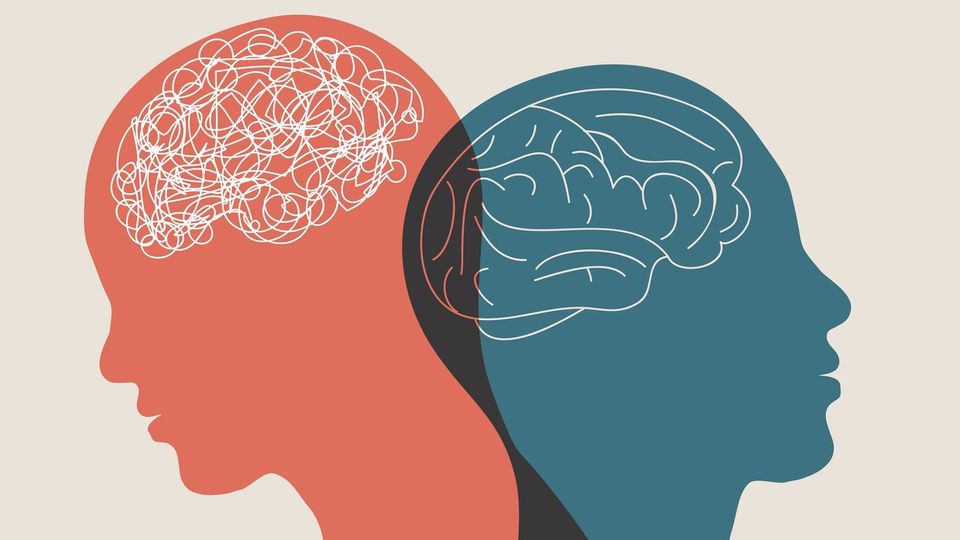
For the past three years, I’ve felt lonely. My everyday existence is dictated by my anxiety and depression. I always overthink about everything I do, and it never ends. It has prevented me from enjoying myself and liking myself, and it has led me to believe that being alone is better than being with other family members or friends. I feel as though I will never lead the life I desire as a result. I’ll never make new friends, and I won’t get the “experience” of college that I imagined having when I was younger. I am aware that my family is supportive and that they care about me, yet I still feel as though I consistently fail to do enough for them and destroy everything. I’ve now been in therapy for two years, and it has helped me tremendously for the better. I’m fortunate to have a supportive mother, who at first did not understand what I was going through but evolved and became my supporter over those three years.
But lately, I’ve run into trouble because one of my professors has made it mandatory to speak in class for participation, and speaking in front of others is difficult for me. I’ve tried to fix it over the years, but it continues to be difficult for me. I wrote the professor an email explaining how I find it difficult to speak in front of others due to my anxiety, but he never replied. I’m currently trying to obtain a student disability accommodation, but it has proven to be very challenging due to the long process. Because I must first have a doctor’s note, and I’m fortunate enough to receive therapy so I can, I can. But after that, I need to meet with the staff and discuss it with them. Wait a few more days or weeks, and see if I’ll get approved or not. I hope I do but I feel like I’ll propbably won’t.
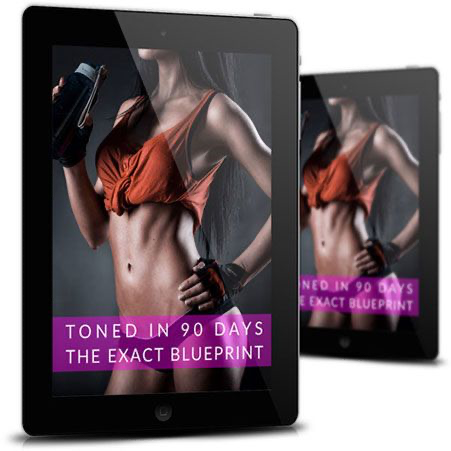
I’ve been doing pilates since I was 11. I remember seeing an Ad on YouTube in 2016 of some muscular white guy basically saying that pilates was the solution to tone your body.
Toned.
I learned that word from him. At 11 I learned that the word “toned” was skinny but not the kind were you’re weak and defenseless but its muscle. But not too much. Enough to make it look “sexy”. I look back in disgust remembering that I let some white guy implement that school-of-thought in my brain at such a young age. I wanted to be toned like the gym models I saw in Nike Ads.
The ads purpose was to push the audience to purchase an online membership which is what I pressured my mom to pay for. After she purchased it I forced myself to follow the workouts and instead of also following the diet, I ate less and less.
No matter how hard I worked I never saw results physically or in the scale and eventually I stopped. I felt trapped in my body and I longed for the “perfect” standard body. Eventually I stopped but started again a few months later and it became a pattern throughout middle school. I’d always feel a new weight of stress and shame drop onto my shoulders each time.
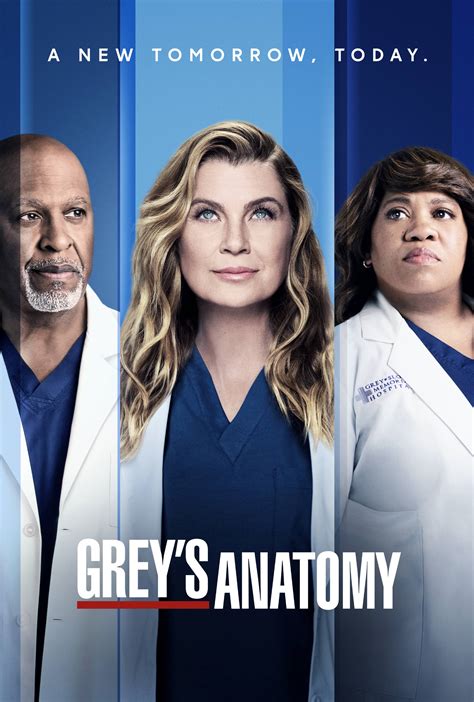
I have been on a Grey’s Anatomy binge recently, and as the class was progressing talking about medical neglect people of color have consistently received, Grey’s Anatomy was actively covering it on their episodes. I believe it was on like season 17 during the George Floyd protests. Since those episodes, coverage continued, more representation for other races and their struggles came out. And I was able to learn from those episodes. Their was an episode about a 12 year old kid who came in because he got shot by police at his own home. The kid had lost his key and was trying to climb in using the window. The police saw him and shot him. The kid was conscious at the hospital but died later in the episode. Afterwards, the doctor spoke with a couple of police officers, and the officers claimed that it was a judgement call, which pissed the doctor off (understandably so) because it was not a judgement call, he made a choice to kill that boy. Overall, they do a decent job covering racial issues on the show especially in later seasons, where they show how big events in the real world can affect people. There is another part where a lot of black people were going to protests after George Floyd got murdered. At the end of that episode, a bunch of the patients coming into the hospital as well as the black doctors showed off their scars from past protests and movements. However, they weren’t victimizing themselves, it was powerful. There is a lot more I can add, like there was another episode about an Asian patient who came into the hospital and died because the disease he had wasn’t common for white people, but moreso for Asians. They went into the detail the idea of the importance of considering race when it comes to medical evaluations, there isn’t a textbook method to diagnose and treat someone.
After watching the documentary Aftershock, I felt compelled to call my mother to see if she was doing okay. Unfortunately, the U.S. maternity health system has failed black mothers time and time again. Shamony Gibson, Amber Rose Isaac, and other black women were not able to get recognition in the media, but their stories and legacies live on. Their stories were truly devastating and made me thank the universe that my African mother did not have an instance of life-threatening neglect. I emphasize that my mother is African because she and her siblings were the first generation in my family to birth children outside the borders of our home country. That is a pretty big deal.
The year was 2003, this was the year that my mother found out she was pregnant. She then discovered there were two babies in her belly instead of one. Twins!!! Fraternal; a boy and a girl. (I could have been extra twining with Dr. Kate but my brother happens to be a boy and not identical to me). My parents lived in Prince George’s County at the time, gearing up to be parents for the first time which is probably a nerve-racking yet exciting experience.
Image by Shutterstock. (I hate it when the watermark is on top of the photo.)
With newfound curiosity, I asked my mom on a call last week what her experience at the hospital during her pregnancy and birth. She told me how the care you receive, depends on whether someone has insurance or not. Luckily, both she and my dad had had insurance they received from their work benefits. This pipelined her experience as a black woman in the U.S. differently as they knew that she would be able to pay for the outstanding bills that come with birth.
The doctor that she went to for her prenatal checkups did not follow an individualistic approach and went very by the book. The doctor insisted that my mom would go into pre-term labor (she didn’t). My mother felt as if she wasn’t truly given a chance and it was dehumanizing that the doctor wasn’t listening to her when it was HER body. Of course, she was not the expert on how this whole pregnancy thing worked but the person who who she needed reassurance the most from, was giving her the opposite. She said something to me on the call that truly stuck with me, “I’m an individual, not a machine”. I am certain that other pregnant women have felt this way because even though birth is a miraculous thing, it seems almost belittling in a sense what doctors tell or don’t tell their patients.
My mother got a C-section for her birth and stayed 4 days in the hospital after the birth which is not nearly enough; that was the maximum amount of days she could spend. She expressed that she thought she was being discharged too early, especially with the pain of the staples. There is so much pressure for new mothers to have it all figured out. From regaining your own strength to nursing your babies and attending to your mental health. I’m getting overwhelmed by just thinking about it. She did have a wonderful support system of friends and family to guide her along the way to lessen the heaviness of it all.
Mothers are superhuman. Tell your mom or motherly figure that you love them today.
The medicalization of fertility and infertility, pregnancy, abortion, contraception, and childbirth care has not always worked in the interest of women, and it had particularly devastating effects on African American women. Their fertility has been managed for hundreds of years, first forced to have children for owners, then as objects to be experimented on, and sterilized without their consent.
Every aspect of fertility, including abortion, varies along racial lines. Black women were denied access to formal medical services well into the 20th century. The relationship between medicine and black women has been and remains troubled. Access to reproductive services remains problematic for black women in America.
African American Midwifery
The history of black midwifery in the United States began in the South with the “granny” midwives. They were generally respected, older, wise women who were transported from Africa to the Americas in the 17th century. They attended to other black women in birth, well-woman care, and a range of procreative services and healing well into the mid-20th century. During slavery, midwives aided in the building of community by caring for and supporting women throughout pregnancy as they brought forth new life.
Midwives are heroes.Working long hours in what is generally portrayed as an exhausting and thankless job. Despite their position, many reported that they were treated poorly. They show up for work, often in difficult environments, for little to no pay. Their unwavering resolve ensured that women and newborns get the care they need.
Labor Supply and Slavery
Enslaved women were dehumanized as a good to be bought and sold. Slave owners sought to maximize the number of enslaved women to bear children, as a result, labor supply increases and productive labor were performed on their own.
Many enslaved women resisted captivity usually by finding methods to avoid work. Part of the expected work consisted of bearing children that would then be treated as the slave owners’ property, and so that is why women wanted to avoid giving birth. The choices made by black women were more like industrial sabotage than personal liberation. They were forced choices more than their own choices, as their freedom was limited.





 Unruly Bodies