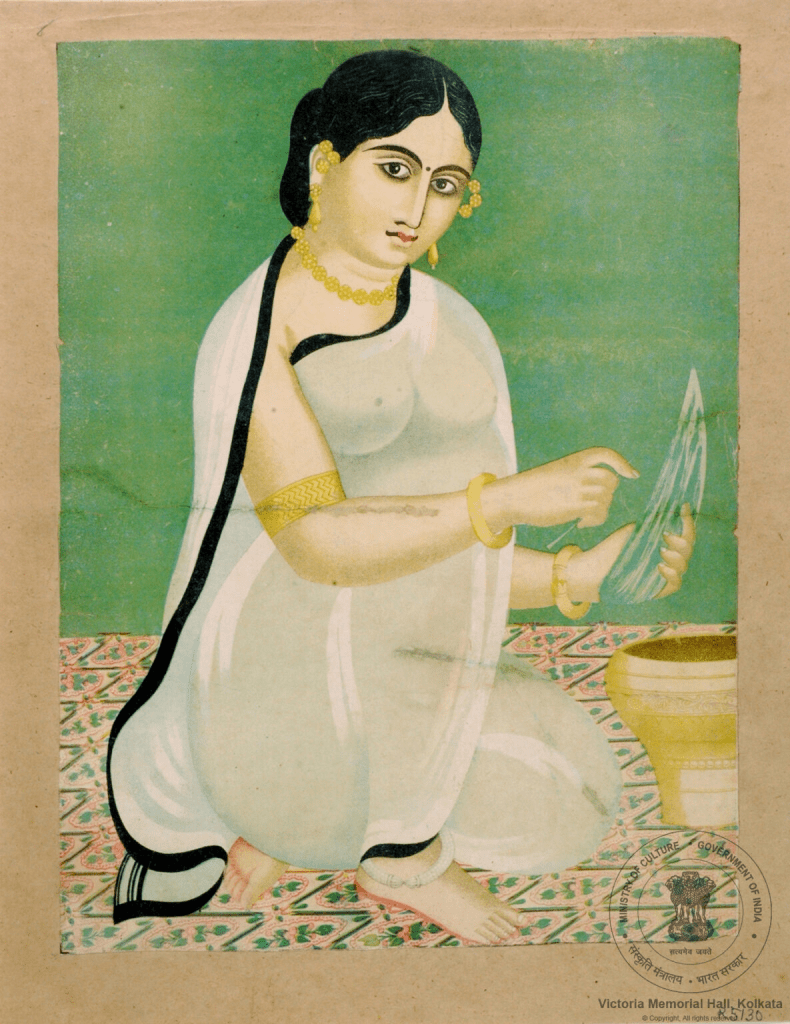
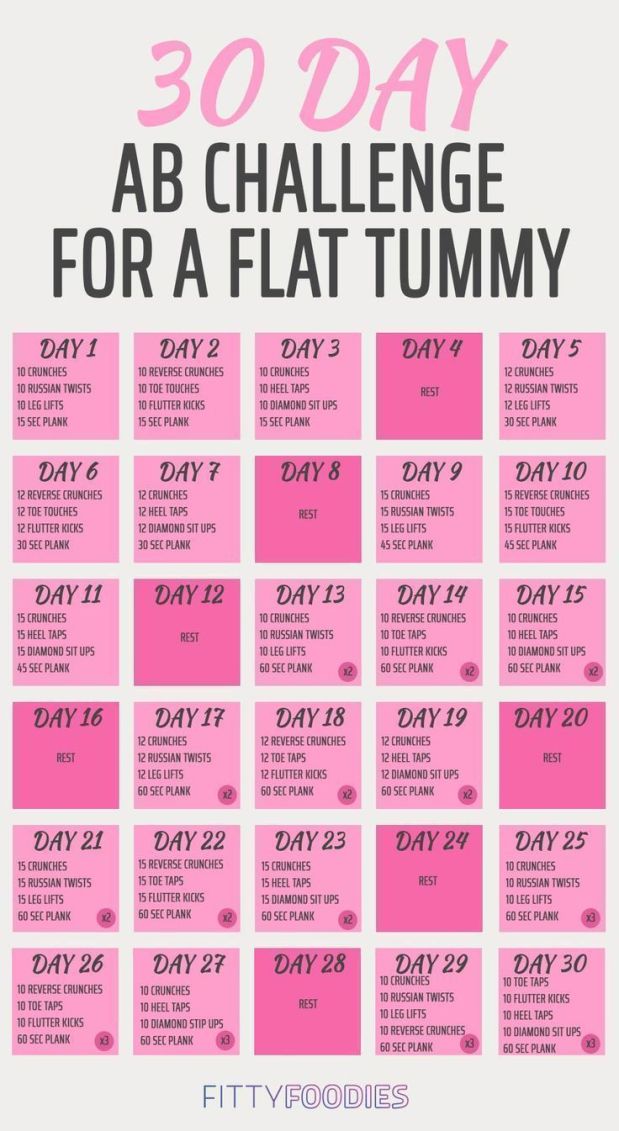
Leg Day, Arm Toning, 30 Day Abs Challenge, At Home Glutes Workout…….

Leg Day, Arm Toning, 30 Day Abs Challenge, At Home Glutes Workout…….

The Substance, Horror, and Ugliness Politics

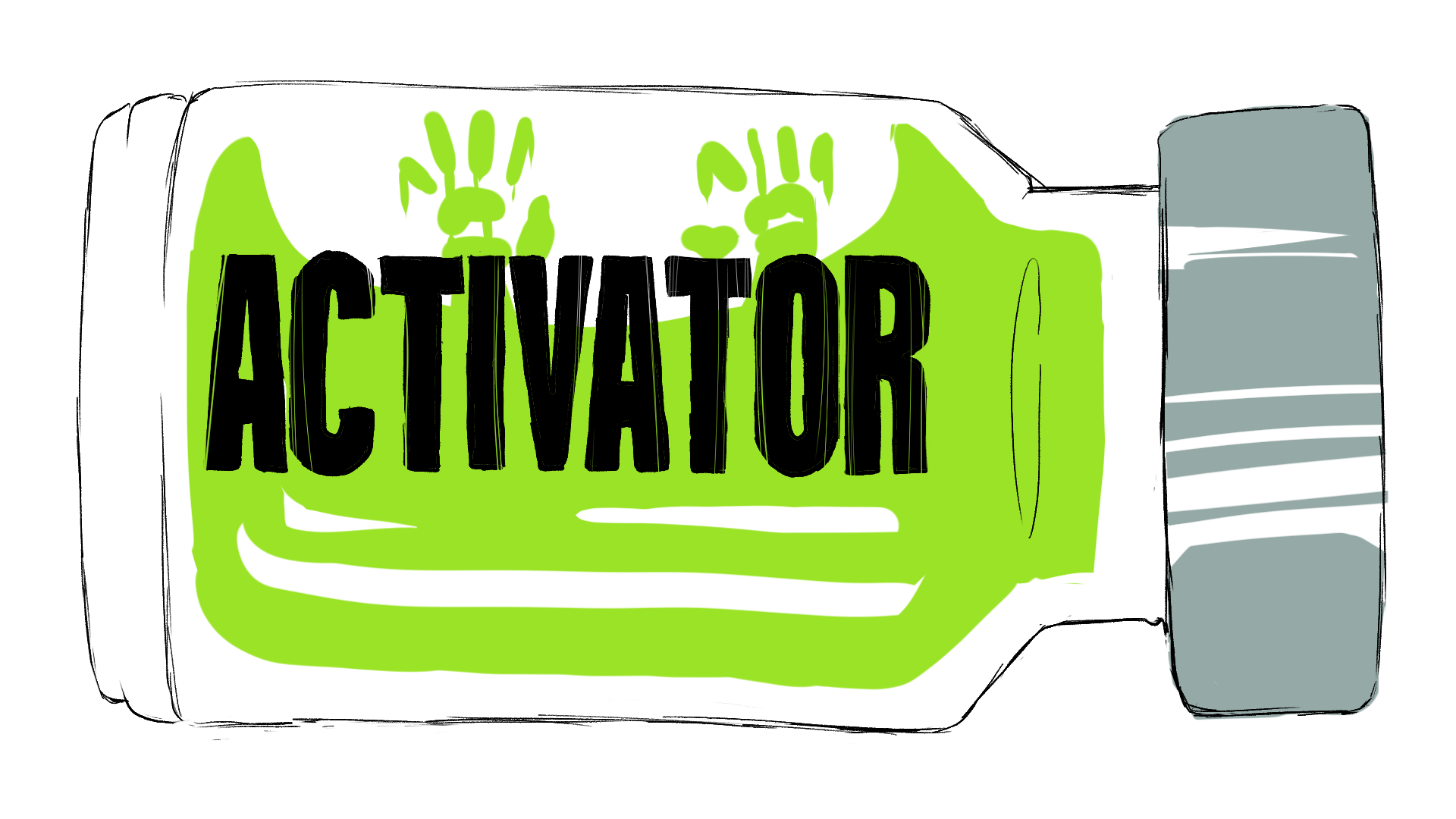
Illustration by me of a vial of “Activator” from the film The Substance with small green hand prints.

The Substance is easily my favorite horror film to come out this year, and probably my favorite film regardless of genre to come out of 2024. It executes common horror tropes beautifully while offering a combination of fresh new ideas that haven’t felt explored in the specific way Coralie Fargeat, the director, addresses them. The film’s plot and general message are also incredibly relevant to politics of Desire and how physical attractiveness is measured among different groups of people.

Continue reading

Piercings

When I was eight, the first piercing into my body was for a ritual, a gentle whisper of tradition inscribed on the skin. Or maybe these were the things little girls did, bearing a tiny badge of belonging. I didn’t question it, didn’t need to. It fell into the soft quilt of childhood.

At twenty, a sharper needle danced across my skin: a second lobe, a nose ring, a tragus. These weren’t whispered rites; they were restless proclamations. Boredom had seeped into my bones, and the sting of metal felt like a remedy, a spark against the dull ache of routine.

But the tragus rebelled, itching, and inflamed, and was eventually lost, snagged in the tangle of intimacy during a hug. A small casualty, nonetheless one that left its mark within memory memory of touch and unintentional loss.

Now, they hang silent companions. Some days, they feel like artifacts of whimsy I can’t quite justify. On other days, they’re ornaments of a self I’ve grown to understand. Mistakes? Maybe. Or maybe they are just chapters, stitched in by silver and steel, each adding texture to the story I wear.

The Potential of Body Neutrality

This reminded me of what we have discussed in class regarding how society prioritizes weight and what bodies look like. In our everyday lives, there is constant expectation of what our bodies are “supposed to be,” what type of body is deemed “healthy” or not, and what bodies are “moral” or “immoral.” Especially with social media, people’s bodies are only placed on a pedestal where hundreds and thousands of people look, judge, and comment. Over time, it becomes distressing because it can be extremely dehumanizing to constantly be aware of others’ entitlement to comment on your body and interpret it, whether those remarks are positive or negative. In this sense, as society focuses on weight and the body, you are left to feel as though you are no longer human with a personality, character, or morals, but rather just a body defined by weight.

With this, I can’t help but wonder: How can we change these expectations and concepts that invade how we view and think about weight and bodies?

I think of the body-neutrality movement that we touched upon in class discussions. Body neutrality embraces the practice of simply accepting your body for what it is rather than constantly trying to have a positive or loving mindset. There is no positivity or negativity tied to bodies, but rather just an acknowledgement of their existence as they are. I find that this has the potential to make a change in how the world views and thinks about bodies and weight, as recognizing and accepting bodies as they are disadvantages ideas of “good” and “bad.” While this cannot be done overnight, there needs to be a change in how we think about weight. Ultimately, there could be a great benefit in embracing movement such as body neutrality and understanding and accepting weight and bodies as they are, rather than attatching them to notions of positivity or negativity. 

Medical Terminology and the Patriarchy

I learned about this in another class and found it to be very relevant to this class. In general, Emily Martin’s The Egg and the Sperm: How Science Has Constructed a Romance Based on Stereotypical Male-Female Roles, talks about how the language in medical textbooks reinforces patriarchal views of men’s and women’s roles in reproduction. Enjoy!

In Emily Martin’s The Egg and the Sperm, she asserts that even when we learn about basic biology, such as eggs and sperm, these notions from the patriarchy are reinforced. This subtle but very deliberate assertion is intentional. It reinforces gender norms and says that the sperm is dominant while the egg is submissive. The sperm travels through the female reproductive system and penetrates the egg. This is very much a Western idea. Now, modern research has found that the egg is the dominant one. Instead of the sperm penetrating the egg, the egg, “traps the sperm and prevents their escape.” (Martin, pg. 493)

The reason these narratives are so problematic is because it devalues the egg’s role in reproduction and, in doing so, reduces the whole female reproductive system and women in general and vice versa. Other things also reinforce this. Like how menstruation is viewed as a failure. The language medical textbooks show menstruation, “as a chaotic disintegration of form, complementing the many texts that describe it as “ceasing,” “dying,” “losing,” “denuding, “expelling. ” (Martin, pg. 486) As if a women’s role is purely reproductive and she is deemed useless or otherized when she is dealing with a completely normal biological function.

Reference

Martin, Emily. “The egg and the sperm: How science has constructed a romance based on stereotypical male-female roles.” Signs: Journal of Women in Culture and Society, vol. 16, no. 3, Apr. 1991, pp. 485–501, https://doi.org/10.1086/494680. 

A Puppet: Follow the rules I make about YOUR body! (TW: eating disorder, body image, parental issues)

It’s such an odd concept, isn’t it?? My mother started controlling my body image when I was in elementary school. 6 years old and already practically dieting. She would give me specific low-calorie, thin ass bread for my sandwiches with a single slice of cheese as my lunch for the day. 10 years old and already posting long workouts that I did on social media so my mother would be proud of me that I was making an effort to make my body more acceptable for her. I developed an eating disorder in elementary school. I was always so scared of my mother seeing me eat that I became so secretive. Binge eating disorder isn’t taken seriously, she knew I had it, admitting she knew, but I guess it was another way of controlling me for her to not help me. I remember hiding snacks under my bed that I was given at school so I could have them without her seeing and judging me. Halloween as a kid was pointless, she always gave my candy away to people at her work because I “didn’t need it”. I was a kid. My mother snapping at me to pull my shirt out, “suggesting” (the things she told me were never a suggestion: you don’t go against what Vicki says, your body is her puppet) that I take my selfies at a higher angle to hide my double chin, telling me to wear shapewear so my clothes would “flatter”… the best they could that is as she looked my body up and down in disgust. I was a child.

I have always been her puppet. Wear this, don’t wear that you can see how fat you are, god don’t sit like that you can see your fat rolls, when does it stop?? The answer? Never.

Continue reading

Subway Shirts

I recently saw an Instagram reel from @arlenezhxo where she shows her original outfit and then adorns this oversized shirt with Kermit the Frog wearing a Santa hat over it. With the text on the screen saying, “shoutout to my subway shirt” and the caption saying, “what’s ur subway shirt?” Here it is: https://www.instagram.com/reel/C_wOd2SyAHV/?hl=en 

The idea behind a Subway shirt is to conceal your body and stop or reduce harassment from people who ride the Subway. This is not the first Instagram reelI have seen about the Subway shirt (I do not have TikTok). It brings up the idea of not wanting your body to be perceived. 

This can be understood through Featherstone’s critique of consumer culture and the focus on the body. Featherstone (1990) highlights that the consumerist obsession with leisure and consumption, especially regarding the body, is often seen as empowering by granting individuals greater freedom to express themselves through fashion and appearance. However, this constant focus on appearance also leads to a form of “ideological manipulation,” wherein the body becomes the primary site of self-worth and identity. The pressure to present oneself in a specific way reinforces conformity to consumerist ideals, which may limit true freedom and alternative ways of being in the world.

In this case, the “Subway shirt” can be seen as a reaction to that manipulation. It symbolizes a rejection of the consumer-driven pressure to always make one’s body available for public consumption and appraisal. The oversized shirt is worn not for leisure or self-expression but as a tool of protection, concealing the body to avoid unwanted attention. This aligns with Featherstone’s view that while consumer culture promises freedom and individualism, it can also act as a means of control, encouraging individuals to conform to certain norms and aesthetics. In this case, the “Subway shirt” might represent a deliberate disengagement from this consumerist gaze, offering a temporary escape from the endless cycle of bodily visibility and scrutiny.

Reference

Featherstone, M. (1990). PERSPECTIVES ON CONSUMER CULTURE. Sociology, 24(1), 5–22. http://www.jstor.org/stable/42854622

The Body Neutrality Bubble

Is it possible to adopt a body neutral mindset in the face of external structural notions about what the body should be?

The image depicts a graphic from bewitching.net that has a green background and colorful splotches with text. The middle pink splotch says Body Neutrality. It is surrounded in a circle by 5 other splotches that say be grateful for how your body functions; focus on how your body lets you be in this world; your body deserves respect; practice self compassion; your body isn't an accessory. Each text has a different body next to it posing.

Image Description: The image depicts a graphic from bewitching.net that has a green background and colorful splotches with text. The middle pink splotch says Body Neutrality. It is surrounded in a circle by 5 other splotches that say be grateful for how your body functions; focus on how your body lets you be in this world; your body deserves respect; practice self compassion; your body isn’t an accessory. Each text has a different body next to it posing.

Body neutrality is a contemporary concept that describes the practice of adopting an objective, arguably more function-oriented mindset towards one’s physical self. Popularized in 2015 by Annie Poirier, body neutrality as a concept encourages individuals to view their bodies as physical vessels that allow them to experience and conduct through daily life. Some find it to be a stepping stone to body positivity, however in its fundamental ideology body neutrality is intended to promote a more peaceful relationship between the mind and body that does not focus on negative nor positive conceptualizations of the body, especially in those ways that can consume and strain the mind (i.e., significantly focusing on the size, shape, or color of the body). The concept of body neutrality is designed to operate in contrast to societal expectations that systemically operate to burden individuals to fit into physical and emotional molds in order to be legible as human beings and gain access to various spaces both physically and socially. It is critical to note that societal standards of physicality and being often disproportionately impact minority communities, who often may be denied access to other mechanisms of legibility such as personhood and femininity.

As the concept of body neutrality manifests as an individual effort—where one must rewire their thoughts to accept themselves in their current existence—it is critical to consider to what extent this mindset is sustainable. For sustainability seems unlikely in a world where one’s internal perspectives are competing with the perspectives ascribed to them by other social actors and the implications of structures more broadly (i.e., the spaces their physical and emotional selves may be accepted in or denied access to). It appears to be the case that the body neutral mindset can only exist in the individual bubble, as venturing out of those individual boundaries forces one to be confronted with realities of dominant thought about the superiority of thinness, smallness, whiteness, etc. that will inevitably, even momentarily, impact the way one views themselves and others. It can be said, then, that genuine bodily neutrality is an in-achievable pursuit in our current world where subjects are “locked in” their bodies unable to transcend to a space of being that allows them to shed their physical and spatial identities. While this perspective is less than optimistic, it does offer a more pragmatic contextualization of how societal influence is imperative in creating an environment where humans are categorized and then held to physical and emotional standards that are historically long-lasting and seemingly intrinsic, which hinder individual and population-specific liberation.

Upward Spiraling Out of My Body Dysmorphia

Image by Karolina Grabowska on Pexels.com

trigger warnings: body dysmorphia, suicide, mentions of disordered eating, illness

If you remember what your body looks like, I think you’re one of the lucky ones. If you don’t, then I’m not so glad this is what we have in common. Coming from an older West Indian family, my body was always a discussion. No matter how many soccer practices I showed up to, salads I ate, nor how well I did in P.E. class, whenever an aunt approached me it was always “You’ve gotten bigger!” Even throughout my adulthood my body has gotten bigger. I know I’m big, but I wish they knew that I didn’t need to be reminded every second of my life.  

I think it’s important to note that I wasn’t always fat, but I still struggled with food and dieting at a young age. Having to deal with cholesterol issues during elementary school was the start of my long, relentless relationship with food. I remember sitting in the doctor’s office with my uncle, his eyes glazed over, listening to every word my pediatrician said. My relationship with food not only originates in this moment, but also with my family’s history of heart disease, diabetes, and many other debilitating diseases. By the time I reached high school, my uncle had a coronary angioplasty, stent insertion, triple bypass heart surgery, and several other surgeries for various kinds of cancer. He never wanted me to suffer like he did.  

For as long as I can remember, my uncle micro-managed everything that graced my plate. There were even times we fought at the dinner table so he could see whatever takeout I’d brought home. The stress of bringing home any form of food that he would scrutinize started to transfer into other aspects of my life. In middle school I discovered how uncomfortable it made me feel to eat in public spaces. In high school I even went as far as to become the library aide so I could escape the daunting task of consuming food in the adolescent-filled cafeteria and tried my best to retreat back to the library every lunch break. The library was my safe haven, a place of structure for the moments where I felt the most vulnerable. This is still a habit I have today, I always look for security.

It wasn’t until my senior year of high school that I started my first romantic relationship. He was beautiful, smart, and even had a piercing on one ear that was the jackpot of my teenage girl fantasies. Being with him was the first time someone told me I was pretty. For someone that had only dreamed of having a boyfriend, that meant the world to me. I naively thought that feeling would last forever. As the pandemic raged on, and quarantine forced us into our isolated nests, there became an evident strain on our relationship. Still, we continued to stay with each other. I never noticed when his demeanor changed or that I couldn’t fit into half of my jeans anymore, or even that I was getting bigger than him. I made a huge mistake. You know that horrible mistake people make when they get lost in a relationship because they already have constant bodily validation? Yeah, that one. I gained the “happy weight”, I let myself go. People hate happy weight because being fat makes you feel empty and alone after a relationship. Nobody thinks that you’re attractive anymore and it feels like now there’s this huge responsibility that you have to get back to when you were skinnier. I fucked up.

Coming out of that relationship I became extremely depressed. I moved back in with my family, back to a space I never felt secure in. Endless nights spent scrolling through Tinder, a space where your body is always being perceived, felt completely invalidating. I was a completely different person. And I didn’t feel that way because I had loved and learned valuable lessons about navigating relationships, but it was because I was fat. Everytime I looked into the mirror, a devil appeared on my shoulder pointing out every flaw on my now monstrous body. It’s like my ego had turned against me. 

I didn’t want to live in my body anymore. I thought I was nothing without the comfort of another person telling me I was good enough. I can’t say that I never feel that way today, but I’ve worked on it. I’m not about to go on a spiel about how much it matters to love yourself, nor about how self-love is a journey and not a destination… but would love really be worth it if it meant that I had to be skinny, athletic, or fit any of the aesthetic qualities guys on dating apps wanted? Probably not. But I want to be better, because I know that the moments in between these feelings of doubt and despair are much more important than these superficial views of my body. Though, how I never saw myself changing is still a phenomena to me.

In the end, I’m still trying to upward spiral out of this feeling called body dysmorphia.