
Subscribe to continue reading
Subscribe to get access to the rest of this post and other subscriber-only content.

Subscribe to get access to the rest of this post and other subscriber-only content.
In high school, I heard the rumors. I knew that I was not the epitome of femininity. It was not the first time I had to evaluate what being a woman meant to me.
It started in 3rd grade, with the best friend of my best friend, who asked why I had a mustache. I didn’t think I had one, but suddenly it was all I could see. Only boys had mustaches—but I was a girl. When I went home, I begged my mom for help. We spread pink Nair on my face and I locked myself in the bathroom where no one could see me washing away my insecurity.
But that wasn’t enough (spoiler: it never is), so in 4th grade, my crush told me my new haircut made me look like a boy—but I was a girl. The “teasing” didn’t stop until my hair had grown past my chin again. I still flinch when I pull my hair too far back and see the more masculine features of my face.
In high school, I’d had enough of hiding behind long hair and getting chemical burns underneath my nose. I decided I would try to stop caring—or at least appear to stop caring. I shrugged off the barbed comments about my face from classmates, refusing to give a reaction, even if it made me think no one could ever love a face like mine. Even if it shook my femininity to the core, even if I began to think my own face was ugly, I refused to cave.
In college, I tried to leave it all behind me; I was grown now. I could shake it. But some people never grow up, and they would match with me on dating apps just to ask me if I knew I had a mustache. An ex of mine told me I should shave my eyebrows and my lip (I should have left him right then).
Then the pandemic hit, and I had more time on my hands than before. I had a coworker who identified as nonbinary, and I started to wonder what that would mean. I shrugged off “woman,” which had caused me problems for so long, and I tried on something different.
But gender is weird. I found myself somewhere in between the two, sometimes feeling like nothing but a person inhabiting a body, and at other times like I was more of a woman than I’d ever been (occasionally, I even reveled in my masculinity). But the more scrutiny I put my identity under, the more it seemed to move. Like my gender, my identity is fluid.
When I shook off the weight of performing femininity, my biggest insecurity became nearly null. If I don’t have to identify as a woman, then it’s not an insult for someone to point out the ways in which I don’t perform as a woman. Rather, it can signal to others that my identity is not what they assume it to be. Most importantly, it is a (much needed) reminder to myself that I decide what I want my body to look like—not others.
♥ ♥ ♥
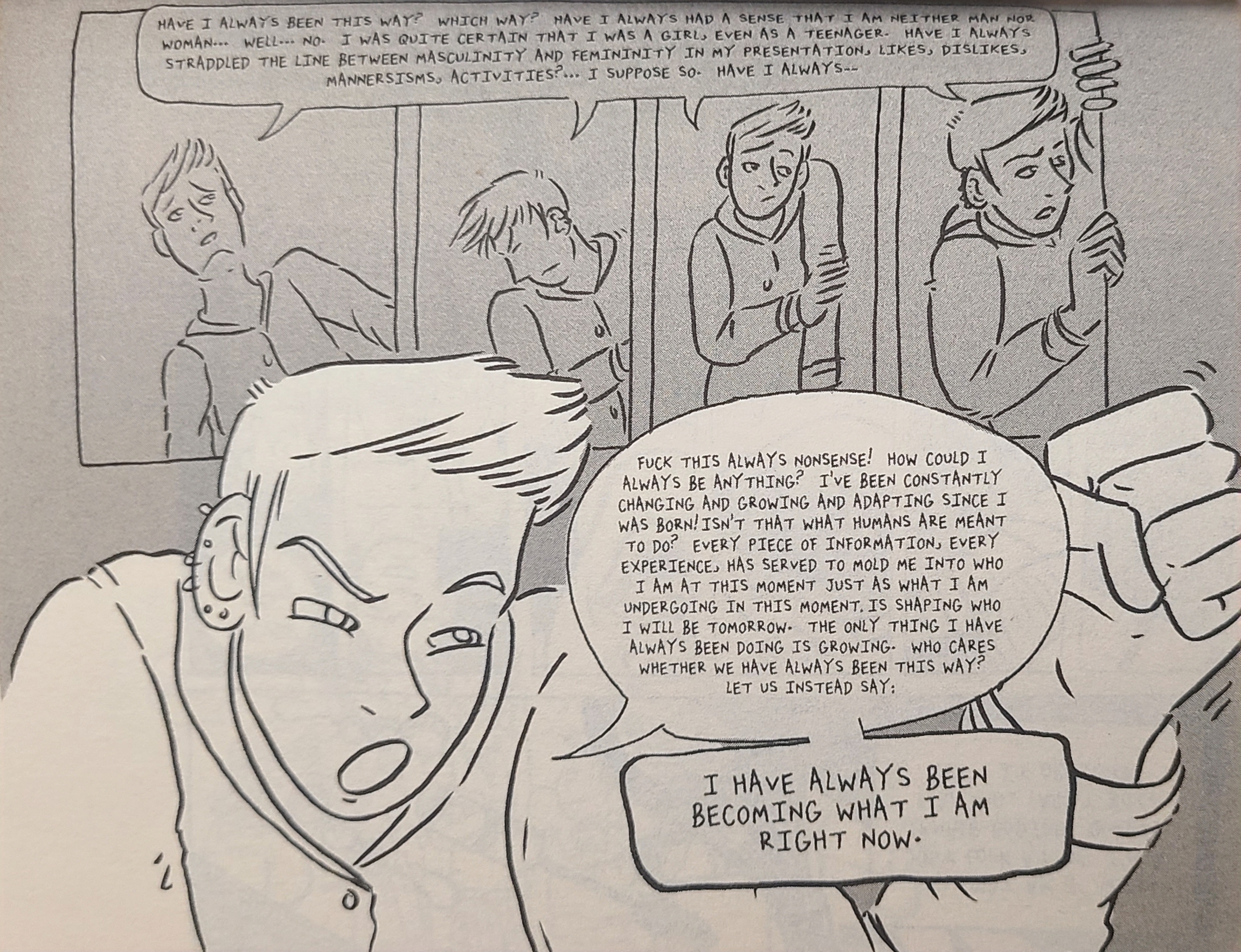
ALT TEXT: An image excerpt from “Gender Outlaws: The Next Generation” page 177. In background: Grayed out images representing an insecure internal monologue. They are saying: “Have I always been this way? Which way? Have I always had a sense that I am neither man nor woman… well… no. I was quite certain that I was a girl, even as a teenager. Have I always straddled the line between masculinity and femininity in my presentation, likes, dislikes, mannerisms, activities? …I suppose so. Have I always…”
The internal monologue is cut off by the person in the forefront, saying, “Fuck this ALWAYS nonsense! How could I always be anything? I’ve been constantly changing and growing and adapting since I was born! Isn’t that what humans are meant to do? Every piece of information, every experience, has served to mold me into who I am at this moment just as what I am undergoing in this moment is shaping who I will be tomorrow. The only thing I have always been doing is growing. Who cares whether we have always been this way? Let us instead say: I have always been becoming what I am right now.”
When I find myself in need (or want) of new clothes, I often find myself in thrift stores. Early in my transition, this was where I shopped. As soon as I could drive, I would make my way to the local Goodwill and buy a $4 oversized rugby shirt. It was low stakes, high reward. I did not have to drop $20 every time I was curious if I might like to wear something, especially since I was still figuring out my style and tended to wear something for a week before burying it in my closet.
Now in my life, I can comfortably buy brand new clothing from target, but I rarely do. Something about thrift stores is so inviting and comfortable, and on the contrary, something about department stores has such Bad Vibes. Foucault kind of helped me understand why.
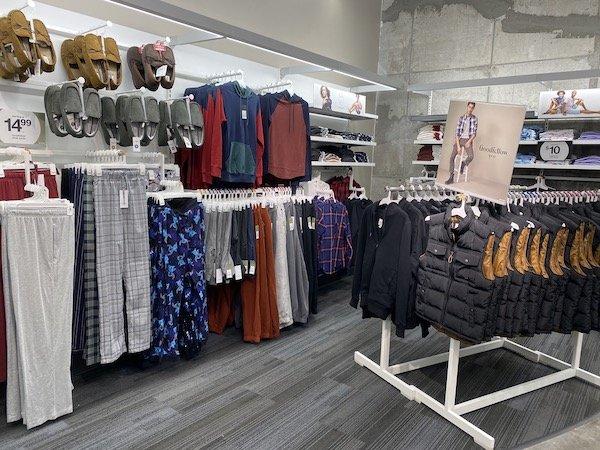
Discipline is written all over department stores. Everything is in its place, to a meticulous extent – clothes folded or hanging from hangers in neat rows, sleek monochrome mannequins with ironed outfits, identical products stacked in rows of tens. The bodies of the employees have to work on their feet, constantly scanning to see if anything needs to be refolded or if they can smile for a customer or answer a question. The clothes themselves are even surveilling the customers, with tags that will sound an alarm if one step is taken outside of the store with them. I think the worst part for me in department stores is how much power I can feel being taken from me when I look at the options of clothes I can buy. The ultimate reduction of individuality is a stack of the same exact shirt in any size.
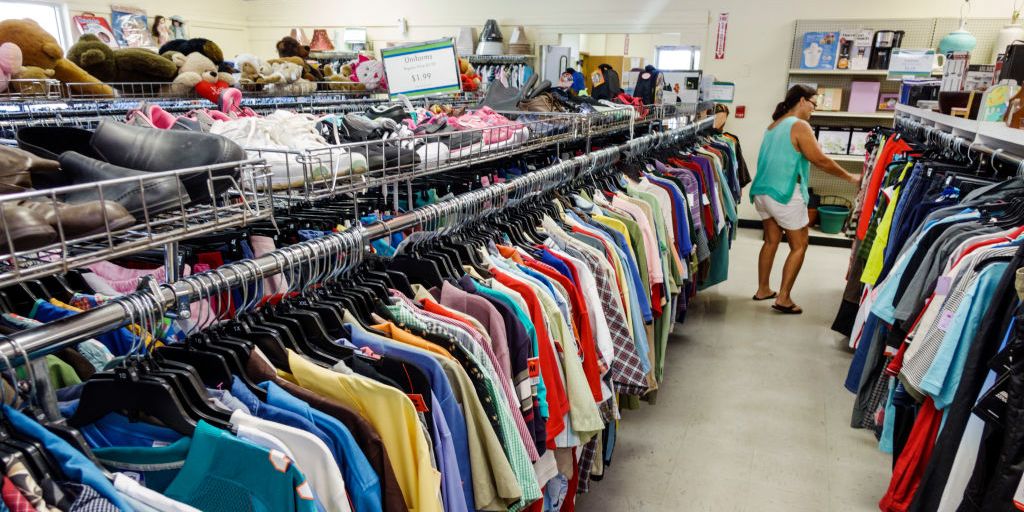
Alternatively, the relaxing, comforting feeling of walking into a thrift store is unmatched. There are so many ways thrift stores subvert discipline and control. Thrift stores defy the intended life cycle of a piece of clothing or product. Our society wants us to buy new, use, and buy new again, and by ignoring this rule, we can escape a kind of control. Further, thrift stores neglect little details – there is imprecision everywhere! Stains on clothing, clothing you can tell has been worn for a lifetime, clothing that has been out of style for at least 20 years, differently gendered and sized clothing all mixed up together. The maximization of time and money is not evident, either. Employees take their time checking out customers, sometimes impressively slow, and products are usually less than $5! Even considering all of these glories, my favorite thing about thrift stores is the community it takes to curate what is inside. Anyone can contribute to what a thrift store/consignment shop sells, effortlessly ignoring trends in society, providing a vast array of options, and encouraging people to listen to their own desires.
Credit to Urban Dictionary for the lovely definitions.
Being born with a body that possesses a vagina has always been…well, there isn’t one word I’d use to describe it. It can be joyful at times, and a burden the next. It can hold me back from feeling immense happiness, and it can also make me feel on top of the world. I never thought I’d have complicated feelings about my vagina, but now as someone who is taking testosterone and seeing the effects it has on this important body part of mine: I can’t help but feel constantly conflicted. Don’t get me wrong, I am in no way saying I want phalloplasty. I, frankly, would prefer if no surgery had to happen within/outside/around my vagina. But I still can’t help but feel this weight of it pulling me back from fully being myself, and fully feeling happy.
Read more: pussy (n.) 1. Nice name for a catAnd why is that? I mean, the short answer is dysphoria. But OK, try a different path: even if I was cisgender, would I still feel conflicted in having a vagina? Could I join the cisgender women in arms and discuss how owning a vagina makes me the most badass, powerful woman on Earth? I mean, maybe. The reclamation of the vagina as an empowering symbol has its appeal to me currently: I’m a man with a vagina, suck on that Republicans! But still, that concept of my genitalia never meeting the “norm” for a cisgender man will always feel as though it’s holding me back. And yes, I know, the “norms” were created by folks who wanted a mass genocide of the Black, Brown, queer, disabled, and all things deemed “other” – so knowing this, why do I still feel the need to appease this massive dictator of a concept?
One answer could be: it’s just easier to submit to society. Another could be that I’m just starting to unlearn these things as the “norm”, so falling into “old habits of thinking” is prone to happen. And, perhaps, the third answer is just that it is also the “norm” for transgender men to feel dysphoria surrounding their genitals, to feel as though they are “lesser”. And maybe that’s the norm that I find myself stuck in: I have to be depressed about my vagina, because I’m trans and society says I have to feel sad about being trans. By actively going against this, and creating joy out of the otherwise dysphoric – it begins to open up a world of new possibilities. The thing that once felt as though it was holding me back, now holds significant power – just as it does for others.
“Buck”, 25, is an able-bodied white transgender man (he/they pronouns).
Read more: Interview with Someone on the SpectrumQ: When did you first suspect you were on the autism spectrum? How did that feel?
Buck: That’s a two fold question. I didn’t have the thought until the last few years that I could be autistic, but I have always known I was weird/different growing up. I knew I was different in elementary school, but I never had a word to explain it until now. But having since found the word to explain why I’m different, it was nice. It explained a lot, but it was also difficult because all of the autistic people I knew growing up were on the high support level, and I didn’t have an image of what I was “supposed to be” as an autistic person.
Q: Would you say your experience is universal, or widely relatable within the autistic community?
Buck: It’s not universal, but probably individual traits or experiences are relatable. It’s a blanket statement that life events and experiences are not always comparable, since my life experiences have shaped how my autism presents – which is entirely different for any autistic person.
Q: What were things you recognized as autistic traits that you did in childhood, and now looking back you’re like “ooohhhh, okay, yeah, that makes sense”?
Buck: I was always the “stick to the rules” kid growing up. I thrived on routines, and was the “narc line leader” in school. There’s one experience where my daycare teachers told us to “grab a buddy” when going out to recess – and when we all went outside, no one continued to stick with their buddy. This stressed me out so much that I ran to the teacher and said, “No one is with their buddy! Do you want me to pair them back up?” to which the teachers went “…no, it’s okay.” When I got older, I then had a decade-long Harry Potter “obsession” (looking back, it definitely was a special interest) – I would discuss intricate plot points to family members who did not care, and had to have every book and read them all (even if it meant buying them on vacation).
Q: What is your favorite stimming activity? Can you describe it to me?
Buck: Oh, I dunno. I’ve learned to mask all of my stims growing up, and I feel like I present stimming in a different way than others. My favorite would have to be scream-singing along to a song in the car, it’s a whole body sensory experience for me.
Q: Do you feel the world disables you as a person on the spectrum? Do you think the world disables other people on the spectrum?
Buck: Like, yes, but I struggle with the word “disables”. I personally have other characteristics that put me at a privileged place to where people will overlook my autism and instead describe me as “eccentric, easily excitable”, etc. Because I am male passing and white, that makes it easier to overlook. I think the world definitely disables autistic people, especially those with higher needs of support. There’s a spectrum, just like autism, where the world has effected people with autism based on their other identities, how they grew up, etc. It’s all intersectional.
Q: What is your point of view on identity-first language? How would you prefer to identify?
Buck: I prefer identity-first language (ie. autistic person), because I can also view it within the context of being transgender. It’s weird to me to be called a “person of transgender experience”, right? It feels like people are trying to separate the identity from the person, but these identities are important to me. You can’t separate being transgender and being autistic from me. But I know that is my personal opinion and feeling, and if others disagree – that’s fine. But for me, personally, it’s identity-first.
Q: What is one thing you wish was less stigmatized about the autistic community, or neurodivergent community?
Buck: Understanding neurodiversity in general. That people think in different ways. Not that there needs to be any accommodations to these different ways of thinking (because I wouldn’t know what that looks like), but just the idea that the way information is presented in a “normal” way doesn’t mean it’s the “right” way of presenting this information. Just the acknowledgement in schools/workplaces that there’s thinking in different types of ways across the board.
Q: Is there anything else you’d like to say or want people to know about you?
Buck: Nope! Thank you.
What would the world be like if it was built for us? The world as it is now is so unaccommodating to anyone who isn’t cis, straight, white, male, and able bodied. Whether it’s lack of gender neutral bathrooms or failure to provide disability access in stores and restaurants, the world we live in now is not built for people who don’t meet the western societal standards of what a perfect body should look and function like. That being said, why isn’t the world more accessible? Aren’t we the ones who decide how the world should work? So why is it that we continue to make these things so inaccessible when it is an easy fix? It’s so engrained in our society that this is just the way things are and that we should just accept it. It’s like the saying “if it’s not broken, don’t fix it” except it is broken and we refuse to acknowledge it. There are so many ways in which the world could be more accessible that just aren’t implemented tin the way they should be. Like why do we not have wheelchair ramps and elevators at every establishment? We could make all restrooms gender neutral as well. Small things such as this would make the world a much more accessible place for everyone to live and be happy. I guess I just don’t understand why we would go out of our way to make things inaccessible for those who need these things. Not to mention it would help everybody, not just those who you would think need it. An example would be parents withs strollers, a ramp would be helpful to them too so they don’t have to carry the stroller up a flight of stairs. Moral of the story, the world could be so much more accessible if we just decided that it should be.
In 1966, Harry Benjamin published The Transsexual Phenomenon, one of the first works to address transness (Benjamin used the word “transsexualism”) as something other than a pathological mental disorder. Compared to modern queer theory this book got a lotttt of things wrong, but in 1966 it was a huge deal and it became the gold standard for medical professionals working with transgender patients. In The Empire Strikes Back: A Posttranssexual Manifesto, Sandy Stone discusses the effect the textbook had on transgender medical care:
“And when the first transsexuals were evaluated for their suitability for surgery, their behavior matched up gratifyingly with Benjamin’s criteria. The researchers produced papers which reported on this, and which were used as bases for funding. It took a surprisingly long time–several years–for the researchers to realize that the reason the candidates’ behavioral profiles matched Benjamin’s so well was that the candidates, too, had read Benjamin’s book, which was passed from hand to hand within the transsexual community, and they were only too happy to provide the behavior that led to acceptance for surgery.”
Continue reading
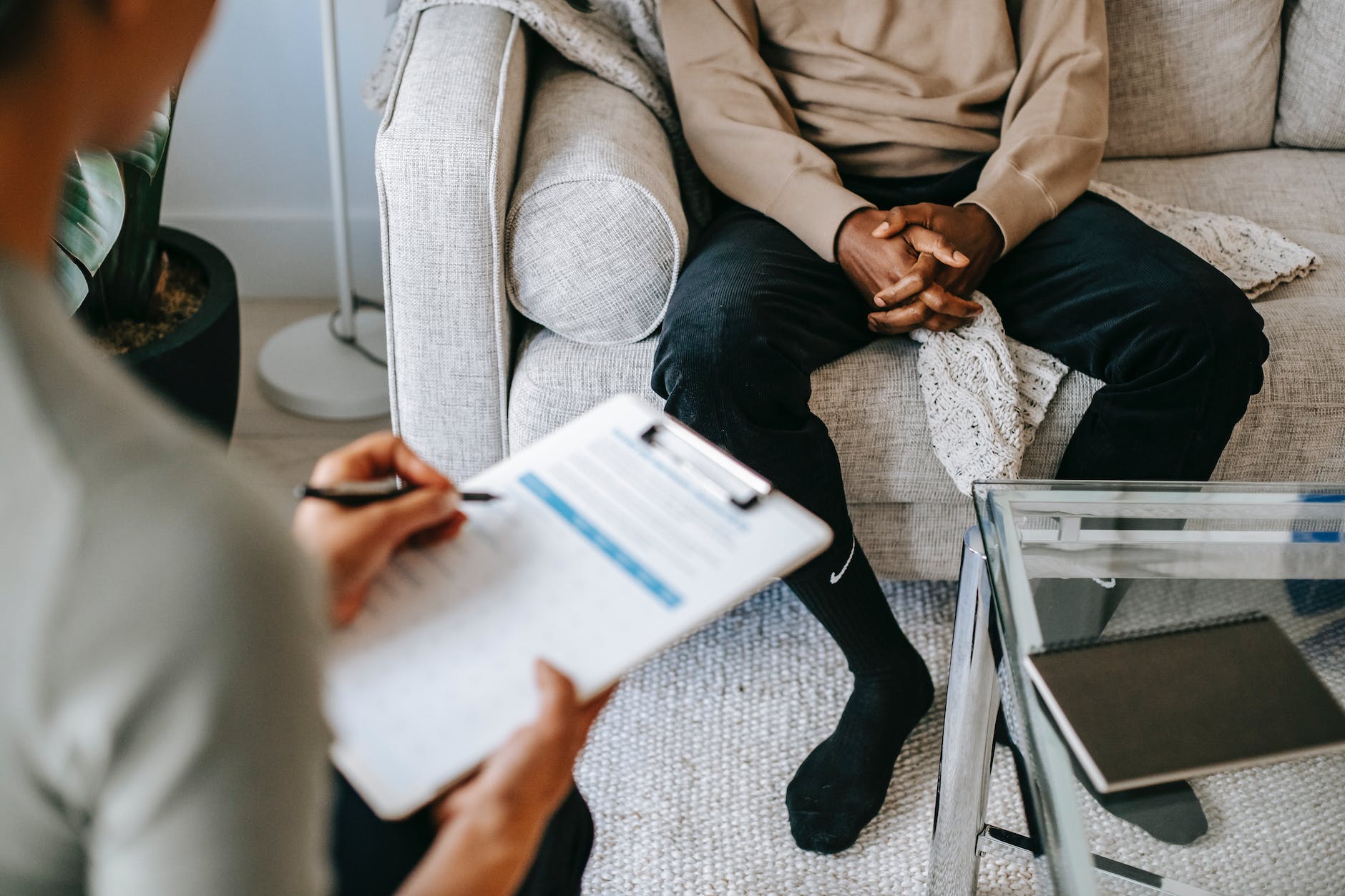
There’s a problem with anti-trans activists trying to deny gender-affirming care to someone diagnosed as autistic. While it isn’t impossible to receive gender-affirming healthcare with an autism diagnosis, some people have reported issues with being denied on the idea that autistic people do not know their own mind or bodies.
This is becoming a concerning issue when you have to either choose to be autistic or choose to be transgender. I do not mean that you have to choose which one to identify with, as I consider myself to be both, I mean in accessing healthcare. There’s been a trend between transgender people having to choose between gender-affirming care or mental healthcare. James Pisani has noticed an issue where trans people sign up for insurance with good transition care, but terrible healthcare. While it wasn’t discussed in the article I read, when it comes to making a choice, you face mental health issues either way. If you choose good transition care, you get more gender euphoria, you face less personal and public issues regarding how you present yourself, even if it’s at the cost of mental health care and autism support. Say you aren’t the majority of people who made the previous choice, and you instead sacrifice gender-affirming care for mental healthcare. Even if you have the best mental healthcare possible, you will still face the dysphoria or other issues that come from being trans. Being transgender is already a toll on mental health (for most people, I think).
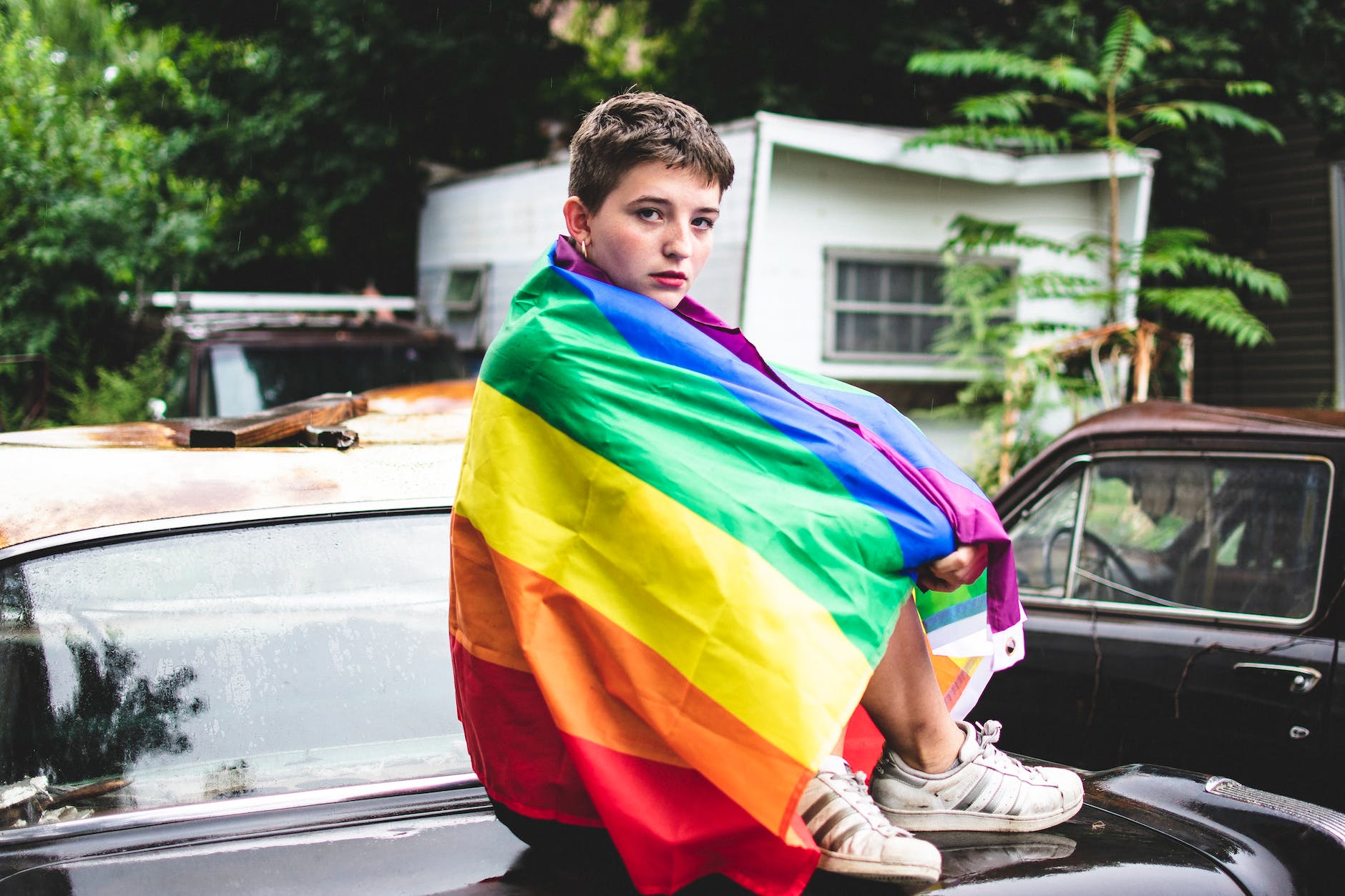
Moving on, there’s already been a consistent problem in trying to deny trans identity for a long time. Especially when it become regarded as a “trend”, instead of wider visibility that made people consider their own idea. This exact thing occurs with autism, where some people see the rise in autism diagnoses and consider it to be a trend, rather than the fact they were always autistic and just never had the knowledge or resources to know beforehand.
Correlation between being gender-diverse and being autistic is still under-research. Some researchers, and myself, think that when someone identifies as genderqueer or autistic/ND in some way, that they are less concerned with fitting into society, and are more willing to consider their identity.
I want to wrap this up by the idea that although there’s an overlap in being genderqueer and autistic, that doesn’t mean either should be taken less seriously. I think there needs to be a pushback against the idea that autistic people are incapable of understanding themselves. Thank you for your time 🙂
Sources:
There’s a struggle at the very heart of my experience as a trans person. The struggle of trying to navigate a society that heavily reinforces the gender binary in ways that most cis people don’t even think about, while also trying to do away with this outdated notion. A prevailing notion on how one does gender is through their performance. Our appearance & the way we use our body signify to others what gender we are. There is nothing in one’s very nature that makes her a girl, it is how she’s been taught a girl looks & behaves that determines her performance as such. I’ve discussed gender in the abstract, but how does it apply to me? How do I experience gender? Well, I am a demigirl, an identity within the non-binary umbrella where I am a girl, but also partially outside the gender binary. Despite this, in circumstances where I have to interact with mostly cishet people, I desire, but do not achieve, to present as femme as possible, to only be seen as a girl, as I don’t trust the general society to grasp that nuance. If someone even for a fraction of a second thinks that I’m a guy, it’ll create gender dysphoria. So if I’m basically trying to present as a girl, this in a way could be perpetuating the gender binary, by erasing the non-binary aspect of my identity in my presentation. But then how does one present as non-binary? There is a misconception that non-binary inherently means androgynous, because you are neither a boy nor a girl, you must not lean towards looking like either. This just creates a gender trinary, which I feel like is only an improvement from the gender binary in superficial ways. It allows for the expansion of gender in so far as it doesn’t mess with the existing structure too much. In other words, as long as it doesn’t challenge the patriarchy. But then, how do I do my part in transforming society such that the general notions of gender match how diverse it actually is? The only satisfactory answer I’ve been able to come up with is for others to be educated about the nuances of gender. After all, I don’t feel that same pressure in queer, especially trans, spaces. In those circumstances I know I’m around people who have the same or similar enough experience & knowledge of gender that I don’t feel obligated to live up to gendered pressures that are thrust upon me. When I’d go visit my ex-boyfriend, or my ex-girlfriend before that, who are both trans, I knew it wouldn’t matter if I didn’t feel up to looking as femme as I could manage, as they’d still see me as the gender I am. So through my experience with other trans people I know it is possible to live in a society that doesn’t require strict adherence to gendered stereotypes. But I can’t really give a presentation on gender to every passerby on the street, so all I can really do is wait, & until then, hope I’m seen as a girl.
Continue readingAs I understand it, the concept of embodiment seeks to move away from the Cartesian mind-body dualism, which posits that our minds and our physical bodies are distinct entities, and towards the idea that we are our bodies. We experience, know, and perceive the world through our bodies, and in return we are experienced and perceived by others through the lens of our bodies. An important factor in our body experience and the way our bodies are perceived is gender. Do I have a gender, or am I my gender? Do I have a body, or am I my body?
Continue reading
