Interracial Relationships

An interracial relationship is when two persons of different races are in a relationship with each other. Interracial relationships has a colorful history that has impacted society in a variety of ways. It has become an increasing common type of relationship that was previously been deterred, frowned-upon, and even criminalized at certain points. Although today’s society has become more accepting towards interracial relationships, there are several ways in which interracial relationships are still seen as wrong.

One of the most commonly discussed and scrutinized types of interracial relationships is that between African Americans and white Americans. Due to the terrible history of racism and the perpetuation of the idea that Africans/African Americans were inferior to white Americans, it became increasingly more important to deter relations between the two races due to the belief in innate differences between the two. Although it is known that race is a social construct and has no biological merit, it has real social implications that impact everyday life and relationships. This can be seen in cases such as Loving v Virginia where banning interracial marriage was finally eradicated in from the law in 1967. The fact that banning interracial marriage was not removed until 1967 showed how important it was in society to keep race relations to a minimum.

The social implications of race still played a significant role in interracial relationships after interracial marriage was legalized. Although it was legally recognized, it was still socially frowned upon. As the United States became increasingly more progressive, the idea of interracial relationships increasingly became more acceptable. However, there are still factors impact these types of relationships including ideas of colorism, becoming a “traitor to your own people”, and the fundamental ideas of racism that has still permeated society despite the social acceptability of interracial relationships.

As an African American woman in an interracial relationship, I have become increasingly more aware of the impact society can have on a relationship. Situations such as being stared at when going out or feeling like I must defend my relationship to others has become something that I have noticed as a part of my relationship. Although race is not a factor to me and has no standing in my relationship, society has created factors that have inevitably made it a part of my relationship. Interracial relationships have become more common in society, but the negative feelings have not disappeared.
Coming out as queer to various loved ones (Pt. 1)

TW: transphobia, homophobia, biphobia

To put my queer experience in a nutshell: I came out as bisexual in 2018, and trans in 2019/2020. In my family, my mom is the only one who knows either. Since coming out and being out to most people, I have felt like a weight has been lifted from my shoulders. I can finally be true to myself and stop living a lie around close people in my life. That does not extend to my father or any part of my extended family. When I say family, I am referring to birth/biological family, but as I say: blood, genetics, nor genes mean shit about who is really family.

Continue reading

Trans Doubt and Acceptance (9/25)


TW: dysphoria

I am trans… or am I??? Part of me knows that I undeniably am. I have had dysphoria for years, although I did not know what dysphoria was or even what being transgender meant. But even still, that tiny voice in the back of my mind likes to sow seeds of doubt in my thoughts. Maybe it’s denial, internalized transphobia, fear, or some other mix of emotions.

Continue reading

The human cost of taboos

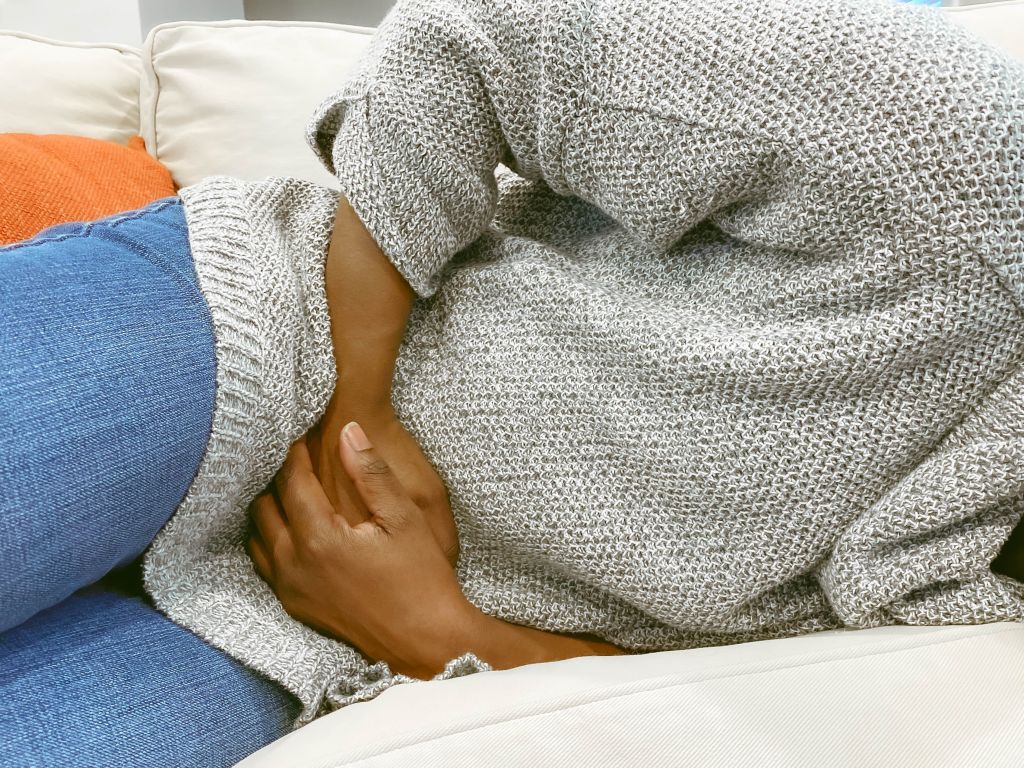
I thought at first I was just weak. No one else struggled as badly with their periods. Clearly, everyone could handle these debilitating symptoms just fine. Therefore I was weak for struggling with something so natural. Then I realized there was something very wrong with my body. I would say something completely normal to me and people would react with confusion. At this point, I switched to feeling like a freak. It sounds egotistical, but at the time I had zero information about menstrual cycles. That’s sadly not an exaggeration. Oh, sure public health classes gave those deemed female basic biology information. But any useful information that could help people like me was never given. Like what are reproductive diseases? Or plenty of women struggle with periods its ok. Here are some ways to get help if you need it. Or heck, a simple don’t be ashamed to go to the doctors if you need help!

Our society tends to normalize the idea of pain caused by periods. However, there needs to be basic knowledge that such extreme pain is never normal
Continue reading

Bad relationship with food

Trigger warning: overeating

Lately I feel so bad after I eat. Eating as a chubby woman is stressful. I don’t get why I feel so bad about the way I eat just because I’m chubby, when there is skinny women who eat the same things I do freely. Whether it’s me obsessing over how much I ate or how what I ate effected me, its too much. I have a problem I guess. I overeat until my stomach hurts. I do it every time and I know I should stop eating. There’s a voice in my head that says stop eating and I ignore it all the time. I’m just so hungry and I enjoy eating so much. Sometimes I feel its the only thing during the day that makes me happy.

This has caused me to gain some weight of course. I also have developed Gastrointestinal Reflux Disease. I have constant acid reflux. Not only that but, my esophagus and stomach hurt often from how much I eat or because of what I ate. But for some reason I’m just so hungry. I know some of it is emotional eating. But I also have a hormonal disorder that causes me to gain weight easily while having trouble to lose that weight. This condition is called PCOS.

I genuinely want a better relationship with food but I don’t know how. The healthy choice is there but I chose the one that will fill my stomach the most. Lately I’ve tried to add more fiber and protein into my diet so I don’t feel the need to eat so much. And this has helped tremendously. I am also trying to listen to the voice that tells me to stop eating because I’m full. My body isn’t telling me that to hurt me or deprive me. I need to listen to my body more. I think one day I will figure it out one day but in the process I am going to try not to be mean to myself and to accept myself.

(If anyone has any tips to help with an undying appetite please comment haha.)

Is my field of study being used to justify eugenics?

I hate that we still use BMI. I was maybe 10 years old when I learned that BMI as a reliable indicator of health was a total myth. My siblings and I would often play Wii Fit, where there was a weight measurement feature. We’d put in our height, age, sex and then they’d determine our health. Mine would always say “At risk of overweight”. I was 5 feet tall (I still am) and around 127 pounds. My mom would reassure me that it was mostly muscle and that I was perfectly healthy. But when I’d go to the doctor, they’d print my BMI on the reports and my status as “almost overweight”.

Continue reading

Strong Is The New Sexy.

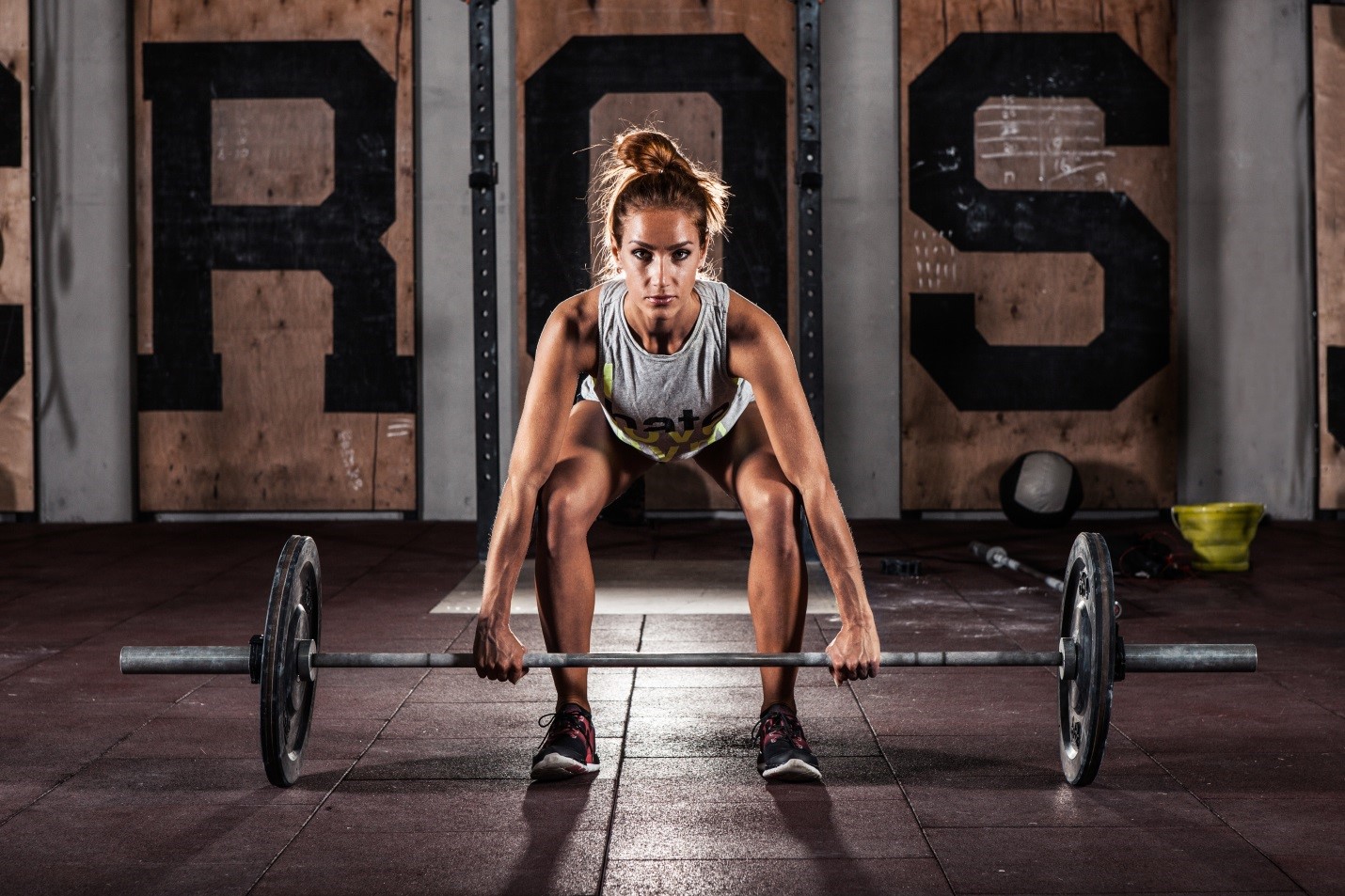
Before high school, you would have never caught me working out in the main gym area. I was the shy, anxious teenager that would rather lift weights downstairs in the tiny women’s gym than risk getting judged by the two-hundred-fifty pound bodybuilders that were max squatting close to triple my weight. Even though the women’s gym had limited space and quite frankly the oldest, dingiest equipment, I didn’t want to worry about potentially publicly embarrassing myself in the main gym. As a middle schooler who had never picked up a dumbbell, I was terrified of what others would think of me when I was working out. I had already thought of the worst case scenarios in my head and that was more than enough to keep me from stepping foot in the main lifting area. 

However, looking back, I realized that my anxiety didn’t stem from not knowing how to use the machines or equipment, it came from a place of feeling like an outsider. As a female, I felt intimated because of the preconceived notions of gyms. If you would have asked middle-school me to describe a gym atmosphere I would have said something along the lines of testosterone and sweaty, muscular men. Nowhere in my description would I have mentioned the word “female” and that was largely due to the fact that gyms have been portrayed as gendered spaces. The body standards and expectations that we place on women doesn’t help either.

Growing up, I remember watching a scene from “Full House” and one of the main characters, DJ Tanner, was trying out the gym for the first time. Instead of heading towards the weights, she gravitated towards the treadmill and elliptical. For so long, the ideal female body revolved around skinny legs, small waists, and dainty arms. Women were afraid to get “bulky” and gain muscle because they feared that they would lose their femininity. This lie has kept so many women, including myself, from stepping foot in the gym because they didn’t want to go against the gender stereotypes that have been placed on our society for so long. 

But, as women have started to embrace the gym and step into more male-dominated fields and interests, a new respect has come from it, let alone even more confidence. Personally, I have never felt more confident in myself after I started lifting weights. In 2020, being a size double zero is less of a concern and physical strength has started to float towards the top of the list for females. As we become more accepting of bodies, gender, and sexuality, my hope is that strong can be the new sexy. Let’s work to desexualize the gym and make it a space where both genders feel at home.

A Doctors Body, A Patients Pain.

I was 21 when I learned my uterus isn’t fully mine to control. No this isn’t about abortion, it’s not a political stance, nor is it here to suggest you should feel one way or another. It’s an epiphany about the medical control of bodies, and how this control of bodies is affecting lives.  

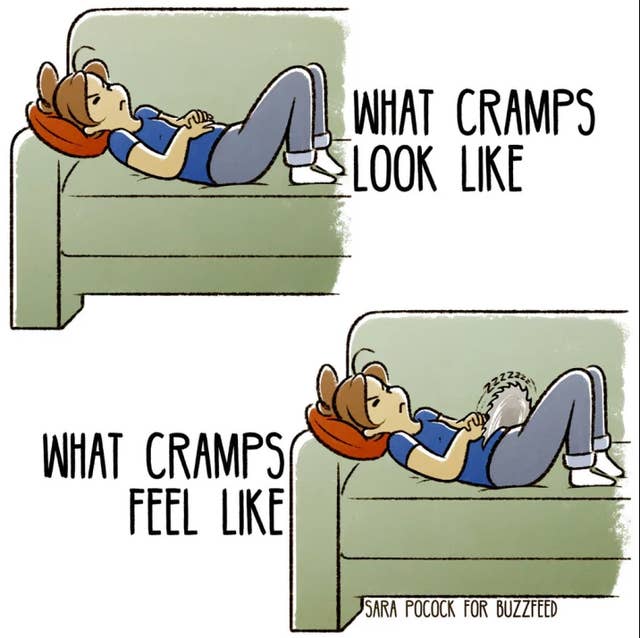
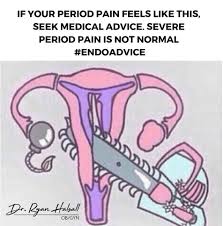
Comic on the feeling of period pain.

When I was 21 one of my close friends wanted to have her uterus removed. She had lived 24 years of her life with awfully painful periods, constant cists, and always with the knowledge that she never wanted to have kids. Sometimes I wonder if she could have taken sick days, instead of puking in the bathroom of our restaurant from the pain, if it would have affected her decision. But our society does not see periods the way she experienced them unfortunately, and she was ready for this. She wanted her uterus out, she had her reasons, and she was prepared to live with her decision. And then she went to her doctor.  

Her gynecologist told her she would not remove it, nor refer her to someone who would. The excuses ranged from a variety of things like, “you’re too young you’ll want kids eventually” to “you have a healthy uterus it would be unethical to remove”. I remember when she told me this, she said something along the lines of “what does a healthy uterus even mean”. 

A throw away comment stemming from disappointment. But the one that stuck. What does it mean? And why does a doctor get to determine it? Surely after years of pain she knew the status of her own uterus. Surely after chronic cists she could determine its health. But in one appointment a doctor who she trusted determined their decision over her body’s health was the law.  

This isn’t about whether it is right for a 24-year-old person to remove their uterus. This is about the medicalization and invalidation that she experienced that day, that most bodies have. As people with uteruses we get told there is more to the story. That our uterus is a being of its own and that our conceptions of our body do not outweigh the science. She was in pain, she felt unhealthy, she wanted something for her body, but the medical world invalidated her pain told her she was healthy and sent her home with an effective slap on the wrist for trying.  

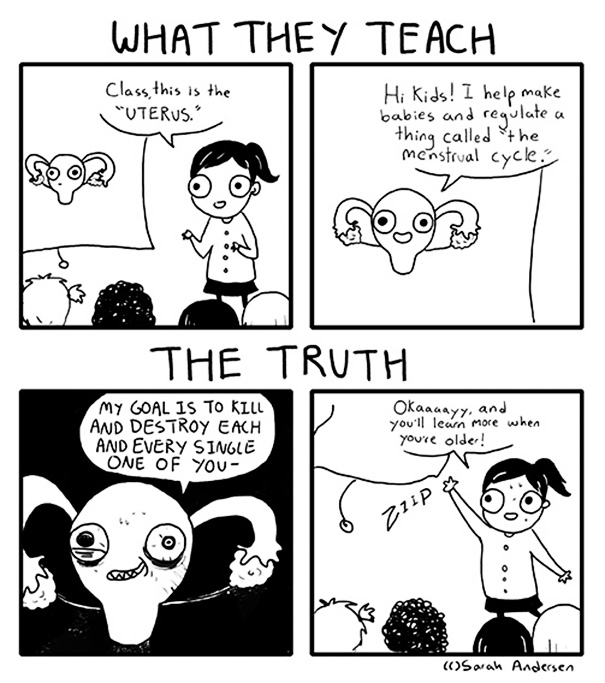
Comic on uterus feeling versus what is taught.

I’m 23 now. She is 26, with a uterus still. And I wonder how she feels about it. Sometimes I still wonder how I feel about it. How far would the unhealth have to go, why does it have to go anywhere? How old is old enough? Why was this decision not hers to make but a doctors to dictate.  

Her doctor made the argument that she had the ideal uterus because of medicalization of body parts. I sometimes wonder if that came from an idealization of her body with a uterus. Was it not the uterus that was ideal, but the idea that as a female the ideal is having a uterus?  

I can’t answer these questions. I won’t even try. But I will use it as a reminder that maybe medicalization isn’t always made for the people in the bodies, but the bodies themselves. A reminder that the ideal medical body is not always the one we have, and sometimes not the one we want.  

What does it mean to be depressed in a pandemic?

We are all going through it right now, but what about those of us that have been in this rut for a while? My family has told me time and time again that “this is hard on everyone”. How does telling me that help? What is the expected response? That I am automatically cured? That I will instantly snap out of my darkness because they pointed out that I am not in fact the only one struggling? I wish that was how it worked. It would save me a lot of money on my medications and therapy sessions.

But the question then occurs to me- how do we help ourselves during this time? This “unprecedented time”? I can’t speak for everyone when I say the outer-world’s behavior has made me feel like I am crazy, but for those of us that have been quarantined since March, everyone that is behaving as though things are normal is driving me Nuts! Not being able to see people, hug my friends, or go get a cup of coffee as normal is pushing me into this dark box that months of therapy once helped me to escape. Sitting in the same room, marathoning the same TV shows, and staring at my screen all day, every day, is exactly what we Aren’t supposed to do. We are supposed to try to get some sunshine, some exercise, socialize, try to get out of the house and remember to brush our teeth and shower. All of that is out the window currently. At least where I am living, people go on walks, but rarely, if ever, wear masks. Socializing is out and what is the point in showering if we are just staying home in pjs? How do we adapt to this new reality for God knows how long?

Trying to stay safe while also maintaining a living is difficult, to say the least. All we can do is try to maintain social distancing guidelines, wear a mask, and hand sanitize All the time. In summary- just try to do your best. Even if that “best” today is getting some food in your system- no matter what it is.

For me? Going to work helps. Zoom calls and checkins. Formulating a schedule. Waking up earlier and petting my dogs. Medication. A more regulated sleep schedule. Small steps. Taking every day one at a time. Social distancing my loved ones. Having open and honest conversations have helped. We are all on the same boat, yes, but that does not mean you need to quiet your emotions or push them down to benefit others. You are valuable. You matter. Your feelings are valid. You are entitled to feel and share your voice. Yes, many are having a really hard time right now, but that doesn’t mean you aren’t struggling too. You are allowed to take up space! Set boundaries with friends and family. Find what your limits are in which you can help those you care about, while also maintaining your mental health. You deserve to be treated well. And the best person to take care of you is You. Remember to breathe and that you are not alone. Someone is in your corner, even if it doesn’t feel like it. You are loved and you are worth the effort.

National Suicide Hotline: 800-273-8255

Intergenerational Body Shaming

(Trigger warning: disordered eating/weight)

One of the first instances I remember being concerned about my weight was sixth grade, after the dreaded FitnessGram assessment in gym class. The FitnessGram consists of a series of different physical tests, ranging from the PACER, push-ups, sit-ups, and measuring body mass index (BMI). This was the first time I became aware of the weights of other girls my age, and naturally my adolescent brain had to compare mine to theirs. When I got home from school, I distinctly remember Googling “is it ok for a 12 year old girl to weigh 112 pounds?”

My relationship with my weight only got worse with age. My family would sometimes make comments about it, which of course made me upset; I would cry to my friends about it and they would insist I had nothing to worry about, that I was pretty, that I wasn’t fat (as if you can’t be both-but that’s another conversation). I didn’t know who to believe. I felt especially ostracized because I come from an extremely health-conscious family- my dad is a physical education teacher, my mom is a nurse, and my sister is personal trainer. Being surrounded by such fit people all the time definitely made me feel worse, and they didn’t hide their feelings about my weight, eating habits, physical activity, etc. I wanted nothing more than to shed a few pounds and be as skinny as my friends. My weight fluctuated some over the years, as I was using the LoseIt and My Fitness Pal apps on and off while being trapped in the binge-restrict cycle.

Despite all of this, I have never been medically classified as overweight. My BMI has always been in the normal range. But I was convinced I needed to lose weight, because my friends were still skinnier than me, women on TV and social media looked better than me, and my family still made comments. This past year, I lost 25 pounds and finally reached my “goal weight”.  Honestly, my biggest motivation was to finally make my family shut up. Now, the comments have switched from “you look like you put on some weight” and “are you sure you should be eating that?” to “you’ve slimmed down” and “what are your weight-loss tips?” And yet, I still feel the same about my body. I still look in the mirror and see fat that needs to go.

My weight loss has made me realize that I may never be satisfied with how I look if I continue to view myself so negatively. I am slowly getting to a place of self-acceptance, and I am in a much better mental state than I have been in years. I have very supportive friends, a loving boyfriend, and a great therapist. I am actively trying to unlearn years of my family’s toxic dynamic with weight, but so much of it was directed towards me in my formative years that it has had a huge impact on my self-esteem and confidence. My grandmother has made similar comments to me that my mom has, so I can only assume that my mom was raised in a similar way, and that many of the things she had to say to me were just projections of how she felt about herself. In both my family and society, women are viewed more favorably the smaller they are. But this is a socially constructed, patriarchal standard of beauty that has taken up too much of my life. I know now that my weight has not, does not, and will never define me, no matter what anyone says. I know that I deserve to treat my body with kindness and love. I know that am more than my physical appearance. This intergenerational trend of body shaming ends with me.