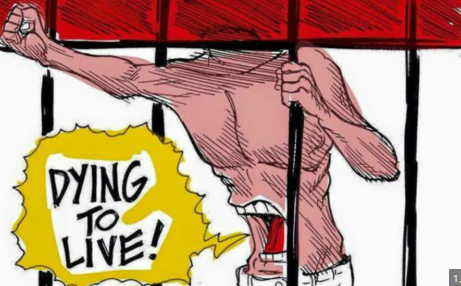
deepest pit within me
Insides creating a void so hallow
hunger has disappeared
Too weak to stand
My neighbor and I check in
Continue reading
deepest pit within me
Insides creating a void so hallow
hunger has disappeared
Too weak to stand
My neighbor and I check in
Continue reading
I have always been a socially anxious, awkward, and emotional person. I was diagnosed with autism and at 16 and I’m 26 now. I’ve spent the last 10 years aggressively pushing myself out of my comfort zone in an attempt to escape my own innate social and emotional challenges. I’ve been sprinting as fast as I can away from the emotionally unregulated little girl I was towards what I envisioned as my “true self”. I’ve been convinced my whole life that my future idealized, neurotypical-acting self with no social deficits is my “true self” and that with enough self-discipline and practice I can become her. Identifying with the undiagnosed, untreated version of myself is scary, because it was alienating and painful to be that little girl. But autism doesn’t go away, even if you try really hard to forget you’re autistic.
In the book Brilliant Imperfection, Eli Clare critiques the notion that disability is something people can or must overcome through hard work in order to thrive, and explains that this belief is rooted in the ideology of cure, which doesn’t neatly apply to most disabled people since so many disabilities are congenital and uncurable.
“But for some of us, even if we accept disability as damage to individual
body-minds, these tenets quickly become tangled, because an original
nondisabled state of being doesn’t exist. How would I, or the medical-
industrial complex, go about restoring my body-mind? The vision of me
without tremoring hands and slurred speech, with more balance and
coordination, doesn’t originate from my visceral history. Rather it arises
from an imagination of what I should be like, from some definition of
normal and natural.“
The person I try every day to become never existed, does not exist now, and may never exist. That is a difficult thing to accept in a world where autistic people are punished for not conforming, for being “weird”, “immature”, “off-putting”, “cringe”, etc. I’ve never felt like I was trying to cure myself, but reading Brilliant Imperfection made me realize how deeply my own internalized ableism is rooted in the ideology of cure. This realization has not magically cured my internalized ableism, but it certainly held a mirror up and opened my mind to another line of thinking that I will continue to explore.
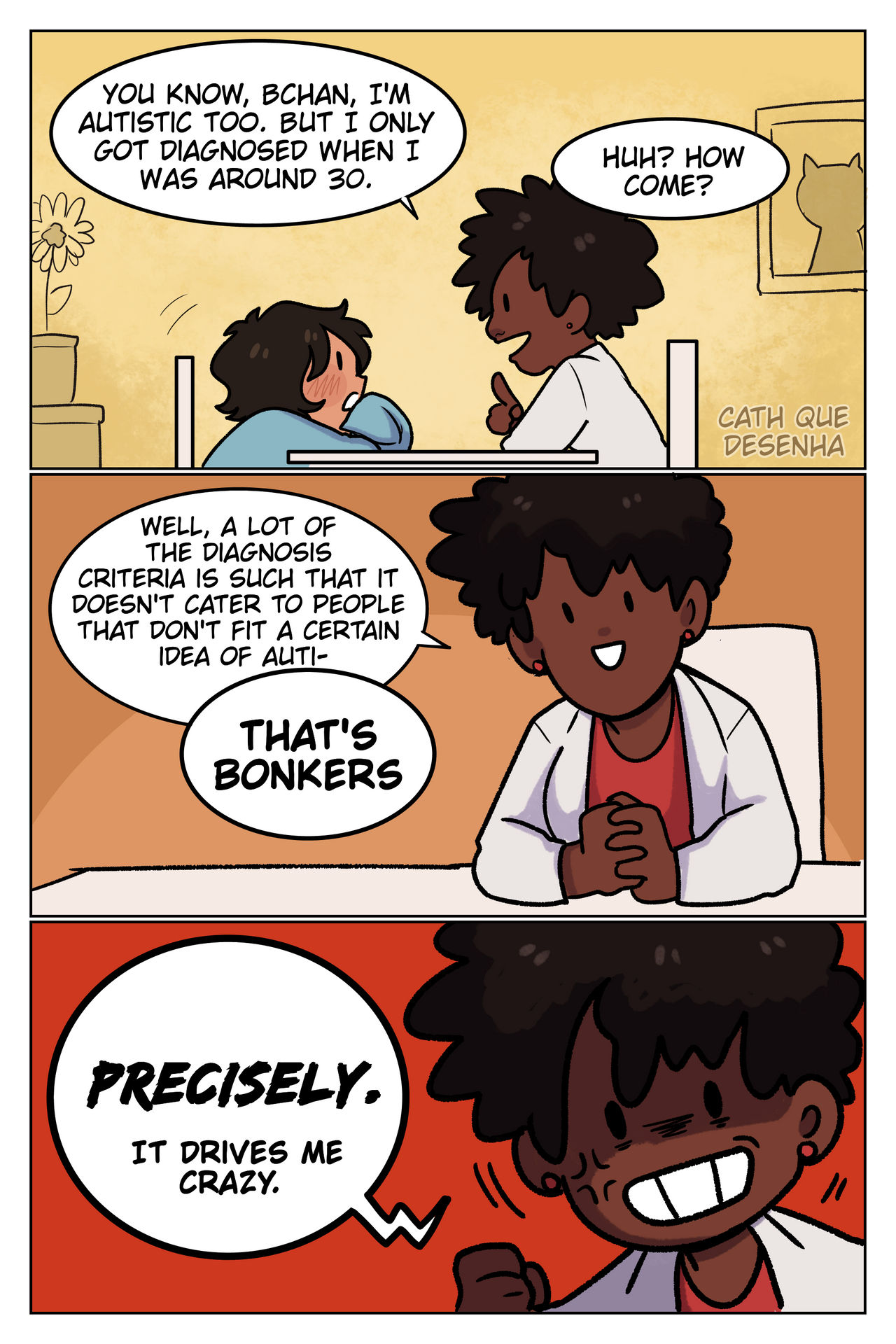
Growing up, I knew how to research. Researching stuff was my jam, and I built that skill through years of new hyperfixations and special interests. So, when I started to notice some psychiatric concerns and neurodevelopmental differences between me and my peers, I got to the bottom of it.
Even after a few trips to the child psychiatric ward during a few incidents in my teen years, I always ended up being blown away by how little the psych professionals seemed to know about diagnoses and treatment options. On top of that, because I had some background knowledge from my own research, it seemed to make psych professionals more dismissive of my concerns. Automatically, if you have done research that leads you to a diagnosis you think fits, you’re angling for a diagnosis just cause you want one and not cause you need the help. I have written a few of the particularly frustrating incidents below. Most incidents are from Johns Hopkins.
I’m not sure what the rules are for becoming a psych professional, but this track record is rough, and not nearly the worst I’ve seen. Please do better.
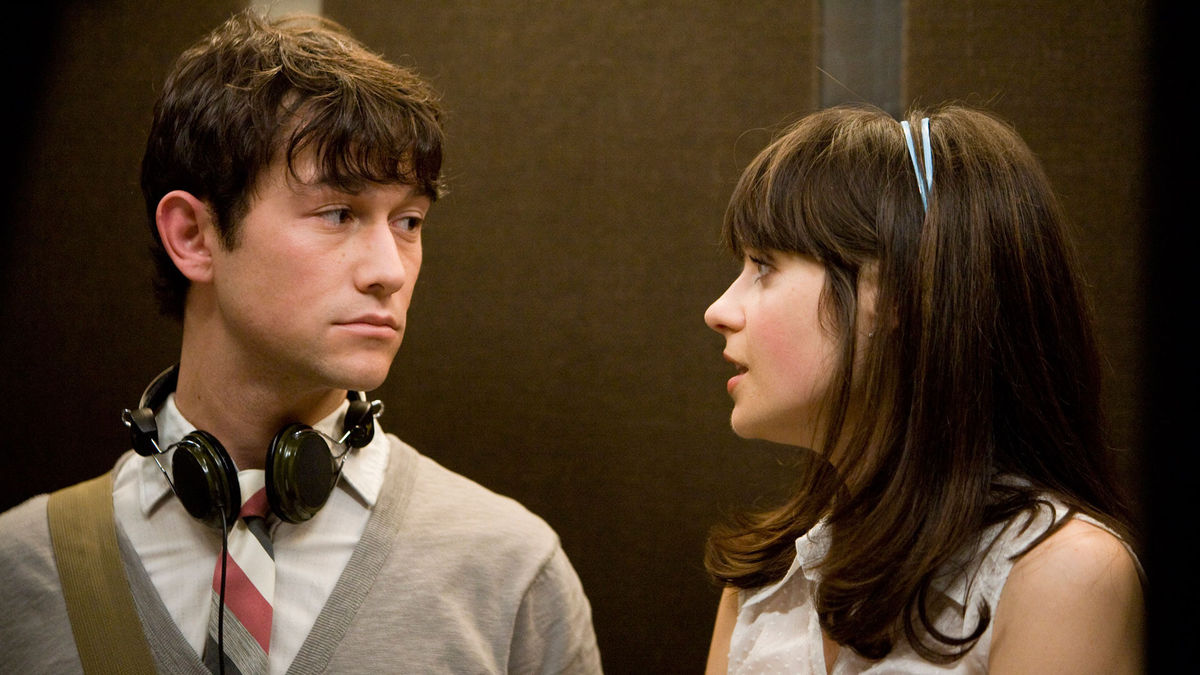
My guilty pleasure has always been romantic comedies and even though a lot of them fall in the girl and guy meet, they fall in love, something goes wrong/ misunderstanding occurs, they separate for a little bit and then they reconcile and live happily ever after, one of them stands out. 500 Days of Summer(spoiler warning even though the story isn’t even linear) is a story about a guy who meets and then falls in love with a girl who likes him back but doesn’t really want a relationship. It goes through a lot of different scenarios where eventually it doesn’t work out and he finds someone new at the very end of the movie. This movie is a perfect example of how the culmination of lived experiences can shape how you view love.
I am absolutely a romantic. I’ve been surrounded by love my entire life, my parents, my grandparents, my aunts and uncles all seemed to be in love and I wanted a piece. My first watch, I completely agreed with the main character. How dare this girl who expressed her feelings of not wanting a relationship with him end up not wanting a relationship with him. The whole point of the movie went over my head and they even tell you at the beginning. After a few more rewatches(I enjoy this movie a lot) and a little bit of growing as a person, I finally start to understand. And the whole reason I was able to understand why what happened wasn’t just one persons fault is because I’ve had more experiences with love since then. Perception of love can be so different from person to person and it’s most likely why love is so difficult.
The opening of the movie is of the main character and the girl’s upbringing, showing how the main characters perception of love was shaped from movies and music, stemming the hopeless romantic mindset while the girl’s perception of love was shaped by how her parents divorced when she was young which stemmed the cynical mindset and we see how their mindsets clash during the movie. It is just so interesting how much experiences and very little or subtle changes in a life can change so much about someone. Always keep a open mind and a open heart.
I look at myself in the mirror
My prescribed vision has never been clearer
But my eyes start to blur as the tears roll down
I don’t feel beautiful, I feel like a cow
I look at myself in the mirror
My prescribed vision has never been clearer
But my eyes start to search for every flaw that I have
The stretch marks on my skin, the hives on my back
A thought claws out from the back of my mind
“This body of mine needs its shaping relined”
Through tears I stare and poke and prod
The origins of that horrible thought
At the end I find a whole vicious plot
To get me to surrender my joy
I will not
I look at myself in the mirror
Shaken, battered, bruised by the world
The expectations placed on a black man to be strong, savage, and fertile have gone too far
I break the chains that have held me down
That prescription was wrong but I can see clearly now
They lied about my body to me
They said big was worse and black was dirty
They pushed me to hate myself and for what?
So i could give them more money, be docile, unfree?
If they want a savage, then that they will see
It is savage to love yourself thin, thick, sharp as a diamond ring
They called my ancestors savage for doing the same thing
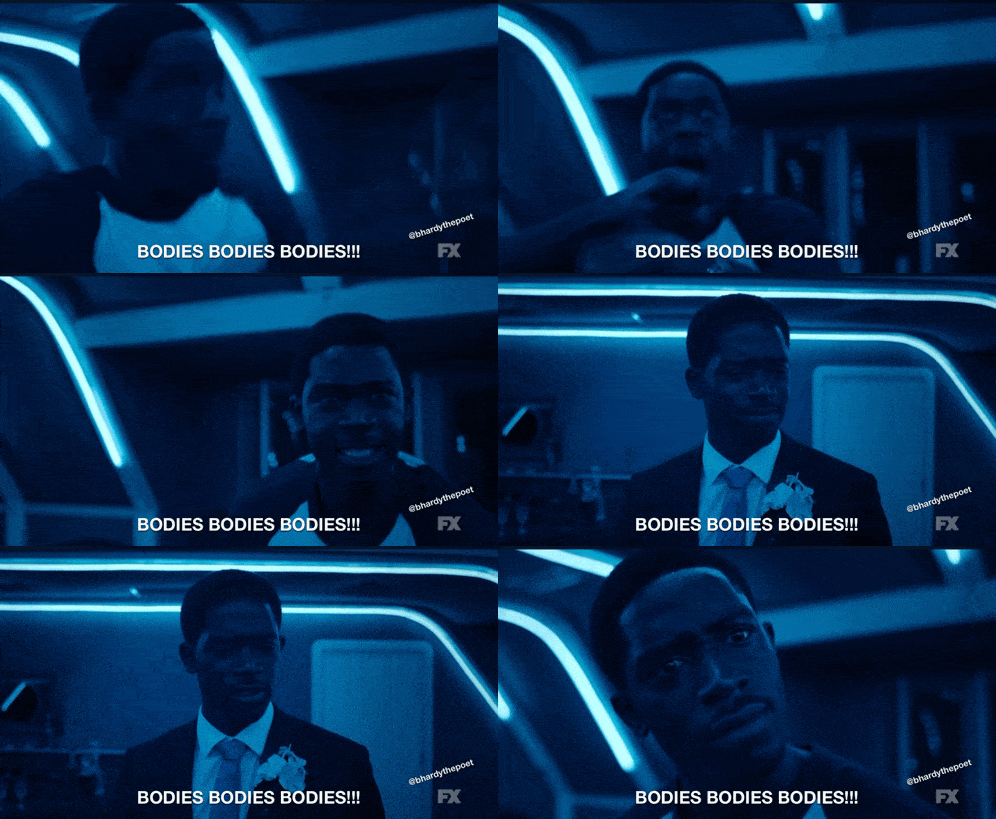
Mind
Is it My Initial Neglected Domain
or am I condemned to haul its weight like a beast of burden?
Do I really look like that, or is dysmorphia the mirror that lies louder than truth?
Black: Behold Limitless Anger and Cold Knife blades
Do I matter — or only when we’re at Dave & Busters?
Am I too dark for safety or too light for belonging? Will always be seen as armed and dangerous when your skins a weapon
Bodies
Disabled: Doubtfully Invisible Says All But Longing for Equal Deservance
No chair beneath me, but pain still builds its throne.
If they don’t see it, will they call me a fraud instead of human?
LGBTQIA+: Living Guilty Becuz They Quiet Individual Advocacy
I’m not confused — or am I?
My existence is not a debate;
I am a real (Wo)Man, whether they choke on the words or not.
Bodies
Fat: Fitting All Tropes
Every step, a verdict.
Every glance, a sentence.
They call it “the easy way out” While I carry a lifetime of shame like armor I never asked for.
Jailed: Jacked And Incarcerated Living in Empty Darkness
Does dignity only belong to the unarrested?
Can I get common decency without starving for it?
Is a calendar cautious— or just another thing denied?
Bodies
Protested: Posting Radical Only Tweets for Everyone to See The Everlasting Death
The heat took everything, but their cameras took more Do you smell that? That’s a life unraveling while they chase the perfect angle. Did the flames illuminate enough for your feed? Was someone’s final moment bright enough for you?
Bodies
After watching the United in Anger documentary and reading You Are Not Entitled to Our Deaths by Mia Mingus, it really made me sit down and think about how performative protest can be at times. I struggle to understand why that is, because the main foundation of every protest is the collective understanding of the mutual struggle that they have and the common cause of said struggle. For instance, the exclusion of disabled people in the talks surrounding COVID, as noted by Mingus, the documentary talks about how many people did not join in on the ACT UP protests until they received a diagnosis of their own. Likewise with the documentary mentioning how some of the AIDS reform was regressive because it was male-centered in how the disease can manifest itself, so women were still left out because some of the criteria that one would need to be able to get some benefits, like common illnesses that come along with a diagnosis, were not common among women, and they were still suffering. Even beyond those examples, looking at the women’s suffrage movement and how white women were hesitant to include black women, for fear that their demands would not be met. The beauty of protests is that people from different walks of life come together and no one is left out; their voices are not trampled over by other parties. Must we wait until we have a personal stake in something before it matters to us? What good is protest if we don’t bring everyone to the table?
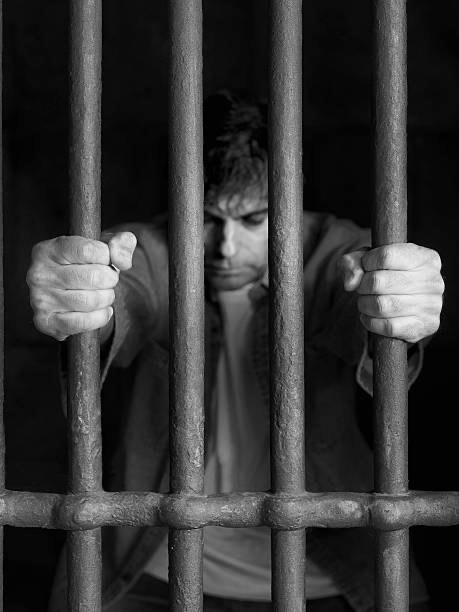
“The Strike” the documentary about the 2013 California Hunger Strikes, I found to be a very captivating and intriguing watch in class. I personally didn’t know about the strikes until we watched the documentary, but I was personally baffled that this was even able to happen to these men in solitary confinement. Watching the documentary, though, I realized a startling truth… most men in society, in many ways, experience a quieter, emotional version of solitary confinement. The men in “The Strike” were put under horrendous conditions by the California prisons; eventually, when word got around that a planned hunger strike was going to take place, it was easy for many to get behind, really, because when you take away someone’s social interaction and time outside and force them to live the same day over and over again, you’re forced to take action on the only thing you have left, the body. For the men, their bodies were the only thing they had control over, so they found a way to rebel by starving themselves for the betterment of their conditions.
While the conditions aren’t the same by any means, men walking free face a similar imprisonment placed on them by the greater society at large. Even though it’s no longer the 1900s anymore, the stigma of men having to be stronger, masculine figures who do not express emotion and provide for the women and children is very much still alive and well. It’s a quieter, more invisible form of imprisonment; boys can’t cry, can’t ask for help, and don’t talk about what hurts because at the end of the day, even if they do talk about what hurts and cry, they show weakness and failure to be a pillar of strength in society’s eyes. And like the men in “The Strike” the only agency they do have is that of their own bodies, throwing that pent-up emotion in the gym, building muscle, cleaving away the pain of their psyche by tearing the muscle fibers keeping them whole. Becoming what society wants, a strong man who doesn’t show weakness, is what true strength is to society.
The reason I’m able to describe how it is, how these invisible bars keep men inside, is because I am one of those men; a subconscious reason of why I started going to the gym is because I was skinny as a twig in middle school, and I was made fun of for my poor posture and the fact that you could see my rib cage with my shirt off. I couldn’t really vent any of these feelings to anyone; my dad is a stoic person who himself doesn’t really express a lot, unless he’s drunk off his rocker. And my mom, who is the complete opposite of my dad, can’t really understand me, even when I try to convey my anger. I just had to shut up and forget. That was in my early development years, and so into middle and high school, I never really talked much. I had friends, but I was known as a quiet kid. It wasn’t until high school that I started taking serious issue with how I looked and how others viewed me. I wanted them to see me as a strong, dependable person, so I started working out. Not choosing to, but was suffering in silence; this was also the time I realized that I hated myself. I distinctly remember telling my friends that I hated myself, after years of never really talking about how I felt. This was how one friend responded to me, “No, you don’t hate yourself.” After this point, I lost faith in trusting others with how I felt when I started putting all that pain and feeling into running and lifting weights. This is how I’ve been living for years now, not really thinking that anyone could or would want to hear what I truly felt. It’s been put into my head, “Men can’t cry,” and I think a lot of other men would resonate with this feeling or story of myself.
Roughly 75% of deaths by suicide in America, Canada, and the UK are by men, and after years of pent-up emotion, the final state a man has to go to rebel is by taking his own life. I myself have faced thoughts of suicide, but never planned for it; it’s only been up until a few months ago that I was able to confide in really close friends about these past feelings. Nothing really gets me to talk much about a certain topic or subject, but I champion and proudly stand for the mental health of men everywhere, to please go and find help, and to realize that it is ok to cry in this painfully messed-up world. While I’ll probably never go through the trials and tribulations of the men in the California hunger strikes, I can connect to the feeling of rebelling against your own body to make a statement to others and having agency over the one thing you can never lose: your body.
It’s been 2 years since I’ve been to the doctor. 730 days for every part of my body to go wrong. But isn’t it always wrong if I know what I’ll be walking into at that doctor’s office? The wrongness of being fat.
If there is one thing I’ve learned from the discourses of this class, it’s that our bodies will forever be changing. So too will the conversation surrounding how we should exist in our bodies, if we should exist in them at all. Our bodies are marked by the same touch of vitality that gives us life, yet we are all subjected to its rule. Society demands it has the authority to rule over something so changing, so unruly. We know how this goes: Authority that demands really has no power at all. But the illusion of power proves authentic in our ignorant minds. If we can be convinced that are bodies need changing, need fixing, the authority that preludes us doesn’t need anything else. We have become the prisoners in our own mind. Change the word bodies, and the message continues to apply.
Let’s get back on track. The medicalization of fat bodies is the evil that I reference in this blog. If it wasn’t known before, we know now how people have been fighting for decades for the right to exist in their body indisputably. The Fat Underground of 1972 emerged after the 1967 protests in Central Park, where people (500 of them) gathered to eat, burn diet books, and ultimately exist as “loudly fat.” It is important to note that continuous efforts of fat equality isn’t just a result of societal ignorance — that is, even if society was completely accepting of all bodies, the conversation had in 1972 about bodies is not the same as in 2010, nor is it the same now. Our bodies are everchanging, and so is our body’s rhetoric.
The Fat Underground seemed to serve as rebellion, more so than the protests from before. This movement now had a target in hand, encompassed in the medicalization of fatness and those who aided in it: “Doctors are the enemy. Weight loss is genocide.” These words were cutthroat, and still carry weight with them (no pun intended). But how do these words help us now? Where does liberty and justice meet health and motive? It seems counterproductive for the fat community to reject all medical models by indirectly rejecting their health. It is based on the rational discomfort of stepping into a space that was not made for you, or me, or them. But I still did it. And so did you?
It has been 730 days since I’ve had a medical professional tell me what’s wrong with me, and yet I still sit with the guilt that I have no idea what is right with me. We can reject the pretenses that still make us small, but where does that leave us in terms of vitality? I conclude, in all two decades of my life, that if our medical models don’t serve us (not even just the fat, but the disabled, and the socially-determined “wrong) that we must create the spaces that uplift what is right with our body.
Maybe the action is not successful, but the rhetoric can be. If the Body Positivity Movement, outside of its target audience, is challenged by a fatphobic agenda, existence can no longer be the only protest. The voices behind the faces behind the bodies behind the fatness must coexist as one.
In 5 months, I’ll break my 2 year record. Here I come!
Something that I often ponder about is the utter chaos within our country’s prison system, and the many people who are severely wronged by this daily. While the U.S. seems to have an endless number of flaws, this one really gets me wondering. I haven’t done much research on this particular topic, but I do know that innocent people, or those who may have committed smaller crimes, are much too often wronged with extensive prison time. From what I’ve heard, it seems as though our country doesn’t allot enough resources to helping those in prison who may not actually be guilty.
What I wonder about is the fact that something this threatening and life-changing could truly happen to anyone. Who’s to say that you won’t be in the wrong place, at the wrong time, and end up being blamed for a crime? It’s scary to imagine that one’s life could be turned upside down so quickly, simply due to unfortunate circumstances. Being in prison is no life to live, and I’m sure many in prison would prefer death, which usually isn’t an option. I simply cannot imagine being trapped and isolated from the world, and any sense of freedom, especially knowing that you’re innocent.
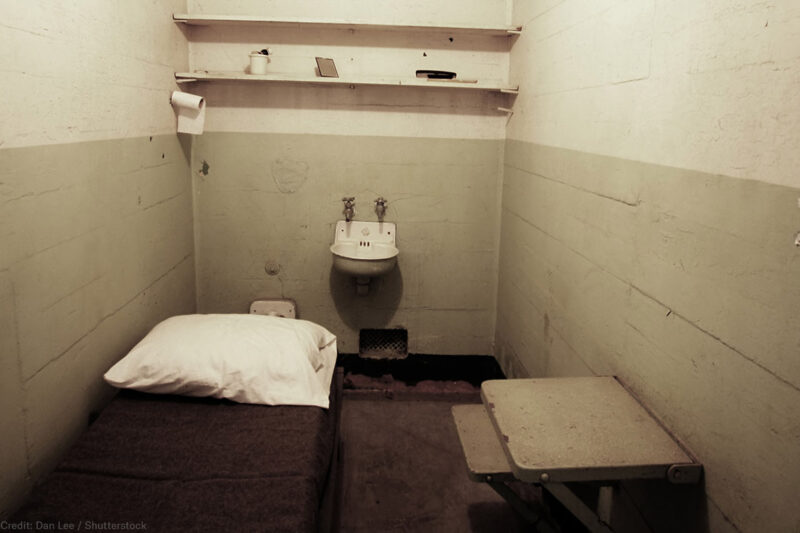
This relates to the film that we watched in class, The Strike. Another aspect of the U.S prison system includes the concept of solitary confinement, which is when prisoners are locked up and kept away from social interactions, pretty much 24/7. In The Strike, the prisoners discussed working out in their cells to stay busy, having food and books delivered to their cells, and talking to each other through the vents during their ‘outside time.’ While some prisoners truly deserve the worst of the worst punishment, people are too easily placed into something as mentally tormenting as solitary confinement. I can only imagine how a person would lose themselves and their identity, hobbies, dreams, and so much more by being put through this psychological torture.
The U.S prison system is consistently in need of major reform.

