Long Hair Don’t Care

I have a confession to make.  I do not shave my arm pits.  Hell, I only shave my legs if I’m feeling saucy and have clean sheets because nothing is better than smooth legs in clean sheets.  (That’s a lie, a lot of things are better than that.)

While I like to think of myself as a badass feminist who says fuck you to anyone and everyone who tries to tell me what to do with my body – especially in regards to body hair—I am not.  That’s my second confession.  I wish it was that simple.

I don’t think it’s ever that simple.

Continue reading

Women Looking at Women’s Bodies

I came back to my apartment the other night to my female roommates sitting together and discussing their bodies. Bodily dissatisfactions were exchanged, such as, “I wish I has bigger boobs,” “I want a toned butt,” “I hate my hips,” etc. I stood in the kitchen fixing myself dinner, occasionally chiming in but mostly observing this conversation (as a possible topic for a blog post was brewing in my mind). My roommates gathered around a laptop and began to look up pictures of their desired physical attributes. I listened to exclamations such as, “See, that’s the kind of ass I want!” and “She has perfect skin!” However, the tone of these comments quickly changed; cries of “I do not like her body,” “Eww, her boobs are so far apart,” and “That’s not a cute butt” abounded.

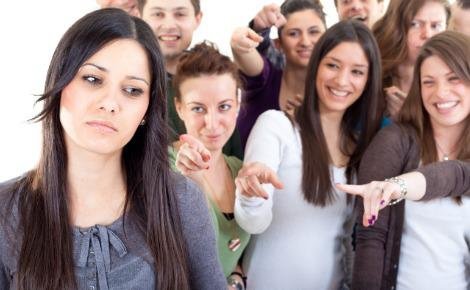
women judging

Generic photo of female judgment
Courtesy of allparenting.com
http://www.allparenting.com/my-family/articles/968537/women-judging-women

I found it interesting how, in just a matter of seconds, their comments went from positive affirmations to scathing criticisms, but I remained cool and collected as I was acting as a secret agent of the Unruly Bodies class. However, after I heard one of my roommates say, “I hate when thighs touch. I think it’s gross,” I was taken aback. This wasn’t a put-down of an anonymous woman’s touching thighs on the internet, but a put down of touching thighs in general—thighs that I happen to have. Suddenly I had become one of those women with an undesirable body.

Continue reading

He called me a waste

The guy I went to prom with called me a waste the day I came out to him. He looked me in the eye and said this with a smile on his face as if it what he were proud of what he just said. This wasn’t the last time something like this had ever been said to me. On multiple occasions I have been called “selfish”, “unfair”, and “a waste” by a number of men because of my sexual orientation. And on every one of these occasions I ask them all the same question, “Why?”. Continue reading

Club Affairs

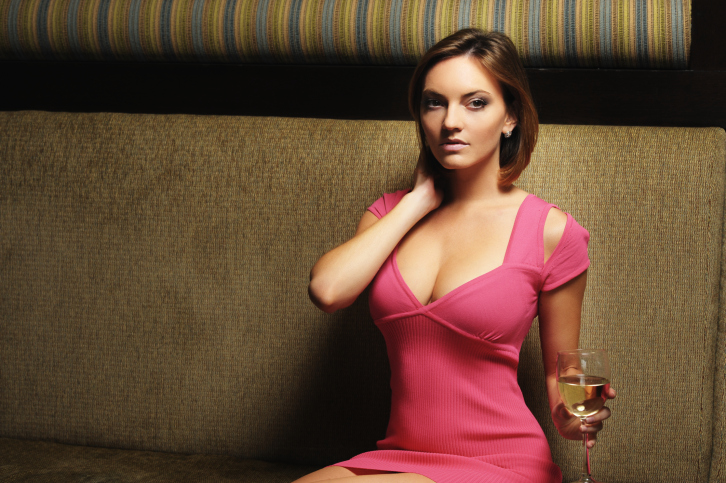
typical club attire


The media consistently portrays an image to women that they must be sexy in order to attract men. Magazines and television shows depicts images of women wearing short skirts, high heels, heavy makeup, and shirts that show their naval in order to be sexy. The media and popular culture alike encourage women to flaunt their cleavage, silky legs, buttocks, and etc. Normal and acceptable club attire requires women to wear a tight short dress or skirt with high heels. These women are constantly being bombarded by sexual advances from men who assume these women are inviting this attention because of the way they are dressed.

When I started going to clubs at the age of eighteen, I wore the expected scandalous clothing and thought nothing of it because it was normalized. I would have felt out of place if I covered my body, while everyone else was showing off their assets. One night at the club, I was wearing a short and tight zebra print dress. The dress hugged my tightly and I was wearing very tall black high heels. I received a lot of attention in that dress from men mainly and I began to feel confident (not that it should have). One man in particular was originally conducting himself in the appropriate manner by asking me to dance and inquiring if I wanted water. As the night drew on, we still continued to hang out at the club. Once the night was over he offered to walk with me and my group of friends to my car. Before I approached my car, this guy held my hand tightly and forcefully tried to kiss me. Scared I started yelling and one of my close guy friends rushed to my aid. When my guy friend asked what he was doing he stated that “it looked like she wanted to do than just dance with at the club”( because of the way I was dressed). At that moment I realized the very message that I thought I had to uphold of being sexy due to the media almost cost me my safety.

In this country women are under a great deal of pressure to be feminine and one of the ways to achieve that femininity is to have a sexy appeal. Many women get blamed when they are rapped in this country because people claim if “she hadn’t been wearing that outfit, no guy would have assaulted her” yet the media claims in order to attract a mate one must appear sexy. That statement directly correlates to blame the victim phenomena. No woman invites rape because the act is nonconsensual in nature. The effect of being perceived as sexy in this country has both negative and positive connotations.

Dysmorphic Friends

One of my closest friends is a fashion stylist. She chooses outfits, hair, makeup, and general looks or moods for photoshoots for natural makeup companies and independent designers. I have modelled for her in the past even though I am not a model and don’t look like a magazine model. I also model for my own Etsy store, selling vintage clothing. My friend has had eating disorders since puberty and I have not. I feel that her eating disorders are a sign of privilege and she feels that my “poverty genes” and post thyroid cancer synthetic metabolism are a sign of privilege. The arguments are frequent and comical.

I feel that it would be insulting to her profession and life’s path to say that her involvement with fashion feeds her disorder, so I often try to tell her eating disorders are a result of a sexist, competitive capitalism, a first world problem, and that if she stops aestheticizng the super young and super thin, wheat colored waify girls with vacant expressions, she won’t hold herself up for comparison to them. I tell her to keep her job but change her aesthetic, make it weirder, and I tell her she’s a misogynist. Then I go on like a hypocrite and smooth out my hair, put makeup on, and have my boyfriend shoot photos of me for Etsy, to make money. And I do make money. But recently, editing and cropping photos of myself, I feel like I look OOLLDD. So I call my friend and ask her for a disorder that will make me less old, less short, less frizzy, less dark, less tired. And there isn’t one. I’m really not sure what I’m aestheticising, but even though I’m perfectly happy with my weight I still feel the need to critically tear apart whatever I can about my own image, down to my assymetrical smile or uneven hair texture or slightly more almond shaped right eye than left one. Little little minute stupid details. All while knowing that I’m making this image public by my own free will, by my need to pay the bills and put gas in my car to get to school. Because those waify wheat colored girls are out there, and my tiny little capitalist enterprise is knowingly in competition with them, and growing up in the 80s and 90s, between Debbie Gibson and Kate Moss, I never felt that my features were pure or innocent, only exotic and “olive olive olive”, and now getting older.

Can a woman be this self-critical and also be a feminist?

Fed Up With Facebook

“Does she seriously think that she looks good???? Yuck”

“It’s like those ladies at the beach or pool who wear bikini’s and their fat it bulging out and yet they think they look good! Good enough to appear day after day like that! Ladies, think of how many eyes you are hurting!!! Lol.”

“She looks so ridiculous…cowhide, leather, beef jerkey, lost at sea…exactly. Attractive…NOT!!! She truly looks like she is in her sixties. Whether she actually brought the child into the tanning bed or not, she is a terrible role model. She needs some psychiatric help to get over that obsession with tanning.”

Although I am not the biggest fan of perpetuating harmful ideas in order to make a point, I am just about to do that. Even though I find the above comments repulsive and upsetting, I think it is important to pull them away from the Facebook context and to put them on here so that our blog readers can consider what they have been seeing on Facebook.

The above comments are in regards to the recent story about the mother who had her young daughter use a tanning bed even though it is against the law. I will be honest, I do not know a lot about this story, perhaps I would have read more about it if I hadn’t seen these comments on Facebook bashing her. I am not defending her actions, but I also want nothing to do with condemning her either, I don’t know her.

However….

If I were to take the route of acting like I know something about this woman, I would say that it does appear that she has some sort of disorder, maybe an addiction. If we look at the story through this perspective I wonder if these people who made the above comments would be saying the same kind of things. Let’s replace the addiction of tanning with alcohol. Would this public speculation even make sense anymore? Because of the physical marker of this disorder, people feel that they are able to openly comment of the “unsightly” nature of it. Then again, maybe these same people think alcoholics are disgusting too. The physical aspect of this disorder mixed with the chance to criticism a woman in her role of being a mother has created a Facebook freak show frenzy. How about we all do ourselves a favor and think before we post?

Do These Pants Make My Ass Look Bisexual?

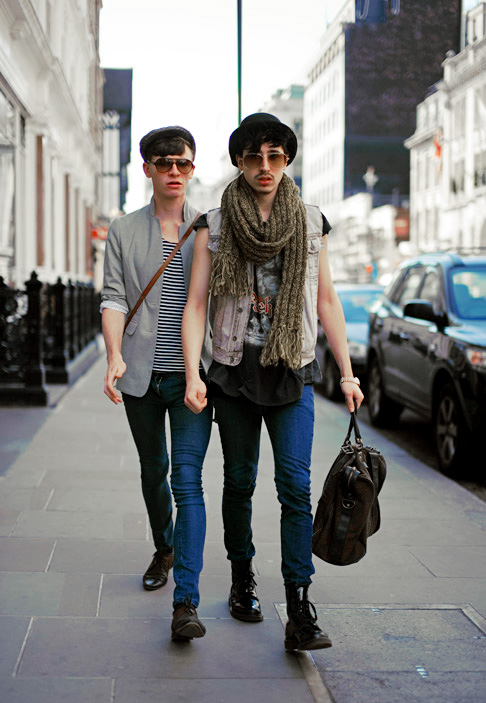
Why does what I’m wearing define my sexual orientation? I’m a 22-year old female, and I often change the way I dress, even on a day-to-day basis. I may feel like wearing a tight skirt, heels, make-up, and jewelry and shaving my legs on Monday. On Tuesday I might wear sweatpants and a T-shirt and throw my hair in a messy bun, and on Wednesday I may wear a baggy pair of guy’s jeans with paint stains on them, a tank top, and skater shoes but do my hair in a cute way. I enjoy dressing in any way that makes me feel comfortable, and I usually do.
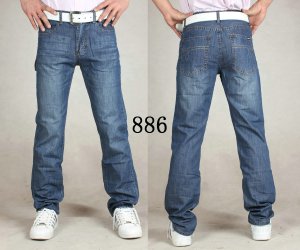
But recently, I got a girlfriend, and even though I dress the same way I’ve always dressed, with my same unique style I’ve always had, I’ve heard some interesting comments, even from people that I know care about me and aren’t trying to be offensive. But if I’m dressed up (and meet society’s beauty standards) I’ll hear people say things like “Are you really a lesbian?” or “I don’t understand how you’re gay” and when I dress down, or “more like a guy” I hear “You’re such a lesbian.”

And I’m not even a lesbian! I’m bisexual!
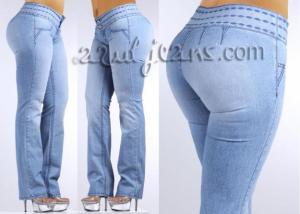
I feel as though society often judges people as being gay or straight based on what they’re wearing. A recent conversation with my (straight, male) roommates went like this:

Roommate 1: “What are you wearing?”
Me: “Jeans.”
Roommate 2: “She has a girlfriend, she can wear what she wants.”
Roommate 1: “She’s only half-gay.”
Me: “What does that have to do with it?”
Roommate 1: “Well sometimes you dress like the straight half.”
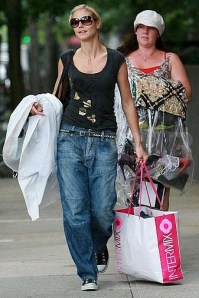
First off, I consider myself a hundred percent gay and a hundred percent straight, and I hate it when people call me “half gay.” It’s not like I find women attractive half the time; I find attractive PEOPLE attractive ALL the time. Second, how come I can only wear “whatever I want” because I have a girlfriend? It’s not like my girlfriend dresses me. Could I wear girls’ jeans if I was a lesbian? Could I wear guys’ jeans if I was straight? Why are my roommates only saying things now? Don’t the same rules apply now as when I was single? Or am I “more gay” when I have a girlfriend?

It’s also weird to me that clothes can make you look gay (“He’s totally gay, look at his pants.”  “I can’t tell if he’s gay or if he just dresses really well…”  “She looks like a dyke in those pants.”) or even make you look straight (“Can you believe he’s gay? He dresses so straight!”) but I have never heard of clothes making you look bisexual. If bisexuality, homosexuality, and heterosexuality are all valid sexual orientations, why don’t our clothes make us look bisexual? Where can I buy pants that make me look like I date boys and girls?

Can I be a feminist and still wear lipstick?

Have any women out there felt a conflict or contradiction between their feminist identity and desire to adorn their bodies? That is, can I shave my legs and simultaneously protest patriarchy? I know of many women (including myself) who have struggled with this and similar questions. In a culture so rampant with images of plucked, primped and worked-out women and men, it’s sometimes hard for me to decide if I want to display my feminist protest on my body or wear pretty clothes, shoes and jewelry.

When I read Gala Darling’s post “Am I A Hypocrite For Professing Radical Self Love While Wearing 5 Inch Heels?” or “Can you call yourself a feminist and still wear lipstick?” I was thrilled to read her take on these very questions. As a woman who blogs about fashion and style and who also boasts a “Radical Self-Love Bootcamp” program, Gala Darling’s work may seem to contradict itself. So she asks the million-dollar question about lipstick and feminism, and raises very good points about bodies, body adornment  and our selves.

Gala points out that when we (women and men alike) display our bodies the way society wants us to, we are rewarded for this behavior. This could be by wearing makeup, stylish clothing, shaving, etc. Gala calls this “beauty” privilege.”  Beauty privilege can be as simple as a smile from the person ringing up your groceries! In a lot of ways it’s easy and comfortable to conform to beauty standards when you can in order to access beauty privilege. Of course, not all bodies have equal access to this privilege. It is overwhelmingly easier for able bodies, thin bodies and white bodies to access beauty privilege. Access to money helps beauty privilege too!

Further on the subject of beauty and feminism Gala explains, “I’ve spent some time recently thinking about “beauty” & trying to reconcile that with truthful feelings about myself. A major & difficult piece of the puzzle is that none of us grew up totally free from societal influence, & so it is almost impossible to separate what we really want from what we think we want…. The place I keep coming back to is that even when I recognise that my ideas of beauty have been passed down to me from society, it doesn’t feel good to me when I choose to deny myself something which provides me with genuine enjoyment….

Gala argues that body adornment is akin to art. People are attracted to aesthetically pleasing objects, whether natural or manufactured, and enjoy being surrounded by them. Of course there is variety in peoples’ tastes, but I think it’s fair to say that most of us like having pretty things around us!

She further notes that “wanting to feel beautiful does not make you a bad feminist or a bad woman. It does not mean that you are being oppressed or that you lack the ability to think for yourself. Wanting to adorn ourselves is natural & normal — very few of us live in houses that are all function & no form, & while we COULD all drive boxy Volvos, the truth is that most of us are attracted to beauty — however we choose to define it.”

Lastly, I found this point quite persuasive: “Some women say that if we wear lipstick, we’re only doing it because society has told us to. I would argue that the woman who tries to buck society by NOT wearing lipstick is just as influenced! No one exists in a vacuum, & almost all of our decisions are effected by external sources.”

I find Gala Darling’s discussion of beauty, bodies and feminism quite persuasive. I like wearing clothes that flatter my shape. I like having smooth legs and putting glittery eyeshadow around my eyes. I love earrings and bracelets. This doesn’t make me less of a feminist, right? What are your thoughts?

“American Able” – Challenging Media Representations of Disability

Here’s a description of the project from the the artist Holly Norris’ website:

“American Able” intends to, through spoof, reveal the ways in which women with disabilities are made invisible in advertising and mass media. I chose American Apparel not just for their notable style, but also for their claims that many of their models are just ‘every day’ women who are employees, friends and fans of the company. However, these women fit particular body types. Their campaigns are highly sexualized and feature women who are generally thin, and who appear to be able-bodied. Women with disabilities go unrepresented, not only in American Apparel advertising, but also in most of popular culture. Rarely, if ever, are women with disabilities portrayed in anything other than an asexual manner, for ‘disabled’ bodies are largely perceived as ‘undesirable.’ In a society where sexuality is created and performed over and over within popular culture, the invisibility of women with disabilities in many ways denies their sexuality, particularly within a public context.

Too often, the pervasive influence of imagery in mass media goes unexamined, consumed en masse by the public. However, this imagery has real, oppressive effects on people who are continuously ‘othered’ by society. The model, Jes Sachse, and I intend to reveal these stories by placing her in a position where women with disabilities are typically excluded.

I think this project is extremely fascinating in its critiques of advertising and mass media, specifically American Apparel, and the projects counter-depictions of disability.

How is Norris’ explanation of the invisibility of disabled bodies in mass media, including the de-sexualization and undesirability often seen intrinsic to disability, parallel to Garland-Thomson’s “Integrating Disability, Transforming Feminist Theory”? Do you believe that the depictions of disability in American Able are revolutionary? Can these counter-depictions of disabled bodies truly change advertising and mass media and the ways in which we view disability in our society?

Some of the following images by be not safe for work (NSFW).

The Adipositivity Project

I’ve been aware of The Adipositivity Project for a number of years.  Most people who float around Fat Acceptance circles online are aware of it, but when I’ve shown it to friends who aren’t aware of FA, it’s always surprised them.  I thought, given the reading for our next class, this was at least visually on topic.  I’m also always a fan of activism through art and you can’t say Substantia Jones’ photographs aren’t beautiful or radical.   Many of the photographs are nudes, so beware if you decide to click through.  I’ve pulled some of the more modest ones to show the intent of the images.

Adipose: Of or relating to fat.

Positivity: Characterized by or displaying acceptance or affirmation.


MISSION:
 The Adipositivity Project aims to promote size acceptance, not by listing the merits of big people, or detailing examples of excellence (these things are easily seen all around us), but rather, through a visual display of fat physicality. The sort that’s normally unseen.

The hope is to widen definitions of physical beauty. Literally.

The photographs here are close details of the fat female form, without the inclusion of faces. One reason for this is to coax observers into imagining they’re looking at the fat women in their own lives, ideally then accepting them as having aesthetic appeal which, for better or worse, often translates into more complete forms of acceptance.

The women you see in these images are educators, executives, mothers, musicians, professionals, performers, artists, activists, clerks, and writers. They are perhaps even the women you’ve clucked at on the subway, rolled your eyes at in the market, or joked about with your friends.

This is what they look like with their clothes off.

Some are showing you their bodies proudly. Others timidly. And some quite reluctantly. But they all share a determination in altering commonly accepted notions of a narrow and specific beauty ideal.


I love this project, especially considering the attempts by the media to include “real” bodies through the use of marketing like the Dove Campaign for Real Beauty and “plus size” (really a size 6-12) models, and how different these fat people look from those culturally approved fat bodies.  These aren’t the media portrayed idea of what is “real” (and how problematic is that word in regards to any person?).  These (mostly) women, according to the BMI (another problematic method of judgment!), are obese, or more likely morbidly obese (sometimes called Death Fat in the FA community).  Most of them probably weigh somewhere in the neighborhood of 200 or 300 or even 400 pounds – yet I don’t think they look like the stereotypical bed-ridden mordibly obese person most non-fats think of when they hear those numbers. Or maybe they do look like those ZOMG FAT people to you.

However you see them, these people are fat, but they have accepted the bodies they have and are living their lives in them.