Phenomenology Field Research

The gym is such an interesting place from an academic’s point of view, as each person experiences it differently. So as a fem-presenting disabled person, I decided to do some field research in regards to the gym  (aka I needed an excuse to suck it up and go) So off I went in my wheelchair, leg braces in tow to get some walking practice in. As I arrive at the RAC, I am greeted by the out of order door opener!! What a great start… way to encourage disabled people to be active. I got some (a lot of) stares, because disabled people being active is outside of the norm to which people perceive. Where I see opportunity, and things I can do and adapt, able-bodied people see what I can’t do, and get all surprised when I do something outside of their idea of what disabled people are capable of. To me, I was just minding my business working out, but to others, I may have been perceived as inspirational or extraordinary simply because of phenomenology. What I experience and the people around me experience are two totally different things. Going to the gym is normal for me, whereas its not “normal” to see a disabled person in the gym for many able bodied people, making it seem out of place in how they experience the world. I also experience gym equipment differently, and it is evident that those who designed the gym and it’s equipment designed it from their own experience. For starters, there was a hand cycle in the gym (think of a stationary bike, but with the pedals at about shoulder height, a photo will be attatched) At least the gym had one, but that is not without faults. A wheelchair user like myself needs to a) transfer onto the seat on the machine and b) have enough lower body and core strength to balance on the seat. As someone that is ambulatory, it is not an issue for my own lived experience, but to someone else it very well may be. The hand grips also require a LOT of hand strength to hold onto, and I found it to be quite difficult. There are hand cycles out there that a wheelchair user can roll up to, and I just wish that was the case at the RAC. There were also no tactile buttons, braille or a headphone jack for audio instructions on ANY of the machines throughout the gym, making it so someone that does not experience vision cannot use the machines unassisted. I think learning about the concept of phenomenology is something that a lot of people that design gyms and other spaces should learn about. How you experience things is not the same as others for so many reasons, whether that be race, trauma, upbringing and ability. Growing up I was told to “put myself into the shoes of others” and that is the very basics of phenomenology, which gets built upon by looking into factors that I mentioned previously. Understanding how another person may feel is great, but understanding how someone may experience your creation, words or actions is a great step to bettering the world. Rather than connecting to course materials in the form of articles, I decided to conduct some field research to apply the overarching concept of the course so far: phenomenology. It felt fitting considering phenomenology is all about experiencing the world, and I think that it was a success!
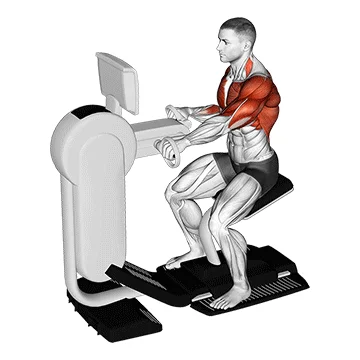

Depiction of a man seated on a stationary hand cycle with the upper arm muscles colored in red.
Hue and Hurt

Hue and Hurt

As long as I can remember, I’ve felt a certain way about my skin. Now, I left that remark to be vague because that “certain” way has changed constantly throughout my life. I’ve come to love my dark, glistening skin. In fact, I’d go as far as saying it is my favorite physical trait of mine.  My family comes from a country where having dark skin is the beauty standard, it is slightly out of the ordinary to be of a lighter complexion, because to us, being dark is just…us – a natural part of our phenotype.

 However, coming into a country where the beauty standard is quite the opposite shook my world. I believe everyone is familiar with the humiliation ritual that is middle school. One day, as I was taking part in this humiliation ritual, a black boy, black just like me, looked at me as I walked past. “Blending in with your outfit, I see!” To better contextualize this interaction, it would be good for you to note I was wearing black jeans and a black long sleeve. 

I’d like you to be mindful of the fact that he was no more than two shades lighter than me. He was black, black just like me. There was no one else around, really. He wasn’t with any friends, nor was I. It was just him, the lockers, me, and our melanin. He wasn’t doing this for validation, it was genuinely how he felt. 

I’ve received comments like this numerous times. When the teacher turned the lights off to properly project a video onto the board, I’d gulp preparing for the comments asking where I went. But something about it coming from someone who looked almost just like me felt so different. I was young then, but I understood that he didn’t hate me, it was himself that he hated. 

Now, being dark skin is more “accepted,” if you will.. a lot of people call it “the great shift.” To me, it’s more of a great fetishization, but I digress. I was sort of reminded of this anecdote when reading Alcoff’s “Toward’s a Phenomenology of Racial Embodiment” as it heavily looked into the manner in which we perceive race. I grew curious about the way colorism is perceived in the black community, and whether it would be different if we hadn’t been tainted with such racism, we felt the need to further divide ourselves for self-protection. 

The Black Female Body: The Restrictive Covenant

With all of the readings, I was really intrigued, and I really wanted to connect some of the content with the Black Woman’s experience in America. I often feel like Black women don’t even own their bodies. Our bodies are always for public debate, and when I say bodies, I don’t just mean like our physical self, I mean like everything we do, whether it be speaking, our general demeanor, etc. It always becomes a matter of public opinion. Citizen by Claudia Rankin talks about the public outrage that Serena Williams was behind, with the way that she expressed her discontent with the umpire of her match, and how she was messing up her calls. It just reminded me of the first reading we did in class, “Introduction: Not Just the Reflexive Reflex” by Kosut & Moore. There is this quote we went over in class. It was in reference to the body and how “it is our possession and our prison, while at the same time it is out of our control as it leaks, fails us, and gives us away” (2), and we discussed in class how this process of “leaking” is completely normal. I looked at it from the point of view that what Serena did was completely normal; her being upset was her body “leaking” in a way. Still, for some reason, it was a problem; it no longer became normal to be a professional athlete who spent their entire time training for matches like this, to be rightfully upset when the umpire made an error. I also found a connection between “Throwing Like a Girl” by Young and how women often have this battle of I can and I cannot, or maybe in this case, it is I should and I should not. While this was in reference to physical activities, I connected this with how we as Black women so often know that we should speak up when we are disrespected, but we hit ourselves with the I cannot. We don’t have the luxury of being able to voice our opinions without it ruining the public perception of Black women as a whole. 

Transcending Metamorphosis

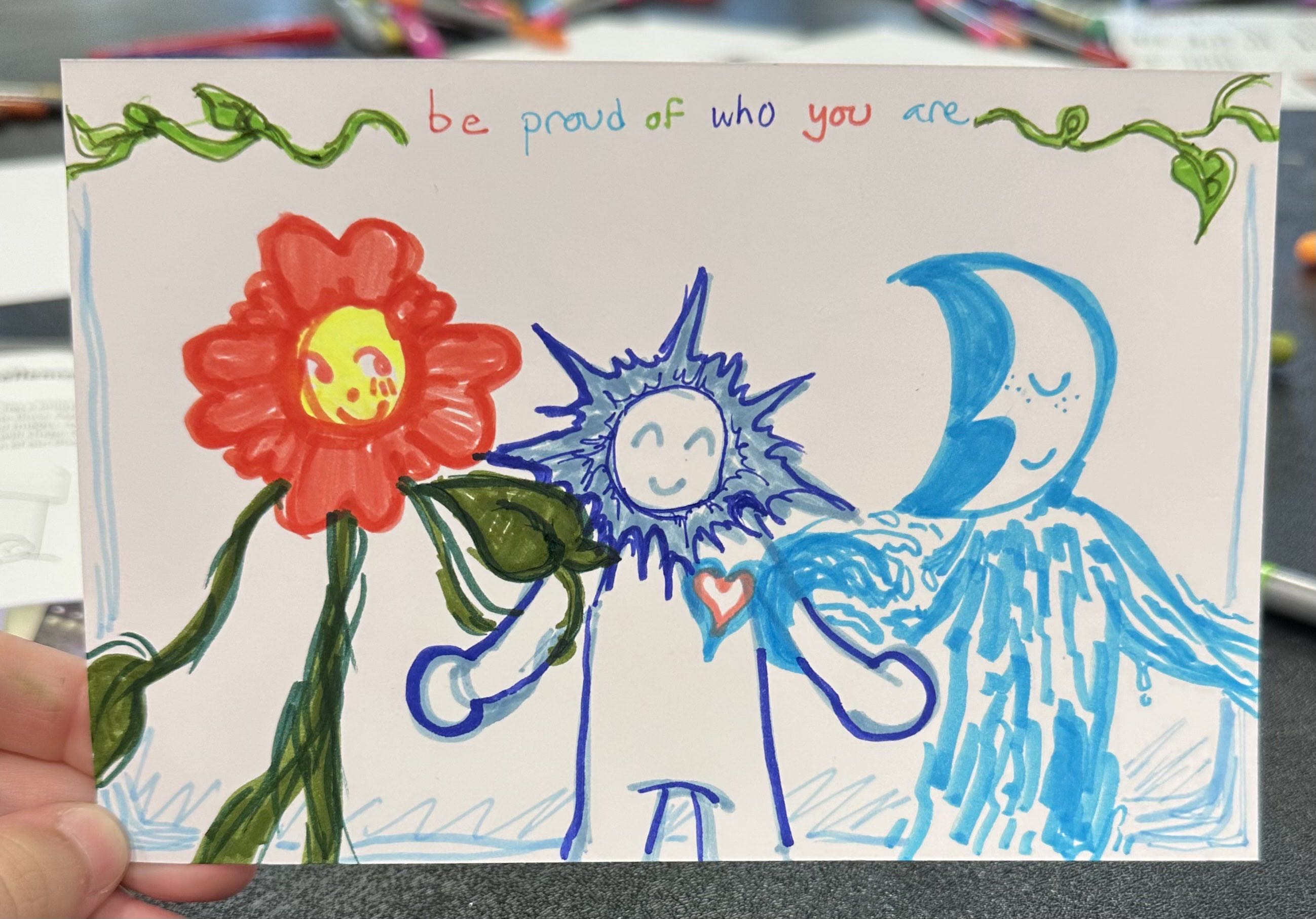
A white notecard with three figures. On the right stands a flower person with pink petals and their green vines are wrapped around the figure to the left of them, a simple figure with a star-like "mane" around their head. To the right of them is a figure with a crescent moon head and a body like water. The moon's arm is shaped like a wave and is intertwined with the middle figure. Above them are green vines and the text "be proud of who you are".
A quick notecard drawing I did at the UMBC Community Art Project.

“The flesh is inscribed with meaning both from ourselves with our consent and by others against our will.” Kosut & Moore, Introduction: Not Just the Reflexive Reflex.

In times when my community is the center of media, I feel like an ant being scorched alive under the microscopic lens of a snot-nosed child. Why, in my own habitat, must I smell my burning flesh? It’s not as if mine or my neighboring hills have done anything to incite such a cruel fate. Still, man believes himself to invade and reign supreme over bodies he views as ‘other’. 

Growing up in a small town is difficult because you know everybody and everybody knows you. Being divergent from those who surround you, the burden of being seen feels suffocating; you’re not really sure what people think until they say something to indicate how they feel about people like you. 

Twice now have I received a call from my dad following cases of gun violence in which the shooter – or someone personally involved with the shooter – identified as transgender. First, he’d sent me a text saying to call him when I had a minute. He’d preface the call with “now I’m not saying this to scare you, but” before updating me on the latest crass life-threatening narrative spun about my community and subsequently spread like wildfire among people who haven’t known how it feels to live with intrinsic fear laced in their veins. And although it was coming from a place of love, he told me this time to “be selective of who I tell”; as if that is something I needed to be told, as if telling me to keep my identity a secret isn’t painful no matter the place it comes from. 

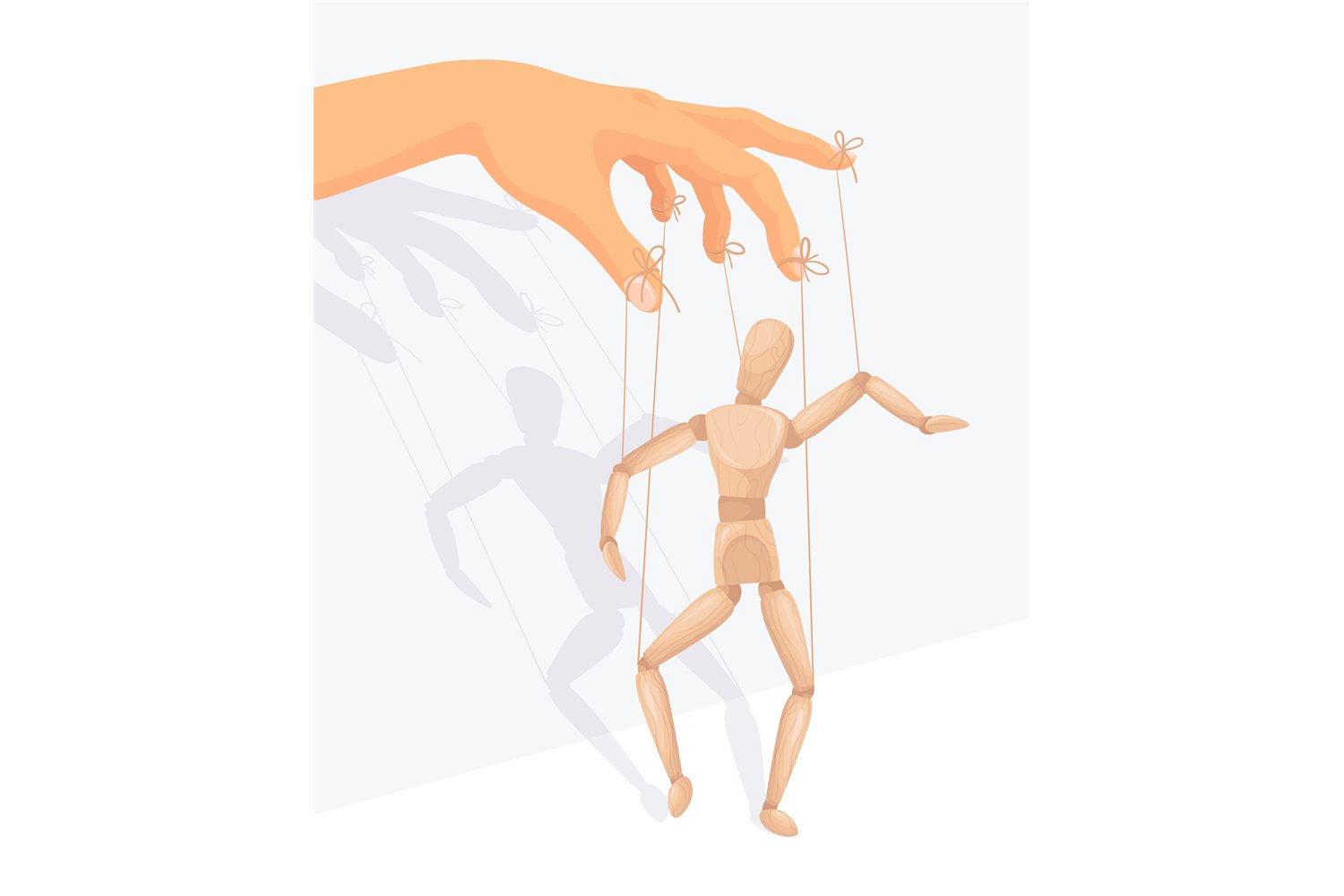
Michael Foucault’s Docile Bodies describe “a body that is docile may be subjected, used, transformed, and improved”. The modality of control is an uninterrupted coercion, and technicians of discipline become dominating. Where there is power, however, there is always resistance.

What does self-preservation in the face of tyranny look like? Under the scrutiny of everyone’s eyes, I feel like I’m expected to shrink, to slink quietly back into stealth and hide an integral part of myself. The fighting part of me refuses to go unnoticed and I yearn to get irrevocably intertwined in activism, to bloom into a symbol of hope. My pride will never get ripped away from me. I will not be a docile body.

Claudia Rankine, author of Citizen, poses a question that stings like alcohol on a raw wound; “How difficult is it for one body to feel the injustice wheeled at another? Are the tensions, the recognitions, the disappointments, and the failures that exploded in the riots too foreign?” Are minority groups viewed as so far removed and alienated from ‘typical’ society that we are seen not as human, but as beast? When the very structure designed to serve you strips you of your rights, your protections and defenses, and discusses rescinding your amendments, the answer is an aggressive, spit-in-your-face “YES”. 

Alexithymia and other Griefs

This will not have any answers to any questions at all. If I knew the answers, I wouldn’t be writing a blog about this specifically.

I don’t know. These three words have been a centerpiece in my vocabulary for as long as I can remember. It seems so easy, to know. Everyone else seems to know how they feel or how much they enjoy something, what they want to do, where they want to go. I do not. I have struggled to understand when I’m feeling any emotion more complex than happy or sad. It is more unusual, then, that I can more easily recognize other people’s emotions than my own. I do not know what I want to do. Nothing stands out. People say “do what interests you” but nothing is inherently interesting to me, I don’t think. Even my current hobbies took a while of doing for me to become interested in them. It’s like I’m plagued with disinterest and uncertainty beyond what is normal. Now, nothing here is unexplainable. Autism, major depressive disorder, anxiety, everything I experience falls into the realm of “yeah that makes sense” once my conditions are factored in. And I don’t hate it, but I notice how the expectations of me are different. When I’d give a short, straightforward answer in a group setting, my autism is to blame, like it wouldn’t be satisfactory if I was normal. I guess I prefer it to how it used to be. My “I don’t know” responses in regards to my feelings were met with frustration. It was upsetting. I was upsetting people and I couldn’t know why. My therapy sessions always end half an hour early because I simply do not know how to say what I feel, do not know what I feel in order to say it. It is shameful in retrospect.

Now for the other issue flying through the cog works in my head; are my thoughts my own thoughts? I mean, yes, I am thinking them, but am I merely repeating what I hear? Are my opinions actually my own opinions, or just regurgitations of what other people think? This, I think, became more of a thought within the past year or two, as I know for a fact that my vision of my gender identity is mine. As such, what else is my own? I do not mean original, I mean what do I actually believe in? And I can sit here and say “oh I believe in xyz” but in reality, most of the time I don’t know (there it is again!) if I actually believe it. Of course, there is also the idea that you are the product of your environment. The argument that even if it is repetition, why does that make it less of my own? Maybe I question my thoughts and opinions when I subconsciously disagree with them. Ultimately, though, I don’t know. That’s what this whole thing is about, isn’t it? Not knowing most of how you feel. Sure, love and happiness and sadness and anger are identifiable, but what am I missing out on? Who’s opinions have influenced mine to the point where they just aren’t mine anymore?

The World Limits My Body and My Body Limits Me

On July 1, 2022, I wrote the following entry:

“Whether I want to admit it or not, my growth is relevant, is obvious…but not when it comes to my body. Kind of. I can’t explain it. I do feel better about myself. I enjoy what I look like…and haven’t used my body as an obstacle or excuse of not trying. But that trauma from being bigger still lingers. What people think of me still stays in the back of my mind, when I get hit on in public it still surprises me…”

Phenomenology teaches us that bodies are not just biological objects but lived experiences, shaping how we perceive, move through, and make meaning of the world. It is the “science of the essence of consciousness.” It is with that then, that we recognize that our Western society has nothing to prepare us for this type of perspective. We are forced to live so physically in our world that we often resort to theories and philosophies to provide cushioning and comfort, but it us that must invoke that change. This is where we feel stuck. The tools and unlimited opportunities but too many fixed mindsets to put it into action. It’s something we feel when we’re 16 and likely what we’ll feel when we’re 60, the outside pressure of constantly separating one’s body from the mind.

What my 16-year-old mind didn’t realize was that there was an exact name for my feeling, an effect of society’s demands: Feminine Motility. How women may move if they must. That’s the feeling you get, anyway. We describe this detached feeling of our body as Ambiguous Transcendence, where we are both separated but bound to our body. The verbal “I can” which ultimately becomes “I can’t” under Inhibited Intentionality, and the Discontinuous Unity, where one severs their capacity in the body from the possibility of the world. At every more we are controlled, questioned, and doubted from something we can’t see but recognize.

It’s an unbelievable reality to merely stumble upon one day, usually in your adolescence. I think that’s the point too, to get you when you’re your most fragile, mentally. It feels damning, but then you get older, and at some point your mind aligns with your physical age and I think that’s what it means to enter adulthood and understand Phenomenology. To recognize that our body is a biological being, but also something that transcends beyond the physical world and our social boundaries. Moving (both emotionally and literally) from childhood to adolescence to adulthood is a painful process, one we can’t understand until we’ve been through it.

You Don’t See Me As Human (Unless You’re Black)

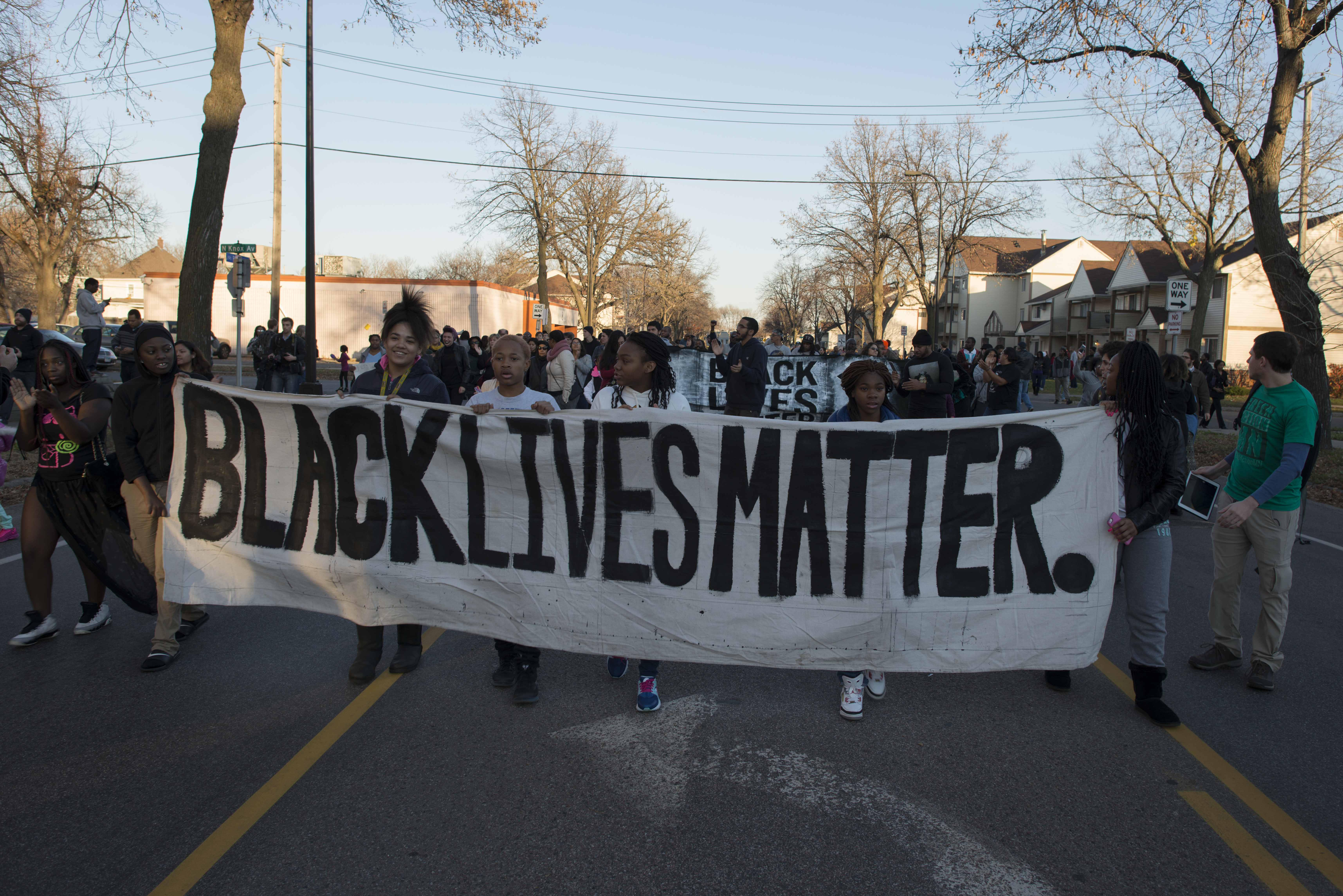
Young children hold a black lives matter banner at a march

Docile Bodies and Stimming

The reading in Docile Bodies reminds me greatly of the disability acceptance movement and modern strides in autistic advocacy.

Docile Bodies describes how society seeks to control individuals by controlling how they move their bodies. The written work focuses mainly on people and general, and then the differences in how it may present for women and men. I will be focusing mainly on their comments on humans and general and how it may relate to autistic people.

“A body is docile that may be subjected, used, transformed, and improved” – Foucault, Docile Bodies, pg.136

Autistic people often have similar experiences of their stimming being shunned by members of authority, peers, family, and strangers. Receiving strange looks, biting comments, or disappointed speeches in response to moving their body in the way they felt fit. Though modern ABA therapy is stated to help clients learn to manage their stimming, and not eliminate stimming completely, it can be said that the way in which medical professionals have treated stimming is less than ideal. Stimming is seen as a disadvantage in social spaces, a way of making yourself stick out like a sore thumb, even sometimes interpreted by strangers as “performing disability”. Masking autistic traits is a way of fitting in as a docile body.

Many Autistic advocates and content creators have advocated for the freedom to stim and posted videos of stimming to help normalize the behavior to non-autistic viewers. It is important that if we ever feel inclined to judge or frown at someone moving their body, how they see fit, we reflect on whether that’s something we actually care about them doing, or if we’re reflecting the docile bodies message that was pushed onto us.

Turns Out Nobody Cares What I Look Like Sweating

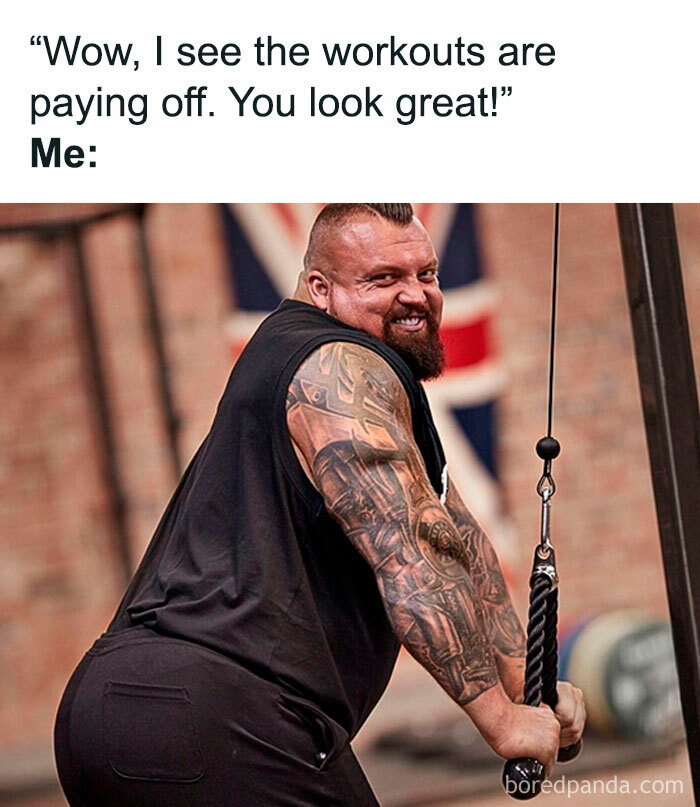
strong body builder man with that tattoos and a terrible mohawk hair cut in a sassy pose smiling is the cable machine doing lateral pull downs and the meme says wow I see the workouts are paying off you look great

About five months ago I started my “great lock-in” aka me starting my weightless journey Again!! I was tired of how I looked and wanted better for myself physically and mentally, so I decided to get my lazy butt up and go to the gym after not being consistent for a few years. I didn’t expect to feel so envious and self-conscious while working out for the first time in a while. I was looking around at others that were working out and comparing my body to them, or comparing how I was working out versus how they were. I felt like I wasn’t doing things correctly, simply because I was getting my workouts from TikTok and Instagram and just trying to copy what the “gym influencers” were doing.

Even though I was feeling like this I tried to keep pushing and put those thoughts to the back of my mind. I wanted to focus on making myself better, and I knew that was gonna be part of the process fighting through the stigma and shame of being judged, and reminding myself that I do belong there and that I actually can succeed.
When I first started attending the gym, I would wear baggy clothing to try to hide my appearance, to take some of the attention off me. Even though people probably weren’t staring at me, I felt like they were. That ties into the idea of the panopticon the feeling that somebody is watching you even if you don’t know if they are. But wearing those clothes wasn’t comfortable, especially the hoodies. I started noticing my body overheating when I wore them. I knew I needed to make changes to what I was wearing, and that ended up putting me one step closer to the confidence I have now. Being able to wear clothes that I’m comfortable in made me realize that just because I’m larger and have more meat on my bones doesn’t mean I can’t wear what smaller people are wearing.
After switching the kinds of clothes I wear, I started gaining more confidence in the exercises I was doing, and I began to see improvement after a while. I noticed that I was losing a couple pounds after a couple months of nothing major. But my body started looking different, my face looking slimmer. And I was like, “Hey, this hard work I’m putting in is paying off.” Seeing those small improvements took me to another level because I was like, “Oh, I am doing this. I can do this.” Nobody was in my way but me.

Over time, my confidence just kept building. Now when I go to the gym, I don’t care what people think. I do the exercises I want to do, no matter if I look crazy. I’m still gonna try them and perfect them the best I can. Nobody else is gonna do the work for me. Nobody else is gonna boost my confidence. And honestly, nobody is even shaming me, no one has ever come up to me and said I don’t belong there. It was really me having this internal battle with myself, getting in my own way with that little voice in my head telling me I shouldn’t be there.