Life After Diagnosis

Phenomenology is the study of first-person experiences and sensations that give life more meaning. When we were discussing this topic in class I immediately thought about how much my experience and perspective on my life shifted after my adult autism diagnosis. After the diagnosis I began to look back at my life and pick out moments and traits that, in hindsight made so much sense with me being autistic. But before the diagnosis, were just a confused, muddled mess. I remember thinking back on basically every interaction I had ever had and wondering if I would have reacted differently had I known. They say ignorance is bliss, but in all reality the not knowing led me to become a traumatized, jaded individual. The world isn’t built for autistic folk, and imagine going about your life wondering why you are facing barriers and roadblocks at every turn and not even knowing why. It messes with your sense of self and you begin to think something is deeply wrong with you. I am still having to unlearn that one. Yay for therapy!

Something that you do when you spend your whole life not knowing you’re autistic, is you get really good at masking. I was able to play the part semi-well and be sociable, friendly, and well-mannered. And when I got older I became even better. But when you learn that you are autistic, that mask begins to crack. It crumbles away and you are left with a messy, soupy, puddle of sensory issues, lack of social awareness, and fixations. It’s extremely common for adults who are diagnosed with autism to regress in a lot of their skills once they find out about their diagnosis. After holding themselves together by the seat of their pants their whole lives, their whole world is turned topsy turvy. This is what happened to me. It’s taken me years to reacclimate to my new way of perceiving the world, and myself. Slowly I’ve built myself back up and created a new, stronger identity. Diagnosis saved my life.
Truly Unruly Body (Medical Trauma)

Truly Unruly Body (Medical Trauma)

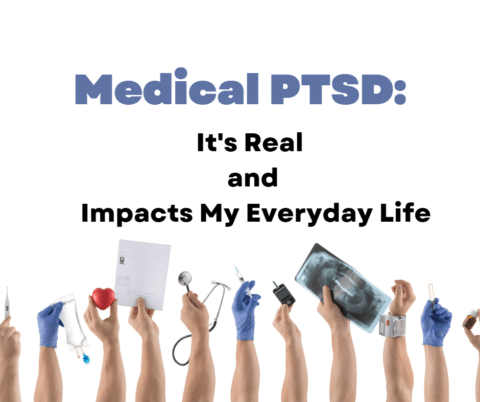
Phenomenology this is the theory is the study of structures of consciousness as experienced from the first-person point of view. The central structure of an experience is its intentionality, its being directed toward something, as it is an experience of or about some object. In simple terms is each person can experience the same thing but due to their past have a completely different view of this experience. For me this help me better understand my own unruly body, I personally have been sick since birth I had rare disease that caused my main vein to my liver to fail as a baby in turn cause me to need a liver transplant at only 2 years old, due to this I was often sick and in and out of the hospital for many different things. With this being stated I have a lot of medical trauma that yes what they did was for the best but as a child you do not completely understand why they are doing the things to your body that hurt or our uncomfortable. This trauma I never really thought was there until I started to go to therapy and learn more about the body and mind through going back to school.

Sex a very common thing for most couples to engage in I personally have been with someone for many years but have never taken that step even though there is a desire to do so. Why? Well through this concept of Phenomenology and going to therapy it has helped me see that because of my medical trauma my body react to physical touch very negatively. I will tense up from head to toe and shut down internally this occurs suddenly and is completely out my control my body take control. I used to tense up if anyone tried to hug me as a child through teenage years due to this trauma I have been able to work through that but still struggle with physical touch outside of a hug. It is very frustrated has caused friction between me and my partner, but they have stayed by myside through this. I hope that in future we can take the next step in our relationship, and my body can learn to accept and trust physical touch again.

Appalachian Redshift

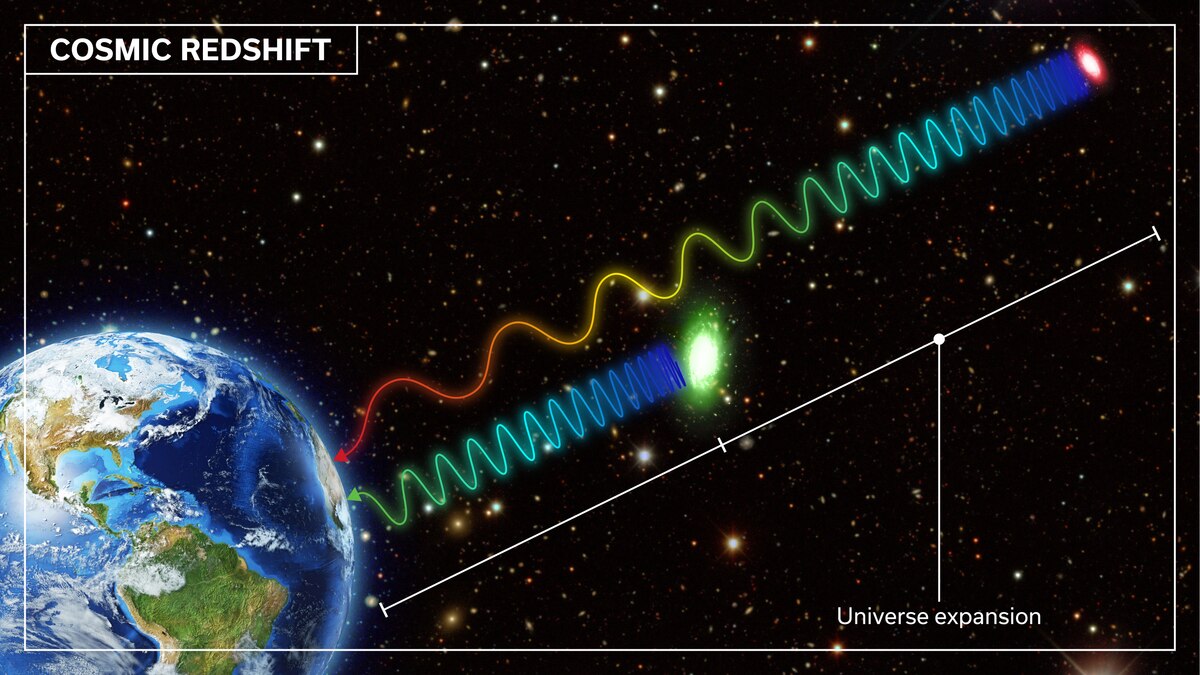
https://commons.wikimedia.org/wiki/File:Cosmic_Redshift_(noirlab2401d).tiff “Redshift is the term used to describe the stretching of wavelengths of the light from an object as a result of the expansion of the Universe; the greater the object’s distance, the greater the redshift.” – Cosmic redshift reminds me of political redshift, watching Appalachia drift further and further away.

My roommate watched Harlan County, USA for a class the other day and it reminded me of something I’ve thought about before – the rural working class of Appalachia is largely responsible for the labor movement and the progress it produced and has now almost entirely shifted heavily right-wing. Appalachia has almost universally shifted from a strong Democratic to a Republican stronghold.

Continue reading

The Substance, Horror, and Ugliness Politics

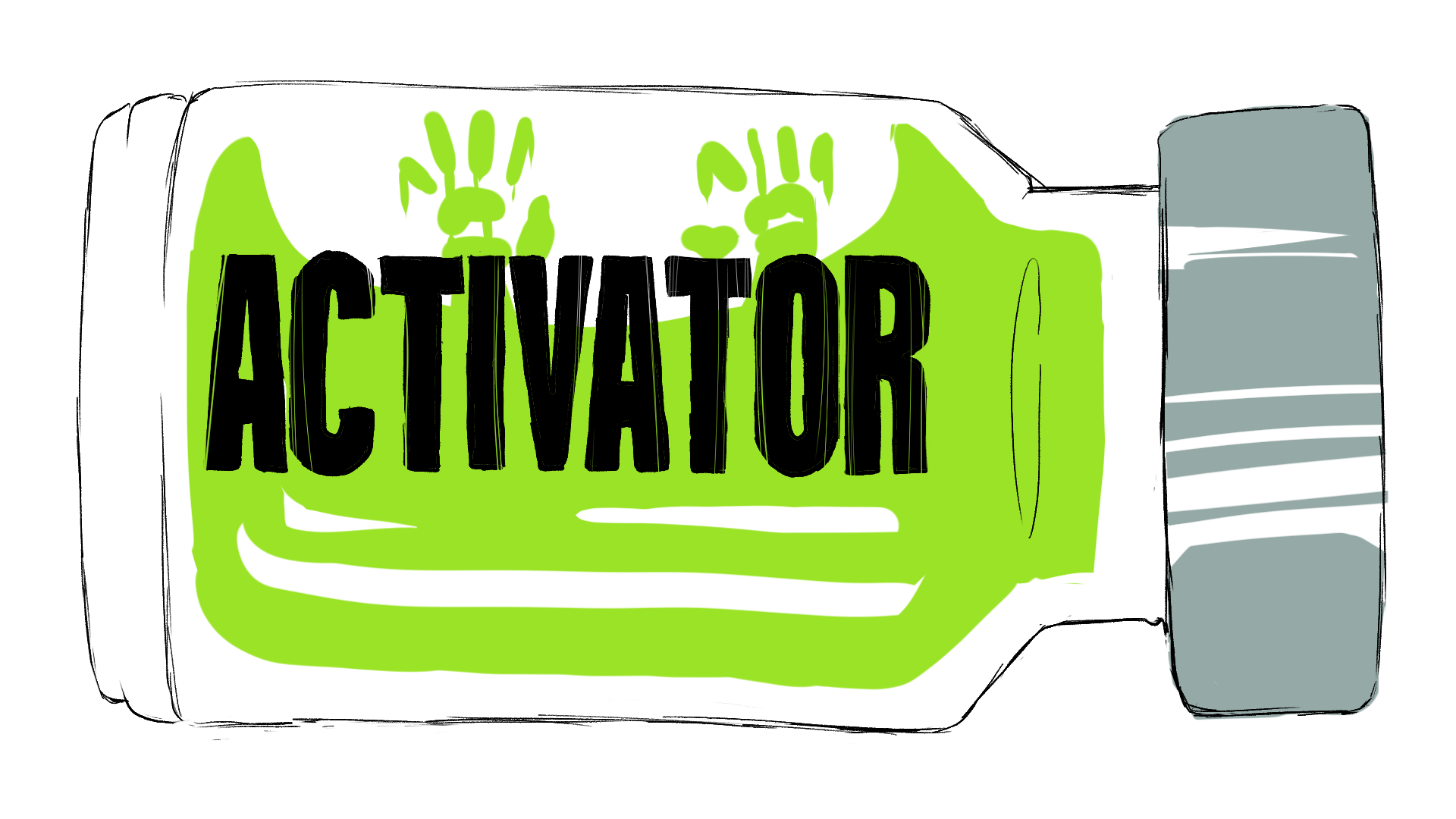
Illustration by me of a vial of “Activator” from the film The Substance with small green hand prints.

The Substance is easily my favorite horror film to come out this year, and probably my favorite film regardless of genre to come out of 2024. It executes common horror tropes beautifully while offering a combination of fresh new ideas that haven’t felt explored in the specific way Coralie Fargeat, the director, addresses them. The film’s plot and general message are also incredibly relevant to politics of Desire and how physical attractiveness is measured among different groups of people.

Continue reading

Embodiment in the Digital Age

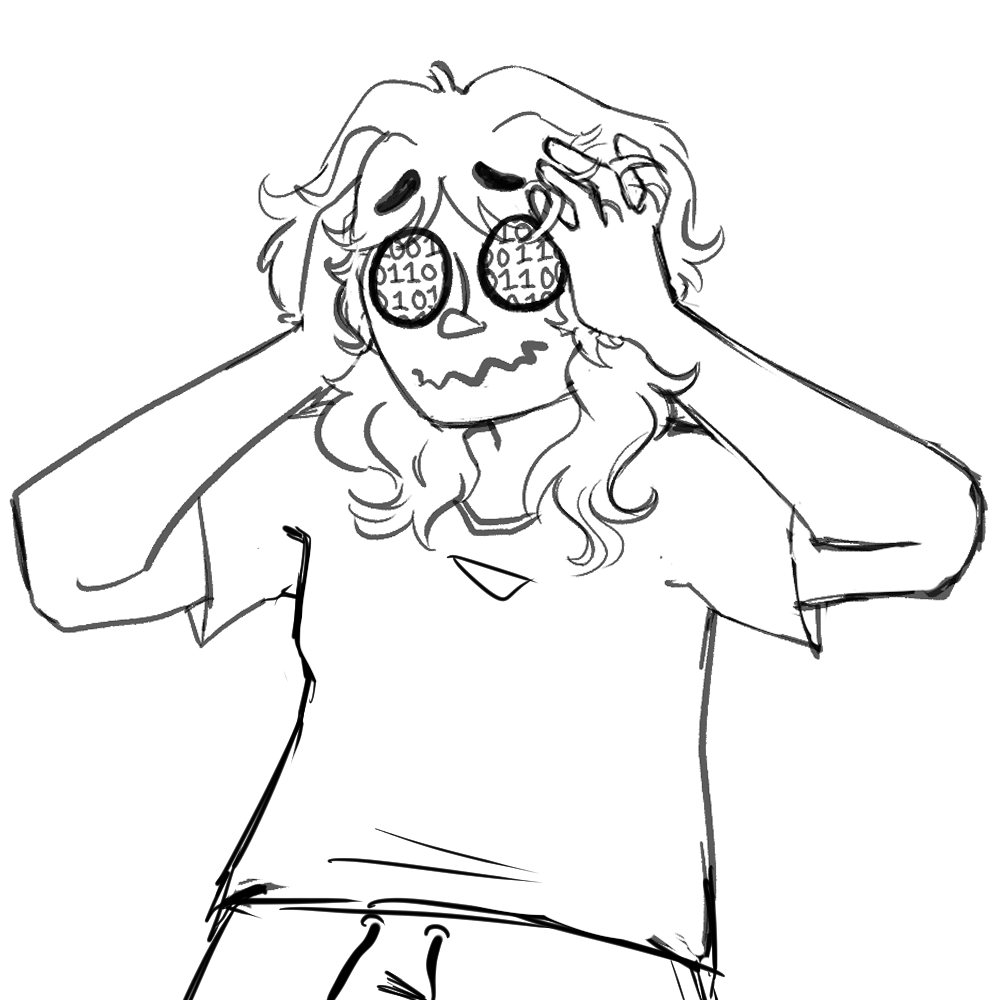
A quick self-portrait doodle I did today that describes my feelings regarding the ever-increasing presence tech has in our lives.

A nih.gov article from 2013 states that an ideal amount of screen time for the average adult should be no more than 2 hours per day. That figure just 11 years later feels completely impossible to achieve, almost like a funny joke. I could hit those 2 hours, 4 times over just working on one school assignment. I have a much more robust and stable social circle online compared to any friendships I’ve managed to foster in real life. My new car’s speedometer and tacometer are both on a digital screen. I can’t even lower my daily screen time when I’m driving. Something about that is kind of terrifying to me.

Continue reading

Trans and a (former) Dancer

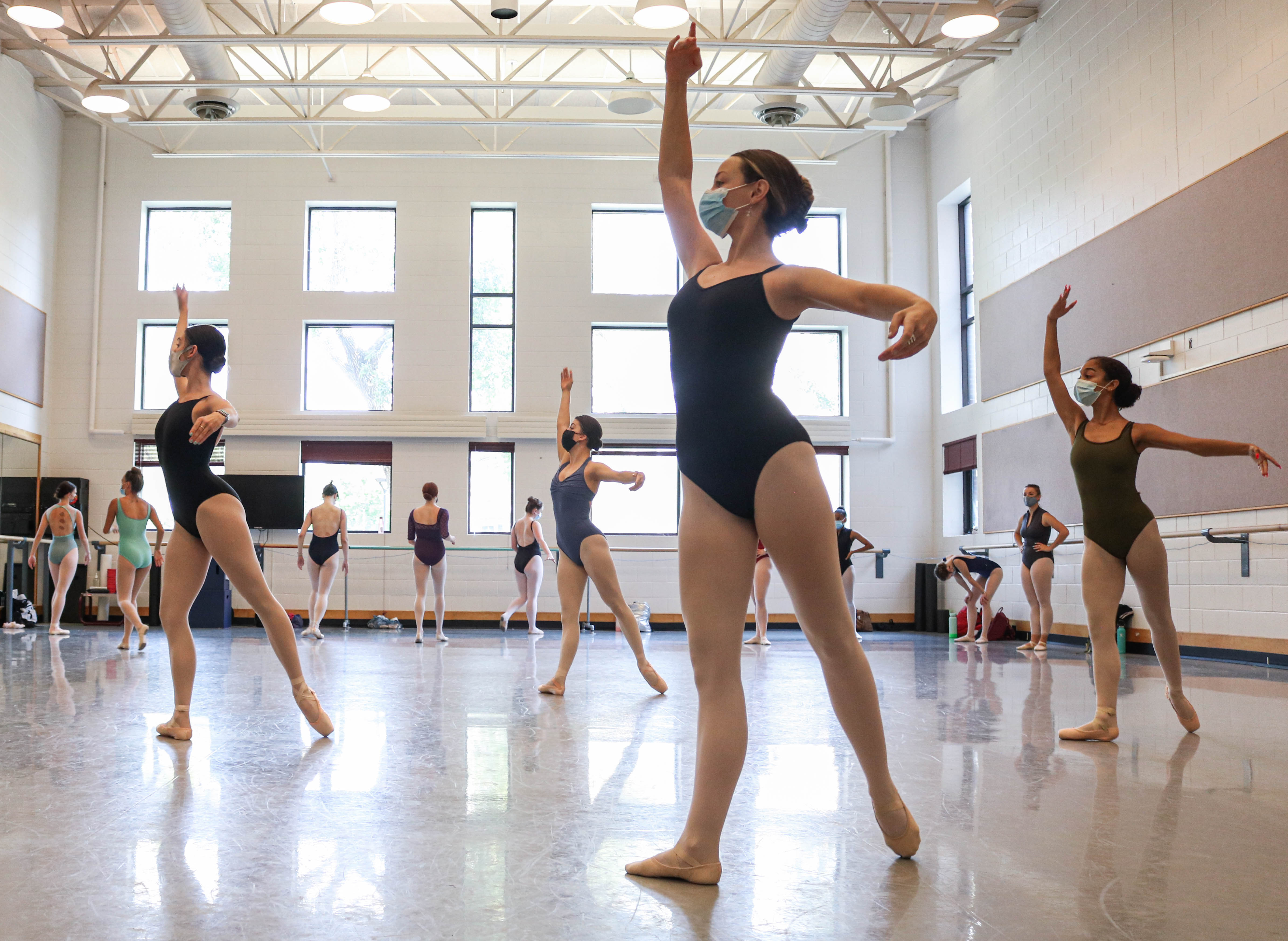
I miss ballet. I miss Irish dance. I miss being comfortable moving my body. The best I felt was when I danced like no one was watching which is pretty silly, but true. I used to love the feeling of having a good practice. I was in such a comfortable environment and space I had grown up with. Now it’s all changed. There’s no way for me to go back to how it was completely but I still wish to experience the joy that dancing gave me. I feel like a light has gone out in my heart and I don’t know how to get it back. If I did kind of know, I am too scared to act on it. I wish there was a space to dance for people like me.

African, not Black

Recent Reflection: Being Called “African, Not Black

I migrated to the U.S. from Ghana in my teenage years, and the transition was enveloped in opportunities for growth and connectivity with new communities. I have grown to appreciate the rich layers of my identity shaped by my Ghanaian roots and those fostered while living here. But there’s one experience that has followed me for many years: being referred to as “African, not Black.

The first time someone said it to me, I didn’t know how to feel. At the same time as I was proud of my African heritage and the rich culture that grew me up, I felt this strange alienation. Growing up in Ghana, I loved the celebrations, the music, and the sense of community that were at the core of my childhood. It was as though my experiences living in the U.S. and navigating life as a Black person here were being invalidated. The reality is, moving to the States didn’t erase the color of my skin or the assumptions that came with it. I’ve faced racial profiling, microaggressions, and moments where I’ve felt the weight of systemic racism. These experiences made me realize that my identity as a Black person isn’t separate from my identity as an African it’s an expansion of it.

But looking back, I can see how I began to internalize some of these comments. I started feeling like I didn’t fully belong to either group-as if I wasn’t “Black enough” because I didn’t grow up in the U.S. or “African enough” because I’d embraced parts of life here. I even found myself hesitating to speak about my experiences, unsure of where they fit into the larger narratives of either identity.

It is a beauty I have learned lately: holding multiple identities. I have learnt that I don’t have to choose between African and Black because they coexist. Each single one of them is valid; together, they speak for me.

Now, if I’m told, “African, not Black,” the justification isn’t really necessary anymore; it is a reflection of how far I have come to accept the full range of my experiences. My identity is not dictated by one else’s perception, but rather shaped from where I come from, through the challenges faced, and the connections made on the way.

Ultimately, I’ve learned that identity is personal and multifaceted. It’s okay for it to feel messy or complex it’s what makes it beautiful. And for me, being both African and Black is a source of strength, pride, and belonging.

Body positivity and clothing

Being in a larger body and wanting to participate in fashion trends and overall fell good about the body your in can be challenging.Majority of the styles and fashions you may want to wear may come with an high price tag or be from a fast fashion company that has unethical business practices that many in your everyday life or online community spaces may not agree with (shein, temu etc).

The body positivity movement, gained popularity in the middle to late 2010s. It embraced the notion that all bodies, regardless of size, shape, or impairments all bodies are beautiful in its natural state.From this movement I saw society move into a positive direction from beauty brands such a Fenty beauty being released that had over 50 foundation from fair to dark. Or other major brands like Nike, Old Navy, Yitty, and Target, who used plus-size models in their advertising campaigns and had plus size mannequins in all there stores and offered size-inclusive apparel lines often going up to an 5xl or 6xl. Those in plus size and fat bodies had options and could shop, browse ,window shop and enjoy the in store shopping experience that weren’t out of dated stores like Torrid, Ashley Steward and Lane Bryant .It was such a beautiful thing to enjoy the in store shopping experience without asking a sales associate if you had an 2xl or 3xl in the back or having to see if your size was available online.

However I’ve notice a shift happened in the last year or two both with major brands and certain social media trends as the body positivity movement in a way faded from the mainstream fewer plus-size models in advertising for plus size clothing , reduced availability of extended sizes, and a lack of representation in physical stores. Some brands that once championed inclusivity have quietly phased out size-inclusive options, even on there websites which left me and many plus size shoppers frustrated and disappointed.It feels like we took such a huge step backward especially with the “unbig” and “big back trends” on social media.Some of the videos are actually funny as its people talking about times were they indulge in a food they like or get themselves a sweet treat but when people began to stuff pillows and bedding under there clothes is were I fell like it crosses the line and becomes fatphobic and harmful.

Move Me, Move You

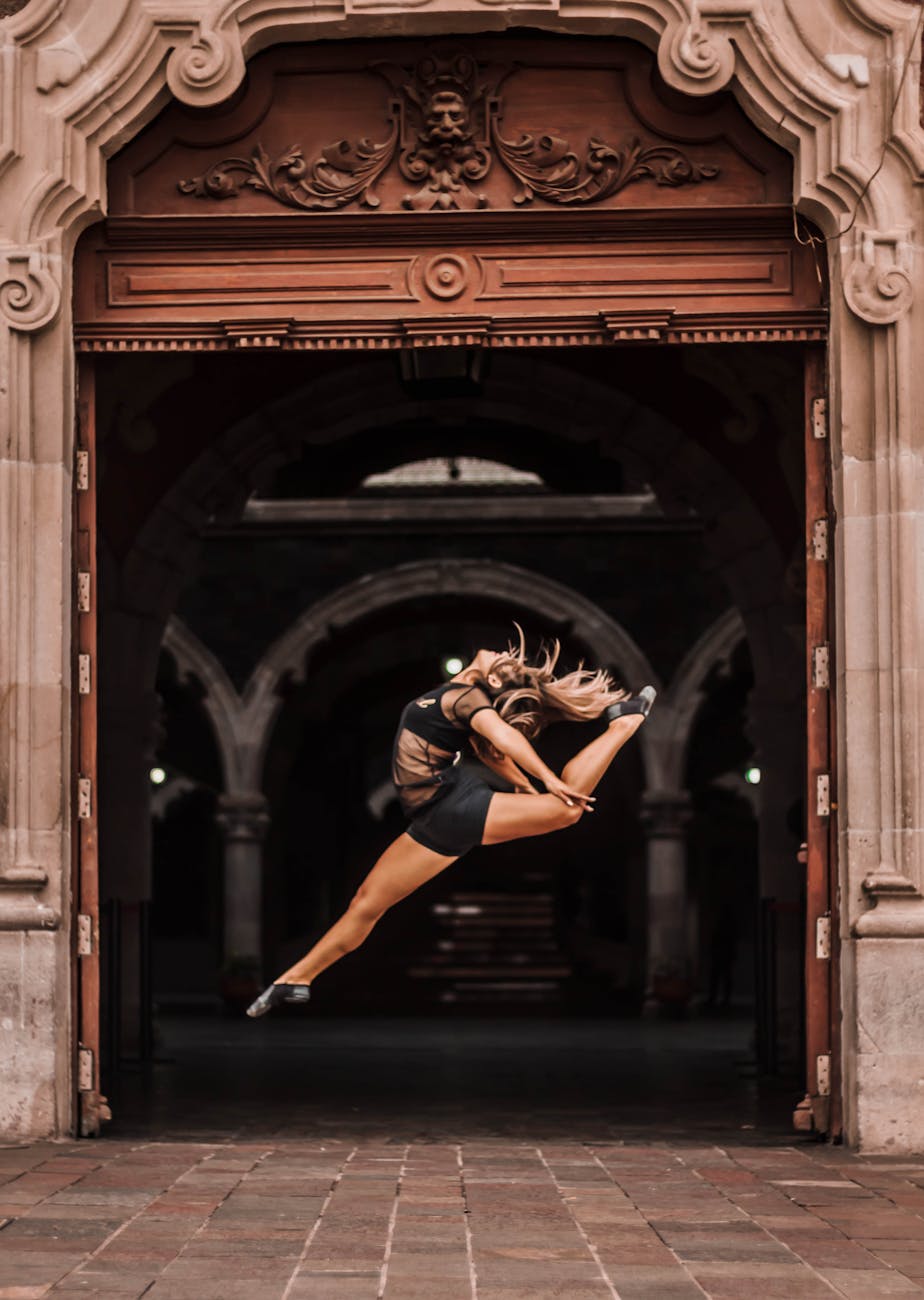
Photo by Luis Gallegos Alvarez on Pexels.com

The universe moves me so I can move others. 

Growing up, my parents put me in every sport imaginable. If my school provided it, I did it. Baseball, basketball, soccer, you name it. And I HATED IT. Running back and forth on the field/court, winning, losing—it all sucked. But there was one sport (yes, it’s a sport. Fight me.) that I actually looked forward to every week, and that was dance. I’ve been dancing since 2 years old. My mom put me in ballet just like every other little girl, and when I tell you I absolutely LIT UP on stage. There are videos of me as a toddler convincing my classmates with stage fright to get on stage and perform. After ballet, I did Irish dance for 7 years. Not my favorite (it was too stiff and strict for me) but I stuck with it so I could take what I learned from class and teach it to my friends at school. At the same time, I did hip hop for 5 years, and that’s where I really started to come to life. I had the most attitude of any 3rd grader on that stage. It inspired me to start choreographing my own dances for me and a couple of my dancer friends to perform and film as part of our own little variety show. Then came tap and jazz class, then musical theater. My love of dance continued through middle school and high school, where I began choreographing for my schools’ musicals. Even in college, I still go back to my middle school to teach kids the dances for their school productions. Every car ride is spent looking out the window, choreographing new dances in my mind. It is a core part of my being. And every step I have taken in my dance journey came with bringing others the joy of dance. It has taken me years to recognize that I was meant to help others move. I live to light up on stage and allow others to do the same. Watching their faces when they finally get a step right that they have been struggling with. Seeing them get excited when they come up with their own choreography and run up to me to show off their new dance. Hearing them telling their parents that their favorite part of rehearsal was dance class. It all makes me feel like I have a place in the world. As Kimerer Lamothe said, “Every movement a human makes animate potentials that them become who that human is—one who made that movement. One who can make that movement again” (Lamothe 127). I was given movement from my teachers from my childhood, and I became the teacher for my friends and students, and they will become teachers for their circle, and on and on. Dance is who I am. It always will be, even if I don’t dance every day anymore. I will never separate that part of me. And that is what I believe I was put on this planet to do. Move others.

In defense of looking cis

Last year, I took one of my favorite classes I’ve taken for my major – the anthropology of adornment. The class covered the diversity of changes that humans make to their bodies, both permanent and non-permanent, and covered the cultural reasons as to why people adorn their bodies in specific ways, and for what reasons. I took that class with a few friends of mine, one with stretched lobes, a septum, and a myriad of other piercings, and the other, who had been working on her patch sleeve for years at that point, and who seemed to have a new tattoo every month. Sitting next to them during class I looked rather unadorned. I feel a little silly, looking as plain as I do. I keep telling myself that one day I’m going to dye my hair, or get my septum pierced, or get a small tattoo somewhere on my body, anything to differentiate myself from the crowd. 

That class got me thinking about what I do to adorn myself. Despite being a transgender man, I tend to fit the gender binary when it comes to what is expected out of a masculine person. I’ve worked hard to pass as cisgender, for many reasons. As it is, there’s a lot of misinformation and prejudice against the trans community, and I try to work against that by being open about my transmasculinity – despite how “normal” I may look to a cisgender audience – so that cis people can learn and grow to accept trans people as a regular aspect of everyday life. In a way, my lack of any obvious adornment is an act of adornment in its own right, complete with its own cultural and political reasonings and justifications.

Despite my reasoning, is conforming to cisgender notions of masculinity for the sake of cisgender comfort an effective strategy to increase acceptance of transgender people? I can’t help but be envious of trans people who feel as if they are able to express themselves outside of the strict cisgender notion of what is masculine and what is feminine. Hell, even my friends from that anthropology class (who both happen to identify as cisgender) feel as if they can adorn themselves with piercings and tattoos, so why should I be any different? No matter what I do to conform to the gender binary, cis people as a whole would rather that transgender people didn’t exist, rather than accept our existence.