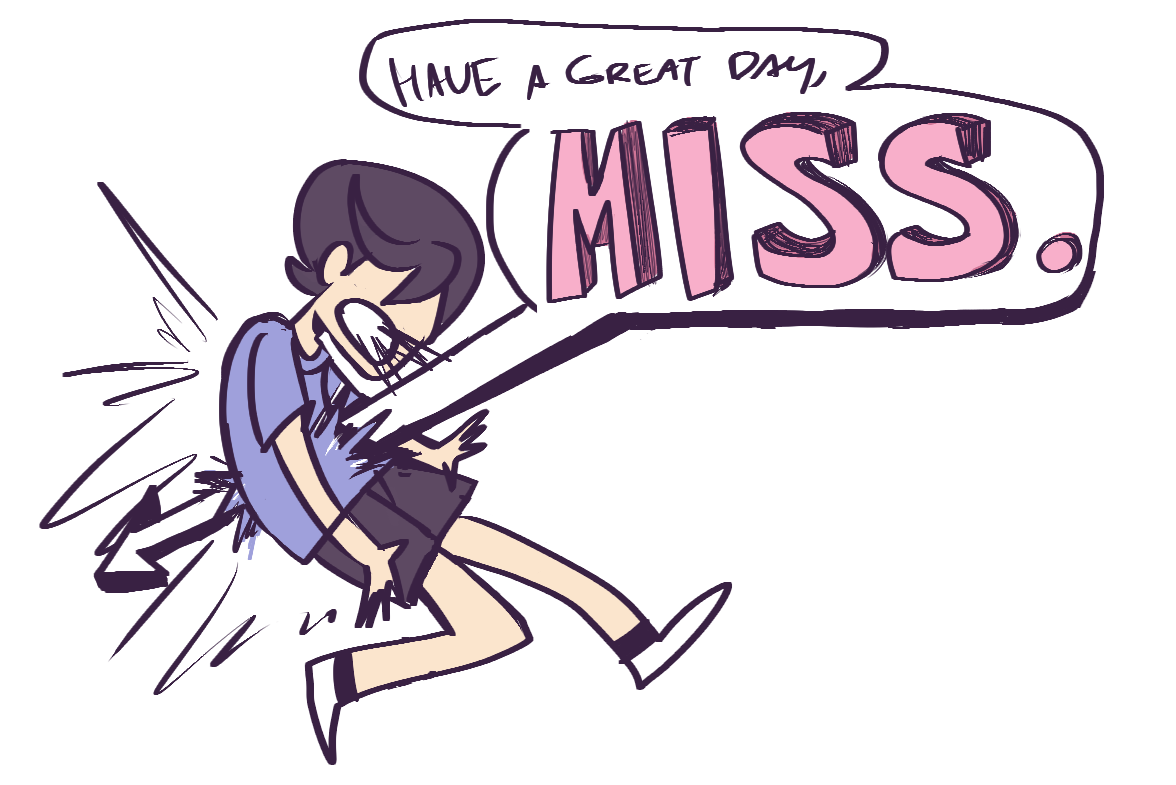
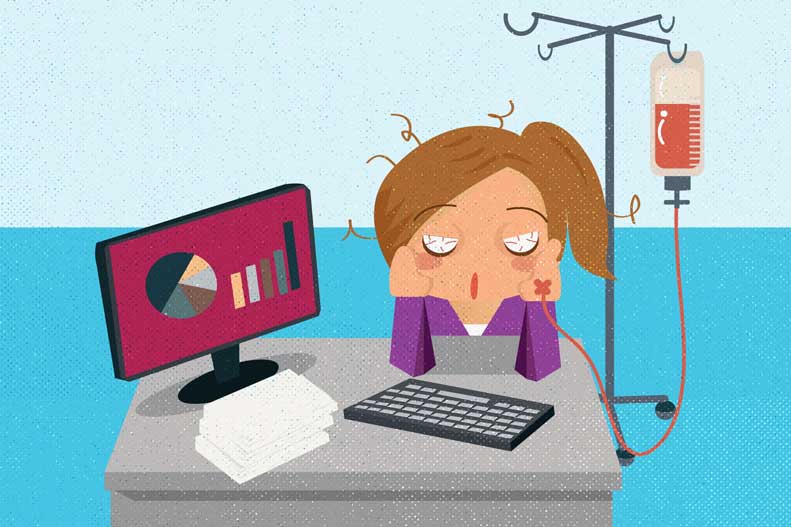
Every time, I can feel the tears fighting their way up to my eyes. I can taste the nauseating anger in my mouth. I can feel my lungs getting tired of the exhausted sigh that is soon to come. All my body wants to do is scream or fight or sob or something. But instead, I just smile – not a real smile, but the type of “white person” smile you give someone on the street. And I try to move on with my day…but sometimes I can’t.
Month: December 2021
A monstrous matryoshka

As I had read Susan Stryker’s article on trans rage and the comparison of Victor Frankenstein’s unfortunate monster, I found myself following each word closely. I had so rarely seen anyone talk so openly about the pains and sorrows that are hidden about transgender identity. The discussion in class presented an extremely important point on who is allowed to show and vocalize strong negative emotions like rage and pain. As a person of color, as a queer and transgender individual, my permission of showing these emotions has been quite small, but looking further inward I know that there are other reasons I am not one to show these emotions. For my last post I call upon Stryker’s voice of these negative emotions and a monstrous identity, but not for my transgender identity, but one I am coming to terms with existing within me. I open up the physical patchwork body of mine to see inwards, within the darkness I see a cage chained to the ground. Moving closer I can hear the rattling of anger, I peer inside the cage to see a gnarled and patched up figure, teeth unnaturally pointed and sharp objects partially embedded in its body. I instinctively know these objects were brandished weapons with the purpose of subduing and killing this figure, but they have failed. This figure was human once and I can’t help the sadness I feel seeing what has become of them.
“What happened to you?” I ask cautiously.
The pause feels deafening.
“I’d think you’d recognize us, not many come back from the war of trauma unscathed.”
It’s said that what doesn’t kill you makes you stronger, but no one should be forced to be this strong to the point of being caged in fear.
As an echo to the original article, my comparison of monstrous identity in regards to trauma is not one to be used against all who have trauma. This is my sole reclamation of my past and should never be used against individuals who do not wish to do the same. This post will include raw calls to mental health happenings in response to traumatic experiences. Though there will be no details of happenings, there are insinuations of abuse on varying levels.
Continue readingUniversities in COVID-19 Quarantine Aftermath
It has been almost two years since universities everywhere had to shut their doors and make the initial quick transition entirely online. After about 3 semesters of learning entirely through the screen of my laptop, sitting on my bedroom floor, I was excited to finally return to campus. However, my excitement was terminated quickly as I became increasingly disappointed by decisions made by professors and the university as a whole during the transition.
I think much of my disappointment stemmed from my ostensibly naïve assumptions that professors and administrators would have learned something from the pandemic’s influence on education. COVID really underscored the fact that being sick is not just an individual issue, but a social one as well. Illnesses are contagious. They are not something to “power through” and ignore just to show up to class. So, I was amazed to see that multiple of my classes still had very strict attendance and illness policies. I do not understand how it could at all be advisable to only have 1-2 allowed absences before a doctor’s note would be required (also while the pandemic is STILL going on).
Another major disappointment was that most of the professors did not take advantage of a lot of the online learning tools we all became familiar with over the past year and a half to continue to make education more accessible. As we are still in a pandemic, it should be expected that those same factors influencing access to education, mental health concerns, etc. during the online portion would still be at play in person. Yet so few of my professors saw an opportunity to allow for asynchronous engagement with the material, or for recorded lectures to make up a missed class.
Over the online portion of the pandemic, many professors were more receptive to student feedback and requests as well as more lenient and empathetic to an extenuating circumstance. However, in-person all of that seemed to disappear yet again. A combination of all of these previously mentioned factors puts students in a very high anxiety dilemma during the end tail of a pandemic. The student does not have access to alternative delivery of material if they get sick and they do not have the flexibility worked into the syllabus to allow them to minimize consequence if they were to take more than a day off. It puts the student in a position where their only available options are to put others and themselves at risk but continuing to attend class or risk their own grade and even the possibility of a direct point reduction for missing in-person classes and discussions.
Overall, I was very upset with my experience back in person. If the university is going to put signs up and send emails out encouraging students to stay home if they are sick, then they need to ensure their faculty are writing syllabi and enforcing policy consistent with it.
Body!
Hear me out: Although I don’t do it, I like working out.
I did yoga a lot when school was online but it was always at night so I wouldn’t be interrupted but it just felt kind of…pointless. Who works out at night just to sleep right afterwards?
I mean, I did, but you get it.
I just was never consistent and the thing is, I go too hard. I push myself for the post-workout pain like I’m not this blob of unexercised mass literally because I like to, like the smallest exercise won’t hurt. I’ve learnt to be nicer to my body because of this class but I think I’m really not ready to consciously exercise and learn my limits. I also refuse to calorie count or weigh myself because I’ll get obsessive.
And my body goals are not…casual.
I also wanted to play a sport but I feel like it’s just because I like being dedicated to something. I ran track in middle school for a little bit but that wasn’t really my sport and our coaches sucked. I wanted to cheer in high school, but as a senior when I decided I wanted to, I felt like it was too late. I forgot to go to the tryouts or interest meetings here. My best choice now is making myself work out on my own, with the only thing driving me being me.
I want to start weightlifting. Muscles and flexibility (not losing weight, even though I think that’s inevitable?) are my fixation right now so remember those unconventional body goals? Women gymnasts, figure skaters, bodybuilders, and men that play superheroes.
Yeah.
Yeah, I know.
I love those videos of when actors talk about their routines to get however for a certain role like I’ll ever be in the gym doing whatever actually superhuman shit they did but it’s nice to imagine. Figure skating (or just ice skating in general) just looks really fun and I think it’s the idea of working out and then taking it to better a talent that sounds so fun, same thing with gymnastics.
I just don’t have it in me and that’s okay. I’ll get to it when I have it in me.
I think my obsession with muscle comes with me being nonbinary, in a way. Women are seen as “soft” so I use it to distance myself because I see how women who aren’t your conventional “soft” are sidelined, no matter how unfair it is to those women. It’s hell to be told “Women aren’t supposed to look like that!” from…well, everyone, when all you have is muscle and work out.
I know if I ever start working out, I’ll be hit in two different ways from my family, specifically the women in my family. They’ll either a. try to start with me because no adventure is my own or b. judge the hell out of me because I’m going further than they expected. I’m excited for either because I’m just gonna keep going.
With all that being said, if you see me in the gym next semester or just running around (you probably won’t but it’s the thought that counts), hiiii.

Taking Up Space.

My entire life, I have struggled with who I am–an alpha. I was raised with this mentality by my dad, he taught me to take up space and to be the alpha female. Granted, this caused us to argue and bump heads like you wouldn’t imagine, but despite that, he made me feel as if I can do anything. Even in a society that doesn’t appreciate women and doesn’t allow them to try and take up space, I still do so. I am blunt, smart, fierce, but also emotionally intelligent, resilient, soft, and empathetic. THAT is what makes women, women. We are capable of both sides, being strong and providing while also being able to comprehend and understand someone’s feelings and emotions about a situation. We are superior and are incredible.
For me personally, this can also be a double-edged sword when it comes to taking up space in your own relationships. Always being the leader in every situation, being the informer, the overthinker. Always two steps ahead of everyone, even my own boyfriend. Having two dominant people in one relationships is hard, and taking up space where it isn’t wanted creates so much conflict. Conflict in ways that he feels inferior to you, or feels that he should always be the problem-solver and not you. When you are completely capable of handling it yourself. It is a hard situation to navigate, and it is hard to find someone that embraces that about you instead of putting you down for it. Taking up space feels powerful, until it doesn’t. Despite this feeling, you should always continue to take up space–you will eventually find the space that takes you.
Running on Empty
How much of the time are you “running on empty”, just struggling to get through the demands of the day without considering your true feelings.
The inner self is about what can’t be seen: feelings, intuition, values, beliefs, personality, thoughts, emotions, fantasies, spirituality, desire, and purpose. In contrast, there is the outer self which is what can be seen and what we present to the world. It generally concerns with material things such as hair or clothes as well as the personas you portray. We usually try to curate our outer self to reflect the best.
Conflict arises when your outer self becomes a habitual pattern at the expense of your true feelings. This conflict often occurs due to spending too little time considering your inner self.
Lately I feel like I have been “running on empty”.
When I imagine my future, all i see is gray. Yet I am working hard and sacrificing sleep in order to get through the demand and responsibility of passing college. When I took the moment to attempt to balance my outer and inner self, I realized I wasn’t sure how I felt about the career path I chose but I also had no desire to figure out what I wanted to change. I also don’t quite feel like the person I present to the world is me.
Trying to find the balance between your outer and inner self can be difficult, but it is important to stay aligned to your inner self as much as your success on the outside. An imbalance can cause stress, feeling of emptiness on the inside, and damage.
If you also feel like you are “running on empty”, take the time to slow down, focus on the moment, and listen to your thoughts as you go about your day. Only you will know what specific changes might help to align you with your true inner self.
learning that I’m disabled
Content Disclosure: discussion of mental illness; detailed depictions of anxiety, depression, panic attacks, and disordered eating; internalized ableism and fatphobia; mentions of suicidal thoughts and self-harm
Continue readingThis Space is Accessible, but Unwelcoming

You have no choice but to work with what you’re given. After a semester of looking at some of the most marginalized populations throughout history, it should be clear that the body you occupy is a significant factor in what path your life takes. Everyone probably knows to not judge a book by the cover. However, realistically the stereotypes that come along with visual markers of identities like sex, race, ethnicity, and so on are carried into every new room you step foot in. Sure, it’s 2021, we are in the midst of the girlboss era and Netflix’s poorly executed diversity campaigns. I’ve often heard from peers that “social justice warriors” are now making problems out of nothing since society has become more progressive, but I strongly believe that a lot of sexism and racism are better hidden which is so scary to me. In her post Access Intimacy, Mia Mingus described how, as a disabled woman, there is a level of acceptance and comfort that only comes with being surrounded by people who also have a disability. I try to deny it, but I agree it is hard to exist in spaces where deep down you know you stick out in like a sore thumb.
I admit, I’ve been very fortunate to never have gone through any trauma or discrimination in my life but I can really relate to Mingus’s sentiment. Volunteering at a fire department takes up most of my time and has sadly become my central personality trait so I’m sorry that every post I’ve made to this blog is about my time there. I volunteer to get clinical experience for professional school applications and I genuinely want to be a capable member, but on big nights where there’s a lot of volunteers I’m always the only female. They’re generally pretty welcoming, but recently I couldn’t pretend to be ignorant anymore of the fact I’ll never be one of them or be fully respected. One of the guys I’m not as familiar with pulled me aside to accuse me of sleeping with the career staff and continued to make lewd jokes if I went off anywhere with anyone. Dude, there are literally only men present who the fuck else am I supposed to spend time with? I even try to be less feminine by avoiding makeup and wearing sports bras when I’m there but regardless I’m seen as a slut. They all cluck together like hens so I knew this was how they all actually felt about me. He’s just the one ballsy enough to speak up and protect his brethren from the temptress who has infiltrated their ranks. I stayed calm until I got home and I stood in front of the mirror with the razor ready to cut all of my hair off again. I didn’t cut it for two reasons: I looked like prepubescent Justin Beiber last time and regardless I’d still have a girl’s body and all the assumptions that go along with it. There’s a lot of positives to being a girl don’t get me wrong but sometimes there’s nothing I’d want more than to see how the other side lives. I know this perspective only acknowledges the gender binary but that’s the default framework most people think in and is what determines how they treat you. Looking at the big picture this passive-aggressive sexism doesn’t hold me back from getting the experience I need, so all I can do is let the rumors pile up in my wake.
What Covid has taught me about being sick

It has almost been two years since the onset of the covid pandemic. While looking up the timeline of this pandemic, I thought “Really? Only two years?”. That sentiment shows how much covid has had an impact on our lives. Obviously covid has changed many things about daily life, but it has also exposed intrinsic problems within our society. Despite changing many things, one thing that has remained the same; American society has a huge stigma against being sick.
On Wednesday of last week, I started to feel like I was getting a cold. Despite this, I started to get ready for class. I had already missed Monday and I didn’t want to miss another day that week. The entire time I was getting ready I felt miserable and I kept complaining about my headache. Finally my girlfriend made me stop and took my temperature; I had a fever. I was frustrated because I definitely couldn’t go to campus now. Instead of being worried about my health, I was worried about missing class. Looking back, it was a good thing I didn’t go to campus, the next three days I laid in bed with a 102 degree fever.
While I didn’t have covid, it would still be extremely inconsiderate to come to campus and spread the yuck. This is when I realized how strange the sentiment towards illness is in America. In the precovid times, it was so common for people to go to work sick, sacrificing their health and wellness to make money and seek approval from their bosses. In the meantime, they are getting their coworkers sick too. When we get sick now we panic that it is covid and rush to determine that it isn’t so we can continue on. But shouldn’t we care about our bodies handling a cold just as much as we worry about covid? We view illness as an inconvenience and that is true; it disrupts our normal routine and makes you miserable. But instead of focusing on healing and protecting those around us, Americans “power through”. In short, covid has taught me that american society has their priorities in the wrong places. Why did we ever think it was normal to expose other people to a cold?
Super Senior
UMBC has been a big rollercoaster for me. Literally freshman year was like the beginning of a roller-coaster where it’s calm and just straightforward. You’re anticipating for the fun to come and you riding in thinking “This will best ride of my life.” That was true until sophomore year. That crap was like the roller-coaster had 5 screws missing from the track. A track that was wobbly and unstable to begin with. My father got severely ill to the point of hospitalization. No one ever saw it coming, and broke me to the core. Due to my father living in another state, I had to continue going back and forth, and it really affected my mental and emotional. I literally just gave up on school. That semester I failed. I failed. ME! I failed. My mother was so disappointed , and it wasn’t even because the school didn’t give me excuses/extensions, it’s because “I let myself go, there are people out there that have it way worse than you.” Lol. So due to me “letting myself go”, I have became a super senior. Now that I’m here for another semester, paying another big ass tuition, and another semester from my dreams and hopes. Three months might not be too much for some people, but for me that’s basically half a lifetime (I know dramatic) that I could have used going to PA school. I honestly told myself that I would finish my degree in precisely 4 years, but I guess things happen for a reason.