Emotional labor can be defined as the action of managing one’s emotions, thoughts, and outward expressions, in order to conform to the responsibilities and expectations of that individual’s position or job. Women have a number of expected positions that they hold and must fulfill because of the patriarchal structures that imposed that on them; mother, wife, daughter, sister, friend, healer, teacher, worker, and more. Though emotional labor comes with every job, every position, and every relationship, women face a heavier burden of emotional labor because of the exhaustive list of commitments that they hold.
we’ve all had to conform to a capitalist society where our value is placed upon how much work we can do. in the past few years, ideas of working and “hustling” have become romanticized, and its seen as a way of working hard while we can in order to see the fruits of our labor later on. my question is, when is later on?
There’s a problem with anti-trans activists trying to deny gender-affirming care to someone diagnosed as autistic. While it isn’t impossible to receive gender-affirming healthcare with an autism diagnosis, some people have reported issues with being denied on the idea that autistic people do not know their own mind or bodies.
This is becoming a concerning issue when you have to either choose to be autistic or choose to be transgender. I do not mean that you have to choose which one to identify with, as I consider myself to be both, I mean in accessing healthcare. There’s been a trend between transgender people having to choose between gender-affirming care or mental healthcare. James Pisani has noticed an issue where trans people sign up for insurance with good transition care, but terrible healthcare. While it wasn’t discussed in the article I read, when it comes to making a choice, you face mental health issues either way. If you choose good transition care, you get more gender euphoria, you face less personal and public issues regarding how you present yourself, even if it’s at the cost of mental health care and autism support. Say you aren’t the majority of people who made the previous choice, and you instead sacrifice gender-affirming care for mental healthcare. Even if you have the best mental healthcare possible, you will still face the dysphoria or other issues that come from being trans. Being transgender is already a toll on mental health (for most people, I think).
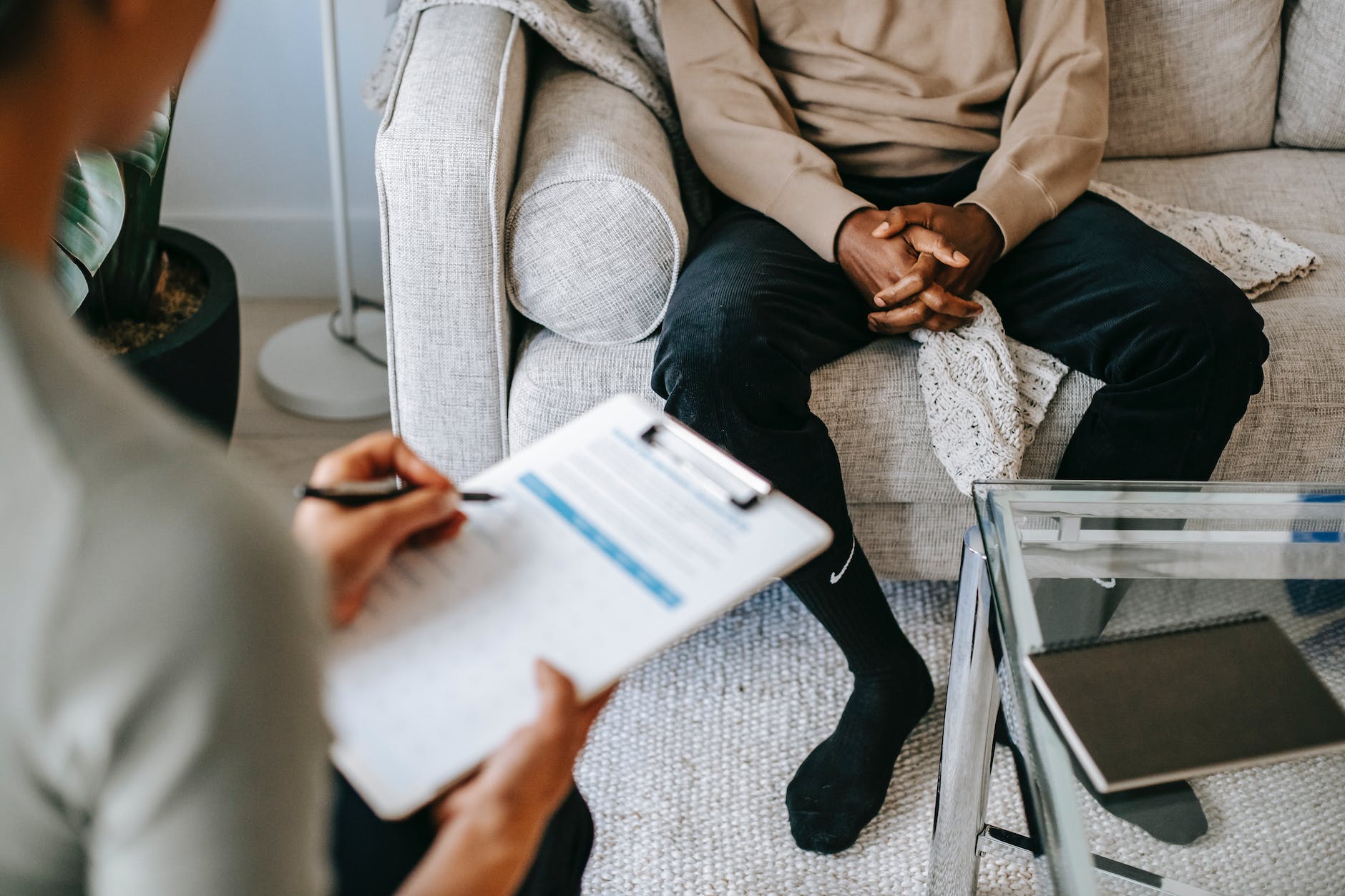
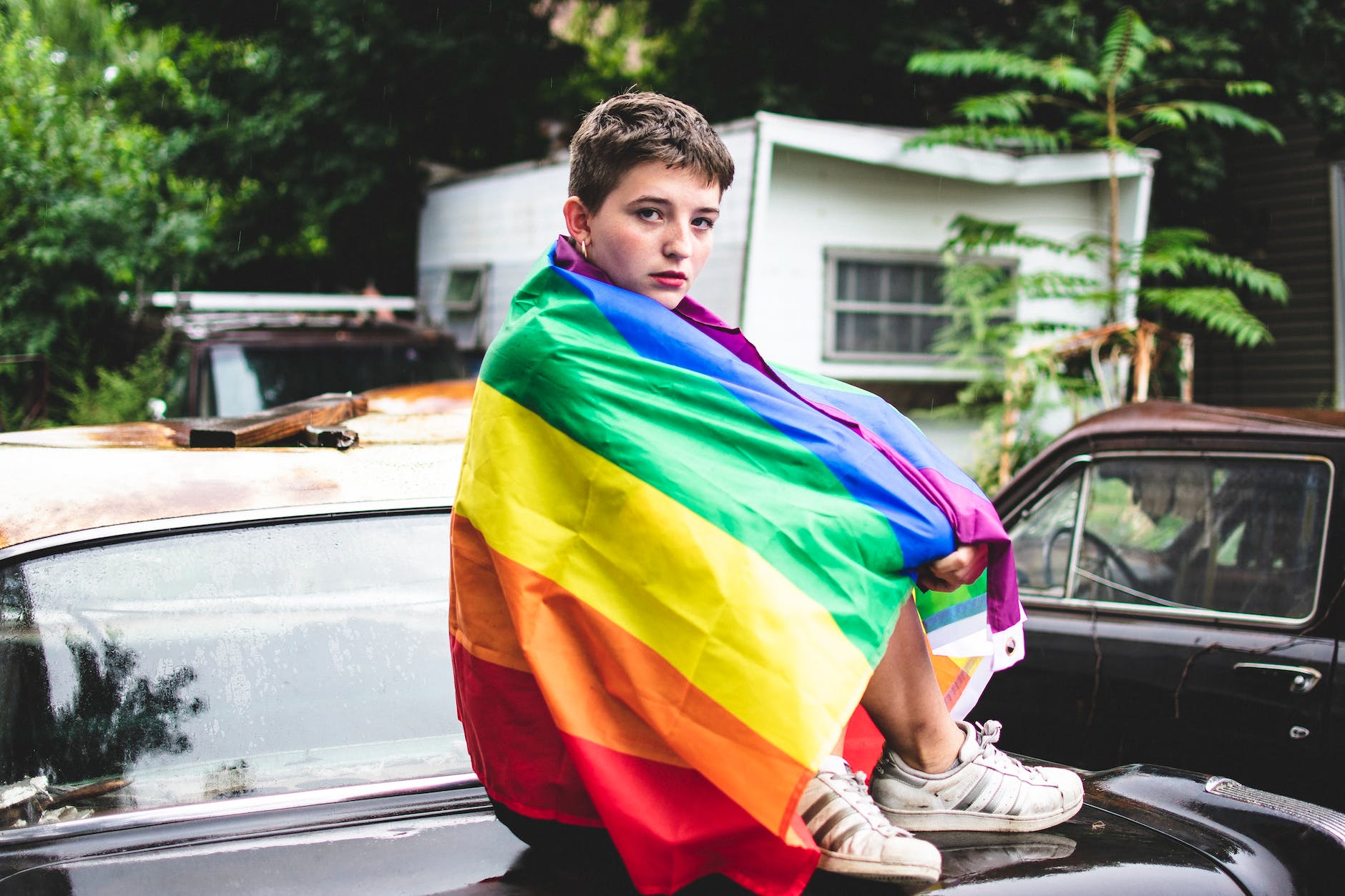
A slider image, with one side showing someone in therapy or similar location with another person holding a clipboard (This is meant to represent choosing healthcare). The other image is someone sitting on top of a car, wrapped inside a rainbow flag (meant to represent choosing transgender care).
Moving on, there’s already been a consistent problem in trying to deny trans identity for a long time. Especially when it become regarded as a “trend”, instead of wider visibility that made people consider their own idea. This exact thing occurs with autism, where some people see the rise in autism diagnoses and consider it to be a trend, rather than the fact they were always autistic and just never had the knowledge or resources to know beforehand.
Correlation between being gender-diverse and being autistic is still under-research. Some researchers, and myself, think that when someone identifies as genderqueer or autistic/ND in some way, that they are less concerned with fitting into society, and are more willing to consider their identity.
I want to wrap this up by the idea that although there’s an overlap in being genderqueer and autistic, that doesn’t mean either should be taken less seriously. I think there needs to be a pushback against the idea that autistic people are incapable of understanding themselves. Thank you for your time 🙂
Why is chronic illness a bad thing? But first, let us get a broad idea of what chronic illnesses are. Chronic illnesses are those with conditions that can last a long time such as 2 months or longer and require ongoing medical attention. This also limits the person from doing daily activities due to something such as back pain, sleeplessness, and more. I would say a lot of people have some type of chronic illness and it shows. At my workplace I see a lot of accommodated items in different desks such as some type of foot stool, special work chair to help with their back pain, odd looking keyboard, and an odd looking mouse to help with their wrist issues.
So back to the question on why people think it is a bad thing, specifically companies. In the article of, “Unhealthy Disabled: Treating Chronic Illnesses as Disabilities” by Susan Wendell, she says, “Most workers feel put-upon and frustrated by their working conditions and the demands of their employers on their time and energy. They have to stand up all day, or have few bathroom breaks, or work overtime or at night, and their employer refuses to accommodate to their aching backs, their family pressures, their sleeplessness or difficulty in concentrating. Many workers, that is, find the demands placed on them next to over whelming at times, and they feel barely able to cope. Rarely do they get a sympathetic ear to voice their frustrations, however, and the only agents they are allowed to blame for their difficulties are themselves” (Wendell, 2001). If people have chronic illness, then the company is forced to meet their demands and needs because of the law placed so they can work normally like others. If they don’t get what they want, then they would just simply leave. If a company did not heed my request, I would leave as well because I can only do my work so well if I am actually working comfortably. If I cannot get what I need, why work there in the first place? Before you start going into that job, make sure you do some research on how the company treats their employees. Otherwise, be that person to make some change which will impact the community in a good way.
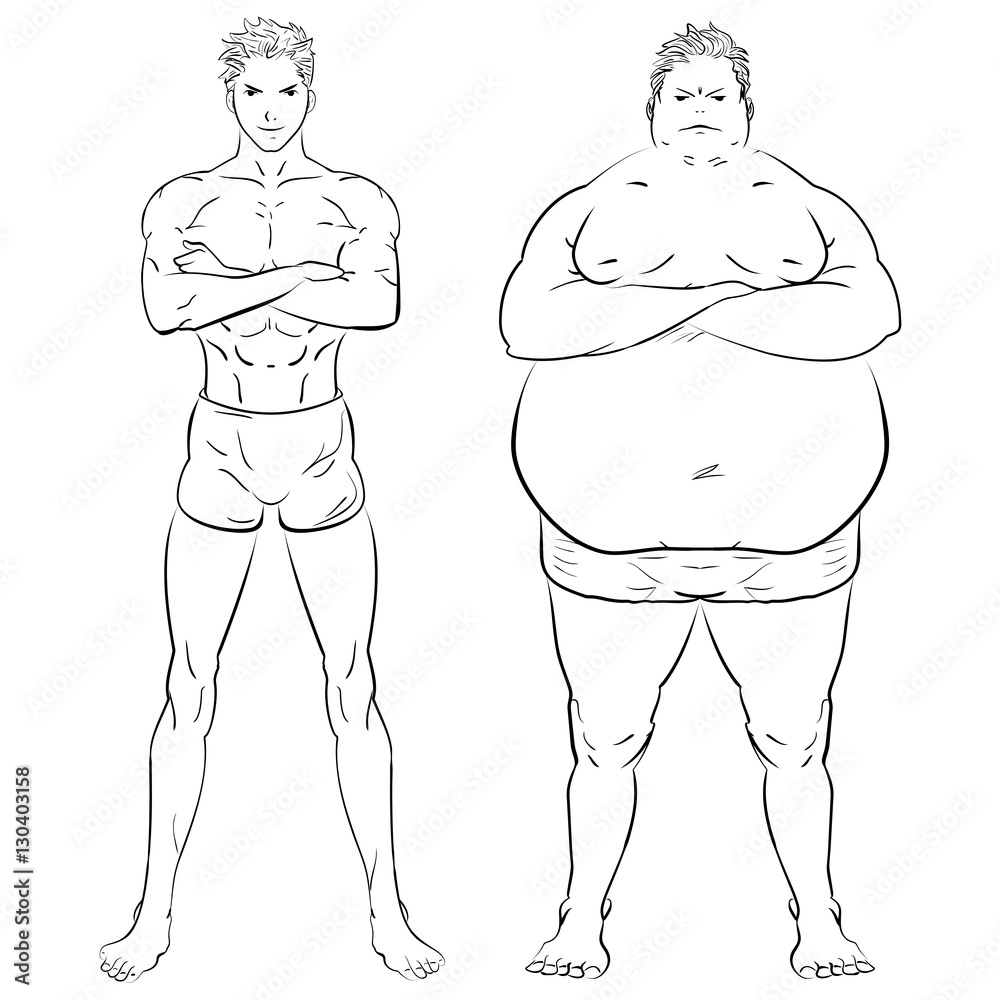
Am I skinny or are you just fat? I see quite often on social media on body shaming or just people looking for shortcuts on how to become skinny or fit. All of these “tips” I see come directly from Instagram for the most part. So whenever you do one search, more searches appear quite often with what you searched previously, so those recommendations will keep appearing until you search something completely different. From these searches, I see videos on how to lose fat easily which is through intense dieting which never works because it is more work than going to the gym and it makes you miserable. In a podcast, I listened to “Is Being Fat Bad for You?” and around 1:17:00 mark, one of the speakers says, “There is not a single method of weight loss that is non-surgical that meets the standards of being evidence-based treatment”. They mention that there are people that are like 250 pounds and are on a heavily strict diet, yet there is barely any progress to their weight loss. People get their weight loss done through surgical means, but it is costly. At this point, you are better off just going to the gym which helps you lose weight faster if you have a personal trainer to get you to the right path. That way, you won’t need to do intense dieting nor surgery. There are videos that show the same food you eat, but with less macros. I am skinny, so I am bulking which makes me eat whatever I want in order to grow. So, if you think you are not where you want to be, ask a doctor for meaningful advice or ask a personal trainer that can help you get on the right path whether you are skinny or fat!
As a trans person, much of my existence has been spent thinking about mine and other people’s bodies. Growing up I had a pretty clear cut idea of what it meant to be a woman and what it meant to be a man. This idea was shaped largely by my conservative Christian upbringing. Even before I started my medical transition, it was apparent to me that I was built larger than most of the AFAB* people I surrounded myself with. My shoulders were broader, my chest larger, my limbs longer, and many things that I felt weren’t “womanly” enough. I spent so much of my youth trying to correct these things as if that would magically fix all of my problems. This sent me into a life long battle with my relationship towards not only my body, but also my relationship towards food. At twelve, I started to lose a lot of weight and I started counting all the calories I would eat in a day. It’s as if the numbers went down, then so did the things that made me seem more “manly”. This was around the time that I started to realize I was transgender. Turns out that eating less than 500 calories a day wouldn’t solve my body dysmorphia or my gender dysphoria. As time went on, I tried to correct these things even more. I wore dresses and makeup, I grew out my hair, and I started to act more “feminine”. After about 3 years of that, I realized how much these behaviors had made me grow to hate myself. I was not only starting to be unhealthy mentally and physically, but I was full of more self hatred than when I started. Looking back now, 4 years after I came out as transgender and accepted these parts of myself, I realize how harmful these behaviors really were. The thing about that is, I still have these thoughts almost daily. I’m in a position now where I can shut them down, but it’s still strange to me how these gendered behaviors and ideals can still coexist with my existence as a trans man. I know that trying to act more feminine won’t erase my transness, but sometimes I still wish I tried harder. I live my life now, knowing that the gender binary is a colonial ideal that really doesn’t do much but harm the individuals in our society but that doesn’t stop me from thinking about them. I love my transness and the transness of those close to me, so why do these gendered ideas still live in my head from time to time?
There’s a struggle at the very heart of my experience as a trans person. The struggle of trying to navigate a society that heavily reinforces the gender binary in ways that most cis people don’t even think about, while also trying to do away with this outdated notion. A prevailing notion on how one does gender is through their performance. Our appearance & the way we use our body signify to others what gender we are. There is nothing in one’s very nature that makes her a girl, it is how she’s been taught a girl looks & behaves that determines her performance as such. I’ve discussed gender in the abstract, but how does it apply to me? How do I experience gender? Well, I am a demigirl, an identity within the non-binary umbrella where I am a girl, but also partially outside the gender binary. Despite this, in circumstances where I have to interact with mostly cishet people, I desire, but do not achieve, to present as femme as possible, to only be seen as a girl, as I don’t trust the general society to grasp that nuance. If someone even for a fraction of a second thinks that I’m a guy, it’ll create gender dysphoria. So if I’m basically trying to present as a girl, this in a way could be perpetuating the gender binary, by erasing the non-binary aspect of my identity in my presentation. But then how does one present as non-binary? There is a misconception that non-binary inherently means androgynous, because you are neither a boy nor a girl, you must not lean towards looking like either. This just creates a gender trinary, which I feel like is only an improvement from the gender binary in superficial ways. It allows for the expansion of gender in so far as it doesn’t mess with the existing structure too much. In other words, as long as it doesn’t challenge the patriarchy. But then, how do I do my part in transforming society such that the general notions of gender match how diverse it actually is? The only satisfactory answer I’ve been able to come up with is for others to be educated about the nuances of gender. After all, I don’t feel that same pressure in queer, especially trans, spaces. In those circumstances I know I’m around people who have the same or similar enough experience & knowledge of gender that I don’t feel obligated to live up to gendered pressures that are thrust upon me. When I’d go visit my ex-boyfriend, or my ex-girlfriend before that, who are both trans, I knew it wouldn’t matter if I didn’t feel up to looking as femme as I could manage, as they’d still see me as the gender I am. So through my experience with other trans people I know it is possible to live in a society that doesn’t require strict adherence to gendered stereotypes. But I can’t really give a presentation on gender to every passerby on the street, so all I can really do is wait, & until then, hope I’m seen as a girl.
trigger warnings: body dysmorphia, suicide, mentions of disordered eating, illness
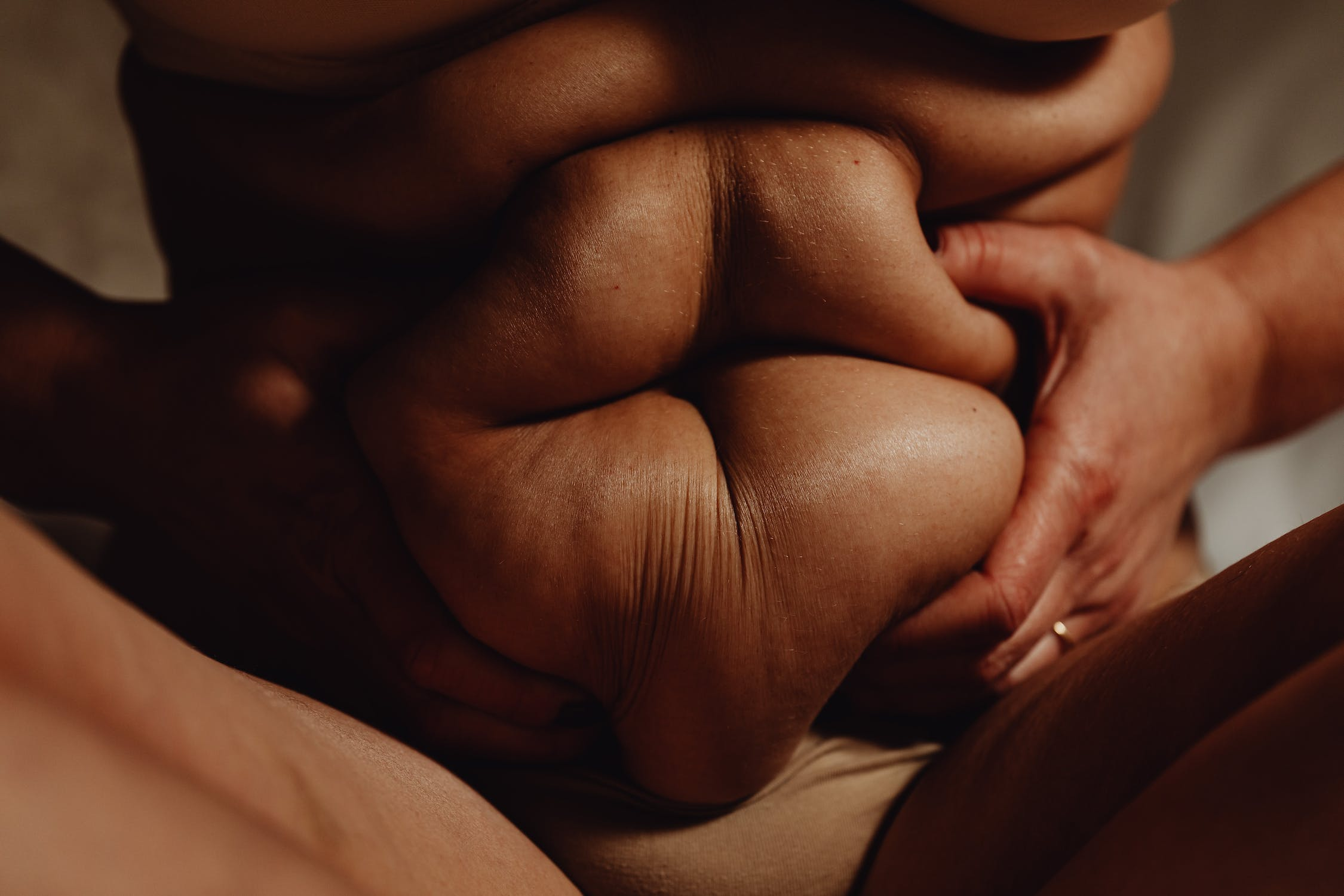
If you remember what your body looks like, I think you’re one of the lucky ones. If you don’t, then I’m not so glad this is what we have in common. Coming from an older West Indian family, my body was always a discussion. No matter how many soccer practices I showed up to, salads I ate, nor how well I did in P.E. class, whenever an aunt approached me it was always “You’ve gotten bigger!” Even throughout my adulthood my body has gotten bigger. I know I’m big, but I wish they knew that I didn’t need to be reminded every second of my life.
I think it’s important to note that I wasn’t always fat, but I still struggled with food and dieting at a young age. Having to deal with cholesterol issues during elementary school was the start of my long, relentless relationship with food. I remember sitting in the doctor’s office with my uncle, his eyes glazed over, listening to every word my pediatrician said. My relationship with food not only originates in this moment, but also with my family’s history of heart disease, diabetes, and many other debilitating diseases. By the time I reached high school, my uncle had a coronary angioplasty, stent insertion, triple bypass heart surgery, and several other surgeries for various kinds of cancer. He never wanted me to suffer like he did.
For as long as I can remember, my uncle micro-managed everything that graced my plate. There were even times we fought at the dinner table so he could see whatever takeout I’d brought home. The stress of bringing home any form of food that he would scrutinize started to transfer into other aspects of my life. In middle school I discovered how uncomfortable it made me feel to eat in public spaces. In high school I even went as far as to become the library aide so I could escape the daunting task of consuming food in the adolescent-filled cafeteria and tried my best to retreat back to the library every lunch break. The library was my safe haven, a place of structure for the moments where I felt the most vulnerable. This is still a habit I have today, I always look for security.
It wasn’t until my senior year of high school that I started my first romantic relationship. He was beautiful, smart, and even had a piercing on one ear that was the jackpot of my teenage girl fantasies. Being with him was the first time someone told me I was pretty. For someone that had only dreamed of having a boyfriend, that meant the world to me. I naively thought that feeling would last forever. As the pandemic raged on, and quarantine forced us into our isolated nests, there became an evident strain on our relationship. Still, we continued to stay with each other. I never noticed when his demeanor changed or that I couldn’t fit into half of my jeans anymore, or even that I was getting bigger than him. I made a huge mistake. You know that horrible mistake people make when they get lost in a relationship because they already have constant bodily validation? Yeah, that one. I gained the “happy weight”, I let myself go. People hate happy weight because being fat makes you feel empty and alone after a relationship. Nobody thinks that you’re attractive anymore and it feels like now there’s this huge responsibility that you have to get back to when you were skinnier. I fucked up.
Coming out of that relationship I became extremely depressed. I moved back in with my family, back to a space I never felt secure in. Endless nights spent scrolling through Tinder, a space where your body is always being perceived, felt completely invalidating. I was a completely different person. And I didn’t feel that way because I had loved and learned valuable lessons about navigating relationships, but it was because I was fat. Everytime I looked into the mirror, a devil appeared on my shoulder pointing out every flaw on my now monstrous body. It’s like my ego had turned against me.
I didn’t want to live in my body anymore. I thought I was nothing without the comfort of another person telling me I was good enough. I can’t say that I never feel that way today, but I’ve worked on it. I’m not about to go on a spiel about how much it matters to love yourself, nor about how self-love is a journey and not a destination… but would love really be worth it if it meant that I had to be skinny, athletic, or fit any of the aesthetic qualities guys on dating apps wanted? Probably not. But I want to be better, because I know that the moments in between these feelings of doubt and despair are much more important than these superficial views of my body. Though, how I never saw myself changing is still a phenomena to me.
In the end, I’m still trying to upward spiral out of this feeling called body dysmorphia.
As a bioinformatics student working mostly with AI, I find myself thinking a lot about non-human thinking systems. It makes a lot of sense in a mind/body dualism school of thought to take a brain and put it into a computer. Actual research into the field of machine intelligence has found that, while neuromorphic AI (AI designed based on models of the human brain) is the place where the best progress has been made, models of the brain are only about a tenth as capable as an equally complex biological network. Additionally the constraints of these systems don’t behave in a way consistent with that of our subjective experience as thinking systems. The one most relevant to the conversation around phenomenology is that of the input requirements for neural networks. Even “generative” neural networks like StyleGANN (https://thispersondoesnotexist.com) use an input of random numbers generated by a computer to give an output. For a thinking human this tends to go against one’s general impression of how their own thought processes work, however phenomenology points out that we are constantly receiving input both from our bodies/senses, as well as in the form of the recursive input of our own focus.
Another thought I have had is whether or not animals have a sense of mind-body dualism. This is actually something that has been studied experimentally! The experiment generates involves a control of placing the animal in front of another member of its species and watching its reaction(s) followed by placing the animal in front of a mirror and watching its reactions. Some animals see their reflections and interpret them as another animal of the same species, unable to distinguish between reflections of the self and other individuals. Most animals just generally ignore their reflections. especially adults who have seen their own reflections in water or glass. Some animals show initial confusion followed by an understanding that the animal in the mirror is the body that is attached to the stream of thought in their head. Most of these animals will remember that experience too and will no longer show confusion in front of the mirror, showing that they have some persistent sense of self. It’s all fascinating and while I would love to write more about it I have to run this in since it’s getting late.
If someone complimented me, they obviously didn’t mean it. It was a social experiment, a tease, some witty inside joke I wasn’t a part of. Especially if it was a male, they wanted to express their male dominance because they’re insecure about their masculinity. I’m a ‘mere object’. They wanted something from me. They have an ulterior motive, with a million strings attached. These are some of the subconscious thoughts that run through my head when I am complimented for something. The sheer audacity of feeling good from someone’s compliment felt narcissistic. I’d honestly rather be criticized. I had to humble myself.
In Citizen by Claudia Ranken, she writes about how “the physical carriage hauls more than its weight”, in other words how our bodies hold more weight than what is shown on the scale. The weight means trauma and experiences we gained through being a conscious, breathing being. Growing up, I was always taught that if anyone had done a nice favor for me or complimented me, they wanted something. I kept this ideology in the back of my head, like a sticky note I would reference each time I interacted with someone. Over time, I amassed a couple hundred of these notes which eventually turned into a know-it-all heavy weight I lugged around when navigating the real world. “Cute outfit!” a stranger said. “Nice try.” I would think to myself. “You’re not getting into my head that easily.” “You’re so pretty!” Another would exclaim. “Lies.” I thought again. I knew how pathetic I was. I wasn’t conventionally attractive. The phenomenon of having this toxic belief ingrained in my brain destroyed every ounce of self-confidence and feelings of worthiness I had throughout my childhood. It was hard for me to sustain relationships with my friends without these thoughts creeping into my mind because why would they want to waste their time with someone like me? Did they want something? Are they playing the long game?
Eighteen years later, I still have an internal debate whenever I receive a compliment or even a simple praise. The guidebook is etched deep within my brain, so it’ll take quite some time to reverse its effects, but I’ve learned to accept these thoughts and let them free. My friends are friends with me because they value who I am and appreciate my presence, not because they have a secret agenda (unless they do…just kidding). People give and receive compliments because they genuinely had a reason to. So, when someone compliments you on your drip, take it with pride! Make an effort to throw one back. Spread the love!
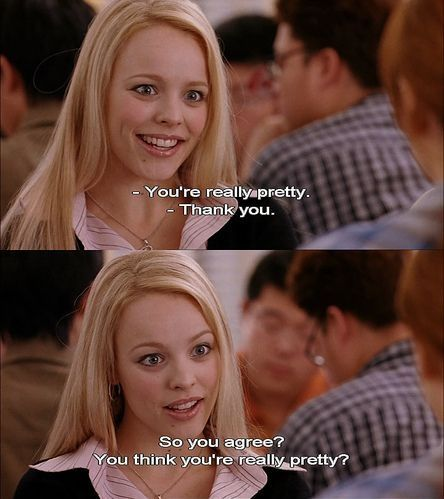
Regina: You’re really pretty Kat: Thank You Regina: So you agree? You think you’re really pretty?