Learning the experiences of fellow gender-nonconforming people through reading Nonbinary: Memoirs of Gender and Identity allowed me to reflect on my own journey of self-discovery. During a time in which transgender voices are facing such prevalent suppression, essays like these encourage their audience to resonate with the writer. I feel grateful to participate in a class that enables me to share my authentic voice.
When I first heard my birth name, I looked over my shoulder expecting to see somebody else entirely, as there was simply no possibility that alien name belonged to me. My first spoken desire post-speech therapy graduation was to please refer to me with a combination of my first and middle name, granting myself some authority in what I’d be called.
Born with panhypopituitarism, a condition in which the pituitary gland is malfunctional, proved disadvantageous in many regards. I never hit standard female puberty: my menstrual cycle never triggered, my breast tissue is scarce, my voice remains neutral. Upon learning this, people aware of my transgender identity revel in how lucky I must feel that I never underwent these changes to cause an onslaught of dysphoria. And, while it could be considered a gift, their ignorance to the daily burdens that it imposes upon me feels like a punch in the gut. Referred to as the master gland due to its major role in regulating the endocrine system, my underactive thyroid gland has affected me in more ways than simply substituting as an English teacher for those unaware of the condition. Chronic fatigue clouds my daily performance, my immune system is weaker than average, perseverant body fat and a stubborn double chin combined with reduced muscle mass has been a source of contention amongst my body image, abnormalities in the lipids and heart rate affect my long-term health, and even unstable moods have always cast a shadow over the outsider’s perceived “but no boobies!” light for me. (Plus, I do still kind of have boobies: see “weight regulation”, or lack thereof.)
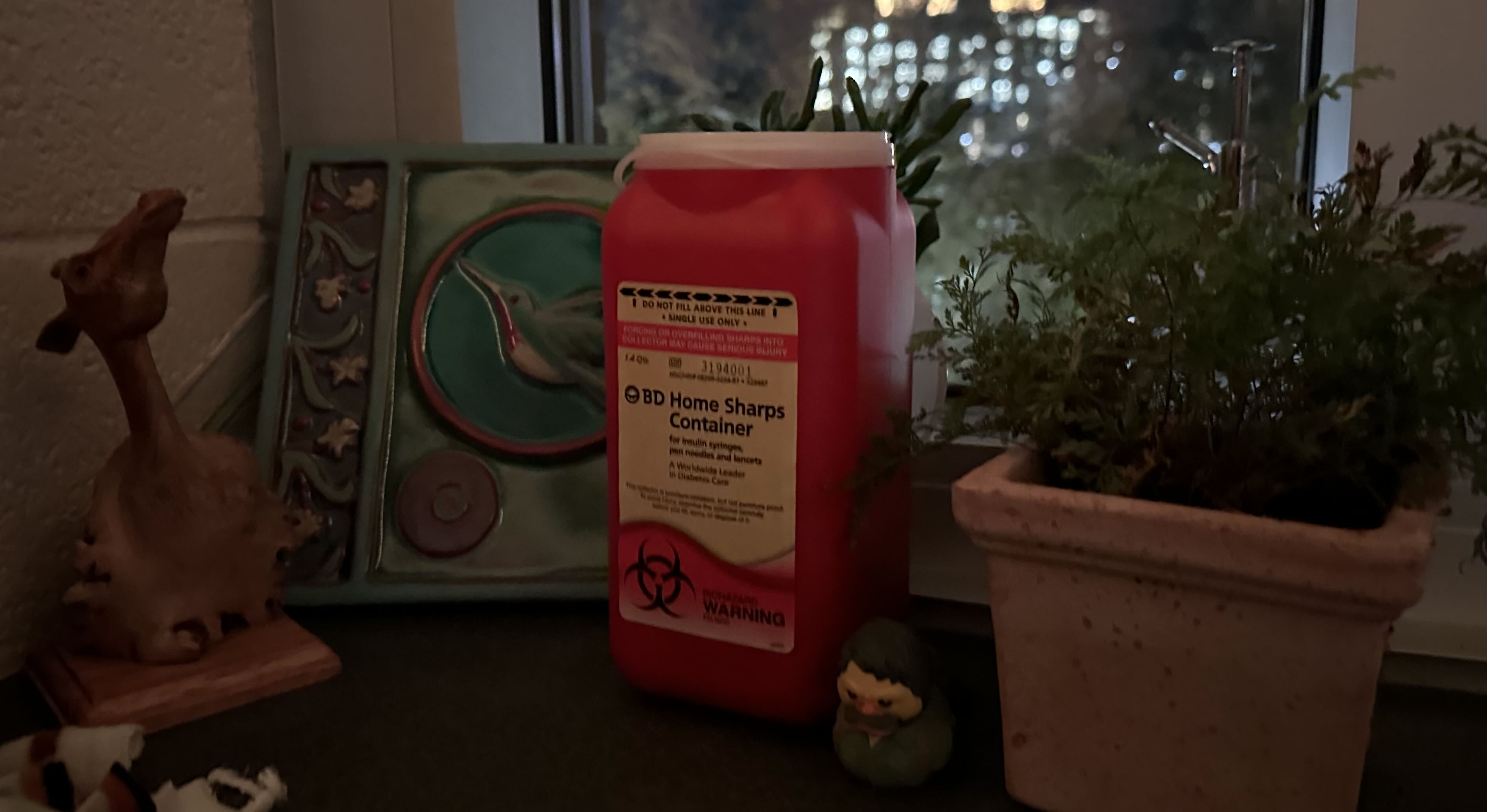
Panhypopituitarism paired with Chiari malformation has earned me the ever-affectionate title of medical anomaly by my primary care providers. Years of doctor’s visits and symptoms being reduced to minor inconveniences blamed on my weight or diet meant that it took a frustratingly long time to discover what was “wrong” with me. Underactive thyroid requires hormone treatment, and at the time, my only option was a daily growth hormone shot. Needles were nothing new to me: all the sweet ladies at LabCorp and I were on a first-name basis, and I was all too familiar with intravenous therapy. I was not afraid of needles, so a daily shot was simply a subtraction to my time. The first time I self-administered my injection, I experienced a pain like nothing I’d felt before. The medication stung; I wailed, describing to my parents the searing pain akin to a red-hot poker piercing through my skin into the tissue below. Burning pain continued to ring through the injection site for hours and left me sore. Repeating this nightly, I grew fearful and tense in the face of the pesky green injector. My parents sought advice from a nurse in my neighborhood who advised to hold me down. Of course, when a child is crying out in anguish, physical restraint only worsens the trauma of a nonconsensual invasion of the body. Progressing to the point that I couldn’t be conscious for my injection, my parents would enter my room as a team in the dead of night to administer it – yet I’d awaken alone, a burning feeling in my helpless body, left with no comfort when I wiped the blood away.
While my parents recognized my despair, it wasn’t until my mom decided that Hmm, maybe my kid who faces a lot of medical procedures with little reaction but begins to quake in fear when faced with an injection actually IS worth looking into, that I was listened to. Out of curiosity, she injected herself with the medication and was met with the same sensation I had described. She relayed to my father that if it was that painful for her, a woman who had been through childbirth twice, she couldn’t imagine the kind of fear and pain it arose in me, finally coming to understand my avoidance of the injection. I was given two choices by my doctor: buck up and continue growth hormone, supplemented with a long list of reasons and countless efforts to sway me or my parents into it, or to begin estrogen therapy in the form of a patch. The speed at which “patch” passed through my lips nearly gave me whiplash enough to re-open the sutures at the base of my neck.
Being put on estrogen therapy almost felt worse than the burning sensation in my subcutaneous tissue post-injection. I had never been a feminine girl, resisting dresses whenever possible, but my role in uniformed private schools made me grow complacent. If I were assigned to be a female figure in a game of house on the playground, I’d opt instead to be the family dog. By this point in time, I was in my young pre-teens and exploring my identity however I could, often limited to the safety blanket that a screen granted me. Donning the e-wardrobe of a masculine figure and inviting girls back to my igloo on Club Penguin was my elementary version of gender exploration. My experimentations with my identity triggered a realization: under the guise of a boy, I felt at peace with myself.
Each visit to the doctor yielded an update. Spikes in my growth chart ran parallel to my anxiety, and as I grew, I realized no future of mine had capacity for estrogen therapy in it. My hormone treatment was a catalyst to expressing my true identity, and I came out as transgender at the age of thirteen to my mother. I was so mortified of this conversation that I spent the majority of it with my back turned to her out of fear that I’d read an expression of disgust on her face, or that making eye contact with her would cause me to burst into tears. I felt newborn; my steps were hesitant, nervous, and ultimately unsteady. Upon my coming out, I’d chosen a new name devoid of gender association: Crow. Relatively unassuming, the placeholder name allowed me to distance myself from my birth name without the immediate pressure of coming out as transgender to my extended family.
My mom helped me to come out to my dad and brother. Although they were as supportive as presumably possible, it took a painstakingly long time for my family to get my identity right – my name was easier to accommodate than my pronouns. My identity has been theorized about, too; though indirectly, I’ve overheard discussions wondering if my misalignment with my assigned gender at birth had anything to do with my lack of estrogen production. To this, I argue that the source of my dysphoria does not matter in the slightest, and I really don’t care to entertain the question anyways. My brother once asked why I didn’t use they/them pronouns, to which I responded those set of pronouns just does not fit me. Reading CK Combs’ What Am I? in Nonbinary, I came across the passage;
“She asked me how I knew I wasn’t female and why I couldn’t be female in a way that matched how I felt. I responded with “Well, how do you know you’re female? You just know, right?” I was defensive and frustrated that I didn’t have any other way to explain myself. How do you convince someone of something they can’t see with their own eyes or understand through their own experience?”
This question is one that bores through me often: how do you make someone understand what they don’t experience?
My dad helped me come out to my extended family rather informally during Thanksgiving dinner later that year. While it wasn’t particularly something I wanted to kick off the night with, it ultimately felt nice having such an immense weight heaved off of my little shoulders and carried instead atop my father’s, who made it explicitly known that any sort of oppression would not be tolerated and the opposer would have to finish their Thanksgiving meal at Golden Corral.
Over the years since my initial coming out, I’ve grown more into myself. Overly anxious and sheltered in my homeschooled state, I yearned to escape the social isolation I felt at home and told my parents that I wanted to go to public school for my high school education. Attending public school was a first for me. I wanted to reduce the possibility of being called my birth name or misgendered as much as possible. The experience of Nino Cipri, author of Kitchen Sink Gender in Nonbinary, resonated with me deeply; “I was misgendered on the phone before I even got there, and then again once class started, despite my customary polite “heads up, I’m trans” email…”. I would email my teachers before the semester began with a blurb about “hi, I’m Crow and I use he/him/his pronouns” with some extra cushy padding in there to bring home the idea that yes, I’m still human, and no, my transgenderness will not affect the quality of my homework. On the first day of classes, I’d shuffle anxiously to my teacher prior to any god-forsaken icebreaker activities or roll call, introducing myself in person and inquiring if they’d gotten my email, hoping that they had already received and read it so that I wouldn’t have to have that conversation face-to-face.
Pleasantly enough, the vast majority of my teachers made an effort to note this change – the outlier being the school’s football coach slash health teacher. I noticed the heaping pile of unread messages in his school inbox on the first day of class as he shared his screen, followed by him taking attendance in which he went through everyone’s profile on our school website to mark them present, boldly displaying my full birth name to the entire class. Afterwards, I waded through my dread and approached him to politely inform him that actually, I use a different name and he/him pronouns, to which he upturned his nose and dismissively told me to remind him again tomorrow. Tomorrow rolled around, I let him know once again, yet he never did call me by anything other than my birthname. To add insult to injury, the vacant lot three doors down from my house miraculously became occupied by none other than him and his family.
To have your identity ignored outright hurts, but it is far more uncomfortable when your classmates know you as two separate-but-same people. My high school had shared locker spaces; mine just so happened to be underneath a MAGA-hat-wearing man-child, forcing me to interact with him in passing periods. He would try daily to debate with me concerning my identity, particularly as a political point, and upon defending myself I was met with every slur in the book. Unsurprisingly, nothing was done about the issue, being resolved only upon the removal of lockers post-lockdown.
It wasn’t until my junior year that I settled in nicely to a close-knit group of other queer kids. One day, I casually expressed a distaste for the name I’d chose for myself, explaining that I felt I’d simply grown out of it; while some people may want to clarify every introduction with “yes, like the bird” after meeting confused looks, I grew tired of being questioned. I was met with the question “well, why don’t you just change it?” and my friends said they would call me whatever felt right to me, no matter how many times it changed. Honestly, the idea of changing my name again never really occurred to me as a serious thought. I started experimenting with a solid masculine name around my close friends. It felt like when you finally find the puzzle piece that’s been missing under the table for years, and once clicked into place, I felt whole again. As a student in communication arts, we would rotate roles for the morning announcements and, when it came time for me to anchor on them, I introduced myself confidently to the school with my new name. To come out widely to my high school with a Guy Name was nerve-wracking, but the empowerment I felt washed away any doubts I’d had. Passing by school administrators and students alike in the halls, I was greeted with my new name, and I felt reborn once again. The wide-spread acceptance of my new name among my peers made me happy.
I came out once again to my dad and brother. My mom had passed away in my sophomore year of high school, leaving me with only men in my immediate family, and I could no longer turn to her for a guiding hand to hold through my transition. While my family questioned the change, I assured them my new name was here to stay, and they did make an effort to call me by it. I’d reached a level of maturity and comfort in which I could relay my name to everyone else by myself, taking action as soon as I could to initiate a legal name change. I needed to eliminate the possibility of my entire high school graduating class and their families to hear my girly-girl birth name mismatched with the visuals of a blue-gowned figure crossing the stage.
Winter of 2023, I received the glorious scripture that was Rx Testosterone: four pumps of gel each night, two on each shoulder. The sensory input of the overpowering hand sanitizer-esque stench was inescapable on my bare shoulders; the residue would stick to my hands, leaving the skin of my palms feeling rubbery and unclean no matter how much I scrubbed them. It was another strategic allotment of my time each night – I’d have to carve out a segment of my schedule so I could be alone without a shirt, waiting for the gel to dry with my neck protruded like a tortoise so no stray wisps of hair from my shoddy bun would touch the gel. I decided that, at my next check-up, I would discuss with my doctor about switching to injections instead.
Upon hearing my wish to switch to injections, my medical providers would react in shock; “Hadn’t you been so scared of your last injection to the point you had to stop taking it?” To quote Susan Stryker in Words to Viktor Frankenstein, “It shows so dramatically how much they simply don’t get what I’m doing with my body” – no, it was never the injection I feared, rather the medication itself that ached. So I sought out a new doctor, particularly a gender-affirming care technician, and for the first time in my extensive medical history, I felt comfortable being a patient. I was switched from gel to weekly subcutaneous injections. Sure, the first few doses did arise a bit of anxiety, but I quickly fell into the habit and the euphoria of being a self-made man was much greater than any fear.
I transferred to University of Maryland, Baltimore County this fall semester from Wor-Wic Community College. Immersing myself in a completely new environment where absolutely nobody knows anything about me aside from what I tell them has been a rejuvenating experience, considering I come from a small town where everybody and their mama knows my family. Prior to my transfer, I was a founding member in the resurgence of Wor-Wic’s Gender Sexuality Alliance club, which had begun to face censorship in the face of the political climate. Forced to change the club’s name to something more discreet and general, it feels as though queer spaces are being diminished. Let this pose as a reminder that efforts may be made to reduce our safe spaces, but no political ideologies can ever erase our identities.
Here I am now, at twenty-one years old, approximately eight years after my initial coming out and two months until the milestone that is three years on testosterone. My legal name change was processed in May of 2023, but my insurance card finally changed mere weeks ago at the end of September 2025. It’s a special kind of irony to pick up my testosterone at the pharmacy with my birthname still plastered on the prescription; even moreso when the pharmacist misgenders me whilst harboring the knowledge of my situation, asking me with each visit if my insurance had gotten fixed yet. Although the gender marker on my license has been changed along with my name, that holds no significance in the eyes of the general public I interact with.
As I write this, I recall standing in wait for my order at the Einstein’s Bagel Bros on campus this morning. The cashier had gotten my drink wrong, resulting in some milky blended concoction sitting on the counter; the barista, referring to me, asked the cashier “do you remember what she ordered?”, receiving a shake of the head, to which the cashier responded “well, did you ask her if she wanted the drink or not?”. I stood there awkwardly, listening to them discuss me in front of my face as if I wasn’t there, looking down at my backpack straps to ensure that – yes, indeed, my he/him/his pronoun pin was glaring them in the face. “Ma’am, are you okay with this drink?” the barista asked. Internally, I questioned what aspect of myself could have been interpreted as feminine. Regardless, I simply nodded and took the drink. I figured it would be easier to deal with whatever havoc the dairy would wreak on my lactose-intolerating ass than continuing to be humiliated, and I didn’t want to be late to class anyways.
My body, at its core and most efficient, is one of abnormality. It is a chimera in the principles of nature. I’ve undergone brain decompression surgery, innumerable medical procedures; I take medications daily to regulate my thyroid, weekly to affirm my gender; my current body is unnatural, a product of medical science. To reference Stryker one final time, I rise from the operating table of my rebirth as something beyond my initial design with the most prominent role in the creation of the body I inhabit: I am both the monster and the scientist.