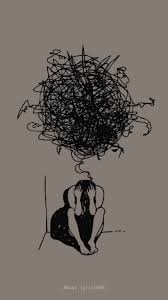
Recently, over the summer, I began trying out sprinting and running. I’ve never really enjoyed the idea of doing cardio; what could possibly be so enjoyable about running in a circle or running long distances? Nonetheless, I gave it a shot anyway, and to my surprise, it was one of the best feelings imaginable. Don’t get me wrong, the actual running part was horrible. I felt like I was going to collapse at any moment, but the feeling of not giving up and completing what I set out to do at the first point was an amazing feeling that I just wanted to run after (no pun intended). What amazed me the most, however, wasn’t the liking I took towards running but how my body kept adapting. I would avoid taking the steps to classes because I hated the feeling of being out of breath, but the stairs no longer caused that reaction out of me. I began to experience things differently, with all the running I was doing, I noticed that I was more eager to go eat then before. I noticed how I started preferring taking longer routes to my classes just so I could get more steps in, and overall, I noticed how much happier I was. As my body adapted more and more to longer distances and faster paces, my perception of time and distance changed. I could judge things based off how far I personally could run in a certain amount of time, if I could beat a car in traffic to its destination, and my sense of rhythm seemed to get better as well. My perception of the world around me changed drastically and it felt like I caught a new breath of life.
I have always been made brutally aware of how I look and how much space I take up. From an early age, I would be taunted for my widened belly, dark skin, and braided hair, but always praised for my silence, attention, and “proper” speaking. Within that, I was taught to internalize these statements, and I unfortunately projected them. It was what I thought was right and wrong, and in being a child, I wanted nothing more than to be virtuous. So that’s what I did, I told myself loud was wrong, small was right, and obedience is everything. That internalized hatred festered within me so much that just my reflection could bring me to tears. As life went on, I learned to expect to be deemed stupid, incapable, and a waste of space. I learned to make myself smaller, hunching my shoulders, not eating in front of people, never looking anyone in the eye, you know, the whole shabang. It wasn’t until 13, the first time i realized that all I have is myself in the world, so why spend so much time hating it? Why was I made to think these things? Who fed these ideas to me? No other than the people who wanted me to remain docile. They knew that if I unlocked my mind and started thinking I could be more, I would be more. Nothing is worse than a woman, let alone a black woman, with a voice. No one wants people to expose how there are still confederates in the white house and Nazis running the polls, never. So what do they do instead? Pump the media full of slim bodies, obedient wives, and diet pills, give people A LOT of small issues to deal with, so we forget the big ones. Much like how Charlie Kirk gets shot and all of a sudden everyone forgets about Epstein, one small assertion to distract from the life-changing facts. As a matter of fact, I didn’t take up ENOUGH space, and I was TOO silent. So while you are busy judging people on their looks, or hair, or whether or not they lost the 3 pounds they were supposed to, while our nation is literally on fire, I ask you: What The Hell Are You On About?
Why? Why does she have to sit up, sit right, sit tight and not take up space? Why just because she has a larger chest does she have to “cover up” because god forbid there be a man around and stare at her. But also yeah she should sit tight and right because that’s who she is. That’s what she was taught but that’s also what she believes. Not wanting to fit into that docile body stereotype but also why not. What if she wants to be that 1960’s nun wife. What if she wants to cover up her body so that other people don’t have that access to her. These two conflicting worlds colliding together in her brain not knowing which one to conform with. Does she say forget societal norms and burp in public because she can or does she hold it all in til she gets behind closed doors. Does she want to actually go against society though because what’s so wrong with wanting to cover up and be pure and be content with not being so out there. But why is this such a struggle? Why is this such a debate? Why can’t she just live her life without having the weight of society and her own beliefs and her own thoughts on her shoulder. Who cares what the world thinks?!! Actually she does. But she doesn’t. What if she was raised differently? Would she still think like this, would she still think that these two ideas of her body still couldn’t become one identity. What If her thoughts would be different or beliefs would align with the worlds or the stereotypical society.
*Spoilers for the halfway point of the play John Proctor Is The Villain*
Last year I had the pleasure of reading John Proctor Is The Villain for the first time. A new play written by Kimberly Belflower about girlhood, friendship, and what it means to believe women.
My whole life I have been told that I am too much, too loud, and most of all, “too dramatic.” and I’m not alone. Women are taught that their bodies should be smaller and unseen. Women don’t get to take up space; that’s for the boys. Belfower sees and explores this thought through her cast of high school-aged girls discussing the Crucible in their drama lit class.
Now, in case you don’t remember anything from reading The Crucible in high school, I’ll catch you back up. Arthur Miller created a famous example of a “tragic hero.” A man who gave up his life to protect his good name. He chose not to lie and be killed rather than say that he was a part of the witchcraft.
And then there’s Abigail, she is 16 and works for John Proctor and his wife. Abigail likes to go out into the woods with her friends and dance. When some men caught onto this they accused the girls of witchcraft. Abigail is quick on her feet and rapidly throws the blame onto someone else when the witch trials first begin.
When John Proctor is questioned about her use of witchcraft, he originally lies for her because of the affair/ feelings he has for Abigail.
Usually, Abigail’s story is perceived as one of a manipulative and conniving girl who sets out to destroy John Proctor’s reputation…Does this sound familiar?
Belflower sets her piece in a one-stoplight town in Georgia in the heart of the MeToo movement(2017).
Let me give you a run down of the characters from the scene I will be looking at:
Shelby: Quick thinking 16 year old. Her mouth often moves quicker than her thoughts. She’d been out of school for a month or two and no one knows why. She just returned earlier this week.
Carter Smith: Fun-loving English teacher. Cares about his job; the students love him.
(The other students are important to the plot but are less so important to the text I am showing you. )
Our bodies and the space we take up is fact. They stay with us for eternity. From a young age we are told not to take up space and that we can’t because we’d be stealing it from men. Oppressors want our space and are terrified of what will happen if we take it back. This is the same concept that Iris Young states in Throwing Like A Girl. The feminine space is supposed to be enclosed and confining. But it doesn’t have to be.
We’re told that a man’s reputation and his “future” are more important than our facts. We shrink ourselves and our experiences so that way the people who hurt us can go on and be happy. His name and reputation means nothing in reality. He can move and change his name and no one will know what happened.
However, our bodies can’t do that. Our bodies remember.
In this play, Carter took Shelby’s space and girlhood away from her, and we get to watch her fight in taking it back.
If you are interested in reading the whole play, here is a link to a PDF:
It’s a phrase that many Black women have unfortunately heard at some point in their lives. But what does it mean? Does it mean that the bar is lower for attractiveness among Black women? Does it mean you’re surprised that you find a Black woman attractive? Do you not believe Black women could be apart of the beauty standard?
You ever randomly decide at 3 am that you are gonna turn your life around so you decide to spend hours scrolling Pinterest and YouTube, looking for the fastest workouts to give you the best body possible? But you start to notice this weird trend where every workout towards women focuses on one specific part of the body. Becoming a blur of “Get toned arms in 15 minutes” or “Build the butt of your dreams in 1 Week!” or “Perfectly Sculpted Abs in 30 days.” Instead of focusing on health, it seems like these fitness influencers and apps promote that our body is a collection of broken parts, needing to be fixed. This message is everywhere you look, constantly pointing out the flaws women need to fix.
I only remembered this trend when reading Young’s essay about throwing like a girl. But more specifically, she talks about a phenomenon called “discontinuous unity” that perfectly captures this feeling. Basically, it’s the idea that women are often taught to move their bodies in a disconnected way, not as one fluid, whole unit. Her example is throwing a ball. She points out that a girl often throws using just her arm, while the rest of her body stays pretty still. A boy, on the other hand, usually puts his whole body into it by twisting his torso, moving his feet, and using what Young calls his “total motorium” to get the job done. This creates a weird feeling where the part of your body doing the work feels totally separate from the parts that are just… hanging out. It’s like your arm is on a mission, but the rest of you isn’t even on the team.
Similar to this example, workout plans made for women that promote “abs challenges” or “leg day” basically train women to perform this mode of discontinuous unity. We are told we need to isolate parts of our body that just need a quick fix in order to get our perfect body. Young argues that this discontinuity comes from women being conditioned to experience their body as an object to be looked at, rather than a subject of action. These workouts focus on aesthetic goals of molding your butt, legs, arms, etc. to fit a certain beauty standard instead of improving the actual health and function of your body. It is just another way to push the idea that women must shape and decorate their bodies to visually please men. In contrast to workouts like dance or yoga, where the goal is to get your whole body moving in sync.
Looking back, this connection seems obvious, but it’s not something I could have noticed when I was 12 years old and hated the way I look. I gobbled up any of these workouts I could find, hoping that one could give me the perfect body that it promoted. Even though I stopped participating in them myself, there are still many young girls doing the exact same thing. It makes me wonder if the cycle will always repeat itself with new, unaware girls who may never read Young’s essay in eight years to connect the dots.
My ribs hurt as I am typing this blog post. Don’t worry, I’m fine, my current binder is just a bit too small for me. I try to only wear it two times a week, generally, and for less than six hours or so at a time. It’s not ideal, but I’m making it work until I am able to get a new one.
Now, why haven’t I gotten a new one yet? Well, let me introduce you to what it is like buying a binder as a mid-to-plus-sized disabled person.
Docile bodies are individuals who have been trained to be obedient an useful to common society. For most people, the act of attending school and reciting the pledge of allegiance puts us in this category; most of my life before college was consistent to a comfy routine of school, hanging out with friends, and enjoying the company of family. This is my second year of college, my freshman year was good! I was adjusting to college life pretty well, but I started noticing things, it had been a while since I had contact with any of my friends from before I left, I relied less and less on my family. I had been trained into the routine of seeing these people everyday for my first 18 years of life, and now I was forced out of that routine of what had became normality for me. It was weird and honestly uncomfortable for me. I know they say that its apart of growing up, but what if it doesn’t have to be? At least, I thought that way; for most of my life I felt like people would come into my life, and then some I had known for years just disappear. It didn’t feel like I had control over who I wanted to have in it; I think over the summer I had came to the realization that life is just like a revolving door, in order for some to enter a few have to leave… I think eventually most if not all of my closest friends from high school will all leave that revolving door, before I might’ve tried to stop it from revolving, but now I might be ready to let go of that. I mean I’ve met some really amazing people already in this new chapter of my life, and I can’t wait to meet more; I feel like most can relate to this, you have this routine for most of your early life and to see the people you remember fade away as you get older is a tough. Eventually we get out of the routine docile bodies puts us in, I mean I haven’t said the pledge of allegiance since high school!
Phenomenology is the study of first-person experiences and sensations that give life more meaning. When we were discussing this topic in class I immediately thought about how much my experience and perspective on my life shifted after my adult autism diagnosis. After the diagnosis I began to look back at my life and pick out moments and traits that, in hindsight made so much sense with me being autistic. But before the diagnosis, were just a confused, muddled mess. I remember thinking back on basically every interaction I had ever had and wondering if I would have reacted differently had I known. They say ignorance is bliss, but in all reality the not knowing led me to become a traumatized, jaded individual. The world isn’t built for autistic folk, and imagine going about your life wondering why you are facing barriers and roadblocks at every turn and not even knowing why. It messes with your sense of self and you begin to think something is deeply wrong with you. I am still having to unlearn that one. Yay for therapy!
Something that you do when you spend your whole life not knowing you’re autistic, is you get really good at masking. I was able to play the part semi-well and be sociable, friendly, and well-mannered. And when I got older I became even better. But when you learn that you are autistic, that mask begins to crack. It crumbles away and you are left with a messy, soupy, puddle of sensory issues, lack of social awareness, and fixations. It’s extremely common for adults who are diagnosed with autism to regress in a lot of their skills once they find out about their diagnosis. After holding themselves together by the seat of their pants their whole lives, their whole world is turned topsy turvy. This is what happened to me. It’s taken me years to reacclimate to my new way of perceiving the world, and myself. Slowly I’ve built myself back up and created a new, stronger identity. Diagnosis saved my life.
Phenomenology this is the theory is the study of structures of consciousness as experienced from the first-person point of view. The central structure of an experience is its intentionality, its being directed toward something, as it is an experience of or about some object. In simple terms is each person can experience the same thing but due to their past have a completely different view of this experience. For me this help me better understand my own unruly body, I personally have been sick since birth I had rare disease that caused my main vein to my liver to fail as a baby in turn cause me to need a liver transplant at only 2 years old, due to this I was often sick and in and out of the hospital for many different things. With this being stated I have a lot of medical trauma that yes what they did was for the best but as a child you do not completely understand why they are doing the things to your body that hurt or our uncomfortable. This trauma I never really thought was there until I started to go to therapy and learn more about the body and mind through going back to school.
Sex a very common thing for most couples to engage in I personally have been with someone for many years but have never taken that step even though there is a desire to do so. Why? Well through this concept of Phenomenology and going to therapy it has helped me see that because of my medical trauma my body react to physical touch very negatively. I will tense up from head to toe and shut down internally this occurs suddenly and is completely out my control my body take control. I used to tense up if anyone tried to hug me as a child through teenage years due to this trauma I have been able to work through that but still struggle with physical touch outside of a hug. It is very frustrated has caused friction between me and my partner, but they have stayed by myside through this. I hope that in future we can take the next step in our relationship, and my body can learn to accept and trust physical touch again.