Quarantine was hard for everyone but I already knew the drill. For my 6th grade, me and my family went in an RV around the country for a whole year. I won’t say I was ungrateful but 6th grade me definitely was not happy. No friends, barely any wifi and just with my family 24/7 was not what 11 year old me wanted. And it kinda sucked. It made me distant from my friends back home and even when I got back, there were only a few people who actually treated me normal or like they did back when I was home. 7th grade was really rough for me. A funny thing that happened at the time was another friend of the friend group I was in who was the same race as me moved away so I kinda just felt like the stand in. The replacement. And right when everything started to hit its groove, everything hit me at once. Family losses, quarantine, no more in person and it hit me like a truck. Everything I was starting to actually get used to was taken away from me in an instant.
In Quarantine, I used to be the friend everyone joked about. Sometimes nowadays I still am but I learned to live with it. My sense of community back then was that if I was the only one they picked on, then I was the glue of the group and I should just take it. I was a pretty sensitive kid growing up so this was no easy task for me but I persevered the best I could. Eventually it got so bad that I was even kicked out of the group by the ringleader who I found out was spreading rumors about me crying wolf to the rest of the friend group. Being kicked out, I reached out to one of my best friends who wasn’t in the group for solace and in that conversation I realized, community isn’t a massive friend group, it isn’t people genuinely bullying you for no exact reason but community is those few select people that you choose the be closest with. Now, while I only have a few friends, I can say with absolute certainty that I chose the right people. They’ve stuck by me through thick and thin and I have for them as well. So even if the title of this post is “No Community For You”, it’s only because you can’t have community thrust upon you, you need to build it around you.
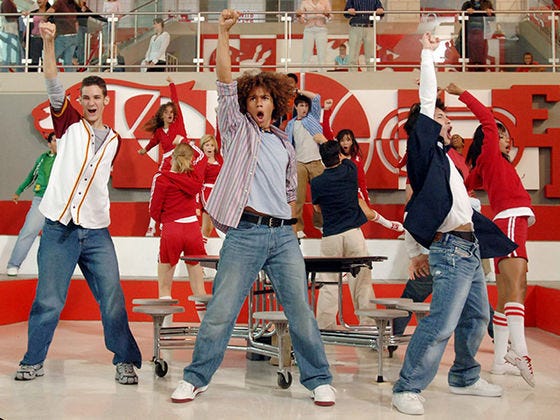
Since birth, we have been subjected to the status quo and fitting in norms, like, for instance, growing up as a girl and being told that you shouldn’t play sports or you should like the color pink, or telling young men that they cannot cry and they have to remain emotionally stoic at all times. While we were reading from Nonbinary: Memoirs of Gender and Identity, I just kept on thinking about this random song from High School Musical, and while this song focuses mainly on students knowing their niche and sticking to it, whether they be the jock, the braniac, etc. I think it relates to the topic at hand because they focus on how any efforts to stray from their niche will overthrow the whole system, and they have to stop that from happening by any means necessary.
“Stick to the stuff you know If you wanna be cool Follow one simple rule Don’t mess with the flow, no no Stick to the status quooooooooooooo”
Anything that does not follow the status quo, for instance, being nonbinary, elicits such vehement responses. While I don’t identify as nonbinary, I deeply appreciated getting to read the memoirs from people of various walks of life talk about their experiences, and I think this meshes so well with the video from Chimamanda about the dangers of a single story. When identities that society has not deemed to be the status quo arise, society imposes its own labels on them and forces them to fit into a box, thus pushing this single story on a vast group of people. While the memoirs vary in their own ways, a common theme among them is the way other people impose their assumptions about one’s identity on another person, or very clearly display their discomfort with constant stares or looks of disgust because they stray from what we have deemed to be the status quo. There is this itch that society has to oppress people, and if one tries to exist in some sort of gray area, it will pick you out of that gray area, forcefully, to maintain control.
The other day, I opened Instagram to a post by one of my grade school classmates, with whom I grew up for most of my life. They were discussing that they identify as “non-binary” and wrote a short piece describing their struggles growing up with these confusing feelings. I was happy that they were able to not only recognize how they were feeling, but also announce it to their mutuals on social media. The thing is, this story yet again reminded me that you truly never know how someone is experiencing life on a daily.
This experience in particular reminds me of Susan Stryker’s Frankenstein essay, as she explores the embodied experience of living in a gendered world that doesn’t quite fit one’s perceptions and feelings of their own identity. I can only imagine how frustrating these feelings must be, especially for a child.
I recall being in school with this person from elementary school all the way through high school. We were in the same classes, had the same friends, and even went on the same field trips together. I can still recall the time that we went on a canoeing field trip to observe the SAV (Submerged Aquatic Vegetation) in our local Chesapeake Bay, when we flipped our canoe and dumped ourselves right into the water. I always joked that we got to see the SAV “up close.”
I’ve made some good memories with this person, but until now, I hadn’t seen anything from them since high school graduation; I’d actually forgotten that I followed them on Instagram. Despite the joy that I felt knowing my old classmate had rediscovered themselves in a new way, I couldn’t help but think about all the times we spent together, while they were struggling with an internal identity crisis, and I had no idea. I absolutely loved my childhood. I’m so blessed to miss every part of growing up as a girl in the way that I did. My classmates’ post was yet another reminder of the sad truth that, ultimately, most people weren’t as blessed to have had the picture-perfect childhood that I did. I truly wish them the best with the rest of their identity journey and hope that they’ve gained some clarity and peace within themselves.
Learning the experiences of fellow gender-nonconforming people through reading Nonbinary: Memoirs of Gender and Identity allowed me to reflect on my own journey of self-discovery. During a time in which transgender voices are facing such prevalent suppression, essays like these encourage their audience to resonate with the writer. I feel grateful to participate in a class that enables me to share my authentic voice.
When I first heard my birth name, I looked over my shoulder expecting to see somebody else entirely, as there was simply no possibility that alien name belonged to me. My first spoken desire post-speech therapy graduation was to please refer to me with a combination of my first and middle name, granting myself some authority in what I’d be called.
Born with panhypopituitarism, a condition in which the pituitary gland is malfunctional, proved disadvantageous in many regards. I never hit standard female puberty: my menstrual cycle never triggered, my breast tissue is scarce, my voice remains neutral. Upon learning this, people aware of my transgender identity revel in how lucky I must feel that I never underwent these changes to cause an onslaught of dysphoria. And, while it could be considered a gift, their ignorance to the daily burdens that it imposes upon me feels like a punch in the gut. Referred to as the master gland due to its major role in regulating the endocrine system, my underactive thyroid gland has affected me in more ways than simply substituting as an English teacher for those unaware of the condition. Chronic fatigue clouds my daily performance, my immune system is weaker than average, perseverant body fat and a stubborn double chin combined with reduced muscle mass has been a source of contention amongst my body image, abnormalities in the lipids and heart rate affect my long-term health, and even unstable moods have always cast a shadow over the outsider’s perceived “but no boobies!” light for me. (Plus, I do still kind of have boobies: see “weight regulation”, or lack thereof.)
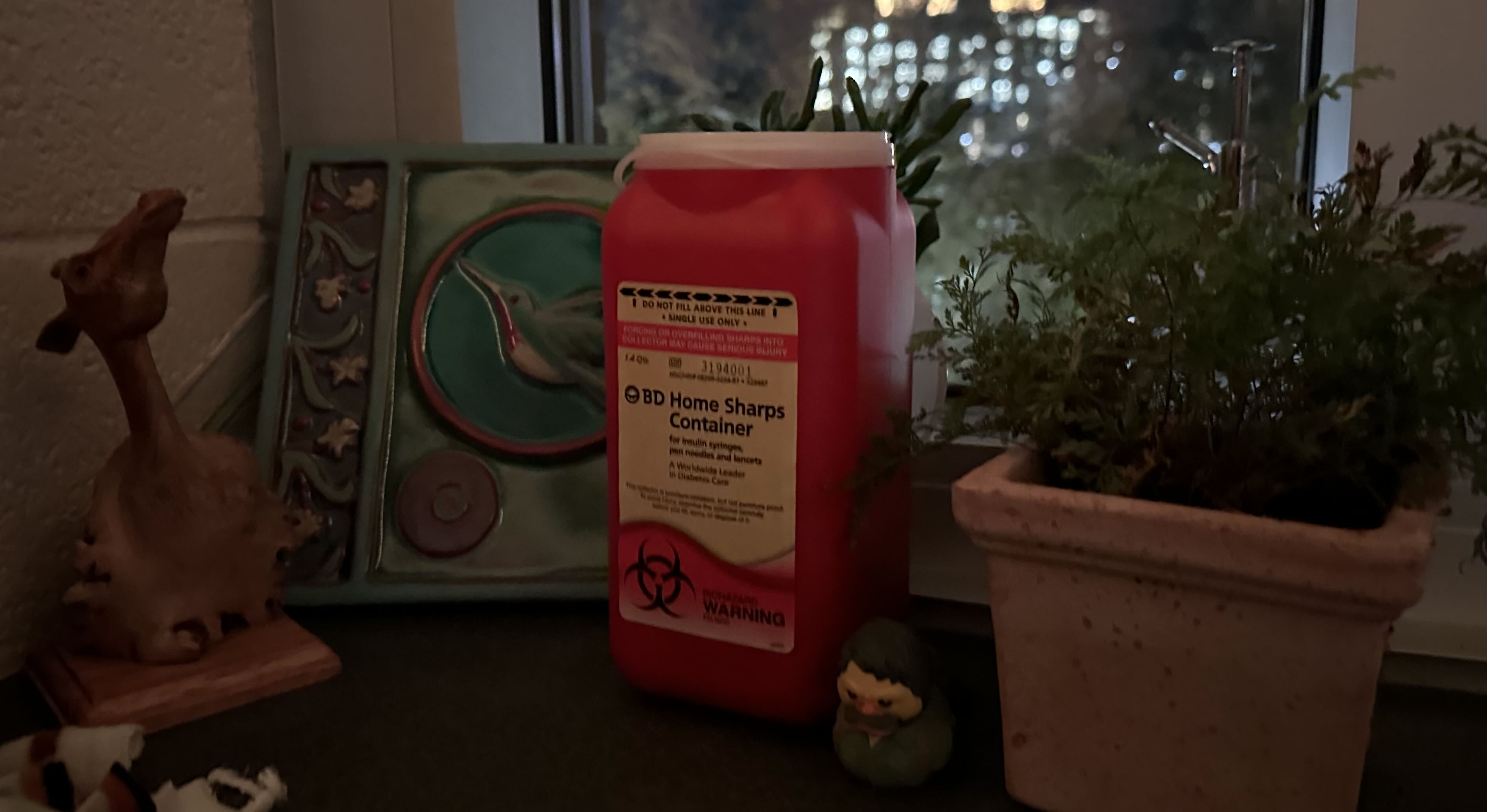
Panhypopituitarism paired with Chiari malformation has earned me the ever-affectionate title of medical anomaly by my primary care providers. Years of doctor’s visits and symptoms being reduced to minor inconveniences blamed on my weight or diet meant that it took a frustratingly long time to discover what was “wrong” with me. Underactive thyroid requires hormone treatment, and at the time, my only option was a daily growth hormone shot. Needles were nothing new to me: all the sweet ladies at LabCorp and I were on a first-name basis, and I was all too familiar with intravenous therapy. I was not afraid of needles, so a daily shot was simply a subtraction to my time. The first time I self-administered my injection, I experienced a pain like nothing I’d felt before. The medication stung; I wailed, describing to my parents the searing pain akin to a red-hot poker piercing through my skin into the tissue below. Burning pain continued to ring through the injection site for hours and left me sore. Repeating this nightly, I grew fearful and tense in the face of the pesky green injector. My parents sought advice from a nurse in my neighborhood who advised to hold me down. Of course, when a child is crying out in anguish, physical restraint only worsens the trauma of a nonconsensual invasion of the body. Progressing to the point that I couldn’t be conscious for my injection, my parents would enter my room as a team in the dead of night to administer it – yet I’d awaken alone, a burning feeling in my helpless body, left with no comfort when I wiped the blood away.
While my parents recognized my despair, it wasn’t until my mom decided that Hmm, maybe my kid who faces a lot of medical procedures with little reaction but begins to quake in fear when faced with an injection actually IS worth looking into, that I was listened to. Out of curiosity, she injected herself with the medication and was met with the same sensation I had described. She relayed to my father that if it was that painful for her, a woman who had been through childbirth twice, she couldn’t imagine the kind of fear and pain it arose in me, finally coming to understand my avoidance of the injection. I was given two choices by my doctor: buck up and continue growth hormone, supplemented with a long list of reasons and countless efforts to sway me or my parents into it, or to begin estrogen therapy in the form of a patch. The speed at which “patch” passed through my lips nearly gave me whiplash enough to re-open the sutures at the base of my neck.
Being put on estrogen therapy almost felt worse than the burning sensation in my subcutaneous tissue post-injection. I had never been a feminine girl, resisting dresses whenever possible, but my role in uniformed private schools made me grow complacent. If I were assigned to be a female figure in a game of house on the playground, I’d opt instead to be the family dog. By this point in time, I was in my young pre-teens and exploring my identity however I could, often limited to the safety blanket that a screen granted me. Donning the e-wardrobe of a masculine figure and inviting girls back to my igloo on Club Penguin was my elementary version of gender exploration. My experimentations with my identity triggered a realization: under the guise of a boy, I felt at peace with myself.
Each visit to the doctor yielded an update. Spikes in my growth chart ran parallel to my anxiety, and as I grew, I realized no future of mine had capacity for estrogen therapy in it. My hormone treatment was a catalyst to expressing my true identity, and I came out as transgender at the age of thirteen to my mother. I was so mortified of this conversation that I spent the majority of it with my back turned to her out of fear that I’d read an expression of disgust on her face, or that making eye contact with her would cause me to burst into tears. I felt newborn; my steps were hesitant, nervous, and ultimately unsteady. Upon my coming out, I’d chosen a new name devoid of gender association: Crow. Relatively unassuming, the placeholder name allowed me to distance myself from my birth name without the immediate pressure of coming out as transgender to my extended family.
My mom helped me to come out to my dad and brother. Although they were as supportive as presumably possible, it took a painstakingly long time for my family to get my identity right – my name was easier to accommodate than my pronouns. My identity has been theorized about, too; though indirectly, I’ve overheard discussions wondering if my misalignment with my assigned gender at birth had anything to do with my lack of estrogen production. To this, I argue that the source of my dysphoria does not matter in the slightest, and I really don’t care to entertain the question anyways. My brother once asked why I didn’t use they/them pronouns, to which I responded those set of pronouns just does not fit me. Reading CK Combs’ What Am I? in Nonbinary, I came across the passage;
“She asked me how I knew I wasn’t female and why I couldn’t be female in a way that matched how I felt. I responded with “Well, how do you know you’re female? You just know, right?” I was defensive and frustrated that I didn’t have any other way to explain myself. How do you convince someone of something they can’t see with their own eyes or understand through their own experience?”
This question is one that bores through me often: how do you make someone understand what they don’t experience?
My dad helped me come out to my extended family rather informally during Thanksgiving dinner later that year. While it wasn’t particularly something I wanted to kick off the night with, it ultimately felt nice having such an immense weight heaved off of my little shoulders and carried instead atop my father’s, who made it explicitly known that any sort of oppression would not be tolerated and the opposer would have to finish their Thanksgiving meal at Golden Corral.
Over the years since my initial coming out, I’ve grown more into myself. Overly anxious and sheltered in my homeschooled state, I yearned to escape the social isolation I felt at home and told my parents that I wanted to go to public school for my high school education. Attending public school was a first for me. I wanted to reduce the possibility of being called my birth name or misgendered as much as possible. The experience of Nino Cipri, author of Kitchen Sink Gender in Nonbinary, resonated with me deeply; “I was misgendered on the phone before I even got there, and then again once class started, despite my customary polite “heads up, I’m trans” email…”. I would email my teachers before the semester began with a blurb about “hi, I’m Crow and I use he/him/his pronouns” with some extra cushy padding in there to bring home the idea that yes, I’m still human, and no, my transgenderness will not affect the quality of my homework. On the first day of classes, I’d shuffle anxiously to my teacher prior to any god-forsaken icebreaker activities or roll call, introducing myself in person and inquiring if they’d gotten my email, hoping that they had already received and read it so that I wouldn’t have to have that conversation face-to-face.
Pleasantly enough, the vast majority of my teachers made an effort to note this change – the outlier being the school’s football coach slash health teacher. I noticed the heaping pile of unread messages in his school inbox on the first day of class as he shared his screen, followed by him taking attendance in which he went through everyone’s profile on our school website to mark them present, boldly displaying my full birth name to the entire class. Afterwards, I waded through my dread and approached him to politely inform him that actually, I use a different name and he/him pronouns, to which he upturned his nose and dismissively told me to remind him again tomorrow. Tomorrow rolled around, I let him know once again, yet he never did call me by anything other than my birthname. To add insult to injury, the vacant lot three doors down from my house miraculously became occupied by none other than him and his family.
To have your identity ignored outright hurts, but it is far more uncomfortable when your classmates know you as two separate-but-same people. My high school had shared locker spaces; mine just so happened to be underneath a MAGA-hat-wearing man-child, forcing me to interact with him in passing periods. He would try daily to debate with me concerning my identity, particularly as a political point, and upon defending myself I was met with every slur in the book. Unsurprisingly, nothing was done about the issue, being resolved only upon the removal of lockers post-lockdown.
It wasn’t until my junior year that I settled in nicely to a close-knit group of other queer kids. One day, I casually expressed a distaste for the name I’d chose for myself, explaining that I felt I’d simply grown out of it; while some people may want to clarify every introduction with “yes, like the bird” after meeting confused looks, I grew tired of being questioned. I was met with the question “well, why don’t you just change it?” and my friends said they would call me whatever felt right to me, no matter how many times it changed. Honestly, the idea of changing my name again never really occurred to me as a serious thought. I started experimenting with a solid masculine name around my close friends. It felt like when you finally find the puzzle piece that’s been missing under the table for years, and once clicked into place, I felt whole again. As a student in communication arts, we would rotate roles for the morning announcements and, when it came time for me to anchor on them, I introduced myself confidently to the school with my new name. To come out widely to my high school with a Guy Name was nerve-wracking, but the empowerment I felt washed away any doubts I’d had. Passing by school administrators and students alike in the halls, I was greeted with my new name, and I felt reborn once again. The wide-spread acceptance of my new name among my peers made me happy.
I came out once again to my dad and brother. My mom had passed away in my sophomore year of high school, leaving me with only men in my immediate family, and I could no longer turn to her for a guiding hand to hold through my transition. While my family questioned the change, I assured them my new name was here to stay, and they did make an effort to call me by it. I’d reached a level of maturity and comfort in which I could relay my name to everyone else by myself, taking action as soon as I could to initiate a legal name change. I needed to eliminate the possibility of my entire high school graduating class and their families to hear my girly-girl birth name mismatched with the visuals of a blue-gowned figure crossing the stage.
Winter of 2023, I received the glorious scripture that was Rx Testosterone: four pumps of gel each night, two on each shoulder. The sensory input of the overpowering hand sanitizer-esque stench was inescapable on my bare shoulders; the residue would stick to my hands, leaving the skin of my palms feeling rubbery and unclean no matter how much I scrubbed them. It was another strategic allotment of my time each night – I’d have to carve out a segment of my schedule so I could be alone without a shirt, waiting for the gel to dry with my neck protruded like a tortoise so no stray wisps of hair from my shoddy bun would touch the gel. I decided that, at my next check-up, I would discuss with my doctor about switching to injections instead.
Upon hearing my wish to switch to injections, my medical providers would react in shock; “Hadn’t you been so scared of your last injection to the point you had to stop taking it?” To quote Susan Stryker in Words to Viktor Frankenstein, “It shows so dramatically how much they simply don’t get what I’m doing with my body” – no, it was never the injection I feared, rather the medication itself that ached. So I sought out a new doctor, particularly a gender-affirming care technician, and for the first time in my extensive medical history, I felt comfortable being a patient. I was switched from gel to weekly subcutaneous injections. Sure, the first few doses did arise a bit of anxiety, but I quickly fell into the habit and the euphoria of being a self-made man was much greater than any fear.
I transferred to University of Maryland, Baltimore County this fall semester from Wor-Wic Community College. Immersing myself in a completely new environment where absolutely nobody knows anything about me aside from what I tell them has been a rejuvenating experience, considering I come from a small town where everybody and their mama knows my family. Prior to my transfer, I was a founding member in the resurgence of Wor-Wic’s Gender Sexuality Alliance club, which had begun to face censorship in the face of the political climate. Forced to change the club’s name to something more discreet and general, it feels as though queer spaces are being diminished. Let this pose as a reminder that efforts may be made to reduce our safe spaces, but no political ideologies can ever erase our identities.
Here I am now, at twenty-one years old, approximately eight years after my initial coming out and two months until the milestone that is three years on testosterone. My legal name change was processed in May of 2023, but my insurance card finally changed mere weeks ago at the end of September 2025. It’s a special kind of irony to pick up my testosterone at the pharmacy with my birthname still plastered on the prescription; even moreso when the pharmacist misgenders me whilst harboring the knowledge of my situation, asking me with each visit if my insurance had gotten fixed yet. Although the gender marker on my license has been changed along with my name, that holds no significance in the eyes of the general public I interact with.
As I write this, I recall standing in wait for my order at the Einstein’s Bagel Bros on campus this morning. The cashier had gotten my drink wrong, resulting in some milky blended concoction sitting on the counter; the barista, referring to me, asked the cashier “do you remember what she ordered?”, receiving a shake of the head, to which the cashier responded “well, did you ask her if she wanted the drink or not?”. I stood there awkwardly, listening to them discuss me in front of my face as if I wasn’t there, looking down at my backpack straps to ensure that – yes, indeed, my he/him/his pronoun pin was glaring them in the face. “Ma’am, are you okay with this drink?” the barista asked. Internally, I questioned what aspect of myself could have been interpreted as feminine. Regardless, I simply nodded and took the drink. I figured it would be easier to deal with whatever havoc the dairy would wreak on my lactose-intolerating ass than continuing to be humiliated, and I didn’t want to be late to class anyways.
My body, at its core and most efficient, is one of abnormality. It is a chimera in the principles of nature. I’ve undergone brain decompression surgery, innumerable medical procedures; I take medications daily to regulate my thyroid, weekly to affirm my gender; my current body is unnatural, a product of medical science. To reference Stryker one final time, I rise from the operating table of my rebirth as something beyond my initial design with the most prominent role in the creation of the body I inhabit: I am both the monster and the scientist.
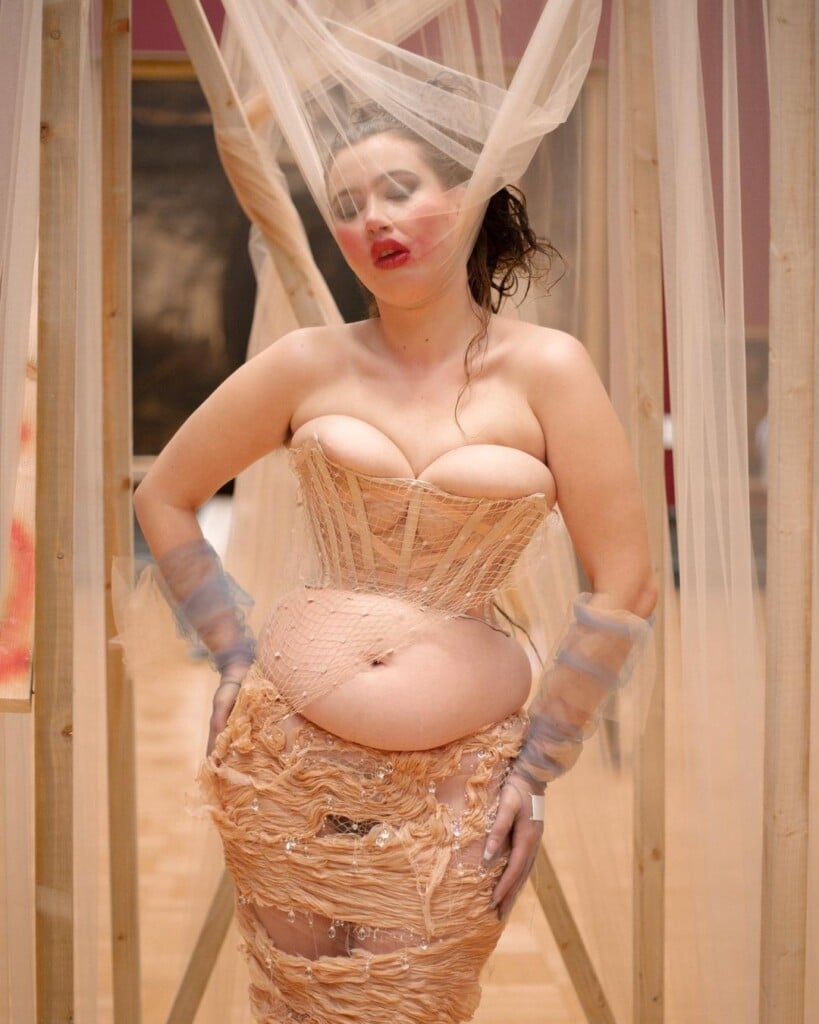
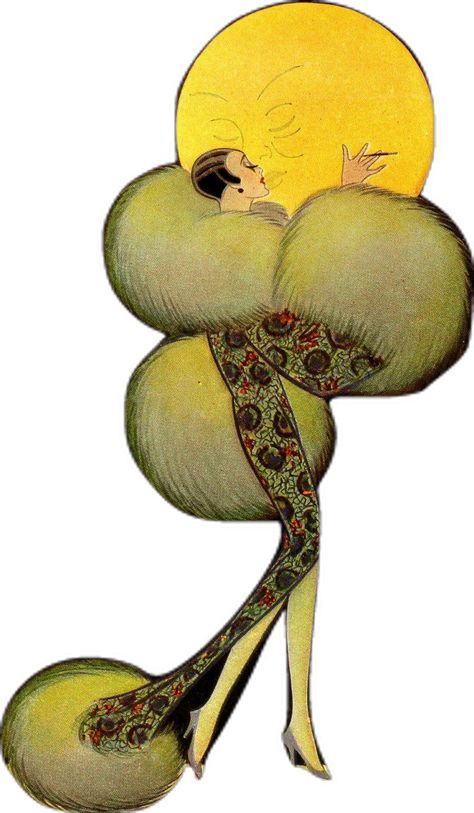
The image above features Michaela Stark on display at the Milan Fashion Week in 2024. Michaela is an Australian “body-morphing” artist currently located in London, who has made several headlines for her ‘Panty’ clothing line, which consists of lingerie and undergarments geared for “all bodies.” She perfectly captures the ways in which our clothing shapes and defines us, and never the other way around. I found Michaela in a sea full of Instagram models, body dysphoric rhetoric, and promotions of every possible procedure to fix every possible flaw of the body, media we consume every single second. Her work was eye-catching, shocking, and…normal.
What is possibly normal about contouring the body in such outrageous ways only to be put on display? Exactly. And yet it has been normalized in every other context by labels. The thin bodies we have shoved down our throats (while completely dismissing our own) are fit to be morphed and changed however need be, whether that be through soft shapewear or restricting corsets. Thin bodies are the ideal, and they must be accompanied by hairless and flawless skin. There mustn’t be a blemish in sight, a wrinkle to see, a stretch mark to grieve. Michaela Stark does this same thing, but we know it’s different. Except we know it’s not different but media has told us it is and so it must be. We all share the burden of having a “broken” body, the only difference is whether your body was born “broken” or conditioned into being “broken.” We all have something we must be desperately fixing at any moment.
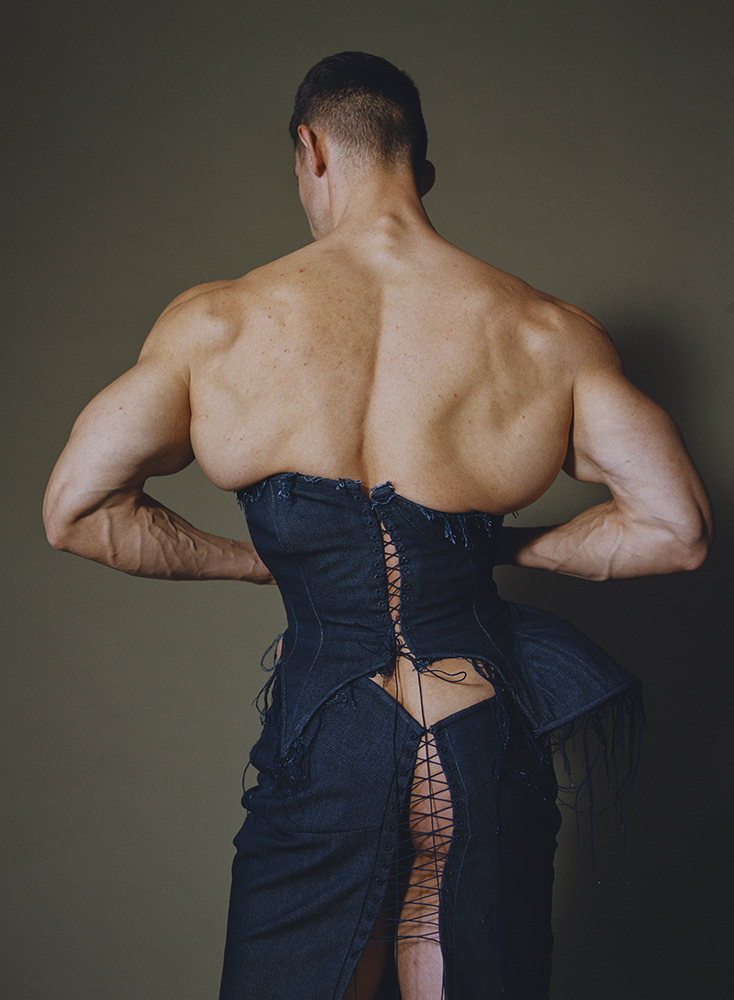
And even through political, social, and public statements that individuals like Michaela Stark make (whether that be through voice or body) where is the representation for men? Society holds tight to how a woman should be, and perhaps we are given some lenience because our bodies are meant to change (not by much though, don’t get ahead of yourself) through the natural processes of pregnancy and birth (yes, I know how demoralizing that is to women anyway), but men don’t get this recognition because it’s socialized to us that they don’t need it. A man’s body should only change for the better: gaining muscle, growing taller, being smarter, stoic. Women are the clay that is never left untouched, always malleable in another person’s hands. Men are the statues, the pyramids, never to fall or be broken down. And a statue should NEVER change. Who knows what waits for you when you don’t identify as either of those things.
My point is that labels are damning, the same way our bodies are socialized and conditioned to be damned. Whether you learn this through the words of Stryker’s My Words to Frankenstein, the sociological concepts of Patricia Collins, or the memoirs in Duane and Rajunov’s Nonbinary, we need no explanation for how this affects us. Through personal experience, we already know. The next step is how we break down these labels that separate us from our bodies, and innovators like Michaela Stark are a perfect example of such. It’s also critical we nip this body-dysphoric-rhetoric in the bud, right at the source: by teaching our children to evolve and grow for their own personal empowerment and not to fit social code. Our girls must know courage and strength the same way our boys receive it. Our boys must know emotion and compassion the way our girls receive it. Most importantly, I think, is instilling these traits as good qualities of a person, rather than subjecting them to a gender binary that supports no one.
Michaela Stark represents a movement of bodies, and in that name we must assume this includes EVERY BODY. If we wish to combat the social construct of the body as its ingrained in our everyday reality, let us begin with abstract thinking.
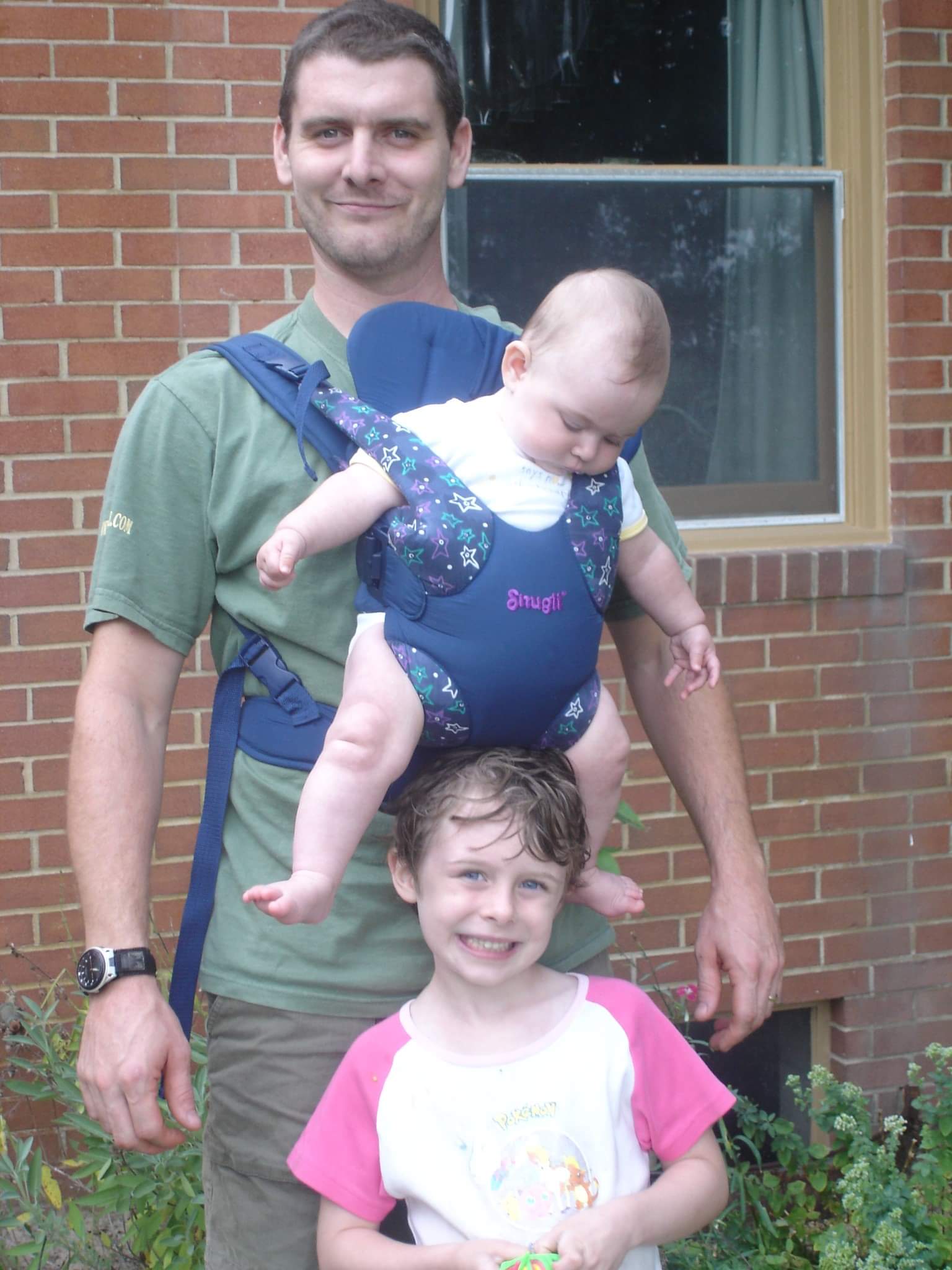
I grew up in a houshold where gender norms were not enforced. I was allowed to wear “boy clothes” and play with “boy toys” just as much as “girly” things. For my 5th year I was obsessed with Spiderman and would wear a Spiderman costume around the house all the time (and try and climb the walls). I had my hair cut short and was constantly questioned about my gender as a young child. At first I would get annoyed by constantly getting asked “ArE yOu A bOy oR a GiRL?” because to me it was obvious that I was a girl. I didn’t understand that to everyone else girls are supposed to have long hair, and wear pink dresses. I didn’t understand why it wasn’t obvious I was a girl in my Pokemon shirt and short hair. Even at a young age I was questioning gender norms (probably due to being autistic lol). I first learned the word tomboy in early elementary school. This was a label that was pasted onto me, not chosen by me. I never understood it. Why couldn’t I be a girl and like playing in the dirt? Why did I need a seperate label from everyone else. This othering definitely coincided with my lonliness as an undignosed autistic child. I just felt so different from other girls. Most of my friends were boys because they liked to do the same things that I did. I struggled to relate to women well into my adulthood. It wasn’t until I realized I was nonbinary did I fully understand why I never felt “like other girls”. Sure people called me a pick me in high school and college. But I geniuinely wasn’t like other women, because I wasn’t a women!!!! It has taken me a long time to come to terms with my non-binary identity, and it’s something I’m still exploring. I only started using they/them pronouns only 2 years ago. I am excited to continue exploring my identity as I grow and change.
Within the past year or so, I’ve been slowly getting more and more into football. Most of my friends were already huge fans, but in high school I was into other things. That all changed when I got to college and found myself with nothing to do on Sundays, so I started following the NFL. Now, I’m even starting to get into the college football scene. While reading Brian Jay Eley’s “You See Me” in Nonbinary: Memoirs of Gender and Identity, I came across a quote that really stood out to me, “I believed the rhetoric I was told as a child. I believed that America was great. I believed God was good. I believed that all people were equal. I believed that it was wrong to be mean to people based on who they are. I believed that anyone could grow up to be anything. No one told me explicitly that I couldn’t play with toys for girls. I grew up with the implicit bigotry that surrounds us all.” (page 157) I found this quote incredibly powerful. Eley lists all the things he was told to believe as a child, only to realize later that society often contradicts those ideals. His realization that even something as small as being discouraged from playing with “girls’ toys” reflects larger social standards and restrictions really struck me. It made me think about football. At my high school, they recently created a girls’ flag football team. Now, this might be a hot take, but I’ve never really understood the point of flag football. To me, tackling is part of what makes football, football y’know? Pulling off a flag just feels… different. But what stands out more is that, for a long time, girls didn’t even have the opportunity to experience the sport in any form, at least not where I’m from. Only recently have those opportunities started to appear even if it’s not the same version the boys get to play. I think everyone should be able to experience the game in its full form if they want to. Regardless of gender, anyone should be able to put on the pads, line up on 4th and 1, and feel the same rush that comes with playing the sport.
In thinking about an oral history of my perspectives and what I can tell, one theme kept with me. It was this idea of Feminine envy and how I wish I could do the things they get to do without a second thought.
Boys don’t have to think about their surroundings or body. The world wasn’t made to hurt them.
They can get gas in the middle of the night and not park as close as they can to the machine so there is only space for your car door and the pump. They aren’t looking over their shoulder.
It’s not that I am mad at boys, it’s that im envious of what they can do.
They’re allowed to open up their dresser and wear the first thing that they see. Then they have the audacity to say “women spend to much time getting ready” when in reality it is a decision of how we are going to be perceived that day.
If I wear something too tight, will people think I’m a slut?
If I wear something baggy, will people think I’m lazy?
If I wear a really well curated outfit, will people think I’m trying to hard? Or that I wear impractical clothing?
This all seems trivial but they have an affect on how people treat us.
Over the span of my life I have made multiple trips to my local giant. The level of which I am dressed will always affect how people treat me.
If I decide to dress nicely then people stare at me. However, If I need to ask for help employees are far more likely to help me and will sometimes even go out of their way to help me (which could be attributed to that I am a pretty little white woman and the privilege that I hold in that)
On the opposite side if I decide to dress in sweat pants, a baggy shirt, and no makeup no one will stare at me however I am greeted with side eyes. Maybe a store employee will watch me to make sure I’m not stealing anything.
When I was a kid everything I was allowed to do changed once my breasts started to develop. Suddenly I couldn’t run, I couldn’t wear my spaghetti strapped tops, and I had to wear an extra hot layer underneath my shirt. All my friends who were guys now started to act differently towards me, and all my family members couldn’t stop bringing up that I was “a woman now”
Boys never had an experience like this. Boys didn’t get their childhood taken from them because of their bodies betraying them.
I have come to love my breasts; they are a wonderful part of me now. However I wish I could’ve come in to my body on my own without the world’s judgmental eyes.
I am me. I own no label but my name. for a major portion of my life, I identified as a lesbian; it was a truth to me, made a fact to anyone who asked. while it was something I obviously resided with, my friends at the time made it out to be my whole personality; not a day went by without being reminded of my orientation by my friends, it was all I was. what made matters worse is that I was hyper femme too. pink was in every outfit, even my all black outfit was paired with a pink sparkly belt, so to the world I was seen as the typical heterosexual ditsy pink girl. my friends constantly probed me to change, I couldn’t be a lesbian and dress the way I did; I needed to constantly be wearing markers. I was a label, only one label, nothing more. it didn’t matter that I loved drag, wrestling, building, coding, and makeup; none of my interests, which made up who I was, actually mattered to them. I was the butt of every gay joke and the first person looked at when the topic came about. As time persisted, I came to explore that women were not the only people I felt a gravitation towards, I confided in my friends about it, and the first thing they said was “Well, what are you then?”. It was like I was letting them down. within that moment, I felt something shift within me. I no longer wish to be a label, just a label. I like who I like, and that is a part of me, just a part. I know now that that friend group was not the best for me, and I do not blame them for their actions, as during this time, chronic online-ness became a pressing issue. they learned to gatekeep the community because the people they adored online were also gatekeeping, but I lost interest in being let in; I just wanted to be myself with no bounds. with this being said, I am still a very active participant in queer rallies and events. I strive to make sure that everyone I meet has a safe space within myself. not a day goes by where I’m not reminding people they are allowed to be who they are, open and free without constraints on being “enough” (whatever enough may be). No one will be made to feel the way I felt within those years, as if who I was was not enough to be let in. I now have a much better support group in friends, and I am forever grateful for them. They allow and help me explore who I am as a person, and remind me that I am complex and composed of a remarkable number of elements. in all, I am more than what anyone will ever make of me. I am queer; it’s just another part of me.
“I remember wearing my mom’s high heels And these pink work-out sweatpants Yeah, I was a little kid Who didn’t know to hide it I remember hatin’ all my clothes And seeing pretty girls with pretty clothes And I was envious How can I be one of those?”
These are some of my favorite lyrics from the song IDK If I’m a Boy by Blue Foster. You can pretty much gather what the song is about from the title. In this section of the song, Foster basically bullet points a series of experiences they had as a child that express interest in feminine practices/rituals/aesthetics. I was listening to this song on my drive to work the other day and when I heard these lyrics it got me thinking about how we’ve talked a little about signs from your childhood acting as evidence towards your queer/trans status later in life.
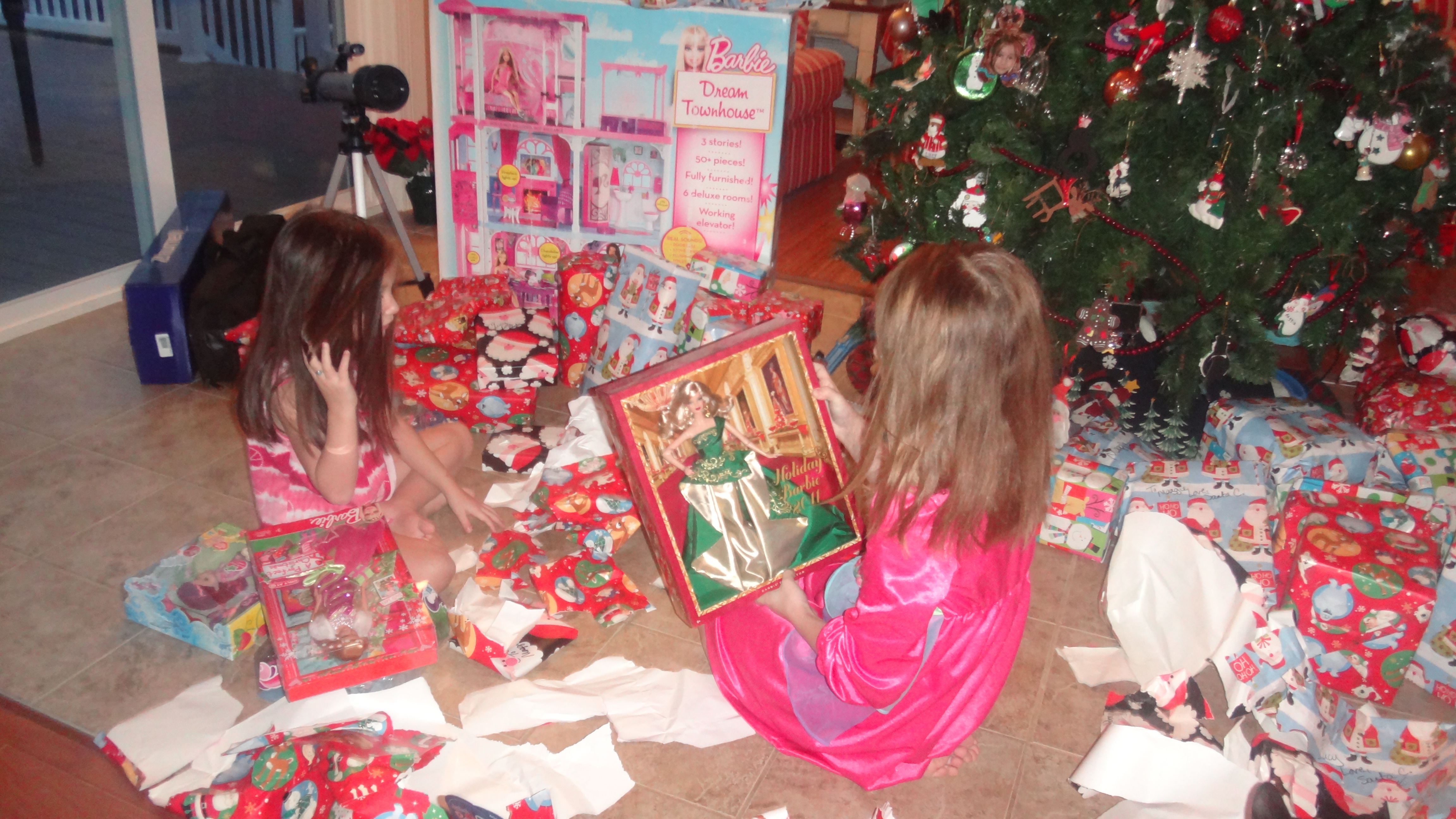
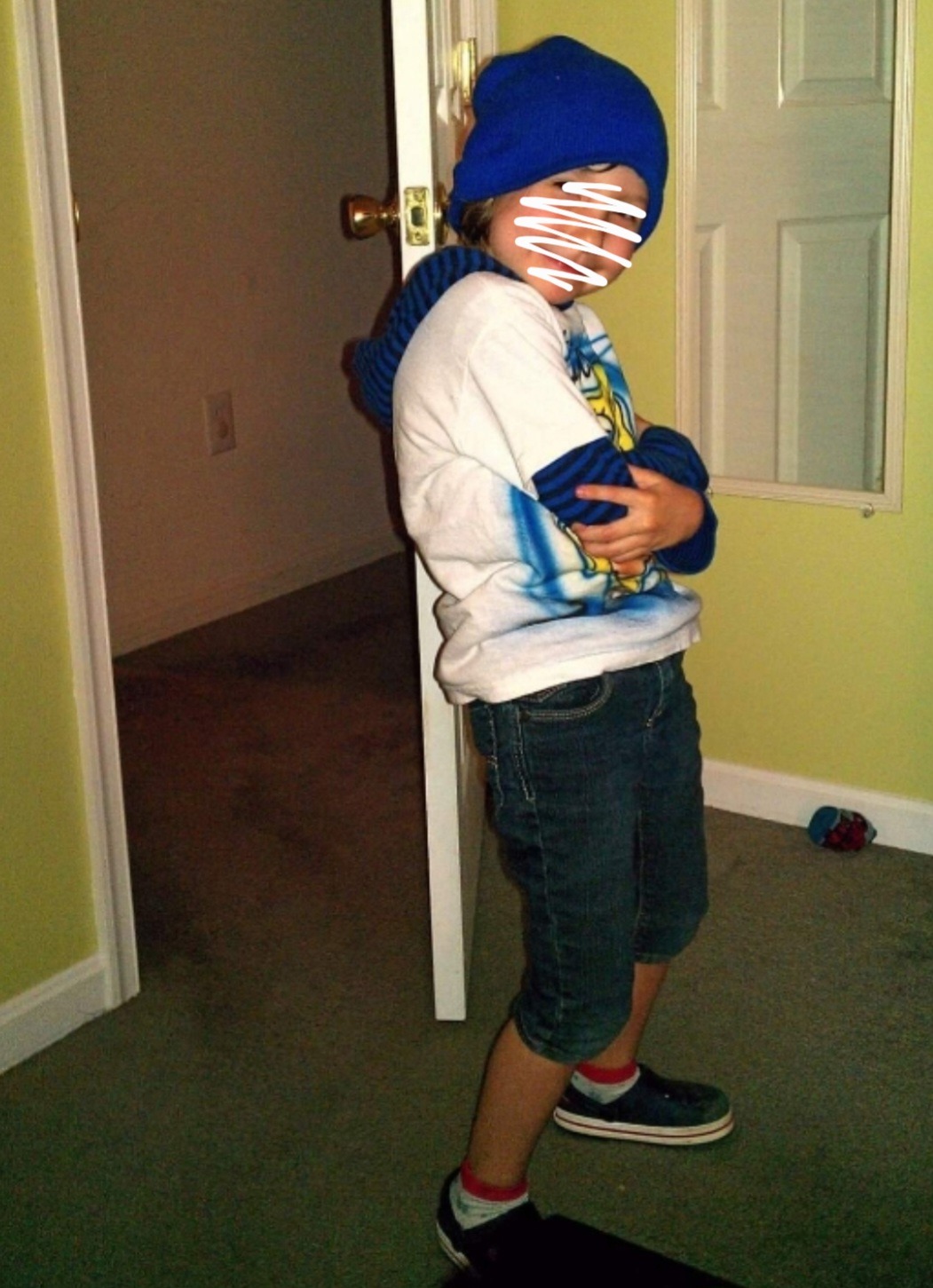
This photo, I think, perfectly encapsulates me as a child (circa 2011). While I don’t have any stories as good as Dr. Kate’s typing class love story, I do think I have some memories that could serve as these so-called pieces of evidence. For one, outfits like the one I’m wearing in that photo were the thing I felt most comfortable in (you may be able to see my big smile through the scratch out lines). I hated anything with ruffled sleeves, I would’ve rather died than let you put my hair in a ponytail, and don’t even get me started on skirts/dresses. When I got old enough to recognize the difference between the “boys” section and the “girls” section of clothing stores, I would say no to everything in the pink, frilly area until my mom was forced to take me over the cool, blue area. It was around the same time that I began to notice how pretty I thought my female classmates were and how uninteresting my male classmates were.
I read Deconstructing Myself (chapter 2) from Nonbinary: Memoirs of Gender and Identity and in it the author, Levi, discusses their journey from identifying as a straight cisgender woman to a lesbian cisgender woman to a “neither heterosexual nor homosexual” genderqueer individual. Levi shared some of their own evidence from their early life. This included wanting to play shirtless outside and pee standing up as a child, as well as wanting to talk about girls, fix cars, and wear a tux to prom as a teenager.
When I started writing this blog post (approximately thirty minutes ago), I planned on ending it with the question of why do people view behaviors they exhibited as children as evidence for their identity when they get older. While I’m sure there’s a lot more that could go into it, I’m starting to think it’s silly for me to ask that question. I have the answer (at least I have my answer). There is some murky water, but I think all-in-all we know who we are and there is no better time to understand who you are than when you are ignorant to all the factors that will one day influence your expression of identity. Like the song says, when you’re too young to understand what your desires may entail for your identity, you don’t know that you are supposed to hide it from the world around you.