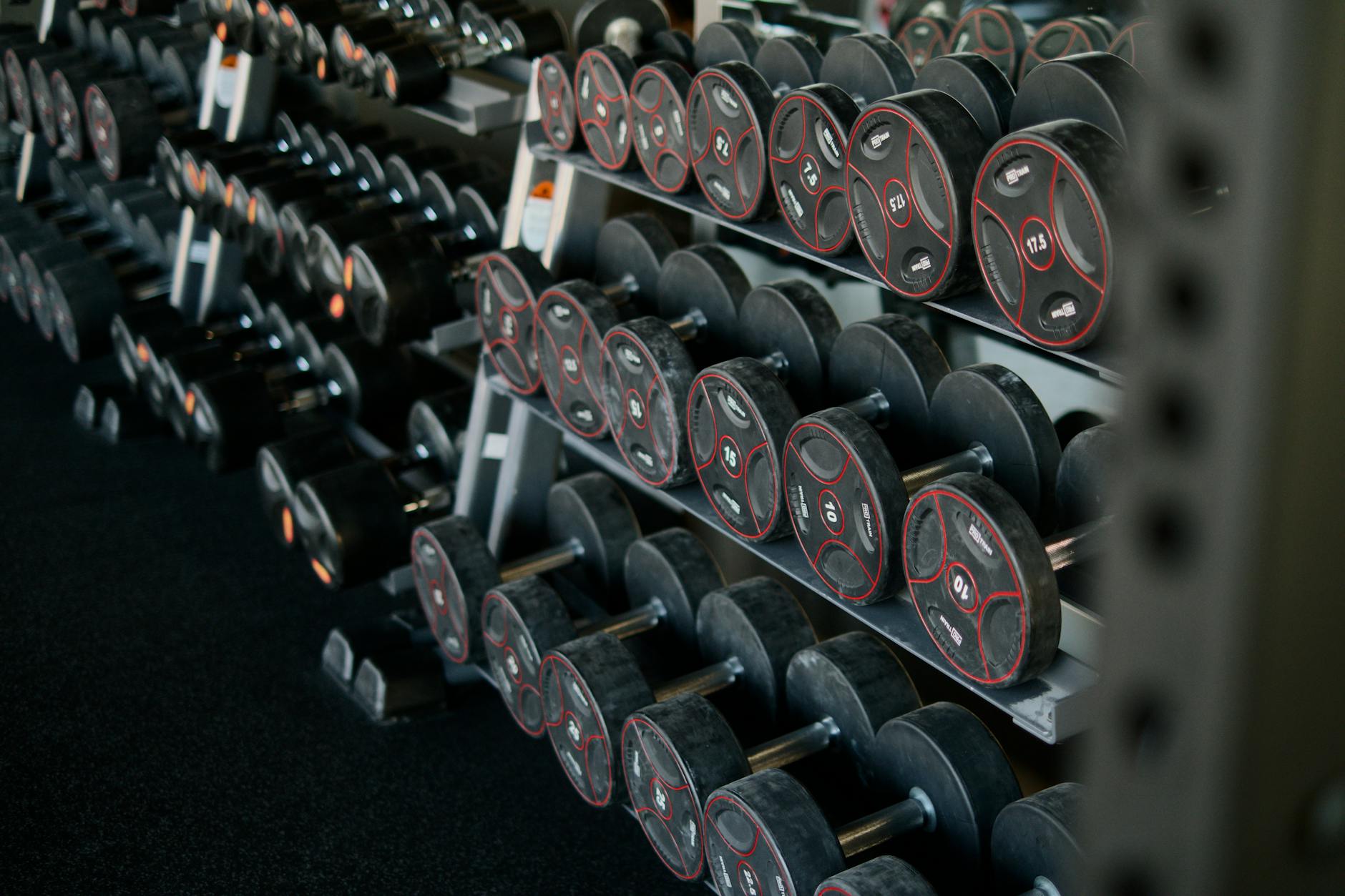
Imagine you walk into a gym, a not-quite 20-year-old feminine presenting person. After months of working out in the peace of your own home and improving your self esteem, you finally build up the courage and confidence to work out in public for the first time. You sign in and find the weight room. You look up and…wow that’s a lot of men. You struggle to even find one girl. Just a bunch of grunting gym bros with all their buddies lifting weights that are probably too heavy for them to safely lift. Not to worry though! You’ve been training for this moment. All the (Instagram) research you’ve done has led up to this moment. You take a deep breath, grab your 2 dumbbells and find a corner to begin your Shy Girl Workout…
Your Shy Girl Workout allows you to stay in one place with one set of weights the whole time, taking up minimal space so as not to draw any attention to yourself. To be virtually imperceptible. Invisible.
Put a finger down if you got out of a five year toxic relationship that ruined your self confidence and body image so you spend a whole year rebuilding yourself and loving who you are just to find out your role model “loving” parents who were married for 30 years are getting a divorce because you learn that your father is actually verbally and physically abusive towards your mother and has assaulted your brother on multiple occasions. So you become the rock in your family and keep everyone grounded while the worst case scenario is going on around you. During this time period your mentally ill father tries to take the house from everyone threatening that everyone will be homeless so you and your brother brainstorm ideas on what you can do to keep the house, and come up with this brilliant idea that if you both buy the home together and buy out your father you will have somewhere to live with the small cost of being in debt for a long time.
Additionally you are working a full time job and balancing a full time college student schedule during your parents divorce mess because your college loans never cover a full semester so it is your responsibility to come up with the remaining balance which is typically thousands of dollars and you don’t qualify for any kind of financial grants since you “make too much.” (aka 35k a year) So then you add on a paid internship which counts as a second job but this second job is located in DC so it is a farther commute then your commute to school which means you have to pay more in gas and tolls but bite the bullet because it is what you want to do for your future job so you try your hardest to not complain and to just be grateful for the opportunity.
I recently saw an Instagram reel from @arlenezhxo where she shows her original outfit and then adorns this oversized shirt with Kermit the Frog wearing a Santa hat over it. With the text on the screen saying, “shoutout to my subway shirt” and the caption saying, “what’s ur subway shirt?” Here it is: https://www.instagram.com/reel/C_wOd2SyAHV/?hl=en
The idea behind a Subway shirt is to conceal your body and stop or reduce harassment from people who ride the Subway. This is not the first Instagram reelI have seen about the Subway shirt (I do not have TikTok). It brings up the idea of not wanting your body to be perceived.
This can be understood through Featherstone’s critique of consumer culture and the focus on the body. Featherstone (1990) highlights that the consumerist obsession with leisure and consumption, especially regarding the body, is often seen as empowering by granting individuals greater freedom to express themselves through fashion and appearance. However, this constant focus on appearance also leads to a form of “ideological manipulation,” wherein the body becomes the primary site of self-worth and identity. The pressure to present oneself in a specific way reinforces conformity to consumerist ideals, which may limit true freedom and alternative ways of being in the world.
In this case, the “Subway shirt” can be seen as a reaction to that manipulation. It symbolizes a rejection of the consumer-driven pressure to always make one’s body available for public consumption and appraisal. The oversized shirt is worn not for leisure or self-expression but as a tool of protection, concealing the body to avoid unwanted attention. This aligns with Featherstone’s view that while consumer culture promises freedom and individualism, it can also act as a means of control, encouraging individuals to conform to certain norms and aesthetics. In this case, the “Subway shirt” might represent a deliberate disengagement from this consumerist gaze, offering a temporary escape from the endless cycle of bodily visibility and scrutiny.
Who am I? I, I’m my thoughts, My dreams, My aspirations. I’m my name, My looks, My imagination. That’s what I see, When I stare, Into my reflection.
My reflection, Ripples in the river of life, The shallow, Shallow river of life. To the world, I am my reflection: I am only what the world sees, Only what the world decides I am. My body is but a vessel; Why must the world ignore me, But acknowledge the vessel?!
Books, merely objects Are still judged By only their covers, So who am I to demand They not judge me By only what they can see. The inside of a book Is where the value lies But most people don’t bother; It’s easier to judge From the outside
My body is a part of me, It embodies my soul My personality, But it is not all I am. I am not my scars, My disability, I am me, A completely separate entity. I, Me, Not just what you see
I woke up one day with a new body and it wasn’t the first time.
The earliest memory of my first body was when I asked my father, “if I cut myself and then bleed out, will I get smaller?” He laughed and said that it doesn’t work like that. I remember having thought long and hard before asking him this question because at 6 years old, it just made sense. Perhaps that was the first time I got a new body. Surely I had one before but I didn’t notice it but this new one I saw was too much. Too much of what exactly, I wasn’t sure yet but I knew I hoped it would shrink some to make me feel better. I kept that body for a while, probably until 8th grade right before I went to high school. Throughout that time I began to realize what I didn’t at six. That this body was too big. I was always the tallest person amongst my peers and sometimes I was the fattest too. In middle school I found a way to cope with these feelings of taking up too much space by making that body the punch line in jokes. I saw how others who had bodies like mine were treated and figured it was better to be the one to take charge of my own disparagement rather than be on the receiving end. When we learned about whales having blubber in science class, some students started naming classmates who had “blubber” (i.e. were fat) and I quickly decided that it would be funny to call the fat on my arms blubber and I would shake it to make my friends laugh. For me, it was better for that body to be laughing, not crying even though it felt the same inside.
I got a new body the day I was helping my older sister move into her college dorm and she commented on the size of my butt. I was confused because we all knew to have a big butt meant you were sexy and attractive and everything this body was not. I was suddenly aware that the body didn’t look the same as when I was six but was somehow the exact same. It seemed that the body I gained that day had new forms. It was still Ugly but…? I kept that one until I was 19 years old. I grew to accept the polarizing experiences I had in that body. That body got catcalled while playing volleyball because of the spandex we wore but also was stared out because of how it looked compared to the white, thin girls who dominate the sport. I could go a day with it being the last thing anyone wanted to be around and later that same day it could be the object of someone’s desire. That desire was typically sexual and the person was likely older than me. I always thought that this body had potential but…… At 19, I hated that body. I saw myself going back to the ways of my youth by saying to people, “I’m so ugly. Aren’t I ugly? Tell my the truth, I’m ugly right?” Initially I got the responses I likely was looking for, denying my assertions and telling me no. Then one day after I went through the whole act with my sister she sighed, exasperated and said “Yes!” I think that was something I wanted to hear too. I needed validation for my feelings of hatred towards the body so many other people told me was not the ugly I saw in the mirror.
Since 19, that body changed shape a few more times but really it’s still the same. What’s really changed is how I view it. I enjoy being in this body despite constantly working to change it. This body likely has an eating disorder (LOL) but I don’t remember a time when I didn’t avoid mirrors or taking selfies so I wouldn’t have to look at it so I’m taking that as a net positive. I haven’t decided whether or not my body is my own. I thought I was getting a new body (it’s always either a “good” one or a “bad” one) every time I realized there were different ways that people were perceiving it. In reality, this body may have grown taller, changed shape, or lost and gained weight but it was the same fat Black feminine body in an anti-Black, anti-fat, and misogynistic world. This world both fetishizes and disposes of people with bodies like mine and it’s always confusing to be on the receiving end of such differing responses to it. A question that has always stuck with me in regards to our bodies and positionalities is “How can I live differently in the same world that harmed my parents when I look just like them?”
“Yes, and the body has memory. The physical carriage hauls more than its weight. The body is the threshold across which each objectionable call passes into consciousness— all the unintimidated, unblinking, and unflappable resilience does not erase the moments lived through, even as we are eternally stupid or everlastingly optimistic, so ready to be inside, among, a part of the games.”
Claudia Rankine, “Citizen”
How is this body my own when it holds the history of my ancestors’ first body in a new world? How can I get rid of the negative thoughts that always linger? This current body has never changed but becomes new whenever its beholder has a new use for it.
I’m hoping for just one more body but I want to see it in a new life.
Is it possible to adopt a body neutral mindset in the face of external structural notions about what the body should be?
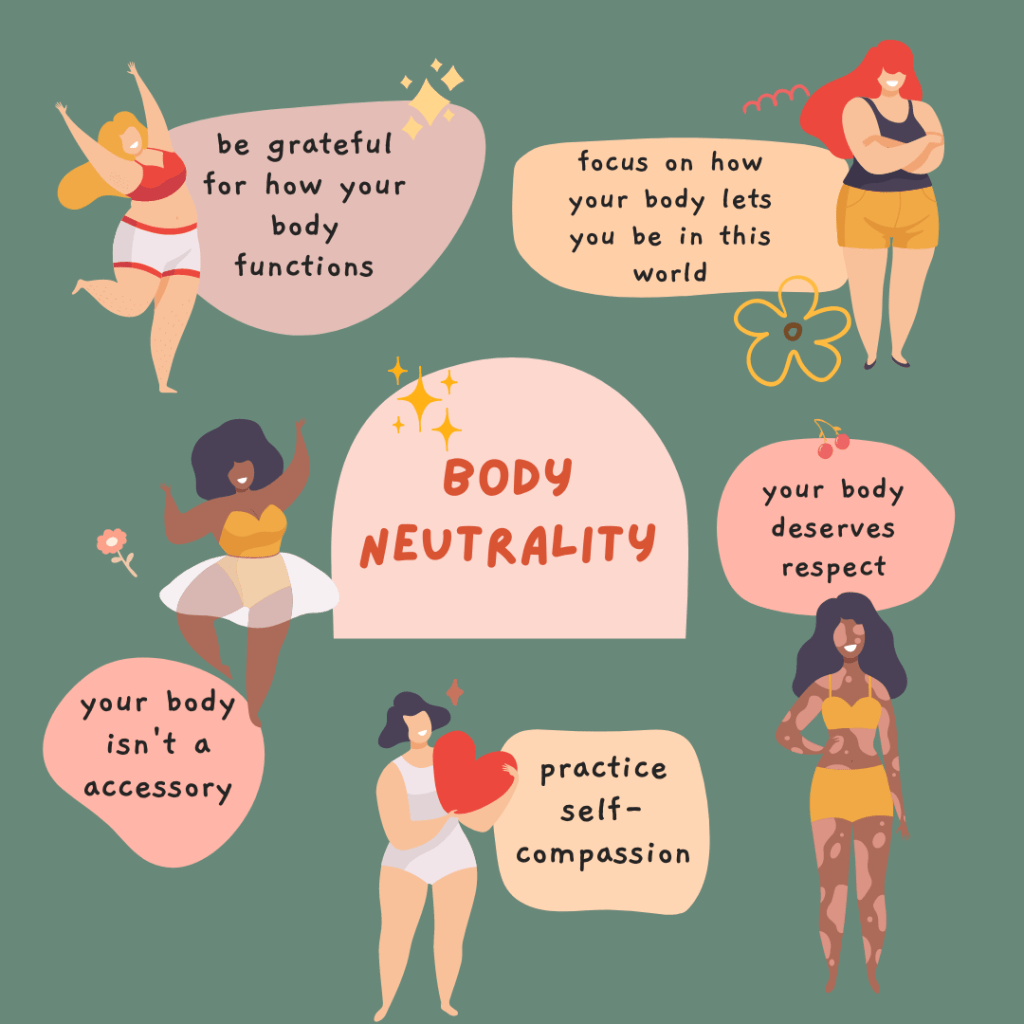
Image Description: The image depicts a graphic from bewitching.net that has a green background and colorful splotches with text. The middle pink splotch says Body Neutrality. It is surrounded in a circle by 5 other splotches that say be grateful for how your body functions; focus on how your body lets you be in this world; your body deserves respect; practice self compassion; your body isn’t an accessory. Each text has a different body next to it posing.
Body neutrality is a contemporary concept that describes the practice of adopting an objective, arguably more function-oriented mindset towards one’s physical self. Popularized in 2015 by Annie Poirier, body neutrality as a concept encourages individuals to view their bodies as physical vessels that allow them to experience and conduct through daily life. Some find it to be a stepping stone to body positivity, however in its fundamental ideology body neutrality is intended to promote a more peaceful relationship between the mind and body that does not focus on negative nor positive conceptualizations of the body, especially in those ways that can consume and strain the mind (i.e., significantly focusing on the size, shape, or color of the body). The concept of body neutrality is designed to operate in contrast to societal expectations that systemically operate to burden individuals to fit into physical and emotional molds in order to be legible as human beings and gain access to various spaces both physically and socially. It is critical to note that societal standards of physicality and being often disproportionately impact minority communities, who often may be denied access to other mechanisms of legibility such as personhood and femininity.
As the concept of body neutrality manifests as an individual effort—where one must rewire their thoughts to accept themselves in their current existence—it is critical to consider to what extent this mindset is sustainable. For sustainability seems unlikely in a world where one’s internal perspectives are competing with the perspectives ascribed to them by other social actors and the implications of structures more broadly (i.e., the spaces their physical and emotional selves may be accepted in or denied access to). It appears to be the case that the body neutral mindset can only exist in the individual bubble, as venturing out of those individual boundaries forces one to be confronted with realities of dominant thought about the superiority of thinness, smallness, whiteness, etc. that will inevitably, even momentarily, impact the way one views themselves and others. It can be said, then, that genuine bodily neutrality is an in-achievable pursuit in our current world where subjects are “locked in” their bodies unable to transcend to a space of being that allows them to shed their physical and spatial identities. While this perspective is less than optimistic, it does offer a more pragmatic contextualization of how societal influence is imperative in creating an environment where humans are categorized and then held to physical and emotional standards that are historically long-lasting and seemingly intrinsic, which hinder individual and population-specific liberation.
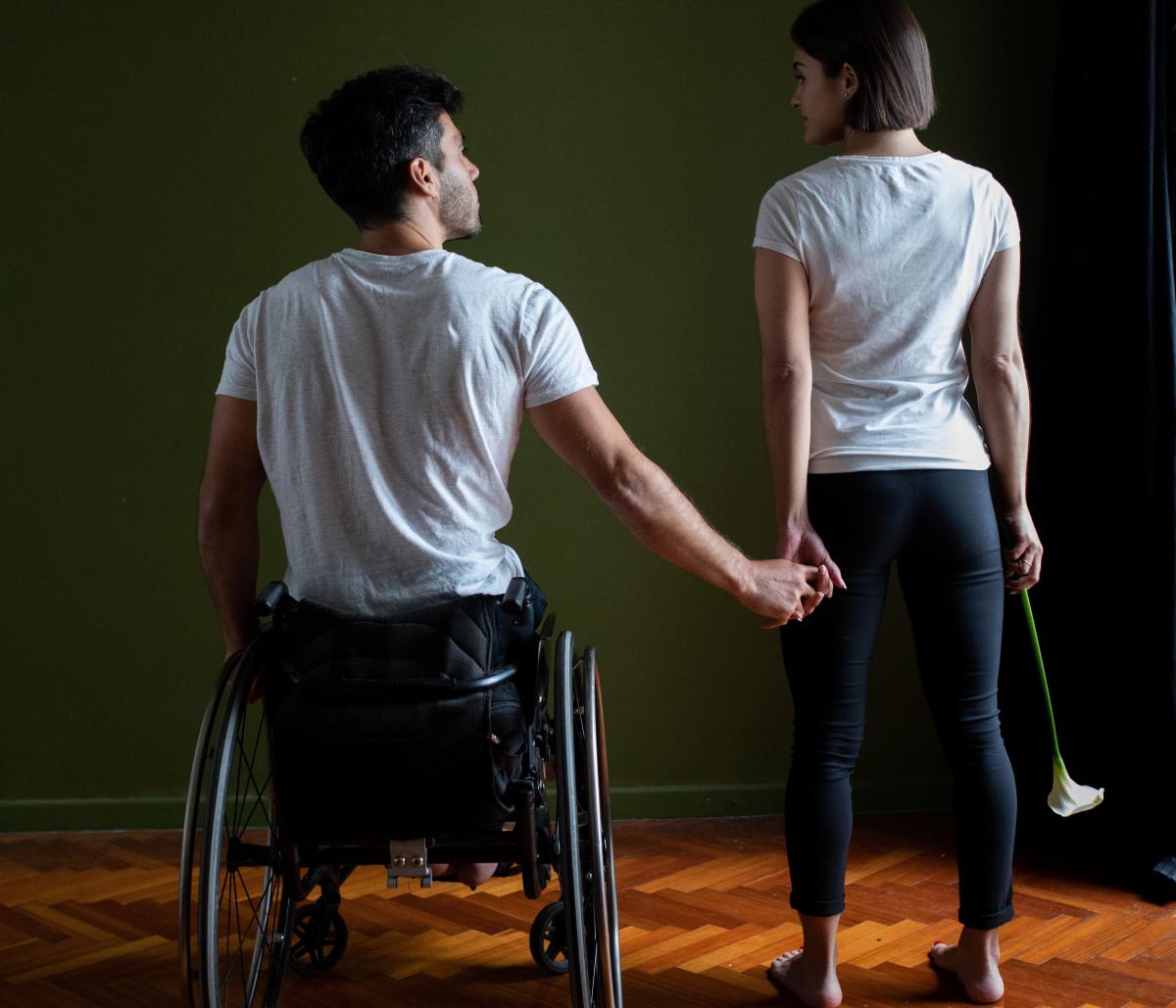
Growing up, we saw physically disabled people as the odd ones out. I could take responsibility for viewing disabled people that way, but that was how everybody around me viewed them. I had no chance of “knowing better,” at least in that environment and age. That was the case until I was introduced to this class and had a fair share of friends who were open-minded. These people changed my thinking in both positive and negative ways, but the point that they taught me that people are different; not everyone is going to look and act the same as everybody else, and that is okay. I know the previous statement can come out as a very “duhh” statement for most of yall; however, I didn’t use to think like that. It was more of “you are weird! something is wrong with you.” And of course, like most adolescents who are just discovering sex and how it works, I wondered what sex must have been like for people with spinal cord injuries and other disabilities like that. I asked myself, “Do they feel anything down there?” or questions like, “can women who are paralyzed from the waist down give birth?” Most of these questions came from mostly ignorance and a bit of curiosity.
Sexuality and Disability: The Missing Discourse of Pleasure by Mitchell Tepper opened my eyes to this issue regarding disabled people and sex. An article like Tepper’s is exactly what people like me missed back in junior high. From reading the article, I learned that sex is more than just borrowing some friction from a partner, and there are more ways to derive sexual pleasure that does not involve the privates. I found it heartbreaking that some disabled individuals give up on their sex lives because they believe that there is no point in trying, “nothing will be the same.” And that is when Mitchell Tepper steps-up and encourages people with SCI that their “sexuality is their responsibility.” These people learned more about the spinal cord-injured bodies and embraced their disability. Evidently, disabled people in wheelchairs tend to have a more difficult time finding a sexual partner than abled individuals; most of this is due to the stigma around disability and sex and partially due to self rejecting before they can even try. Self rejection is a problem that we need to tackle. We (teachers and professors) need to teach about pleasure and sexuality in order to shine a light on this topic of sex and disability and hopefully reduce the stigma and misinformation around disability and sex.
trigger warnings: body dysmorphia, suicide, mentions of disordered eating, illness
If you remember what your body looks like, I think you’re one of the lucky ones. If you don’t, then I’m not so glad this is what we have in common. Coming from an older West Indian family, my body was always a discussion. No matter how many soccer practices I showed up to, salads I ate, nor how well I did in P.E. class, whenever an aunt approached me it was always “You’ve gotten bigger!” Even throughout my adulthood my body has gotten bigger. I know I’m big, but I wish they knew that I didn’t need to be reminded every second of my life.
I think it’s important to note that I wasn’t always fat, but I still struggled with food and dieting at a young age. Having to deal with cholesterol issues during elementary school was the start of my long, relentless relationship with food. I remember sitting in the doctor’s office with my uncle, his eyes glazed over, listening to every word my pediatrician said. My relationship with food not only originates in this moment, but also with my family’s history of heart disease, diabetes, and many other debilitating diseases. By the time I reached high school, my uncle had a coronary angioplasty, stent insertion, triple bypass heart surgery, and several other surgeries for various kinds of cancer. He never wanted me to suffer like he did.
For as long as I can remember, my uncle micro-managed everything that graced my plate. There were even times we fought at the dinner table so he could see whatever takeout I’d brought home. The stress of bringing home any form of food that he would scrutinize started to transfer into other aspects of my life. In middle school I discovered how uncomfortable it made me feel to eat in public spaces. In high school I even went as far as to become the library aide so I could escape the daunting task of consuming food in the adolescent-filled cafeteria and tried my best to retreat back to the library every lunch break. The library was my safe haven, a place of structure for the moments where I felt the most vulnerable. This is still a habit I have today, I always look for security.
It wasn’t until my senior year of high school that I started my first romantic relationship. He was beautiful, smart, and even had a piercing on one ear that was the jackpot of my teenage girl fantasies. Being with him was the first time someone told me I was pretty. For someone that had only dreamed of having a boyfriend, that meant the world to me. I naively thought that feeling would last forever. As the pandemic raged on, and quarantine forced us into our isolated nests, there became an evident strain on our relationship. Still, we continued to stay with each other. I never noticed when his demeanor changed or that I couldn’t fit into half of my jeans anymore, or even that I was getting bigger than him. I made a huge mistake. You know that horrible mistake people make when they get lost in a relationship because they already have constant bodily validation? Yeah, that one. I gained the “happy weight”, I let myself go. People hate happy weight because being fat makes you feel empty and alone after a relationship. Nobody thinks that you’re attractive anymore and it feels like now there’s this huge responsibility that you have to get back to when you were skinnier. I fucked up.
Coming out of that relationship I became extremely depressed. I moved back in with my family, back to a space I never felt secure in. Endless nights spent scrolling through Tinder, a space where your body is always being perceived, felt completely invalidating. I was a completely different person. And I didn’t feel that way because I had loved and learned valuable lessons about navigating relationships, but it was because I was fat. Everytime I looked into the mirror, a devil appeared on my shoulder pointing out every flaw on my now monstrous body. It’s like my ego had turned against me.
I didn’t want to live in my body anymore. I thought I was nothing without the comfort of another person telling me I was good enough. I can’t say that I never feel that way today, but I’ve worked on it. I’m not about to go on a spiel about how much it matters to love yourself, nor about how self-love is a journey and not a destination… but would love really be worth it if it meant that I had to be skinny, athletic, or fit any of the aesthetic qualities guys on dating apps wanted? Probably not. But I want to be better, because I know that the moments in between these feelings of doubt and despair are much more important than these superficial views of my body. Though, how I never saw myself changing is still a phenomena to me.
In the end, I’m still trying to upward spiral out of this feeling called body dysmorphia.
If someone complimented me, they obviously didn’t mean it. It was a social experiment, a tease, some witty inside joke I wasn’t a part of. Especially if it was a male, they wanted to express their male dominance because they’re insecure about their masculinity. I’m a ‘mere object’. They wanted something from me. They have an ulterior motive, with a million strings attached. These are some of the subconscious thoughts that run through my head when I am complimented for something. The sheer audacity of feeling good from someone’s compliment felt narcissistic. I’d honestly rather be criticized. I had to humble myself.
In Citizen by Claudia Ranken, she writes about how “the physical carriage hauls more than its weight”, in other words how our bodies hold more weight than what is shown on the scale. The weight means trauma and experiences we gained through being a conscious, breathing being. Growing up, I was always taught that if anyone had done a nice favor for me or complimented me, they wanted something. I kept this ideology in the back of my head, like a sticky note I would reference each time I interacted with someone. Over time, I amassed a couple hundred of these notes which eventually turned into a know-it-all heavy weight I lugged around when navigating the real world. “Cute outfit!” a stranger said. “Nice try.” I would think to myself. “You’re not getting into my head that easily.” “You’re so pretty!” Another would exclaim. “Lies.” I thought again. I knew how pathetic I was. I wasn’t conventionally attractive. The phenomenon of having this toxic belief ingrained in my brain destroyed every ounce of self-confidence and feelings of worthiness I had throughout my childhood. It was hard for me to sustain relationships with my friends without these thoughts creeping into my mind because why would they want to waste their time with someone like me? Did they want something? Are they playing the long game?
Eighteen years later, I still have an internal debate whenever I receive a compliment or even a simple praise. The guidebook is etched deep within my brain, so it’ll take quite some time to reverse its effects, but I’ve learned to accept these thoughts and let them free. My friends are friends with me because they value who I am and appreciate my presence, not because they have a secret agenda (unless they do…just kidding). People give and receive compliments because they genuinely had a reason to. So, when someone compliments you on your drip, take it with pride! Make an effort to throw one back. Spread the love!
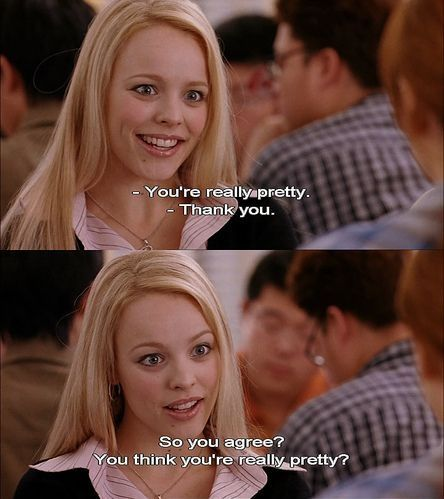
Regina: You’re really pretty Kat: Thank You Regina: So you agree? You think you’re really pretty?