Disability?

It never clicked that I had a mental illness until way later than it should have, unfortunately. Then when it did I always made excuses for how my actions caused me to function so poorly in life, separating the illness from myself as if they could ever exist separately. Visible and invisible disabilities were never seen as equal in society. One was a valid reason for requiring aid and assistance, the other was a cry for attention or something synonymous with not trying hard enough. When you look at your own behavior through that lens and not for what it really is it diminishes your chances of finding peace in living or happiness. At young ages, we are forced to process our ever-changing minds and chalk it up to normalcy or puberty. But when you develop a mental illness and you lack the resources to properly process or understand the significance that track to disability isn’t as long as it seems. The debate about whether chronic illnesses should be seen and treated like disabilities means that there is a difference in the way the two live their lives. And that legislature will solve the debate, when in reality both parties are already living the same struggle. If the way I live my life isn’t indicative that I’m not behaving like a healthy and abled person then disabled would be the appropriate term. Calling myself disabled when I have all the tools to fix them just out of reach but no motivation to reach for them is an argument that I’ve had way before lecture. And one that I will continue to have after I’ve graduated.

Anxious

Living with anxiety has been a very big part of my life, and it affects my daily routine. The constant worry and unease make even simple conversations feels like a challenge, leaving me feeling pretty uneasy in social situations. As a student, the pressure to excel academically only makes my anxiety worse, making it hard to keep up with assignments and deadlines. Whether it’s about health, school, money, friends, family, etc. everything seems to make me anxious in a way. It’s comforting to know that I’m not alone in this struggle and that many people face similar battles with anxiety.

I’ve taken some steps to try and tackle my anxiety. I’ve been watching YouTube videos and reading articles that provide tips for managing anxiety. These videos and articles have given me a sense of motivation to try and retrain my brain and reduce the hold anxiety has on my life. While it is tough sometimes, I’m determined to confront my anxiety and work towards a calmer future.

Neurodiversity and Race

Neurodiversity and Race

Neurodiversity can be defined as differing in mental or neurological function from what is considered typical. Neurodiversity can take many forms, like ADHD, autism, dyslexia, and Tourette syndrome, just to name a few. Thinking differently has many advantages, like better pattern recognition, creativity, stronger observational skills, and more. Unfortunately, neurodivergence does not exist in a vacuum. People are perceived by society through social constructs like gender, sexual orientation, socioeconomic status, and more. In this post, I explore the intersectionality of race and neurodiversity, focusing on Black people in the United States. 

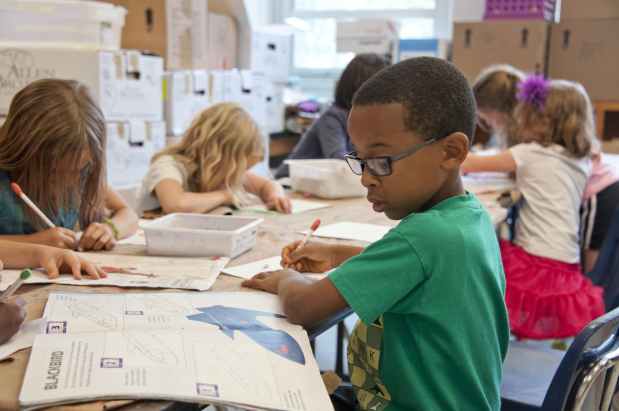
The stereotyping around neurodiversity shows itself in assumptions of intelligence and capabilities. Stigmas include low intelligence, carelessness, lack of ability, and behavioral issues. In school, neurodivergent children are segregated from the other students by learning in different classrooms. When combined with the structural inequalities around race, it could be a deadly unification. White children are twice as likely to receive a diagnosis compared to black children. Teachers in wealthier, whiter schools are more likely to recognize neurodivergent behavior. When paired with stigmas around black people being trouble-makers in society who deserve the punishment they receive, it is not surprising that Black children are punished harsher for behavior that may be signs of neurodivergence. This ties right into the school-to-prison pipeline, which are the policies and practices that push our nation’s school children, especially our most at-risk children, out of classrooms and into the juvenile and criminal justice systems. This phenomenon shows itself in disproportionate punishments given to black and brown children, especially for boys. Black and brown children are constantly looked at as deviant or “bad” children who deserve to be punished in school and grow up to be overly policed by law enforcement in society.  

I’ve seen this first-hand with my brother. We lived in a majority non-black neighborhood, and it was very apparent that teachers did not have a lot of experience with children. My brother always showed Attention Deficit Hyperactivity Disorder (ADHD) tendencies, something that the school was made aware of each year. He was always in trouble for something, whether it was talking back or playing too rough. The teachers were generally white women who did not understand him. Punishments were always suspensions, which never matched with what he did. The problem with suspension is that the student misses school time, which leaves the student behind in classwork. They also go on your school record and can affect your chances of getting into your first-choice colleges, getting jobs or internships, etc. In high school, he was officially diagnosed with ADHD, and the school issued a 504 plan, a plan developed to ensure that a child who has a disability identified under the law and is attending an elementary or secondary educational institution receives accommodations that will ensure their academic success and access to the learning environment. For my brother, he needed small breaks where he could walk around the hallway, headphones, and his personal space. To put it simply, he just needed to be left alone, which seems like something so simple but was proven so hard to comply with. Some teachers understood this dynamic; he may not look like he’s paying attention, but he is. However, some teachers could not let it go. Constantly being reprimanded for having his headphones in, not being allowed to get up and leave when he needs to, etc. 

In the fourth grade, my brother was in art class and called this girl’s artwork ugly. The girl said, “So is yours,” they both proceeded with the rest, not considering the interaction. The art teacher overheard this interaction and reported him to the principal, where he was later suspended for bullying. When my mom caught wind of what was happening, she contested with the principal, who would not budge, a couple of administrators in the school system, and then the superintendent of Howard County Public Schools. She was met with the same stubborn and prejudiced mentality that a conversation overheard between two students warranted a three-day suspension. It wasn’t until my mom hired a lawyer, built a case, and threatened to sue the school that the suspension was overturned. The process took a year of constant back and forth with the school system and another six months to correspond with a lawyer. It is not lost on me that not everyone can spend 18 months in a battle with the school system over one suspension, and it makes me wonder how many other children were punished unfairly but did not have the resources to hold the school system accountable.

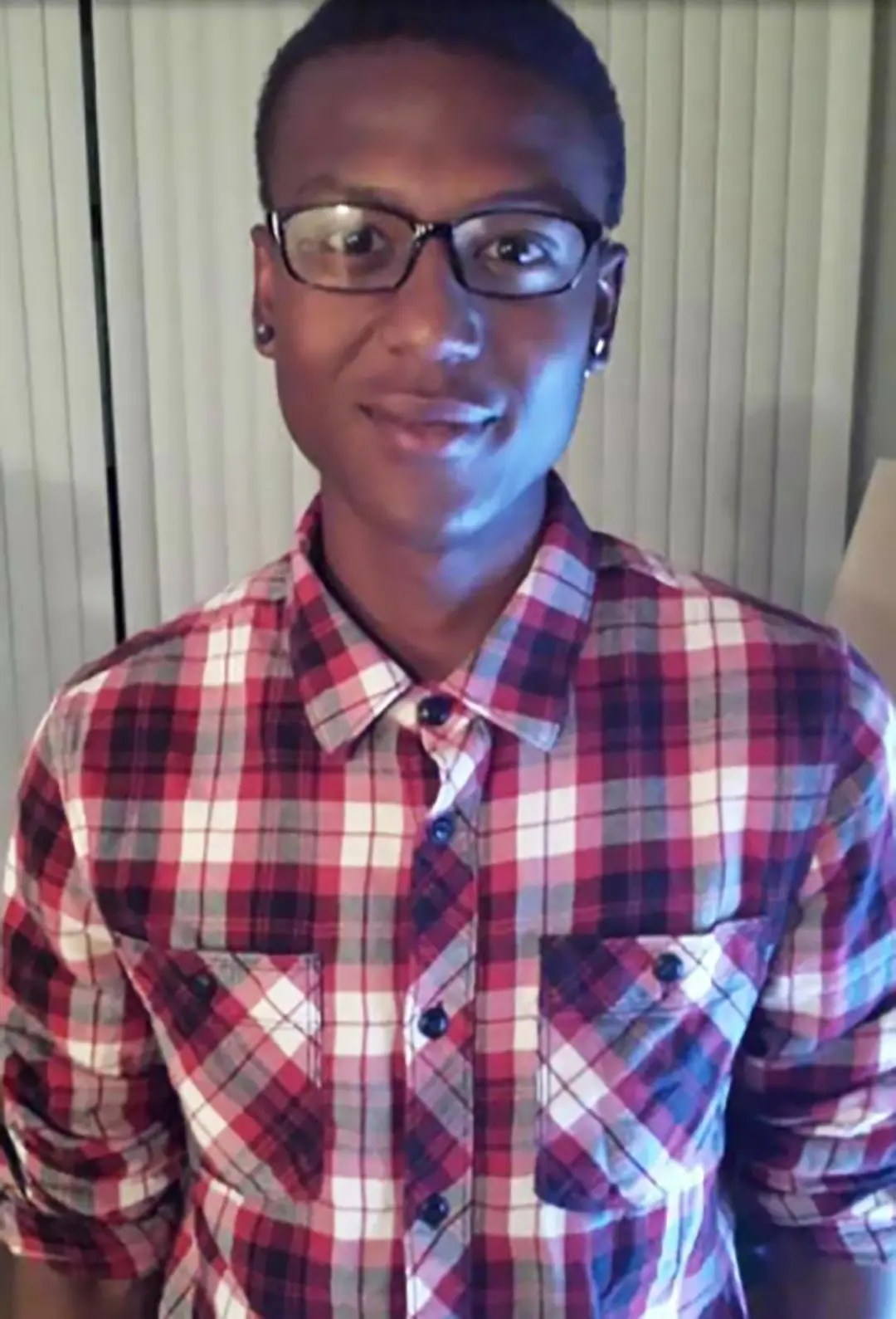
Family photo of Elijah McClain wearing red plad shirt and black glasses.

Lastly, I want to shed light on Elijah McClain. Elijah was a 23-year-old massage therapist who loved to play violin for stray cats. When the police harassed him, he notified them that he was autistic, but the Aurora, Colorado Police Department still murdered him. These practices and procedures aren’t just humiliating; they take the lives of the innocent.

Warning

Warning 

I have stretch marks 

Stretch marks 

The stretching of skin 

Appearing on those from thick to thin

Some on men, best friend to women 

Those fierce lines 

The tiger stripes of woman pride 

That we all try to hide 

But I don’t know why

I thought we were all about beauty being natural 

Then why is media beauty posed as unfactual 

The bodies I see on my phone are unachievable and irrational

Warning 

I am not a size zero

I don’t have a tiny waist of a superhero 

I have a belly whether I’m full or famished 

I sometimes don’t eat a salad with my sandwich 

I have rolls on my back 

My biggest curves is all of me from my thighs, hips to my rack 

The mastery of self control is something I sometimes lack 

Warning 

I don’t believe it’s an ugly thing to be fat 

“Do I look fat in this”

“Does this dress make me look big” 

“I look so fat in this pic”

Since when has big become unattractive 

Society says it impossible to be fat and attractive 

Oh but being “PHAT” is okay 

Oh she got all the right curves the guys like to say 

So the bigger the better only applies to breast and ass

If your chest is bigger than your stomach then you get a free pass 

“You’re not that fat”

What do you want me to say?thank you? 

I don’t think so

Warning 

Skinny and healthy aren’t the same word 

I can be plus size and in shape no matter what you’ve heard 

You know what I’ve been forced to learn?

If my skinny friend eats burgers and fries no one bats an eye 

But if I stuff my face all eyes turn attention to my not so tiny waist 

I guess you can only pig out if you’re the size of twig 

I’m tired of my outside appearance taking from whats within 

Warning 

My “summer body” is my every day body 

Everyone’s body is a “summer body”

I won’t hide my arms because they jiggle when I raise my hand 

I won’t refuse to sit down to conceal my rolls or hold in my stomach when I stand 

Editing insta pics so I look like Kim K

When her body was permanently fixed to look that way

I will not keep altering 

When society is the one who’s faltering 

Warning 

Skinny girls have body problems but we have it worse

Now before y’all throw a fit, society doesn’t hit you where it hurts 

Halsey is the standard, Megan Fox is the goal

Lizzo is one of my only plus size idols, and her advocating for fat girls has taken its toll 

Her comments stacked with all kinds of trolls 

“Cover your body” and “No one wants to see all that”

Maybe it is a death sentence to be fat

It damn well shouldn’t be 

Just in case society brain washed you about my own body, I had to warn you 

Warning 

I am beautiful 

I am not beautiful in spite of my rolls, cellulite, and flab 

I’m beautiful because of that

His little world

I wanted to talk about my family friend’s son named Shaun. I’ve known Shaun for a while, he was really young when I met him, I was still young however, in my middle school years I was still learning things. Shaun, along with his brother Stefon were autistic. Whenever it came to the family parties I would be the one to watch over them and keep them company since I was still young and couldn’t be a part of the adult or even the teenage conversations. Shaun was an interesting kid, although he didn’t communicate verbally with words, I felt like I could still understand him and what he needed. I felt like I could understand his emotions.

Shaun would always get in trouble for breaking things, but I knew it was him just stimming because that was one of his habits. I remember during a Christmas party he grabbed one of the ornaments from the tree and smashed one to the ground, and then another, several times until he was stopped by his mother. Shaun got in trouble with his mother. I felt bad for him, I knew he wasn’t doing it to make anyone mad, yet his mom did get mad at him for doing it anyway since it wasn’t his house. She looked defeated, like she didn’t know how else to help him whenever his behavior would get worse. She looked tired too, like she was doing everything she can to just enjoy her time at the party and also watching her boys making sure they didn’t break anything or do something dangerous. My parents loved Shaun and his brother, my dad always made an effort to let Shaun be seen, playing with him, making jokes and funny faces. Whenever Shaun was with me, I tried my best to entertain him, to make him feel heard. He always had a fascination with my hair (back then I used to have hair that would reach the floor I had to keep it in a braid since it was so long, I’m not kidding haha) so every time we sat in a room to calm him down he would touch it and slowly begin to settle. The way he felt my hair and stared at it gave me a sense of comfort knowing that I was there with him making sure he was okay. He would hum the majority of the time, whenever he wanted something he would hum in a pattern and point at the object that he wanted. Shaun never had good focus either, after touching one object he would go onto the next and then the next. Shaun’s mom works with other children who are autistic, whenever she would come to these parties, she would bring books for them to read, I would read the books to Shaun and his brother. Shaun was always mesmerized by the images in the books, he would hum and point at the characters. He always made me feel like whatever I was doing was helping him and that gave me a deep sense of reassurance.

I just feel like people are always afraid to try to communicate with people who have this disability because they don’t understand the way autism works and the levels of the spectrum. Every time I see a child with autism, or introduced to someone, I am never afraid to interact or learn from them, because with Shaun, all I ever did was make him feel heard and safe, and I want to do that for every other boy or girl who has autism. Society likes to put this negative connotation and label of people with disabilities which to me is just undermining their true potential and power, I learned a lot from Shaun and my other experiences after that, and seeing how their minds think and interact made me open my eyes to a whole different concept of learning and understanding. I learned more patience, I learned to really slow down my “normal” thinking and try and fit their perspective into my life. Doing that type of thinking really does open up your mind to a lot of ideas and thoughts. I am thankful for Shaun and the way I made him feel comforted and cared for, that’s something I won’t ever forget. I do know his parents were really good when it came to teaching him, but just like Shaun and other kids who have it I hope the world is able to see that there is nothing wrong with them they just have a different perspective which isn’t and shouldn’t be seen as a negative thing.

Comfort may cause anxiety

A conversation we had in class was about how certain accommodations can negatively affect the others around you. That leads me to think about how certain things I do to comfort myself can be seen as nuisances to others.

Read more: Comfort may cause anxiety

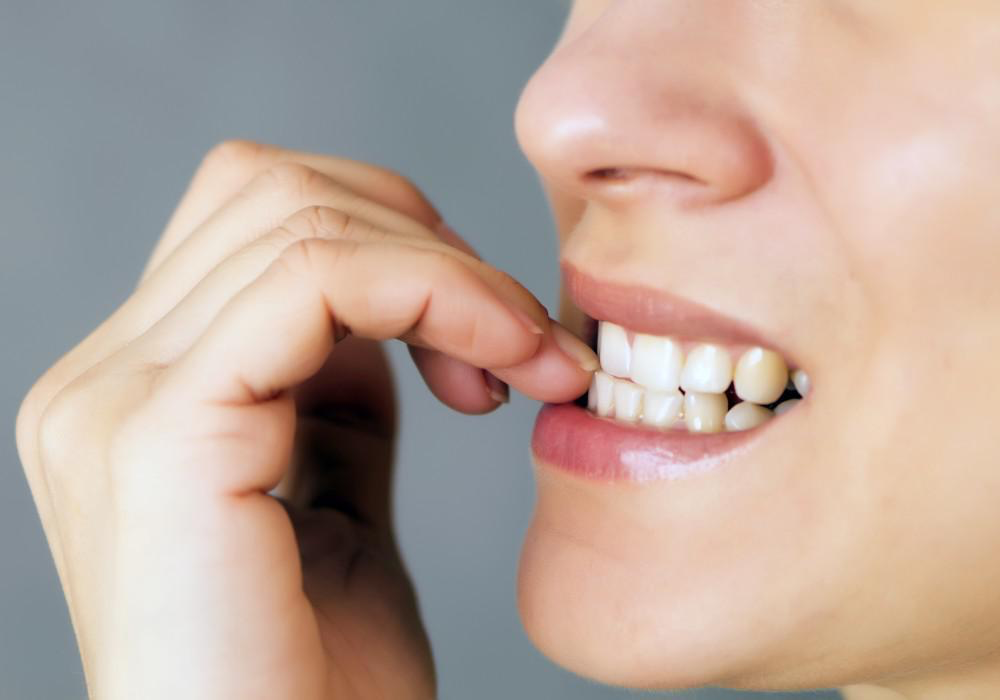
 I often bite my nails and I wouldn’t say it’s necessarily an anxiety thing as it’s just something I do whether or not I feel anxiety at that moment. It was often expressed throughout my childhood that biting my nails was annoying because of the sound it can make. Most of the time I bite my nails it’s not something I thought of doing. It’s just something I do out of habit and it does have a calming effect on my mind so I don’t even realize. 

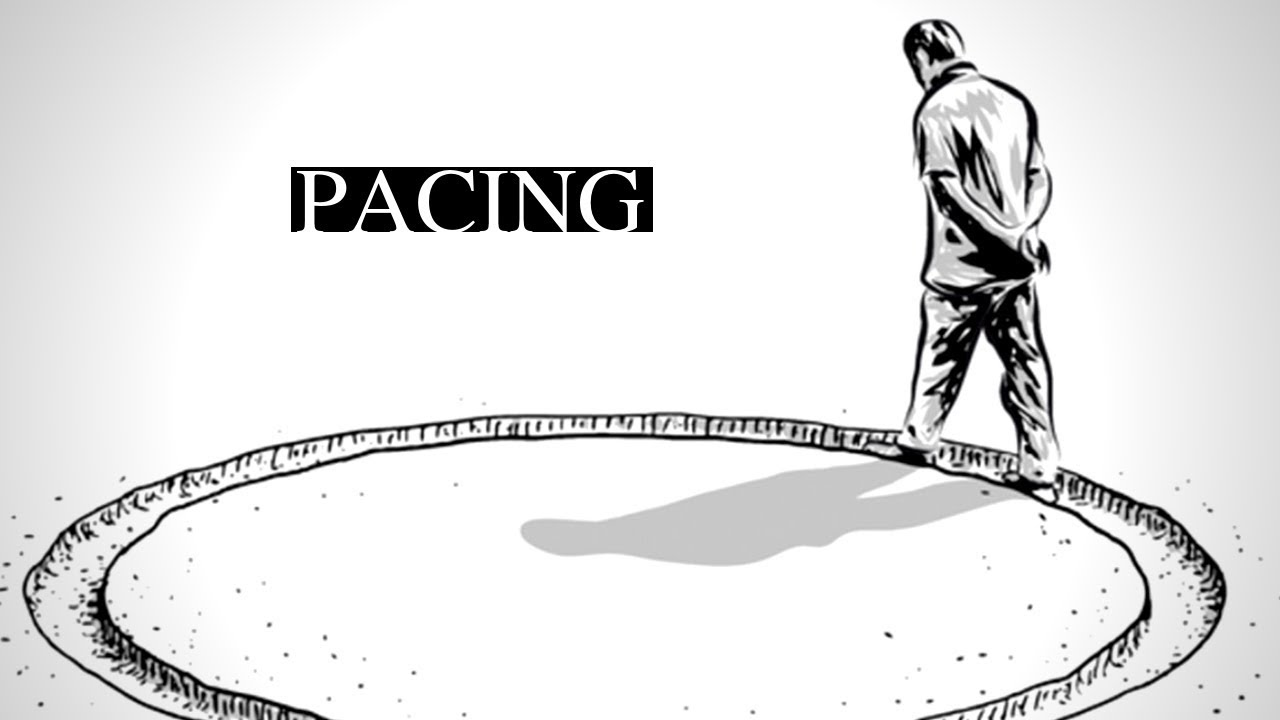
Another thing is my pacing or fidgeting. I pace and fidget a lot and I am never sitting still. To sit still, I have to focus on not moving and when I do my body feels very uncomfortable. I was told that I distract people with my movements and they can cause people to become stressed out when that wasn’t my intention. Sometimes the movements are based on the music I’m listening to and my natural reaction is to go with the beat. Like biting my nails this is just something I do out of habit. 

These things were never meant to cause harm to others and the worst thing is no one says anything about it anymore so I’m wondering constantly whether or not I am affecting someone. I think this puts into perspective what people with handicaps think. Since the world doesn’t accommodate them they have to worry about how their handicaps are not only affecting themselves but how they affect others as a whole. The anxieties I feel when I do these things I think to some severely lesser degree are what people with handicaps experience and if I feel stress from my things I can only imagine how they must feel as they have to struggle to feel comfortable in the world around them.

Constant Stress about Weight

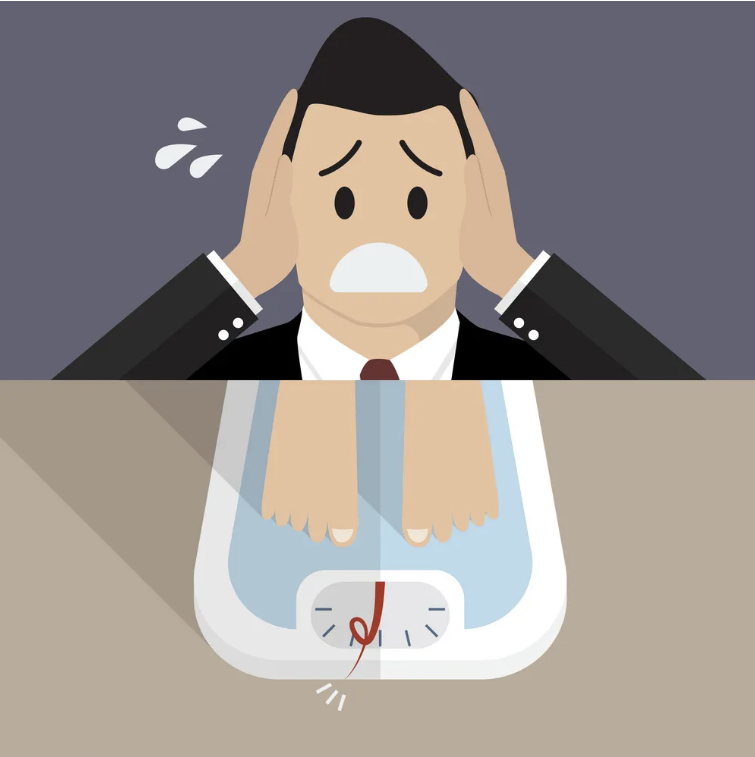
Have you ever felt embarrassed about how your body looks? Have you felt uncomfortable around in public, or even around family? How many times have you reminded yourself to “lose weight”? Are you tired of the fat shame you keep on getting? I am sure you would want to get rid of the excess weight, but staying consistent is hard for some people.

I started feeling insecure about my weight during my middle school years. I did not look like my other peers in terms of physique, and I would get called out for it. The emotions I had were not great to say the least, and it left me feeling ashamed of myself. Having to go to school five days a week under these conditions really shattered my self-esteem. I constantly felt like I was alone in class, as I was certainly isolated from the rest of the kids. I had no one to talk to because I was unable to make friends during that time. With the shame I carried, I even avoided speaking to my parents and teachers regarding the situation I was in. Honestly it was hard for me.

Being overweight and having to deal with body shaming scarred my mental health and well-being. I had a phase where I refused to take proper care of myself, which consisted of me eating less calories than the norm and hating my body overall. The harmful comments I received left me unaware of what I was doing to my health in general.

Ever since the days of my traumatic middle school experience, I wake up displeased with the way I looked in the mirror. Losing weight has become an objective for me, hoping to improve on myself and my health. It became less stressful when the pandemic hit a few years ago. I no longer had to constantly think about what others thought about me. It was a time where I could be at peace and find my values as a person.

Losing weight requires proper consistency and self-discipline. For some people it can take a long time to notice weight loss, as everyone’s weight loss journey is different. What’s important to me is that I learned to love my body and pushed through it and I’m proud of myself for that. Sometimes we just need to ease off on what others think and focus on yourself, and not for the sake of others

More than what it is: a ramble on “neurodivergent”

The subject of neurodivergence is a huge issue, not simply because it reveals the incredible breadth of how the human mind can function, but also because of how that is situated within the intricacies of our very diverse backgrounds and upbringings, infused with social constructions of race, gender, class, and generations. Nature and nurture take on whole new meanings here because they can no longer be perceived as bifurcated aspects of human development. Our neurological configurations are primed and shaped by our environment, and our environments were molded to hold, or not hold, our neurology. In this way, the term “neurodivergent” vastly oversimplifies the entirety of what it means to be something other than neurotypical.  

This is the blessing and the curse of having labels to help us define things. When we give something a name, an amorphous concept can suddenly have grounding and shape through language and become a topic of discourse we can then begin to understand it through. Giving language to an inner experience can be hugely impactful in validating what sometimes feels like isolating events that exist only in our minds. However, that very same label can be a restricting device that limits our ability to truly grasp the enormous landscape that a term like “neurodivergent” encompasses.  What becomes imperative here is how we allow that word to be representative of something that it cannot possibly adequately convey. 

When we think of the Pacific Islands, what does that thought come with? Tropical islands? Palm trees and coconuts? Resorts and vacation getaways? Sunny skies and sandy beaches? Volcanoes? While these are definitely aspects you could find throughout the Pacific, in no way do these elements define what the Pacific Islands actually consist of: nuclear devastation in the Marshall Islands and French Polynesia; phosphate mining in Banaba; military occupation in Hawaiʻi; coup deʻtat in Fiji; island extinction by sea level rise in Kiribati. There is so much history and context and culture to each individual island and atoll, much of which has nothing to do with the greater categorization of these places as a geographic designation. Yet that is often what this region of the world becomes delimited to. 

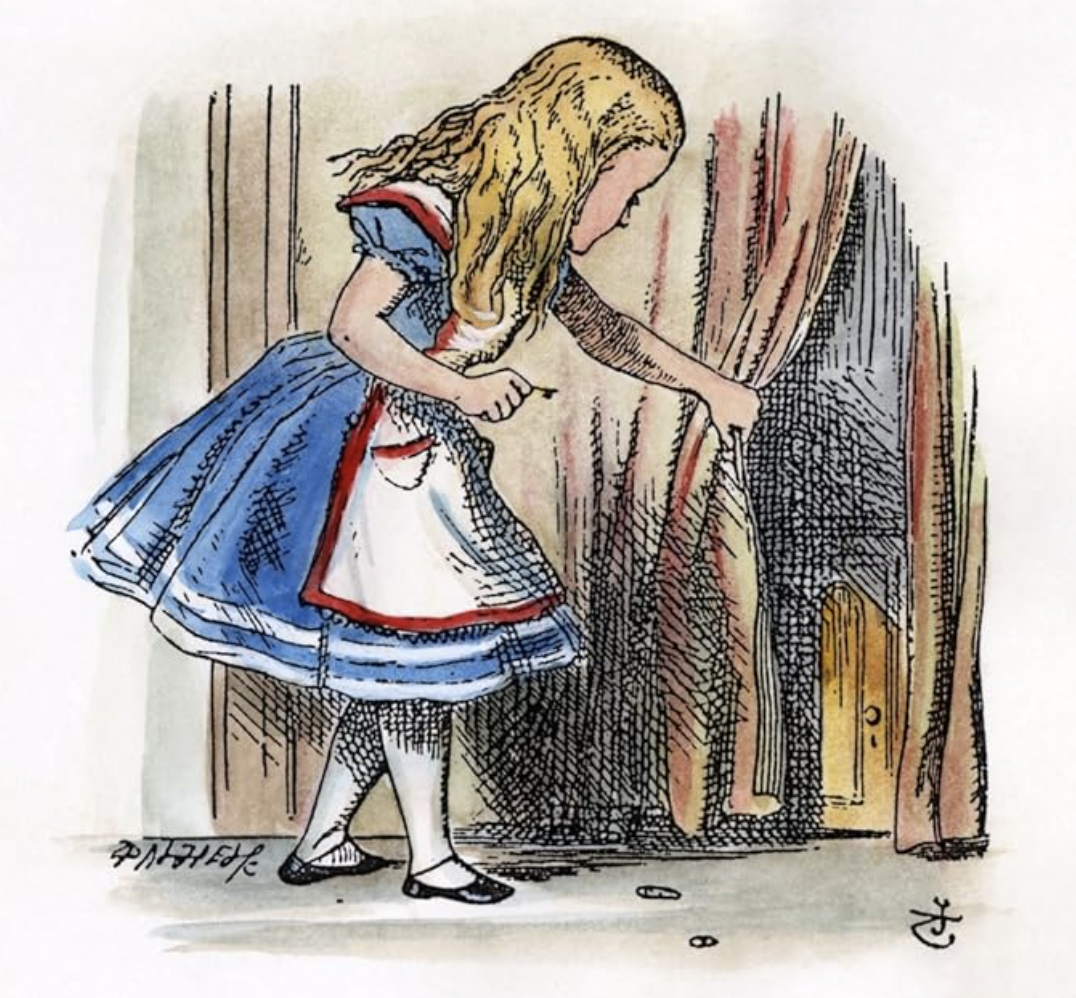
“Neurodivergent” risks having that same delimiting effect. Perhaps what might be helpful is how we view what labels represent. Instead of seeing umbrella terms as something that encompasses many things, maybe we need to understand them as small doorways into whole other realities where new and unfamiliar worlds exist. In this way, the assumption is not that we possess a single word that consists of many elements – an approach to knowledge that suggests what we already know and thus, can simplify – but rather that we can use a single word to help us enter into a space that we must now learn about – an approach to knowledge that centers the possibility of what remains to be known.

Normal

I love the fall, but I hate the dark. The cool weather is always a change I look forward to at first.  It then quickly becomes dreadful. Excruciating. Why is it dark at 5pm? 

I don’t know why the change of an hour has such a big effect on me. It shouldn’t.

I can’t get myself to wake up. I can’t get myself to class. My floor is made of clothes. Any assignment takes so much willpower to complete. At this point I struggle to truly try. Everything I do gets 25% of my effort, because that’s all I can spare. I’m falling behind in all of my classes because my brain feels like mush. Everything feels like it’s falling apart. Graduating with my degree seems so far and unreachable. I hate that I have an obligation to the government because I have to borrow their money. I’m scared I’m doing this for nothing. I hope I can pay it back. What if I can’t? 

My eyes are puffy and my cheeks are raw and red. I wish I was a pretty crier. I don’t think I’ve ever impressed anyone. I wouldn’t be impressed with myself. I’m not impressed with myself. I shouldn’t be ranting like this. This is supposed to be a blog post. Does this relate to our class topics? I don’t know. I’m sorry. 

.

I just feel so burnt out. I wonder if it’s normal to feel this way? I assume it’s not. What exactly is normal? Something is only normal if it is common, I guess? If that’s the case, I don’t wanna be normal. Except when it comes to the way I’ve been feeling lately. That makes me want to be “normal”. 

A clear picture of the moon in a pitch black night sky.
Photo by Dids . on Pexels.com

Dance is toxic af

TW// eating disorders, abuse

Growing up in the dance studio was not all bad. I had friends that I loved talking to and hanging out with, and I loved wearing makeup and pretty costumes. It also felt so good to move my body and gain control over it in a way I hadn’t known to do. Dance also taught me discipline, and the importance of showing up and articulation. And now being an adult, I am very thankful I know how to dance because it allows me to take what I have learned and create with it. But we’re not talking about the benefits, so let’s get into it.

1. Ballet

In order to compete on most dance teams, you are required to take a certain number of technique classes, always including ballet. This is important to note because ballet is the foundation that most classical dancers build off of, so there is no separating ballet from other styles of dance except maybe some forms of hip-hop. So, when someone mainly dances jazz, they most likely have years and years of ballet experience as well. I think ballet is the most toxic form of dancing there is, and it is something needed for almost every dancer, whether they hate it or not.

2. “Dance is life”

I’m sure you’ve heard people say “____ is life” but whenever I heard a dancer say that I knew they always meant it. At least at the studios in my area, people would typically go to dance 4-5 times a week for around 5 hours at a time. Keep in mind those hours are the minimum to be able to compete. And it’s not a myth that some parents homeschool their kids so they can spend more time in the studio. And I think it is like this because of how competitive the sport is. With dance, it is typically all or nothing.

Dance also becomes a huge part of someone’s identity, especially when they really don’t have much of a life outside of dance. I’ve known several people who have gotten older and had an identity crisis after quitting dance. This was something I slightly struggled with as well.

3. You will never be good enough

In ballet especially, there is an unwavering feeling of never being good enough. “Good enough for what” you might ask. To which I say…. everything. That’s at least how I felt, and still feel frequently. There is always something that can be improved in dance. If you look up videos of the greatest dancers in the world, their coach will always have a critique to give after they finish. Because in ballet, you’re supposed to be as close to perfect as possible. Ballet also makes your body move in ways that are unnatural and quite harmful to the body.

That being said, you are constantly worried about your body and the way that it looks because at the end of the day, that’s what dance is. And how do we do that? Mirrors around the whole room. Pair that with skintight leotards, staring at yourself while being told to suck in your lunch. Now add any sort of body issues to that. Say for example, you go home to a mom who is constantly on diets and criticizing her weight and body. Unfortunately, going home to a mother who deals with those issues is very common. This is where eating disorders come in. I personally developed my eating disorder around the age of 12 or 13, and dance just fanned the flames. Looking in the mirror for 20-25 hours a week had a huge impact on my brain and caused body dysmorphia. For those who don’t know. Body dysmorphia is when an individual does not have an accurate perception of their body in the mirror. The mind distorts the image you see to make yourself look bigger than you are or exaggerate insecurities. I still have trouble with mirrors because I can easily get caught in a trance like state. As you can imagine, staring at my stomach in the mirror everyday was not healthy, and I would obsess over it to where I decided not to eat as much so I could stay skinny (mind you I was 13 and hitting puberty). That’s when things snowballed into a much more complex eating disorder. According to National Library of Medicine, “The overall prevalence of eating disorders was 12.0% (16.4% for ballet dancers), 2.0% (4% for ballet dancers) for anorexia, 4.4% (2% for ballet dancers) for bulimia and 9.5% (14.9% for ballet dancers) for eating disorders not otherwise specified (EDNOS)” (Arcelus, 2013).

4. Abuse

I did not experience any physical abuse during my time as a dancer, but I have heard stories. The classics are teachers throwing shoes at students and/or sitting on them to get the dancer to go down in their split. This is a lot more prevalent in other countries, but it still happens. There is also the emotional/mental abuse that occurs. Examples of this are comments about people’s stomachs, favoritism in the team, and ridicule for not doing good enough.

5. Lack of diversity/Intersectionality

Most dancers are women, and a lot of men who dance get made fun of for being “gay.” As with other art forms, dance is seen as something for girls. For other art forms, (painting, singing, drawing) there is more acceptance of men. However, with dance, it is still heavily gendered. This made me think about the nature of dance and being a woman, there is a lot of overlap. I would even say that dance helped to socialize me as a woman. In both being a woman and dancer, there is a desire for beauty and perfection. There is also the concept of not taking up space and making yourself smaller (“bring your belly button to your spine”). Even in freer moves in dance such as a leap, there is still so much control which goes on inside. Dance and being a woman often look effortless, yet there is so much work and pain that occurs behind the pretty face. Even smiling for the audience makes me think of how men tell women to smile for them, like the world is an audience. Have you ever heard the phrase “to be a woman is to perform?” Yeah. Dance really engrained that into me. There’s also “beauty is pain” which I think captures both very well.

Most ballet dancers are thin and white as well. Growing up it was very rare to see a POC ballet dancer. I cannot speak for women of color, and their experiences, but as with many other US institutions, there is racism which occurs. Dance is also expensive as hell. So, the people that dance are only able to do so because of the money their parents are spending. This leads to a major lack of diversity. Dance is also pretty ableist. Sure, there are disabled dancers, but I have never seen any in person. Thinking about the social model of disability, it is not the impairment that hinders people, but the way that dance is not usually accepting or accommodating of disabilities. Due this lack, most disabled people do not feel welcomed in the dance (especially ballet) community. Looking at dance from a stereotypical perspective, it appears there is no room for disabled people. But this is complete BS! I don’t think the dance community has done enough advocating or caring for those who do not look like the typical dancer. Because dance should be accessible and affordable for EVERYONE. Finally, there’s the fatphobia. I feel I do not need to elaborate on this much, although this is one of dance’s most toxic traits. I think dance has gotten a lot more body positive recently, but I see this positivity mainly in hip-hop, which has always been more inclusive. But ballet man…… There is no practical reason why ballet dancers must be skinny other than for the fatphobic people in the audience and in society. Yet this still hinders so many people? Why should one have to change their body to create art? It’s ridiculous.

References

Arcelus, J., Witcomb, G. L., & Mitchell, A. (2014). Prevalence of eating disorders amongst dancers: a systemic review and meta-analysis. European eating disorders review : the journal of the Eating Disorders Association, 22(2), 92–101. https://doi.org/10.1002/erv.2271