Sex With Limited Mobility

Growing up, we saw physically disabled people as the odd ones out. I could take responsibility for viewing disabled people that way, but that was how everybody around me viewed them. I had no chance of “knowing better,” at least in that environment and age. That was the case until I was introduced to this class and had a fair share of friends who were open-minded. These people changed my thinking in both positive and negative ways, but the point that they taught me that people are different; not everyone is going to look and act the same as everybody else, and that is okay. I know the previous statement can come out as a very “duhh” statement for most of yall; however, I didn’t use to think like that. It was more of “you are weird! something is wrong with you.” And of course, like most adolescents who are just discovering sex and how it works, I wondered what sex must have been like for people with spinal cord injuries and other disabilities like that. I asked myself, “Do they feel anything down there?” or questions like, “can women who are paralyzed from the waist down give birth?” Most of these questions came from mostly ignorance and a bit of curiosity. 

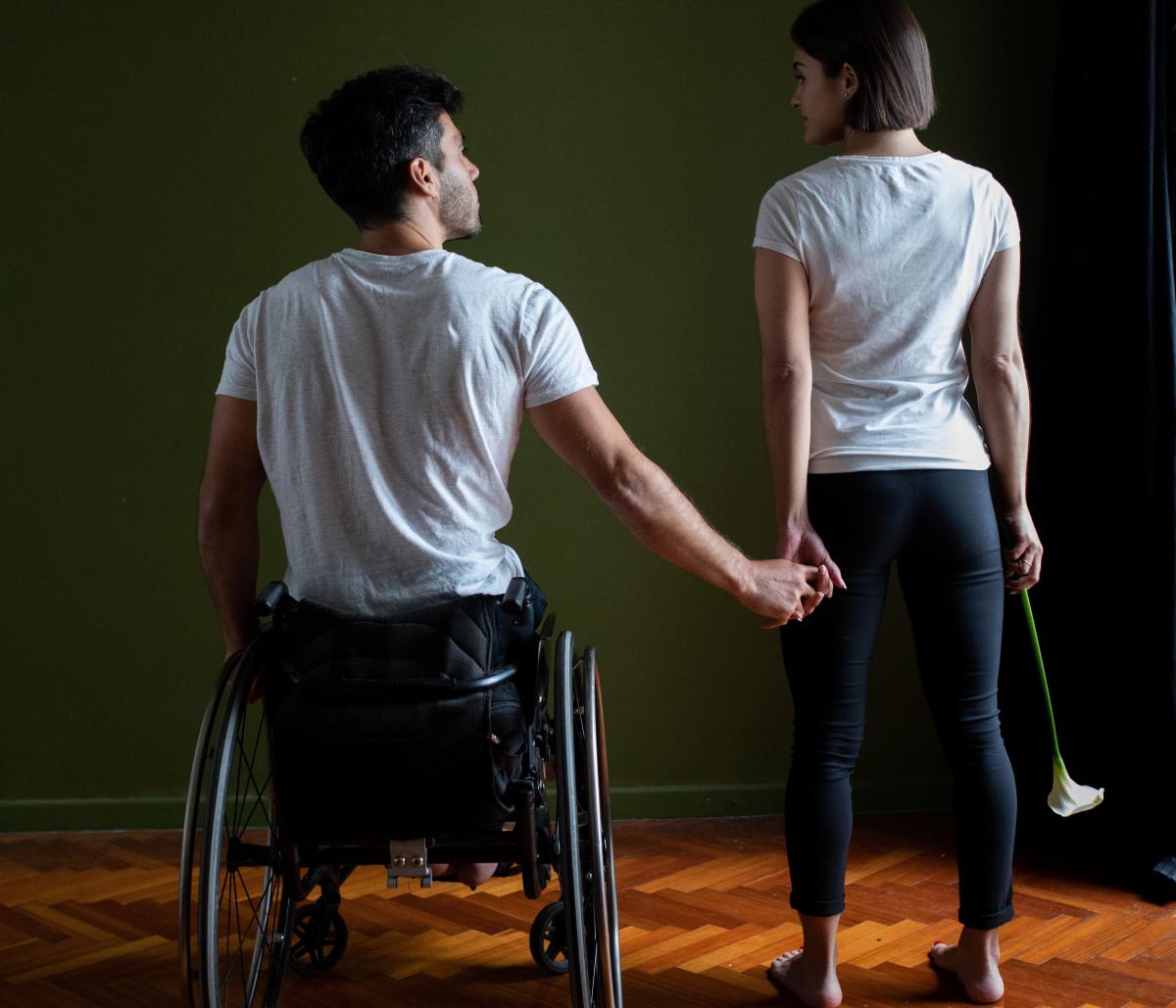
Sexuality and Disability: The Missing Discourse of Pleasure by Mitchell Tepper opened my eyes to this issue regarding disabled people and sex. An article like Tepper’s is exactly what people like me missed back in junior high. From reading the article, I learned that sex is more than just borrowing some friction from a partner, and there are more ways to derive sexual pleasure that does not involve the privates. I found it heartbreaking that some disabled individuals give up on their sex lives because they believe that there is no point in trying, “nothing will be the same.” And that is when Mitchell Tepper steps-up and encourages people with SCI that their “sexuality is their responsibility.” These people learned more about the spinal cord-injured bodies and embraced their disability. Evidently, disabled people in wheelchairs tend to have a more difficult time finding a sexual partner than abled individuals; most of this is due to the stigma around disability and sex and partially due to self rejecting before they can even try. Self rejection is a problem that we need to tackle. We (teachers and professors) need to teach about pleasure and sexuality in order to shine a light on this topic of sex and disability and hopefully reduce the stigma and misinformation around disability and sex.

What is a disability?

Disability is anything that hinders your ability to perform specific tasks or just live your life normally. Some people are born with disabilities and those are the ones that are physical. But what about the other conditions we don’t really think of as a disability.

The thought of never being enough or not feeling confident or traumatized by past experiences. All of those things and many more are a part of disability as well. Because they make you feel less of yourself and hinder your ability to ever feel enough or even perform certain tasks accurately. Let’s say you hate your body and to not get judged you don’t go to certain stores in the mall so the people inside the store don’t judge you. No one might judge you but the thought of just being “different” which is either stemmed in you by you or by someone else, gets in the way of you living your life comfortably.

One other example could be some parents putting high expectations on their child and the child trying hard to get to that level. But until that child gets to that level, anything he does before it will just make it seem like he hasn’t done enough. This is when parents should stop expecting things from their children and instead appreciate them for what they have achieved so they never stay in that “never being enough” complex.

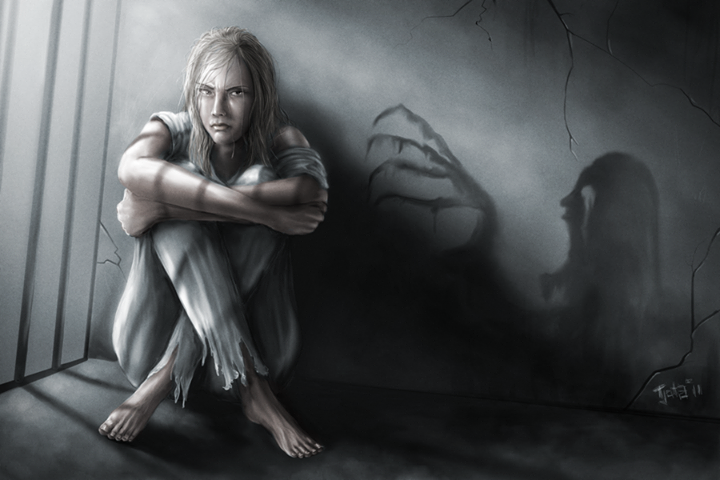
In the end, my point is that every person almost has a disability. The inner demons we all have are our disabilities because those demons make us less able in some situations. The difference is that if the inner demons are worked on, they can go away but other physical disabilities are permanent. So, it will be wrong to say the disabilities we have within ourselves are the same as chronic illness or other serious disabilities. But anything that interferes with our ability to be the normal version of ourselves meaning being at your full potential is a disability.

A world built for us

What would the world be like if it was built for us? The world as it is now is so unaccommodating to anyone who isn’t cis, straight, white, male, and able bodied. Whether it’s lack of gender neutral bathrooms or failure to provide disability access in stores and restaurants, the world we live in now is not built for people who don’t meet the western societal standards of what a perfect body should look and function like. That being said, why isn’t the world more accessible? Aren’t we the ones who decide how the world should work? So why is it that we continue to make these things so inaccessible when it is an easy fix? It’s so engrained in our society that this is just the way things are and that we should just accept it. It’s like the saying “if it’s not broken, don’t fix it” except it is broken and we refuse to acknowledge it. There are so many ways in which the world could be more accessible that just aren’t implemented tin the way they should be. Like why do we not have wheelchair ramps and elevators at every establishment? We could make all restrooms gender neutral as well. Small things such as this would make the world a much more accessible place for everyone to live and be happy. I guess I just don’t understand why we would go out of our way to make things inaccessible for those who need these things. Not to mention it would help everybody, not just those who you would think need it. An example would be parents withs strollers, a ramp would be helpful to them too so they don’t have to carry the stroller up a flight of stairs. Moral of the story, the world could be so much more accessible if we just decided that it should be.

“F*ck your disorder”

Photo by Darya Sannikova on Pexels.com

A few weeks ago I had a difficult bipolar/autistic meltdown that spiraled me into a dissociative state. I say bipolar slash autistic because the criteria and symptoms for both disorders overlap so much that it is nearly impossible to tell them apart within my own body at this point.  I wasn’t able to attend some of my classes for two weeks because my mental state was feeling immensely guilty about using my accommodations. Every time I typed up another email to a professor, saying that I once again had to rely on my disability accommodations, I felt my chest tighten with anxiety and guilt, as if I was doing something wrong by needing my accommodations. I didn’t want my professors to think that I was lying to get out of class to go out with my friends. To be fair I did hang out with my friends and try and do stuff during the time I had class, but everything we did was an attempt to pull me out of the dissociative state I was in. As someone who has heard numerous times that they don’t look “autistic” or “disabled”, I am aware that this is a judgment that many pass on me, and I was aware that my professors may think that as well. Perhaps out of guilt, I sent an email to my professors, explaining that I had bipolar disorder and was struggling to pull myself out of a rough episode that left me unable to even read and comprehend the readings for any of my classes. Most of my professors answered with supportive statements, validating my disability and granting me as many extensions as I needed. One professor emailed me back, ignoring the fact that I had just opened up to him about my identity, and demanded I turn in my work within 48 hours, because the accommodation guidelines offered a 48 hour extension as an example guideline. Evidently, I was not able to get my work in, because I am not able to pull myself out of a dissociative episode on command; to make it worse, when I finally returned to class the following week he spoke negatively about bipolar disorder in class, leaving me stunned and panicked. I made the rather obvious assumption that I wasn’t his favorite student. Rather than fighting with him every step of the way, I decided to withdraw from the class, postponing my graduation from this December to May. I was devastated telling my parents that I would not be graduating as soon as they thought, and I was even embarrassed, knowing that if I pushed myself I could have made it through the class. But just because you can do something as a disabled person, doesn’t mean it is worth it. I was reminded in a somewhat blunt manner that not everyone will accommodate your disability, and sometimes it’s better to give up, then to fight for your right to take a class. 

The emotional labour it would have taken for me to fight with this professor every step of the way, just to most likely pass with a C in his class was not worth it for me. Personally, I am proud of myself for knowing my boundaries and how far I can push myself. He made me feel weak and made me hyperaware of how people view me as someone who is bipolar and on the sepctrum. 

Subtle ableism is so present in today’s world that it goes unnoticed by most, unless we are directly affected by it. For me, this was an example of direct ableism, someone who would do the bare minimum to accommodate my needs, and refused to do anything more. It was dehumanizing, but it also reminded me how lucky I am to not be faced with people like him, and ableist challenges on a daily basis. Our world was not made for disabled bodies, whether it’s expectations at work, to campuses being not accessible, to the general population applying certain stigmas to disabled people as a whole. As a physically abled person who is usually able to mask their disability in public, I don’t have to constantly worry how I will make it to class on time, or if the elevator will work today, or if I will be able to make it up the hill to my building for class, and that gives me a certain privilege. The dialectic of both being disabled and abled is an interesting limbo to live in. I can’t imagine how it would be if I had to worry about physical disability on top of my ever present mental disability, still, I can’t help but wonder if I would have been treated better by that professor if my disability had been more visible.

Attitudes

I never wanted to be like her

Always complaining and never solving

Making others push her around in a wheelchair when she could still walk

Never taking her medication even as she complains about her failing health.

As I got older, I stopped wanting to be like him too.

Never visiting the doctor

Always making excuses for his aches

He let his body fall apart

Too afraid to admit he needed help.

I was glad they made me independent 

They taught me not to make excuses

They taught me to work harder to be like everyone else

They taught me to get a stool when I was too short

They taught me to go to doctors and take my medicine

They taught me to be better than they were.

I wake up at 8 am

I take my pills at 9am

I wear my brace 

I wear my prosthetics

I wear a smile

I need help, but

If I fall apart

I can put myself back together 

I feel sorry for them

I want to help them

I know I can’t

They gave strength

They gave me choices

They gave me what they didn’t have

Thanks mom and dad ❤️

Dispair / *Despair

I have many impairments. I need glasses. I need tasks repeated, written down in planners, reminded of multiple times throughout the day, written in front of me, with a harsh deadline in order to get done. I even had braces, and should be using my long-lost retainer inside a hot-pink case to keep that “aesthetic impairment” in check (sorry to my future dentist). But I don’t think I would have ever considered myself disabled until now that I’m facing mobility issues.

Read more: Dispair / *Despair

To be frank: I still don’t consider myself disabled. I just think the possibility is higher now. I’m older (not too old), and have had incredible stressors placed on my body (an example being COVID in May, as well as the mental stressor of work and a deteriorating friendship) – it’s natural for things to start “falling apart” or “not working as well as they used to”. 

But buddy, if you have these impairments – surely you’ve been disabled this entire time! Like, sure, I guess. Except for the fact that my visual and cognitive impairments are the “more manageable” impairments that I face. I have glasses, although I need to go in to update my prescription every few years. I have ADHD, although I need to constantly ensure I can get access to adderall without jumping through ten thousand hoops – not to mention admitting my amphetamine results on drug tests are because of medication, something I am always embarrassed of (another conversation for another day). Mobility impairments aren’t in the same ballpark solely because the “solutions” are less accessible. 

In order to check that my ankles are chronically messed up, I have to have routine conversations with my doctor. This means testing out theories of new/different shoes, stretches, exercise plans, and pain medications. Some of which could help, but only for a few periods of time. Others can have no impact whatsoever, or even make my pain worse. Once these are all ruled out, then comes the tests. X-rays. Blood tests. Gait checks. Then the waiting. Then the results. Then the realization, whether good or bad – that I need help. Then the vulnerable accommodations. Begging to be taken seriously, if I was even given the advantage of being taken seriously from the get-go, which not everyone is privileged to. I’m fortunate enough to be working somewhere where the walk from my car and the building isn’t too harsh, but from Parking Lot 29/Walker Apartments (wherever there’s a free commuter spot) to Engineering is absolutely unbearable. So the disability pass – if I even qualify for one – would only be for school, which already feels like a debate that’s waiting to happen: are you really disabled? 

That’s when I circle the drain. Is it easier to just accept yourself as impaired, but not disabled? But then, how do you gain accomodations for such impairments? Do you just stick it out, saying it’s not worth it and continue suffering in silence?

Why has society ruined the idea of being disabled?

Where the Sidewalk Ends

Euthyphro’s dilemma asks, “is it right because God wills it, or God wills it because it is right?” The first branch believes in an external locus of control, that success and failure result from factors beyond our control. The second branch believes that the self and its actions control the outcome of events in their life. If both statements are true, it becomes a vicious cycle where the snake is eating its own tail. A feedback loop based on inferiority.

Vector Ornamental Snake Ethnic Ouroboros Stock Illustration - Download  Image Now - iStock
Ouroboros eating its own tail in an infinity loop.
Continue reading

Am I Faking It?

I have chronic migraines. I got diagnosed when I was probably around 13 or 14, but I’ve never felt like I could call myself disabled or claim identity with the chronic illness/pain communities. It’s not that I feel put off by those labels– I’ve done plenty of introspection on that, to make sure that the reason I didn’t feel comfortable with those labels wasn’t because of some subconscious bias. Rather, I feel like my migraines just aren’t bad enough, don’t affect my life severely enough to “count.” I feel like claiming those labels would be exaggerating, or speaking over someone who “fits” better than I do. 

Which is stupid, by the way. I essentially live my daily life with a near-constant headache clocking in between 1-4 on the pain scale, with occasional spikes to higher levels. When it escalates to a migraine, I get nauseous and can’t eat or drink for a day or more, until it goes away. Before a migraine hits, I often get visual aura, which looks like TV static taking up most of my vision. During a migraine, I become extremely sensitive to sounds and smells, and I get so photosensitive that, especially combined with the visual disturbances, I can become effectively blind for several hours. Depending on weather patterns, stress, and other situational factors, I average between 3-10 true migraine episodes per month, with other severe headaches in between for spice. This has impacted my academics, my work life, my social life, my mental and physical health and development, etc. Everything. Like, what part of that experience doesn’t sound disabling??? And yet, I struggle to feel justified in identifying as such.

Continue reading

When Failure is Radical.

Affirmations from an unreliable drop out

I have failed to work with a system that prioritizes productivity over personhood.

I have chosen moving forward over suffering

I will accept myself to spite a value system that does not want acceptance – but always striving for “better”. If I internalize it, that I am always striving for “better”, then I build a comfortable place for the belief that I will never be enough, to rest upon. Instead, I will build space within myself to be less than ideal. 

Continue reading

Bedroom.

A view from my bed [ID: Hazy photograph of a window illuminated by vibrant red and purple lighting. In the center there is an electric candelabra sitting on the window sill, slightly obscured by sheer curtains.]

2011 was the year I began distancing. By which I mean, I began a life lived from my twin bed, fueled by goldfish crackers and electrolyte drinks, seldom able to access the outside world. It wasn’t mine to call home anymore.

I was drowning in conditions that these doctors hardly knew about. I had no choice but to become my own doctor, nurse, and historian. More than anything, I became my own community.

The outside world was stolen from me by sickness, uncertainty, and administrative violence – this world was never built for my survival. Such predicaments were met with constant calls to push through – go into the world anyways, risk it all for a “normal” life. They said adapting to it would make me better. It wrecked my body and my mind. Being bedridden was extraordinarily taxing and painful in a way that cannot be understood by those who have not been fully immersed in it in this way, yet. But I am inseparable from my bedroom life, I am made of soft pillows and the world I built among them. 

Continue reading